

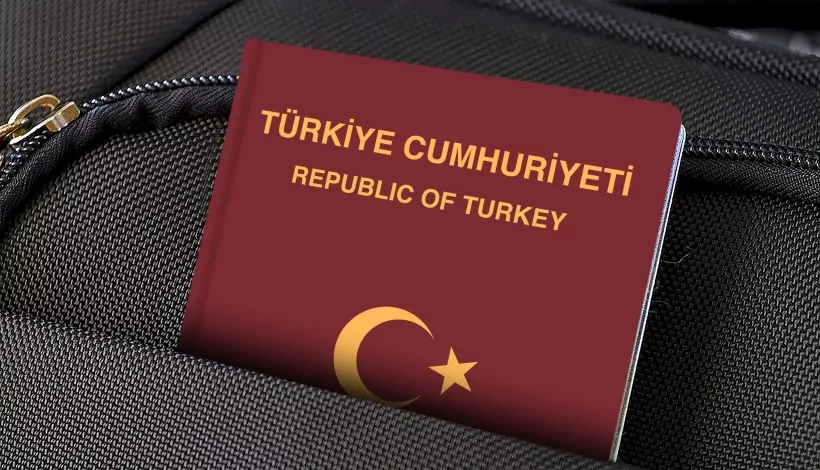
More people are holding two passports today than at any point in modern history, driven by a combination of loosening nationality laws, the growth of citizenship-by-investment programs, and a genuine, generational shift in how globally mobile professionals and investors think about “home.” Dual citizenship — legally holding the nationality of two countries simultaneously — has moved from a legal curiosity to a mainstream financial and lifestyle planning tool. This guide covers what dual citizenship actually means in practice, the concrete benefits it offers, which countries permit it (and which don’t), and why Turkey in particular has become one of the most popular second-citizenship destinations for investors who want to add a passport without giving up their first one.
This shift isn’t just anecdotal. Governments themselves have noticed and, in many cases, responded by launching or expanding formal investment migration programs specifically to attract the capital and talent that comes with internationally mobile individuals and families — Turkey among them. What used to be a niche option reserved for the very wealthy or those with unusual family circumstances (a parent from one country, a marriage into another) has become a mainstream planning tool accessible to a much broader range of investors, professionals, and business owners.
What Dual Citizenship Actually Means
It’s worth starting with a precise definition, since the term gets used loosely in everyday conversation. Dual citizenship means being a full legal citizen of two countries at the same time, with the rights and obligations of citizenship in both — the right to live, work, and vote (where eligible), and the obligation to comply with each country’s laws, including in some cases military service or tax filing requirements. This is distinct from permanent residency, which grants the right to live somewhere long-term but not full citizenship rights like an unrestricted passport or voting eligibility. It’s also distinct from a simple long-stay visa, which is temporary and conditional. True dual citizenship is permanent (absent renunciation) and typically passes to children born after the parent acquires it, depending on each country’s specific nationality law.
Why More People Are Pursuing a Second Citizenship
The motivations we hear from clients fall into a few consistent categories, and most people pursuing dual citizenship are acting on more than one of them at once:
- Political and economic diversification. A second citizenship functions as insurance against instability in one’s home country — economic downturns, political shifts, currency crises, or restrictions on capital movement.
- Global mobility. Passport strength varies enormously by nationality. A second passport with strong visa-free access can dramatically expand where you can travel, live, or do business without advance visa applications.
- Business and tax planning. Some jurisdictions offer more favorable tax treatment for certain income types, and having residency or citizenship options in more than one country gives genuine flexibility in structuring where you base yourself and your business.
- Family security. Parents frequently pursue a second citizenship specifically to secure better education access, healthcare, or long-term optionality for their children, independent of their own reasons for applying.
- Real estate and lifestyle. For many of our clients, a second citizenship starts as a natural extension of a property investment rather than a goal pursued in isolation — buying a home in a new country and later formalizing the relationship through citizenship.
The Concrete Benefits of Holding Two Passports
The benefits below aren’t abstract — they’re the specific, recurring reasons our clients give when we ask why they pursued a second citizenship in the first place, and most apply regardless of which country’s second passport you’re considering.
Visa-Free and Simplified Travel
This is the most immediately tangible benefit for most dual citizens. Depending on which two passports you hold, you can often choose whichever one grants faster entry, longer permitted stays, or visa-free access to a given destination — useful for business travelers who need to move quickly across multiple regions without visa delays.
Property and Investment Access
Some countries restrict property ownership, business formation, or investment activity to citizens or place additional hurdles in front of foreign buyers. Citizenship removes those barriers entirely, opening up the full range of ownership and investment structures available to locals.
Healthcare and Education Access
Citizens frequently have access to public healthcare systems and, in some countries, reduced or free university tuition rates that aren’t available to non-citizen residents. For families, this alone can represent significant long-term financial value.
A Genuine Plan B
Perhaps the most cited reason among our clients: a second citizenship guarantees a legal right of residence somewhere else, permanently, regardless of what happens politically or economically in your home country. It’s not a hypothetical benefit — it’s an option that exists and can be exercised at any time, with no application process required at the point of need.
Business Expansion
Holding citizenship in a second country often simplifies opening local bank accounts, registering a business, and accessing local financing — all of which tend to be more bureaucratically complex for non-citizens, even long-term residents.
Which Countries Allow Dual Citizenship?
This varies significantly and is one of the first things to check before pursuing a second nationality — some countries permit dual citizenship without restriction, others allow it only in specific circumstances, and a smaller number still require renouncing any existing citizenship upon naturalization. Turkey sits firmly in the first category: Turkey fully permits dual and multiple citizenship, with no requirement to renounce any existing nationality to become a Turkish citizen, and no oath of renunciation involved in the naturalization process. This makes Turkey one of the more straightforward second-citizenship options for investors specifically because it adds a passport rather than forcing a choice between two. It’s still essential to check your own home country’s rules, since some nations (though a shrinking minority) restrict or complicate dual nationality from their side even when the second country permits it freely.
How to Check Whether Your Home Country Allows Dual Citizenship
Before starting any second-citizenship process, it’s worth confirming your own country’s position, since this varies more than most people expect. Major economies with straightforward dual citizenship policies include the United States, the United Kingdom, Canada, Australia, most of the European Union, and the vast majority of Latin American countries — citizens of these countries can generally acquire a second nationality without any risk to their original one. A smaller number of countries take a more restrictive approach: some require notification or approval before acquiring a second citizenship, others technically prohibit it but rarely enforce the restriction in practice, and a few genuinely revoke original citizenship upon voluntary naturalization elsewhere. India is a notable example of a large country that does not recognize dual citizenship for its own nationals (offering an alternative “Overseas Citizen of India” status instead), so Indian nationals in particular should seek specific legal guidance before pursuing a second passport. If you’re unsure where your country stands, checking with your home country’s foreign ministry or a qualified immigration lawyer before applying is the safest first step, since unwinding a citizenship decision after the fact is far more complicated than confirming the rules up front.
Passport Strength and What a Turkish Passport Adds
One of the more practical ways to evaluate a second citizenship is simply comparing passport strength — how many countries you can enter visa-free or with visa-on-arrival versus your existing passport. For citizens of countries with more restrictive passports, adding a Turkish passport can represent a meaningful upgrade in visa-free access to a substantial list of destinations across Europe, Asia, and the Americas, in addition to visa-on-arrival access to many more. For citizens of already strong-passport countries (much of Western Europe, North America), the travel-access benefit is smaller, and the appeal of Turkish citizenship tends to center more on the property investment itself, the residency optionality, and the tax and business benefits rather than pure travel convenience. Either way, it’s worth mapping out your specific travel needs against Turkey’s current visa-free agreements before treating this as the primary driver of your decision, since the list of visa-free countries does shift periodically as bilateral agreements are updated.
Turkey as a Second Citizenship: Why It’s Become So Popular
Turkey’s citizenship-by-investment program has become one of the most accessed in the world for a straightforward reason: a $400,000 real estate investment — a fraction of the cost of most comparable European or Caribbean programs — grants full Turkish citizenship to the investor, their spouse, and children under 18, with no renunciation of existing nationality required and no minimum residency period to maintain the passport once granted. We cover the complete process, documentation, and timeline in Turkish Citizenship by Investing at Least $400,000 and How to Obtain Turkish Citizenship. Beyond the investment route, Turkey also grants citizenship through several other paths — marriage to a Turkish citizen, extended legal residency, and exceptional cases at government discretion — which we cover in Procedure for Obtaining Citizenship.
What Turkish Citizenship Specifically Provides
Beyond the general benefits of dual citizenship covered above, a Turkish passport carries its own specific advantages: visa-free or visa-on-arrival access to a substantial number of countries, the right to live and work anywhere in Turkey without any residence permit renewal ever again, access to Turkey’s public healthcare system, and eligibility to vote in Turkish elections. For business-focused investors, Turkish citizenship also opens the door to establishing and running a business with the same rights as a Turkish national, rather than navigating the additional registration hurdles that apply to foreign-owned entities in some sectors. We detail the full scope of these benefits in What Turkish Citizenship Provides and make the specific investor case in Turkish Citizenship: The Ideal Place for Investors.
Real Estate as the Foundation of Second-Citizenship Planning
For most of our clients, the citizenship decision doesn’t happen in isolation — it’s built on top of a real estate investment they were making anyway. Turkey’s property market offers the dual benefit of a genuine investment asset (rental income, capital appreciation potential) alongside the citizenship pathway itself, which is a meaningfully different value proposition than pure “donation” citizenship-by-investment programs that don’t leave you owning anything tangible. We cover the full property investment picture in Buying and Investing in Real Estate in Turkey, including how to structure a purchase specifically around the citizenship threshold.
How Turkey’s Program Compares to Other Citizenship-by-Investment Options
Turkey is far from the only country offering a route to citizenship through investment, but it compares favorably against most alternatives on the metrics that matter most to our clients. Caribbean programs (St. Kitts and Nevis, Dominica, Antigua) offer lower entry costs but limited additional benefit beyond the passport itself, since they don’t come with a genuine, liquid property investment or a large domestic economy to plug into. European “golden visa” programs, where they still exist in citizenship form, typically require substantially higher investment thresholds — often €600,000 to over €1 million — and considerably longer timelines, frequently five to ten years, before citizenship (rather than just residency) is actually granted. Turkey’s combination of a $400,000 threshold, direct citizenship rather than a multi-year residency-to-citizenship pipeline, and a genuine, sizeable domestic real estate market to invest in rather than a government bond or donation fund, is a meaningfully different value proposition — you end up owning a real, income-generating asset rather than simply paying a fee.
Common Misconceptions About Dual Citizenship
A few misunderstandings come up repeatedly in client conversations and are worth addressing directly. First, dual citizenship does not mean paying double income tax on the same income in both countries — most countries operate residence-based taxation (you’re taxed based on where you actually live and earn, not simply where you hold a passport), and double-taxation treaties between many countries further prevent the same income being taxed twice; the United States is the major exception, taxing citizens on worldwide income regardless of residence. Second, holding a second passport does not automatically mean losing benefits, rights, or protections tied to your first citizenship — in the large majority of cases, both citizenships remain fully valid and independently exercisable. Third, dual citizenship is not typically difficult to maintain once granted — there’s usually no ongoing renewal process for the citizenship status itself, only for the physical passport document, which follows the standard renewal cycle for that country (Turkish passports, for instance, are generally issued for up to ten years).
Considerations Before Pursuing Dual Citizenship
Dual citizenship isn’t purely upside, and it’s worth going in with a clear-eyed view of the obligations that come with it before treating it as a purely positive decision with no downside to weigh. Tax residency and filing obligations can become more complex, particularly for citizens of countries like the United States that tax based on citizenship rather than residency regardless of where you actually live. Some countries impose military service obligations on male citizens, which Turkey does maintain, though dual nationals living primarily abroad generally have access to exemption or reduced-service arrangements — worth understanding in advance for families with sons. And while Turkey doesn’t require renunciation, it’s worth double-checking your home country’s own stance, since a small number of countries do still restrict dual nationality or apply specific conditions to citizens who acquire a second passport.
The Application Timeline in Practice
One of the most common questions we get is simply “how long does this actually take?” For Turkey’s investment route specifically, the timeline typically runs three to five months from signing the property purchase agreement to receiving citizenship approval — considerably faster than most comparable programs. The process runs roughly as follows: property purchase and title transfer, obtaining a certificate of conformity confirming the investment meets the $400,000 threshold, submitting the citizenship application with supporting documentation, background and security checks conducted by Turkish authorities, and finally approval and issuance of the Turkish ID and passport. Delays most commonly arise from incomplete documentation or translation issues rather than from the underlying government processing itself, which is another reason working with an experienced legal team from the outset tends to produce faster outcomes than attempting the process independently.
Family Citizenship Planning
One of the more overlooked advantages of Turkey’s investment-based citizenship route is how family-inclusive it is: a single $400,000 investment brings the applicant’s spouse and all children under 18 into the same citizenship grant, at no additional per-person investment threshold. For families with young children, this also intersects directly with questions about schooling and long-term residency planning — topics we cover in Education System in Turkey and, for families expecting a child in Turkey during the application process, Birth of a Foreign Child in Turkey.
Estate Planning and Generational Benefits
Dual citizenship’s benefits often extend well beyond the person who initially applies. Children born to a dual citizen typically inherit eligibility for that second nationality by descent, meaning the citizenship decision one generation makes can shape options for the next generation as well, sometimes indefinitely depending on the specific country’s descent rules. For families thinking in decades rather than years, this generational dimension is frequently as important as the immediate benefits — a grandchild born decades from now to a family that secured Turkish citizenship today may still be eligible to claim it, provided the chain of descent and documentation is properly maintained along the way. This is one of the reasons we encourage clients to think of citizenship-by-investment less as a one-time transactional decision and more as a long-term family asset, similar in some respects to the real estate itself.
Taken together, these benefits explain why dual citizenship has shifted from a niche legal curiosity into a standard part of serious wealth and family planning for internationally-minded investors, rather than a decision reserved only for people with an unusual family or business circumstance forcing the question.
Frequently Asked Questions
Does Turkey require me to give up my current citizenship?
No. Turkey fully permits dual and multiple citizenship, and there is no renunciation requirement or oath involved in becoming a Turkish citizen through investment or any other route.
Will my home country revoke my citizenship if I take a second one?
Most countries do not, but rules vary — it’s important to confirm your specific home country’s position before applying, since a minority of nations still restrict or complicate dual nationality.
Do I need to live in Turkey to keep my Turkish citizenship?
No — once granted, Turkish citizenship through investment carries no minimum residency requirement to maintain it. You can hold the passport indefinitely regardless of where you actually live.
Can my children inherit dual citizenship?
Generally yes — children born after a parent becomes a Turkish citizen typically acquire Turkish citizenship by descent, in addition to whatever citizenship they hold through the other parent or the country of birth.
Is dual citizenship the same as having two passports for convenience?
Not quite — dual citizenship is the underlying legal status; the two passports are simply the travel documents that result from holding that status in each country. You can’t hold a second passport without the underlying citizenship being real and legally recognized by both countries.
Can I lose my Turkish citizenship once granted?
Turkish citizenship acquired through investment can, in rare and specific circumstances, be reviewed — for example if it’s later found the investment or documentation was fraudulent. Outside of such exceptional cases, citizenship legitimately granted is permanent and not subject to periodic renewal or re-qualification.
Do I need to speak Turkish to become a citizen through investment?
No — unlike naturalization through extended residency, which typically requires a Turkish language proficiency test, the investment route does not carry a language requirement.
How Uinvest Group Can Help
We work with clients throughout the entire dual citizenship journey — from selecting and purchasing the right qualifying property, through document preparation, to submission and follow-up on the citizenship application itself. Our team has guided investors from dozens of countries through Turkey’s investment citizenship program, and we’re happy to walk you through exactly how the process would apply to your specific nationality, family situation, and long-term goals, whether that’s travel flexibility, a genuine Plan B, or simply a well-located property that happens to come with a second passport attached. Get in touch via our contact page to start the conversation.
Sources: Turkish Citizenship Law No. 5901, Presidency of Migration Management (Turkey).


