




























Foreigners can buy property in Oman, but only in designated areas. The Ministry of Housing and Urban Planning stated on 28 and 29 June 2026 that non-Omanis cannot buy real estate across the Sultanate, and that ownership is limited to areas the state has designated. The longest-standing of those areas are the licensed Integrated Tourism Complexes (ITCs), where non-Omanis can hold freehold title under Royal Decree 12/2006. Since 2025 the picture has widened: freehold units in special economic zones and free zones, areas the Ministry named in 2026, and a usufruct scheme for apartments are all described in the sources, each with its own conditions and its own gaps in the published rules.
This guide sets out each route, who qualifies, what it costs, how ownership links to residency, and what the sources do not yet settle. It replaces an older version of this article that treated ITCs as the only route. Most legal instruments below were read through law-firm bulletins, press reports and the decree.om database, not the Official Gazette, so article numbers should be checked against the Gazette before they are quoted in a contract or filing. Last verified: 11 October 2026.
The Short Answer
- Foreign ownership is allowed only in areas designated by the state; it is not open across the Sultanate.
- Integrated Tourism Complexes are the established route and give freehold title registered in the buyer’s name.
- Freehold units in special economic zones and free zones are allowed by Royal Decree 38/2025 (Article 42), with the detail in an OPAZ regulation issued in September 2026 that was not available in full for this review.
- The Ministry’s June 2026 statement also lists future cities (Sultan Haitham City, Al Thuraya City, Al Jabal Al Aali) and integrated neighbourhoods such as Surooh, without stating the form of title or which projects qualify.
- Ownership and residency are separate questions: the Owner Visa and the Golden Residency are residency permits, and neither widens where a foreigner may own.
| Route | Who | What the buyer holds | Evidence |
|---|---|---|---|
| Integrated Tourism Complex | Omanis and non-Omanis, individuals and companies | Freehold; in Musandam, built units under usufruct up to 99 years | Royal Decree 12/2006, Ministerial Decision 191/2007, law-firm opinion of July 2026 |
| Special economic zone or free zone project | Non-Omanis buying from a licensed developer | Freehold unit; land allocated to the developer by usufruct | Royal Decree 38/2025 Article 42; OPAZ Regulation 81/2026 reported, text not seen |
| Future cities and integrated neighbourhoods | Non-Omanis, project by project | Not stated | Ministry statement of 28–29 June 2026 |
| Apartments in multi-storey buildings | Resident expatriates aged 23 or over | Usufruct, up to 50 years renewable to 99 (as reported) | Ministerial Decision 357/2020; 2026 status unconfirmed |
Why Ownership Is Limited to Designated Areas
Outside the designated areas, non-Omani ownership of land and real estate is restricted. Royal Decree 29/2018 and its executive regulation, Ministerial Decision 292/2020, as summarised by law firms and the Oman Observer, bar non-Omanis from owning in Musandam, Buraimi, Dhahirah and Wusta governorates, in Dhofar outside the wilayat of Salalah, in the wilayats of Liwa, Shinas and Masirah, in Jabal Akhdar, Jabal Shams and other strategic mountains, on islands, near palaces and security installations, in archaeological or heritage lanes, and in agricultural land anywhere. Integrated tourism complexes are exempt from this restriction.
Citizens of Gulf Cooperation Council states are treated separately. According to the Oman Observer’s report on Ministerial Decision 292/2020, they may own land and property outside the exclusion areas, except agricultural land, with Ministry approval, and may own in licensed ITCs. The Ministry’s June 2026 statement says GCC citizens are governed by separate GCC agreements and Omani regulations in approved areas.
Route 1: Integrated Tourism Complexes
An Integrated Tourism Complex is a master-planned development licensed by the Ministry of Heritage and Tourism. The ownership system for non-Omanis comes from Royal Decree 12/2006, as amended by Royal Decree 76/2010, and from its executive regulation, Ministerial Decision 191/2007, as amended by Ministerial Decision 109/2022. A law-firm opinion published by Times of Oman on 25 July 2026 describes the main rules:
- Omanis and non-Omanis, whether individuals or companies, may own built units or plots in a licensed complex for residential or investment use, and two first-degree relatives who are natural persons may co-own a unit or plot.
- Title is registered at the Ministry of Housing and Urban Planning’s land registry, and ownership passes only on registration.
- Status attaches to a licensed site, not to a developer or a brand name.
- An owner of a plot must build within four years of registration, with an extension of up to two years; an undeveloped plot cannot be sold before completion and may be mortgaged only to fund construction.
- In Musandam, non-Omanis may buy only built units, and these are held under usufruct for a term of up to 99 years, not freehold (Ministerial Decision 109/2022, reported by the Oman Observer on 29 May 2022).
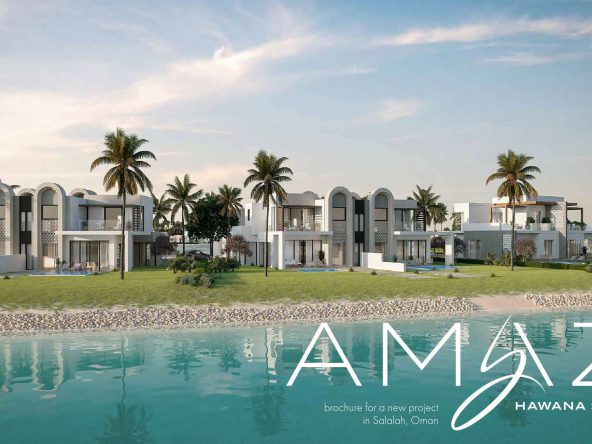
The Ministry of Heritage and Tourism announced 19 valid ITC licences on 4 July 2023, across Muscat, Dhofar, South Sharqiyah, South Batinah and Musandam, and later press reports describe more complexes under development. No official list of all names was found. Times of Oman and the Oman Observer have named Muscat Bay, Al Mouj Muscat, Barr Al Jissah, Jebel Sifah and Hawana Salalah among the licensed complexes, and later reports refer to Yiti, Muscat Hills and AIDA. Whether a particular project holds ITC status is a fact about its land and licence, so it is worth asking for the licence reference in writing. Our comparison of Oman’s integrated tourism complexes sets out how the main schemes differ.
Individual complexes can carry their own conditions. A ministerial decree for Jebel Sifah, reported by the Oman Observer on 28 September 2025 without a decree number, bars a developer from selling any unit before approval from both the Ministry of Housing and Urban Planning and the Ministry of Heritage and Tourism, and requires a dedicated escrow account, an independent auditor, insurance of the units and bylaws for owners.
Route 2: Special Economic Zones and Free Zones
Royal Decree 38/2025, the Special Economic Zones and Free Zones Law, was gazetted on 13 April 2025 and took effect on 13 or 14 April, depending on the source. Article 42 allows a licensed developer to sell project units to non-Omanis as freehold, in the manner set by the executive regulation. According to an explanatory note from the zones authority (OPAZ) quoted by the Oman Observer, the land is allocated to the developer by usufruct, while the buyer’s unit is freehold with no time limit.
OPAZ issued its executive regulation, Decision 81/2026, on 20 September 2026. Muscat Daily, Zawya, Gulf News and GCC Business News report that it covers licensing, off-plan sales, escrow, freehold ownership of units by non-Omanis in qualifying projects and residency provisions for investors and owners. None of the reports reviewed names the zones or projects that qualify, and the regulation text was not available. An Oman Observer report, the only source found for the figure, describes a threshold of 20% of project cost before off-plan marketing, which our article on the Oman off-plan marketing threshold sets out.
Until the text and the list of qualifying projects are published, a buyer in a zone project has to confirm the form of title for the specific unit. In one Duqm project that we list, for example, the units are offered as a 99-year lease and not as freehold, and the sources reviewed do not give a date from which zone freehold applies there.
Route 3: Areas Named by the Ministry in June 2026
On 28 and 29 June 2026, after an amendment to the residency rules attracted attention, the Ministry of Housing and Urban Planning issued a statement reported by Gulf News and Siasat. It says foreigners may own property only in designated developments and names three groups: licensed ITCs, future cities (Sultan Haitham City, Al Thuraya City and Al Jabal Al Aali) and integrated residential neighbourhoods such as Surooh. The statement does not say whether title in those areas is freehold or usufruct, nor which phases or units qualify.
Surooh and the related Hai programmes are state housing schemes in which private developers build and sell on Ministry land, mainly for citizens entitled to residential land. Our own listing review found that two Surooh projects, Husn Al Zain and Nismat Zain, are citizen stock, while Hay Al Wafa is offered to non-Omanis, so eligibility is decided project by project and not by the programme name. The Ministry’s statement lists Sultan Haitham City as a future city and not as a tourism complex, so the form of title is a question to put to the developer.
Route 4: Usufruct of Apartments in Multi-Storey Buildings
Ministerial Decision 357/2020, issued by the Ministry of Housing and Urban Planning in October 2020, allows resident expatriates to acquire usufruct of apartments in approved areas of Muscat. Trowers & Hamlins and the Oman Observer reported these conditions at the time:
- The buyer must be 23 or older and have lived in Oman for at least two years, with one unit per buyer or first-degree relative.
- The building must have at least four floors and be completed and no more than four years old, and units must have at least two rooms.
- Expatriates may hold no more than 40% of the units in a building, and no more than 20% for any one nationality.
- The unit may not be sold or let for four years, with an exemption possible.
- The initial term is up to 50 years, renewable to 99 according to Trowers, while the Oman Observer in September 2021 described it as a 99-year lease; the right passes to a legal heir and may be mortgaged.
The approved Muscat areas listed in the reports include Bausher, Al Khuwair, Ghala Heights, Wattayah, Misfah, Amerat, Hashiya, Mahajj, Madinat al Nahdah, South Mawelah in Seeb, Al Khoud and South Mabelah. Registration fees under the scheme are reported as 3% for the seller and 5% for the buyer by Trowers but as 3% for each by the Oman Observer. The Ministry’s June 2026 statement does not list this route, and a 2026 confirmation of the conditions was not found, so its current status should be confirmed with the Ministry.
Other Routes in the Sources
- Omani companies. A Curtis blog of October 2017 describes limits on company ownership of land: only limited liability companies wholly owned by Omanis or GCC nationals may own real estate, and joint-stock companies need at least 30% Omani shareholding, so a company with foreign shareholders is not a general route to freehold residential title outside ITCs. This was not re-verified for 2026.
- Foreign Capital Investment Law. Royal Decree 50/2019, in force from 1 January 2020, supports usufruct or lease of land for an approved investment project, and its 100% foreign equity provision refers to company shares, not land title.
- A 2022 decision for investor-residents. The Oman Observer and Times of Oman reported on 9 March 2022 that holders of first-class and second-class investor residency cards could own one property outside the ITCs in approved areas. The decision number was not found, and the residency tiers it relied on, OMR 500,000 and OMR 250,000, have since been replaced by a single OMR 200,000 route, so its current status is unverified.
Costs and Taxes
| Item | Position as of 11 October 2026 | Evidence |
|---|---|---|
| Sale registration fee | 3% of the asset value, reduced from 5% in November 2020; the official-type reports do not state who pays it, and commercial guides say the buyer | Oman Observer, 8 November 2020; Times of Oman, 2 November 2020 |
| VAT | 5% on the first supply of new residential property; resale of residential property and residential rent are exempt; real estate in special zones may be zero-rated under conditions | Deloitte and KPMG summaries of the Tax Authority’s real estate guide |
| Service fees in a tourism complex | Set by the developer under the project bylaws, with an independent auditor reviewing accounts; no amounts found | Jebel Sifah decree, September 2025 |
| Legal, notary and agency fees | No official or law-firm figure found | Commercial guides quote percentages without a source |
| Annual property tax | No levy found in the sources reviewed; not confirmed by the Tax Authority | No source reviewed describes one |
| Capital gains tax | None found today; from 1 January 2028 disposal proceeds become taxable income | Royal Decree 56/2025 |
Royal Decree 56/2025, the Personal Income Tax Law, takes effect on 1 January 2028. According to EY, income tax is 5% on income above OMR 42,000 a year, and rent from real estate and proceeds from the disposal of real estate are listed sources of income, with exemptions that include the sale of a primary residence and of a secondary residence. Residents are taxed on worldwide income and non-residents on income from Omani sources. The executive regulations were due by 30 June 2026 and no report of their issue was found, and advisers describe differently whether the OMR 42,000 line applies before or after deductions. Our guide to property tax in Oman and the guide to service charges cover the ongoing costs in more detail.
Residency Linked to Ownership
Two residency routes are linked to property, and neither changes where a foreigner may own.
- Golden Residency. Launched at the end of August 2025, it requires a qualifying investment of at least OMR 200,000, about USD 520,000, on one of seven routes. On the real estate route, press reports describe residential, commercial or tourism units in an ITC with a valid title deed, and a certified balance sheet where a company owns the unit. It is a renewable 10-year permit that extends to family members. The OMR 200,000 figure replaced earlier tiers of OMR 250,000 and OMR 500,000.
- Owner Visa. Royal Oman Police Decision 87/2026 was published in Official Gazette 1653 on 21 June 2026 and took effect the next day, according to Times of Oman and Lexis Middle East. A foreigner who buys construction-ready land or a unit whose registration is incomplete can obtain a sponsor-free visa on a certificate from the competent authority, valid from 6 months to 1 year and renewable, with stays of up to 3 months per visit, and owners of registered units can obtain a property owner residency. It covers a spouse and first-degree relatives, ends automatically if the property is transferred, and sets no minimum property value in any report reviewed.
The Ministry’s statement of June 2026 says the amendments concern residency only. Our comparison of the Golden Residency and the Owner Visa sets out the two routes side by side.
The Purchase Process
- Identify the regime. Establish whether the project is in a licensed ITC, a zone project, a named future city or neighbourhood, or ordinary mainland land, and ask for the licence or designation in writing.
- Check the developer’s licences. On the mainland, Royal Decree 79/2025 requires a developer licence, a project licence and a per-project advertising licence, and our guide to Royal Decree 79/2025 for off-plan buyers covers them.
- Reserve and sign. For an off-plan unit, Article 25 of the same law makes a pre-completion ownership contract void unless it is the Ministry-approved contract, and buyer payments go to a project escrow account.
- Register the sale. Off-plan sales are entered in the Preliminary Real Estate Register under Royal Decree 79/2025 and the Real Estate Register Law, Royal Decree 56/2026, which took effect on 18 May 2026; completed sales are registered at the Ministry of Housing and Urban Planning. Reports describe electronic registration of the sale contract through licensed brokerage offices and digital title deeds with a verification code.
- Apply for residency separately. The Golden Residency and the Owner Visa are separate applications to the competent authorities.
No official or law-firm timeline for the process was found, and the executive regulations under both laws were still pending on 11 October 2026.
Documents and Buying From Abroad
No official document list for a foreign buyer was found. Commercial guides mention a passport, proof of funds, the sale and purchase agreement and, for off-plan units, a developer certificate, but these items are market practice and not sourced to a rule. Real estate agents are designated businesses under the anti-money-laundering law, so a buyer should expect identity and source-of-funds checks.
Oman has been party to the Hague Apostille Convention since 30 January 2012, after accession on 12 May 2011, which is relevant to documents signed abroad. The formalities for a power of attorney to buy property, such as notarisation and Arabic translation, were not sourced, so they should be confirmed with the notary or lawyer handling the purchase.
Mortgages for Foreign Buyers
No Central Bank of Oman rule setting a separate loan-to-value ratio for non-residents was found, so terms are set by each bank. BankDhofar’s expatriate housing loan, described in August 2026, offers up to 70% of the property value for up to 20 years, from a rate of 4.15%, up to OMR 350,000, for resident and non-resident expatriates. Sohar International’s expatriate housing finance, on a page that carries no date, offers 70% to resident expatriates for up to 20 years and 50% to non-residents for up to 10 years, up to OMR 250,000. Both are described as applying to tourism-complex projects registered with the bank and approved for sale to non-Omanis. Our guide to mortgages in Oman for foreigners covers lenders and documents.
Inheritance and Resale
A 2020 Trowers & Hamlins note on wills says Omani courts generally honour a will made under an expatriate’s home law, with a certified Arabic translation and legalisation, and that without a will the court may apply home-country intestacy rules, with Shari’ah not usually applied to non-Muslims. For ITC property the same note says there is no automatic right of inheritance, even if a will specifies one, and that an application is needed, while other commentary says succession is covered by the ITC regulation. The two readings are not reconciled in any source, and the note is six years old, so a buyer with significant holdings is better served by advice specific to the complex. No inheritance tax was found. Our guide to inheritance for foreign property owners in Oman covers the subject at more length.
On resale, an ITC owner must notify the developer, ownership passes only on registration, and an undeveloped plot cannot be sold before completion. A residency permit based on a property ends if the property is transferred. Our guide to selling property in Oman covers the exit side.
How the Fees Compare With Other Markets
| Market | Purchase-side registration charge | Evidence |
|---|---|---|
| Oman | 3% of the asset value | Oman Observer and Times of Oman, November 2020 |
| Dubai | 2% from the buyer and 2% from the seller on the Land Department’s sale registration page, plus flat fees | Dubai Land Department |
| Turkey | Title deed fee of 2% for each party under the 2026 rules, with an annual property tax of about 0.1% to 0.6% | Our Turkey property tax calculator; the official land registry page was not reached |
| Saudi Arabia | Real estate transaction tax of 5%, plus a foreigners’ fee that the regulator’s spokesperson puts at 2% in designated zones and King & Spalding reads as up to 5% | Amlak report of 8 July 2026; King & Spalding |
The fees are not like-for-like. They differ in who pays, in what is charged separately and in what the rest of the tax system adds, so the table compares one line of each regime and not the total cost of buying.
Key Dates
| Date | Event |
|---|---|
| 2006 | Royal Decree 12/2006 sets up the ownership system for tourism complexes |
| 2018 | Royal Decree 29/2018 restricts non-Omani ownership in listed areas; Ministerial Decision 292/2020 follows |
| October 2020 | Ministerial Decision 357/2020 on usufruct of apartments for resident expatriates |
| November 2020 | Sale registration fee cut from 5% to 3% |
| April 2025 | Royal Decree 38/2025 on special economic zones and free zones |
| End of August 2025 | Golden Residency launched at OMR 200,000 |
| September 2025 | Royal Decree 79/2025 (Real Estate Regulation Law) issued; in force around March 2026 |
| 18 May 2026 | Royal Decree 56/2026 (Real Estate Register Law) in force |
| 21 to 22 June 2026 | Owner Visa decision published and in force |
| 28 to 29 June 2026 | Ministry of Housing statement that ownership stays limited to designated areas |
| 20 September 2026 | OPAZ Regulation 81/2026 issued |
| 1 January 2028 | Personal income tax law takes effect |
Statements in Older Guides That No Longer Hold
- “Foreigners can buy only in ITCs” is outdated: Royal Decree 38/2025 and the Ministry’s June 2026 statement add other designated areas.
- “The Ministry of Housing approves ITCs” is wrong: the Ministry of Heritage and Tourism licenses them, and the Ministry of Housing registers title.
- “There is no capital gains tax” holds today but not from 1 January 2028.
- “Any property above OMR 200,000 qualifies for the Golden Residency” is wrong: the real estate route covers ITC units with a valid title deed.
- “Land outside ITCs is restricted to Omanis” is too broad: GCC nationals and resident expatriates have limited routes, described above.
What Is Still Unconfirmed
- The text of OPAZ Regulation 81/2026, including which zones and projects offer freehold units and from what date.
- Whether the 2020 usufruct scheme for apartments is unchanged in 2026, and its fee split and term.
- The current status of the 2022 decision for investor-residents.
- An official, complete list of ITCs, and the status of individual projects.
- The payer of the 3% registration fee, notary and legal fees, municipal charges and the rent taxation that applies today.
- The Central Bank rule for non-resident borrowers, the power-of-attorney formalities and the Preliminary Register’s fee schedule.
- How succession works for ITC property.
Frequently Asked Questions
Can a foreigner own land in Oman?
Only in designated areas. In an ITC, non-Omanis may own built units and plots, with plot-development conditions; the Ministry’s June 2026 statement says ownership is not open across the Sultanate.
Is freehold available outside tourism complexes?
Royal Decree 38/2025 allows freehold units for non-Omanis in qualifying zone projects, and the Ministry has named future cities and integrated neighbourhoods. The form of title and the eligible projects were not fully published as of 11 October 2026.
Which ministry licenses tourism complexes?
The Ministry of Heritage and Tourism licenses them. The Ministry of Housing and Urban Planning registers title and, for some complexes, co-approves unit sales.
How much is the registration fee?
3% of the asset value, reduced from 5% in November 2020. The reports reviewed do not state who pays it.
Is there an annual property tax or a capital gains tax?
No annual levy and no capital gains tax were found in the sources reviewed. From 1 January 2028 the personal income tax law taxes rent and disposal proceeds above OMR 42,000 a year, with exemptions for primary and secondary residences.
Does buying property give residency?
Not automatically. The Golden Residency needs at least OMR 200,000 in qualifying ITC units with a valid title deed, and the Owner Visa is a separate sponsor-free permit with no minimum value.
Can a foreigner get a mortgage in Oman?
Some banks lend to expatriates, including non-residents, for projects they have registered, with loan-to-value ratios of up to 70% for residents and 50% for non-residents at one lender.
Can I buy off-plan from abroad?
Off-plan sales on the mainland require the Ministry-approved contract and a project escrow account, and sales are entered in the Preliminary Real Estate Register. The power-of-attorney formalities for remote purchases were not sourced.
Last verified: 11 October 2026. Sources: Gulf News on the Ministry of Housing statement, Siasat on the same statement, Times of Oman on the legal framework for tourism complexes, Oman Observer on Musandam complexes, Oman Observer on zone freehold, KPMG on Royal Decree 38/2025, Muscat Daily on the OPAZ regulation, Trowers & Hamlins on Ministerial Decision 357/2020, Oman Observer on Ministerial Decision 292/2020, Oman Observer on the registration fee, Deloitte on VAT for real estate, EY on the 2028 income tax, Times of Oman on the Owner Visa decision, Ministry of Commerce, Industry and Investment Promotion on the Golden Residency, Trowers & Hamlins on the register law, BankDhofar housing loans, Trowers & Hamlins on wills in Oman and Dubai Land Department.