



























Best areas to buy property in Muscat come down to one legal fact before anything else: foreign nationals can only own freehold property inside government-designated Integrated Tourism Complexes (ITCs). Outside those zones, foreign ownership is not permitted, no matter how attractive a neighborhood looks. For anyone researching property investment in Oman, understanding exactly which Muscat districts fall inside these freehold zones — and how they differ from each other in lifestyle, price, and rental potential — is the starting point for any serious search.
Best Areas to Buy Property in Muscat: Freehold Zones
The Wikipedia overview of Muscat provides useful geographic context for identifying the best areas to buy property in Muscat covered district-by-district below.
Why Freehold Zones Define the Muscat Market
Omans Sultani Decree on real estate ownership restricts foreign freehold ownership to ITC-designated developments, master-planned communities built to a specific government standard that typically include hotels, marinas, retail, and community infrastructure alongside residential units. This is different from Dubai, where entire districts are freehold, or Turkey, where foreigners can buy almost anywhere with limited exceptions. In Muscat, the practical effect is that the best areas to buy property are not simply the most prestigious postcodes — they are the specific, government-approved developments where foreign title deed ownership is legally possible at all.
Al Mouj Muscat (The Wave) — Best for Waterfront Living and Liquidity
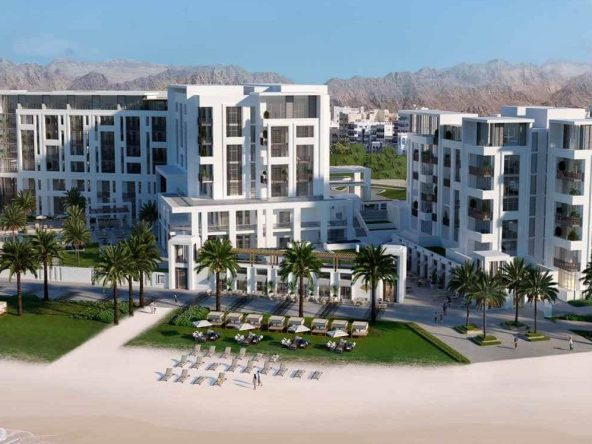
Al Mouj Muscat, still widely known by its original name The Wave, is Omans flagship ITC and the most established freehold community in the country. Built around a marina, golf course, and beachfront promenade, it offers the deepest resale and rental market of any Muscat freehold zone, meaning owners benefit from genuine liquidity rather than a thin pool of buyers. Property types range from marina-front apartments to villas in gated sub-communities, with prices reflecting the developments maturity and brand recognition. For investors prioritizing ease of resale and a well-established rental market over the lowest entry price, Al Mouj remains the default first choice.
Muscat Bay — Best for Luxury and Privacy
Muscat Bay occupies a dramatic natural amphitheater of cliffs wrapping a private cove near Sidab, just outside central Muscat. It positions itself firmly at the luxury end of the market, with villas and apartments built around a private beach, a Trump-branded golf course, and a marina, all within a gated, low-density setting. Muscat Bay suits buyers prioritizing privacy, dramatic scenery, and a smaller, more exclusive community over the larger scale and broader price range of Al Mouj. Rental demand here skews toward longer-term, higher-income tenants rather than short-term visitor turnover.
Jebel Sifah — Best for Value and a Marina Lifestyle
Jebel Sifah sits roughly 40 minutes south of central Muscat along the coast toward Sur, offering a marina-centered community at meaningfully lower price points than Al Mouj or Muscat Bay. It has developed steadily since its original launch, with a working marina, beach clubs, and a growing residential base. For investors prioritizing value and willing to accept a longer commute to central Muscat in exchange for lower entry prices and strong potential upside as the development matures further, Jebel Sifah is one of the more compelling options in the current market.
Yiti — Best for Long-Term Growth Potential
Yiti is one of the newer and more ambitious ITC developments near Muscat, a large-scale, still-developing master plan positioned along a stretch of coastline south of the capital. Because it remains earlier in its development cycle compared to Al Mouj or Muscat Bay, pricing reflects that earlier stage, and buyers are effectively betting on the projects long-term build-out and Omans broader tourism growth trajectory. This makes Yiti better suited to investors with a longer time horizon and higher risk tolerance than those seeking an established, income-producing property from day one.
Madinat Al Irfan — Best for Urban, Mixed-Use Living
Madinat Al Irfan represents a different model from the coastal resort-style ITCs: a large, centrally located mixed-use urban development positioned near Muscat International Airport and the Oman Convention and Exhibition Centre. Rather than a beach or marina lifestyle, it targets residents who want proximity to business districts, retail, and transit infrastructure. For investors interested in the rental demand generated by business travelers, airport proximity, and Muscats broader urban growth rather than a resort or holiday-home profile, Madinat Al Irfan offers a genuinely different investment thesis within the freehold market.
Comparing the Muscat Freehold Zones
| Area | Best For | Price Positioning | Distance from Central Muscat |
|---|---|---|---|
| Al Mouj Muscat | Liquidity, established rental market | Mid to high | Central |
| Muscat Bay | Luxury, privacy | High | ~20 minutes |
| Jebel Sifah | Value, marina lifestyle | Lower to mid | ~40 minutes |
| Yiti | Long-term growth | Lower, early-stage | ~30 minutes |
| Madinat Al Irfan | Urban, business-district demand | Mid | Near airport |
What Foreign Ownership Actually Includes
Purchasing freehold property in a Muscat ITC grants full ownership of the title deed, not a leasehold or usufruct arrangement, and this ownership is inheritable and can be sold or mortgaged like any other freehold asset. Foreign owners of qualifying property above a specified value are also eligible for Omans residency visa program tied to real estate investment, extending to the owners immediate family, which has become one of the more significant draws of the Muscat freehold market for international buyers relocating or diversifying their residency options.
Rental Demand and Yields Across Muscats Freehold Areas
Rental demand across these zones is driven by a mix of long-term expatriate residents working in Muscats oil, gas, logistics, and tourism sectors, alongside a smaller but growing short-term holiday rental market centered on Al Mouj and Muscat Bay in particular. Yields vary meaningfully by area and property type — established communities like Al Mouj tend to offer more predictable, moderate yields backed by consistent demand, while newer or more remote developments like Jebel Sifah and Yiti can offer higher percentage yields relative to their lower entry prices, at the cost of a thinner, less liquid rental market. Investors should weigh their own priorities between yield percentage and ease of finding tenants or buyers when comparing across these zones.
The Buying Process for Foreign Investors
Foreign buyers purchase Muscat freehold property through a process that includes signing a reservation agreement with the developer or seller, a formal sale and purchase agreement, and registration of the title deed with Omans Ministry of Housing and Urban Planning, the government body responsible for real estate registration and ITC oversight. Buyers should verify a specific propertys ITC and freehold status directly with the developer or through official channels before committing, since not every development marketed to foreigners necessarily carries confirmed freehold status for every unit type.
Financing and Costs to Budget For
- Registration fees, payable to the Ministry of Housing and Urban Planning as part of title deed transfer.
- Developer service charges, ongoing annual fees covering shared facilities, security, and community maintenance, which vary by development and property type.
- Real estate agent commission, typically a percentage of the purchase price for resale transactions.
- Mortgage financing, available to foreign buyers through Omani banks, though terms and loan-to-value ratios differ from those offered to Omani nationals.
Common Mistakes Foreign Buyers Make in Muscat
- Assuming any attractive Muscat neighborhood is freehold-eligible without confirming ITC status directly.
- Underweighting resale liquidity by focusing purely on entry price without considering how easily a property can later be sold or rented.
- Not budgeting for ongoing service charges, which can vary considerably between an established community like Al Mouj and a newer development still building out shared infrastructure.
- Skipping direct verification of freehold status with the Ministry of Housing and Urban Planning before signing a reservation agreement.
How Muscats Freehold Market Compares to the Rest of Oman
Muscat is not the only place in Oman where foreigners can buy freehold property, but it is the deepest and most liquid market by a clear margin. Coastal ITC developments further south, around Salalah in the Dhofar region, offer a different lifestyle proposition built around the annual Khareef monsoon season and a slower-paced tourism identity, while Muscats zones benefit from the capitals year-round business activity, international airport, and status as the seat of government and diplomatic missions. Investors weighing Muscat against these other Omani freehold markets should factor in this structural difference: Muscats demand base is broader and less seasonal, which generally translates into steadier rental occupancy across the year compared to markets built primarily around a single tourist season.
The Ministry of Housing and Urban Plannings Role
Omans Ministry of Housing and Urban Planning is the government authority responsible for approving ITC master plans, registering freehold title deeds, and maintaining the official property registry foreign buyers rely on to confirm legitimate ownership. Any serious purchase in a Muscat ITC should be verified against this official registry rather than relying solely on developer marketing material, since the ministrys registration is what actually converts a purchase agreement into legally protected, inheritable freehold title.
Timing the Muscat Market
Omans freehold market has matured considerably since the earliest ITC launches, and this maturity affects how different areas should be evaluated today compared to a decade ago. Al Mouj Muscat, now largely built out, offers investors a known quantity — established pricing history, a track record of resale transactions, and a mature rental market, but correspondingly less room for the kind of early-stage price appreciation that comes with buying into a developing project. Newer or still-developing areas like Yiti and parts of Jebel Sifah offer the opposite trade-off: more uncertainty about final build-out and community maturity, balanced against lower entry prices and greater potential upside if the area develops as planned. Investors should be honest with themselves about which side of that trade-off actually matches their own investment timeline and risk tolerance, rather than defaulting to whichever area is currently generating the most marketing attention.
Property Types Within Muscats Freehold Zones
Each Muscat ITC offers a range of property types, and the right choice depends on the investment strategy as much as the area itself. Marina-front and beachfront apartments in Al Mouj and Muscat Bay tend to command the highest per-square-meter prices but also the strongest rental and resale demand, given their direct water views and walkability to amenities. Villas, available across most of these developments, suit buyers targeting longer-term tenants or personal use, typically with lower rental turnover but a smaller pool of potential tenants compared to apartments. Townhouses, positioned between these two categories, have become increasingly popular in newer phases of developments like Jebel Sifah, offering more space than an apartment at a lower price point than a standalone villa. Understanding which property type dominates demand in a given area — and matching it to the target tenant profile — is as important as choosing the right ITC itself.
Working with a Local Real Estate Advisor
Given the specific legal framework governing foreign ownership, the variation in maturity between Muscats different ITC zones, and the practical realities of financing and service charges, most foreign investors benefit from working with a real estate advisor experienced specifically in Omans freehold market rather than navigating it purely through developer sales offices. An independent advisor can help verify a propertys freehold and ITC status against the Ministry of Housing and Urban Plannings registry, compare realistic rental and resale expectations across areas, and flag service charge or community-maturity considerations that developer marketing materials do not always emphasize.
Frequently Asked Questions
Can foreigners buy property anywhere in Muscat?
No — foreign freehold ownership in Oman is restricted to government-designated Integrated Tourism Complexes such as Al Mouj Muscat, Muscat Bay, Jebel Sifah, Yiti, and Madinat Al Irfan.
Which area offers the best value for a first-time buyer in Muscat?
Jebel Sifah generally offers the lowest entry prices among established freehold developments, though buyers should weigh the longer commute from central Muscat against the price advantage.
Does buying property in Muscat qualify for residency in Oman?
Foreign owners of qualifying property above a specified value can become eligible for Omans investment-linked residency visa, extending to immediate family members.
Which Muscat freehold area has the strongest rental market?
Al Mouj Muscat has the most established and liquid rental market among Muscats freehold zones, given its maturity and brand recognition.
Infrastructure and Connectivity Around Muscats Freehold Zones
Access and infrastructure differ meaningfully between Muscats ITC areas, and this affects both day-to-day livability and long-term rental appeal. Al Mouj Muscat benefits from proximity to Muscat International Airport and direct access to the Sultan Qaboos Highway, the main arterial road connecting the capitals districts, making it genuinely convenient for residents commuting to business districts or frequent international travelers. Muscat Bay and Jebel Sifah, positioned further along the coast, trade some of that central convenience for more dramatic natural settings and lower density, a trade-off that particularly suits residents prioritizing lifestyle over daily commute time. Madinat Al Irfans location near the airport and the Oman Convention and Exhibition Centre gives it a distinct connectivity advantage for anyone whose rental target market includes business travelers or conference attendees rather than long-term residential tenants. Investors should walk or drive each areas actual road access themselves rather than relying solely on map distances, since Muscats coastal geography means straight-line distance does not always reflect real driving time.
Currency, Financing, and Cross-Border Considerations
Omans currency, the Omani rial, is pegged to the US dollar, which gives foreign investors a degree of currency stability not available in markets with freely floating or historically volatile currencies. This peg matters for investors comparing Oman against other regional freehold markets, since it removes a layer of currency risk from the investment calculation. Foreign buyers financing a purchase through an Omani bank should expect a more involved documentation process than a cash purchase, including proof of income and, in many cases, a larger down payment than would be required of an Omani national, and should factor mortgage pre-approval timelines into their overall purchase timeline, particularly for off-plan units in newer developments like Yiti where payment is often staged against construction milestones.
Key Takeaways
- Foreign ownership in Muscat is legally limited to designated ITC freehold zones — always confirm this status before pursuing a specific property.
- Al Mouj Muscat offers the strongest liquidity and rental market; Muscat Bay targets luxury and privacy; Jebel Sifah and Yiti offer better value for longer-term or higher-risk investors.
- Madinat Al Irfan offers a genuinely different, urban investment profile tied to airport and business-district demand rather than a resort lifestyle.
- Qualifying property investment can open a pathway to Oman residency for the owner and immediate family.
Best Areas to Buy Property in Muscat: A Quick Decision Guide
If you’re weighing the best areas to buy property in Muscat and want a fast way to narrow the field, start with your priorities rather than the map. Investors chasing the safest, most liquid resale market should default to Al Mouj Muscat. Those buying a primary residence and prioritising privacy and scenery over convenience should look hardest at Muscat Bay. Buyers working with a tighter budget who are comfortable trading commute time for entry price should focus on Jebel Sifah, while those with a longer investment horizon and appetite for early-stage risk should evaluate Yiti on its long-term build-out potential rather than today’s pricing alone. Anyone targeting business travellers or conference-linked short lets should treat Madinat Al Irfan as the more specialised, but potentially higher-yield, option.
Whichever zone fits your priorities, the underlying rule stays the same across all of Muscat’s freehold market: verify ITC and title status directly through the Ministry of Housing and Urban Planning before signing anything, since this single check does more to protect a foreign buyer than any amount of comparing amenities or finishes between developments.
Utilities, Connectivity and Practical Living Costs
Beyond the purchase price and service charges, owners in Muscat’s freehold zones should budget for utilities billed separately by Oman’s national providers — electricity, water and internet — which are metered per unit rather than bundled into any community fee. Costs vary by property size and usage, but villas with private pools and gardens in developments like Muscat Bay typically run higher utility bills than a compact apartment in Al Mouj. It’s worth requesting a recent utility bill from the seller or developer during due diligence, since this gives a far more realistic picture of ongoing costs than marketing material alone.
Connectivity across these zones has improved significantly as Oman’s telecoms providers have expanded fibre coverage to newer developments — a genuinely practical consideration for investors targeting remote-working tenants or long-term residents who need reliable high-speed internet, not just scenic views.
Learn More From Oman’s Ministry of Housing and Urban Planning
For the official, authoritative list of designated freehold zones and current regulations governing foreign property ownership, buyers should consult Oman’s Ministry of Housing and Urban Planning directly, and cross-check any specific development against the Invest Oman platform, which lists approved investment zones tied to residency eligibility.
Community Amenities Worth Comparing
Beyond the headline marina-or-golf pitch, the day-to-day amenity mix differs meaningfully between Muscat’s freehold zones. Al Mouj offers the widest retail and dining strip of any Omani ITC, with a working marina walk that functions as a genuine social hub rather than just a scenic backdrop. Muscat Bay leans harder into wellness and privacy, with its beach club and golf course positioned for residents rather than day visitors. Jebel Sifah’s amenity base is still filling out as the development matures, which is precisely the trade-off buyers accept for its lower entry price. When comparing developments side by side, ask specifically what’s operational today versus what’s still on the master plan — amenity brochures for early-phase communities like Yiti often show the eventual vision rather than what exists on the ground right now.
Typical Rental Yields by Area
| Area | Indicative Gross Yield |
|---|---|
| Al Mouj Muscat | 5–6% |
| Muscat Bay | 4–5% |
| Jebel Sifah | 6–8% |
| Yiti | 7–9% (higher risk) |
| Madinat Al Irfan | 6–7% |
These figures are indicative ranges based on current market activity and vary by unit type, finish quality and specific building — always request comparable, current rental data for the exact unit you’re considering rather than relying on area-wide averages alone.
The Bottom Line
The best areas to buy property in Muscat are not a matter of general neighborhood reputation but a shortlist defined by Omans freehold ownership law: Al Mouj Muscat, Muscat Bay, Jebel Sifah, Yiti, and Madinat Al Irfan. Matching the right zone to an investors actual priorities — liquidity, luxury, value, growth potential, or urban rental demand — matters more than chasing the single most talked-about address. For a deeper look at the wider market context shaping these decisions, see our guide to buying property in Oman.
Choosing Between Muscat’s Top Areas: A Quick Decision Guide
With several strong freehold districts to choose from, the right choice ultimately depends on what an investor is optimizing for — yield, capital appreciation, or personal lifestyle use.
| Priority | Recommended Area |
|---|---|
| Highest rental yield | Ghubra / Azaiba |
| Strongest resale liquidity | Al Mouj |
| Family lifestyle, space | Muscat Hills |
| Corporate/diplomatic tenants | Qurum / Shatti Al Qurum |
Investors who are still deciding between areas should weigh their own priorities against this framework rather than defaulting to whichever district is most heavily marketed. A buyer purely chasing yield percentage should look toward the mid-market apartment districts, while a buyer planning to use the property personally for part of the year, or prioritizing the fastest possible resale, is generally better served by the more established, higher-liquidity freehold communities. Either way, working with an agency that has transaction experience across multiple Muscat districts — rather than one tied to a single development — tends to produce a more objective recommendation, since the guidance in our companion piece on Oman real estate market risks makes clear that liquidity varies meaningfully by district and should factor directly into the buying decision.