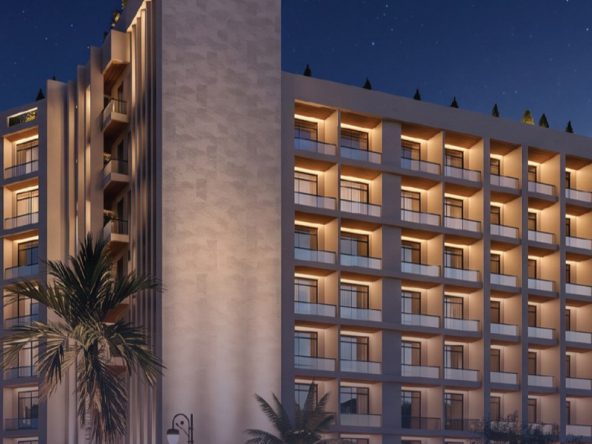




























What can you buy in Oman right now? More than you might expect. Oman has quietly become one of the most accessible property markets in the Gulf: foreigners can buy freehold in designated Integrated Tourism Complexes (ITCs), there is no annual property tax and no capital gains tax, and a purchase of OMR 200,000 (about $520,000) or more qualifies for a renewable 10-year residency. But what does your money actually buy at different budget levels? Using current listings in Muscat, Jebel Sifah, and Salalah, alongside demographic and construction data published by the National Centre for Statistics and Information, here is a realistic breakdown of what $200,000, $400,000, and $600,000 gets you in Oman in 2026.
| Budget | What it typically buys | Golden Residency (OMR 200,000) |
|---|---|---|
| $200,000 | Studios, chalets, entry-level villas | Below threshold on its own |
| $400,000 | Attached and semi-detached villas | Close to, sometimes over, threshold |
| $600,000+ | Detached villas and branded residences | Comfortably clears threshold |
What Can You Buy in Oman? Prices at a Glance
Most Oman listings are priced in Omani Rial (OMR), but international buyers usually think in dollars, so we have converted the figures below at roughly OMR 1 = $2.60. Prices vary by unit type, floor, and phase, and the market moves, so treat these as a current snapshot rather than a fixed price list. What stays constant is the structure: freehold ownership inside ITCs, no annual property tax, and a residency pathway that kicks in once you cross OMR 200,000.
$200,000 in Oman: Studios, Chalets, and Entry-Level Villas
Around $200,000, you are mainly looking at studios, chalets, and the smaller end of villa developments in Muscat’s coastal resort communities. This tier does not reach the OMR 200,000 residency threshold on its own, but it is a genuine entry point into a freehold, tax-free market.
- The Beachfront, Jebel Sifah – apartments and townhouses from $143,000; studios and simplex apartments in a 118-unit beachfront community with a golf course and marina nearby
- Amazi, Hawana Salalah – 1-bedroom beachfront chalets from about $205,000, in a beachfront integrated tourism complex with a 170-berth marina
$400,000 in Oman: Bigger Villas and Golf-Front Addresses
At $400,000, attached and semi-detached villas come into range, including branded golf-course addresses. You are getting close to the OMR 200,000 residency threshold but generally still need to add a little more, or choose the right unit, to cross it.
- AIDA, Muscat – attached villas from $353,000 (120 sqm, 3 bedrooms), the Trump International Golf Club development co-developed with Dar Global and Oman’s OMRAN Group
- Amazi, Hawana Salalah – 2-bedroom semi-detached villas from about $400,000 to $425,000
- Raya, Jebel Sifah – wellness and majlis villas with private pools from about $492,000 (OMR 189,200), just under the OMR 200,000 residency line
$600,000 and Up: Detached Villas and Golden Visa Territory
Once you are working with $600,000 or more, detached villas with private gardens and full-size plots come into reach, and OMR 200,000 (about $520,000) is comfortably cleared. This is the range where the 10-year Golden Residency becomes a straightforward part of the deal, not something you have to stretch to reach. Applications are submitted through Oman’s official Invest Oman platform.
- Amazi, Hawana Salalah – detached 2-bedroom villas from about $425,000 and detached 3-bedroom villas from about $575,000
- AIDA, Muscat – full villas from about $1,900,000 and mansions from about $8,100,000, for buyers who want the Trump-branded golf address rather than the entry-level attached villa
Which Budget Makes Sense for You?
If your main goal is qualifying for residency as cheaply as possible, aim for the OMR 200,000 line directly rather than buying below it and hoping to add a second property later. This is a decision worth making deliberately and early, before shortlisting specific units, so your search stays focused. If you are buying purely for rental income, the $200,000 to $400,000 tier in Jebel Sifah tends to offer the strongest yield-to-price ratio, since studios and small villas rent well to both long-term tenants and holidaymakers. If lifestyle and a flagship address matter most, the $600,000-plus tier at AIDA or Amazi’s larger villas is where the standout properties sit. In every case, UInvest Group can walk you through current availability, help you reserve remotely, and manage the property once it is rented out.
Property Types By Budget: What To Expect
Beyond the specific listings above, it helps to understand the general property-type pattern across Oman’s budget tiers. At the lower end, studios and one-bedroom apartments dominate, typically 45–70 square metres, well suited to rental investors and buyers prioritising a low entry point over space. The $300,000–$500,000 range is where two and three-bedroom townhouses and attached villas become available, generally 120–180 square metres, suited to small families or investors targeting the Golden Residency threshold. Above $600,000, detached villas with private gardens, larger plots, and branded-residence options open up, extending into multi-million-dollar mansion territory at the very top of the market for buyers prioritising a flagship address over value-for-money.
Which Areas Fit Which Budget?
Budget and location are closely linked in Oman’s freehold market. Buyers with $200,000 or less should focus on Jebel Sifah’s smaller units, Hawana Salalah’s entry-level chalets, or Sultan Haitham City, where freehold prices start lower still — though foreign eligibility should be confirmed unit by unit before you reserve. The $400,000 tier opens up a wider mix across Jebel Sifah, Hawana Salalah, and the more accessible collections at Al Mouj, such as Juman. At $600,000 and above, Al Mouj’s premium collections, Muscat Bay, Shatti Al Qurum’s branded residences, and AIDA’s larger villas and mansions all come into range, giving buyers at this level the widest choice of Oman’s flagship addresses.
Financing Considerations At Each Budget Level
How a purchase is financed often shifts meaningfully by budget tier. Buyers at the $200,000 level frequently purchase in cash or use a developer payment plan, since smaller loan amounts may not always justify the fixed costs of mortgage arrangement. In the $400,000–$600,000 range, mortgage financing through Oman-based banks, under lending rules set by the Central Bank of Oman, becomes more commonly used, particularly for buyers who prefer to preserve liquidity for other investments while still securing the Golden Residency-qualifying purchase. Above $600,000, buyers vary widely between all-cash purchases and financed transactions, with financing terms and loan-to-value ratios depending heavily on the specific bank, the buyer’s residency status, and whether the property is off-plan or ready.
Furnishing And Setup Costs To Budget For
The purchase price is rarely the full cost of getting a property rental-ready or move-in ready. Studios and apartments in the $200,000 tier typically need $8,000–$15,000 for a functional furnishing package if targeting rental tenants, more if targeting the short-term holiday market where presentation directly affects booking rates. Villas in the $400,000–$600,000 range generally require $20,000–$40,000 for a comparable full furnishing package given their larger floor area, while the premium villas and mansions above $600,000 can see furnishing budgets scale into six figures depending on finish level and whether the buyer is furnishing for personal use or a luxury short-term rental positioning. These figures are general guidance rather than fixed quotes and should be confirmed against the specific unit and finish level.
How Oman’s Budget Tiers Compare To Dubai And Cyprus
At the $200,000 entry level, Oman’s studios and chalets generally undercut comparable Dubai studio pricing, while sitting roughly in line with or slightly above entry-level Cyprus apartments, depending on the specific Cypriot region. At $400,000, Oman’s attached villas and townhouses offer more space per dollar than equivalent Dubai product, reflecting Oman’s earlier-stage market pricing. Above $600,000, Oman’s detached villas and branded residences at AIDA and Al Mouj compete directly with mid-tier Dubai villa communities, though Oman’s total tax burden — no annual property tax, no capital gains tax — gives it a durable cost advantage over a multi-year holding period regardless of budget tier.
Illustrative Buyer Scenarios By Budget
A rental-focused investor with $220,000 to deploy might choose a studio or one-bedroom unit at The Beachfront in Jebel Sifah, prioritising yield and liquidity over space, and budgeting an additional $10,000–$15,000 for furnishing to target the holiday-rental market. A family relocating to Oman with a $450,000 budget might instead choose an attached villa at AIDA or a two-bedroom villa at Amazi, clearing most or all of the Golden Residency threshold while securing enough space for day-to-day family living. An investor with $700,000 or more focused on a flagship lifestyle address might target a detached villa at Al Mouj or Muscat Bay, accepting a lower percentage rental yield in exchange for the strongest resale liquidity and brand recognition in the market.
Step-By-Step: Buying At Any Budget Level
Regardless of budget tier, the purchase process in Oman follows a consistent framework. Start by shortlisting properties matched to your budget and goals with a licensed broker, then verify the development’s ITC status and the developer’s registration with the Ministry of Housing and Urban Planning. Sign a reservation agreement and Sale and Purchase Agreement setting out price, payment schedule, and handover terms, complete payment through the agreed structure — staged for off-plan, on completion for resale — and register title at the relevant land registry. Buyers clearing the Golden Residency threshold can begin their residency application once title is registered, using the deed as supporting documentation. Higher-budget purchases sometimes involve additional steps, such as arranging mortgage financing or structuring a corporate purchase vehicle, but the core sequence remains the same across every price point.
Total Costs At Each Budget Level
Budgeting for an Oman purchase means accounting for more than the sticker price. At every tier, buyers should expect roughly 5–6% in additional closing costs — the 3% government transfer fee, agency commission, and legal and admin costs — on top of the purchase price. On a $200,000 property, this adds roughly $10,000–$12,000. On a $400,000 property, roughly $20,000–$24,000. On a $600,000 property, roughly $30,000–$36,000. New-build purchases may also carry 5% VAT on the developer’s first sale, which resale purchases avoid entirely — see our full breakdown of property tax in Oman for exact figures and worked examples across different price points.
| Budget tier | Additional closing costs | Typical VAT exposure |
|---|---|---|
| $200,000 | ~$10,000–$12,000 | 5% on new-build only |
| $400,000 | ~$20,000–$24,000 | 5% on new-build only |
| $600,000 | ~$30,000–$36,000 | 5% on new-build only |
Rental Potential By Budget Tier
Rental yield and budget tier are connected but not in a simple straight line. Entry-level studios and apartments in the $200,000 range, particularly in Jebel Sifah, often post the highest gross percentage yields, since achievable rents are high relative to the low purchase price — though service charges take a larger share of the rent on small units, so always compare net rather than gross figures. Mid-tier villas around $400,000 usually sit in the middle, balancing solid absolute rental income with reasonable liquidity. Premium properties above $600,000 generally yield less in percentage terms, trading percentage yield for stronger capital preservation, brand recognition, and resale liquidity. Investors purely optimising for percentage yield often gravitate toward the lower budget tiers, while those prioritising a stable, liquid, lower-risk asset tend toward the higher tiers despite the lower headline yield. See our full Oman rental yields guide for area-by-area detail.
Off-Plan Vs Ready Property Across Budget Tiers
Off-plan purchases are available across all three budget tiers covered in this guide, typically at a discount to comparable ready inventory, with staged payment plans that ease upfront cash requirements. This is particularly common in newer developments and can meaningfully lower the entry cost at the $200,000 and $400,000 tiers. Ready, delivered property removes construction and delivery-timeline risk entirely and can begin generating rental income immediately, which becomes more valuable as budget increases and buyers have more capital at stake. Buyers should weigh their own risk tolerance against the discount typically offered for off-plan purchases at their target budget level, rather than defaulting to one approach across every tier.
Common Mistakes When Budgeting For An Oman Purchase
- Forgetting closing costs. The 5–6% in additional fees on top of the purchase price catches first-time buyers off guard if not budgeted from the start.
- Assuming every property near the residency threshold qualifies. Ownership structure and ITC status should always be confirmed for the specific unit, not assumed from the community’s general reputation.
- Underestimating furnishing costs. A property bought at the top of a buyer’s budget can leave little room for furnishing, which matters most for rental-focused purchases.
- Comparing headline prices without checking VAT status. A new-build unit and a resale unit at similar headline prices can carry meaningfully different total costs once 5% VAT is factored in.
- Not confirming service charges before purchase. Recurring service charges vary significantly by community and should be checked against the specific unit, not a development-wide average.
Currency And Payment Notes For International Buyers
The Omani rial’s peg to the US dollar removes currency risk for USD-based buyers at every budget tier, meaning the amounts quoted throughout this guide should hold reasonably steady in dollar terms regardless of currency market movements elsewhere. International buyers typically transfer funds via standard international wire transfer, with escrow arrangements commonly used for off-plan purchases to protect staged payments through to handover. Escrow protections and staged payment structures are standard practice for off-plan purchases regardless of budget size, giving buyers a layer of protection through the construction period. Buyers should factor standard international transfer fees into their budget, particularly on larger transactions where even a small percentage fee represents a meaningful dollar amount.
Is It Cheaper To Buy Off-Plan Or Ready Property At The Same Budget?
Off-plan property is typically priced lower than comparable ready inventory at the same budget level, reflecting the construction and delivery-timeline risk the buyer accepts. Ready property costs more but removes that risk entirely and can generate rental income immediately, which many buyers view as worth the premium, particularly at higher budget tiers where capital preservation matters more. Buyers should always request an itemised cost quote for their specific transaction before committing, since fees can vary by bank, broker, and community.
Do I Need To Pay The Full Amount Upfront At Any Budget Level?
Not necessarily. Off-plan purchases across all three budget tiers commonly use staged payment plans tied to construction milestones, while resale and ready-property purchases typically settle in full on completion. Mortgage financing is also available at every budget tier through Oman-based banks for qualifying foreign buyers, reducing the upfront cash requirement further. This applies at every budget tier covered in this guide, from entry-level studios through to flagship villas, since financing terms and mortgage eligibility can shift with market conditions and individual bank policy over time.
How Does Budget Affect Access To The Golden Residency Programme?
Budget directly determines residency eligibility in Oman’s investment framework. Purchases below OMR 200,000 (roughly $520,000) do not qualify for the 10-year Golden Residency on their own, though they can still qualify for the newer, sponsor-free Owner Visa under ROP Decision 87/2026, which has no published minimum property value. Buyers specifically targeting the Golden Residency should structure their budget to clear OMR 200,000 with some margin, since fees and currency fluctuations can otherwise leave a purchase just short of the threshold. See our full comparison of Oman’s Golden Residency vs. the Owner Visa for exact eligibility rules at each budget level.
Are Prices In This Guide Still Accurate Throughout 2026?
Prices are a snapshot based on current listings and move as developments sell down inventory, launch new phases, or adjust pricing. Buyers should treat the figures in this guide as a realistic starting point for budgeting rather than a fixed price list, and confirm current availability and pricing directly with a broker before finalising a budget. Prices, availability, and payment plans across every budget tier covered here change regularly as developments sell down, so we recommend confirming current figures directly before finalising any purchase decision.
Can I Buy Multiple Properties Across Different Budget Tiers?
Yes, there is no restriction on foreign buyers owning multiple freehold properties across Oman’s ITCs, and some investors deliberately spread their budget across a lower-tier rental unit and a higher-tier residency-qualifying property to balance yield and residency goals. Each purchase follows the same registration process independently, so buyers should budget closing costs separately for each property rather than assuming shared savings across multiple purchases. Our team regularly helps clients structure exactly this kind of dual-property strategy, sequencing purchases to optimise both residency timing and overall portfolio yield.
Frequently Asked Questions
What is the minimum budget to buy property in Oman?
There is no legal minimum, but realistically the cheapest freehold units in resort developments such as The Beachfront in Jebel Sifah start from about $143,000.
Can I get Oman residency with a $200,000 property?
Not on its own. Oman’s Golden Residency requires a qualifying investment of OMR 200,000 (about $520,000), so a $200,000 property alone does not qualify. You would need to combine it with another qualifying investment route or purchase a higher-value property.
Is Oman cheaper than Dubai for property investment?
Generally yes at the entry level. Oman’s entry-level freehold units start around $143,000, below typical entry prices for comparable Dubai studios, and Oman’s residency threshold of about $520,000 is slightly lower than the roughly $545,000 required for the UAE’s 10-year Golden Visa. Oman also has no annual property tax, similar to Dubai.
Do Prices In Oman Negotiate Below Asking?
Some negotiation room exists, particularly on resale units and off-plan inventory later in a project’s sales cycle, though established developments with strong demand, like Al Mouj’s newest launches, tend to see less flexibility than newer or slower-moving projects. Working with a broker who tracks recent comparable sales is the most reliable way to gauge realistic negotiation room for a specific unit, a service we provide free of charge as part of our client onboarding process.
Should I Buy The Cheapest Unit That Clears The Golden Residency Threshold?
Not necessarily. While clearing OMR 200,000 is the minimum requirement, buyers should weigh rental yield, resale liquidity, and personal use potential alongside the residency threshold itself — the cheapest qualifying unit in a given community is not always the best overall investment once these factors are considered.
Can I Combine Two Smaller Properties To Reach The Residency Threshold?
This depends on the specific programme rules and should be confirmed directly with the Golden Residency administering authority or your broker, as qualifying-investment rules can be specific about whether combined smaller purchases satisfy the threshold in the same way as a single qualifying property.
Find the Right Oman Property for Your Budget
Whatever your budget, UInvest Group can walk you through current availability across Muscat, Jebel Sifah, and Salalah, confirm which properties qualify for Oman’s Golden Residency, and handle everything remotely from reservation to furnishing and rental management. Contact us for a free consultation, or message us on WhatsApp or Telegram to get started.