









The thing most UAE property pages get wrong
“Buying property in the UAE” is not one decision. The United Arab Emirates is a federation of seven emirates, and property ownership law is set by each emirate individually, not federally. Tax, residency visas, the currency and inheritance law are federal and identical everywhere. What a foreigner is allowed to own is not — and it varies from full freehold title in Dubai to a 100-year usufruct in Sharjah.
Get that distinction right and the rest of the research becomes straightforward. Get it wrong and you will read a Dubai article, assume it describes Sharjah, and be surprised at the notary.
One more thing worth saying at the top, because it shapes everything below. All 69 UAE projects UInvest Group currently represents are in Dubai. That is not an accident and we explain why further down — but if you want the Dubai detail itself, prices, areas, yields and costs, that lives on our dedicated buy property in Dubai page. This page is about the country: the rules, the tax, the visa, the will you need to write, and how the UAE compares with the other markets we work in.
Federal or emirate? Know which rule you are reading
| Set federally, identical in all seven emirates | Set by each emirate separately |
|---|---|
| Personal income tax (none) | Whether foreigners may own freehold at all |
| Corporate tax (9% above the threshold) | Which zones or areas are open to them |
| VAT (5%) | Whether ownership is freehold, leasehold or usufruct |
| Golden Visa and residency rules | Property transfer and registration fees |
| The dirham and its dollar peg | The land department you register with |
| Inheritance framework for non-Muslims | Escrow and off-plan regulation |
The practical upshot: the tax and visa case for the UAE is the same wherever you buy. The ownership case is not, and that is what decides where you should actually be looking.
Where a foreigner can actually own, emirate by emirate
This is the table that should exist on every UAE property page and almost never does.
| Emirate | What a non-GCC foreigner can hold | Where |
|---|---|---|
| Dubai | Full freehold, title in your own name | Extensive designated freehold zones across most of the city |
| Abu Dhabi | Freehold since Law 13/2019 (before that, 99-year leasehold only) | Designated investment zones — Saadiyat, Yas, Al Reem, Al Maryah, Al Raha Beach, Masdar City, Al Reef, Al Ghadeer, Al Shamkha, Hudayriyat |
| Sharjah | No freehold. Usufruct rights up to 100 years | Only in areas designated by the Government of Sharjah, registered with the Sharjah Real Estate Registration Department |
| Ras Al Khaimah | Freehold in selected areas, plus leasehold | Designated developments |
| Ajman | Freehold in selected areas (opened to expatriates in 2004) | Designated developments |
| Umm Al Quwain | Freehold in selected areas, plus leasehold | Designated developments |
| Fujairah | Selective freehold areas alongside leasehold and usufruct | Designated developments |
Two lines in that table deserve emphasis.
Abu Dhabi changed in 2019, and a lot of older advice has not caught up. Law No. 13 of 2019 amended the 2005 real estate law and, from 16 April 2019, allowed foreign individuals and foreign-owned companies to hold freehold title inside the emirate’s investment zones. Before that the ceiling was a 99-year leasehold. If you are reading a guide that still says foreigners cannot own freehold in Abu Dhabi, it predates the reform.
Sharjah is genuinely different, and it is the one people misread most. Non-GCC foreigners do not take freehold title in Sharjah. They take usufruct — a registered right to use the property, for a term of up to 100 years, in areas the government has specifically designated, with the contract registered at the emirate’s registration department. It is a real, transferable, long-dated right. It is not ownership of the land, and it should not be priced as if it were.
The official federal summary is published at u.ae — expatriates buying property in the UAE. Dubai’s registry is the Dubai Land Department; Abu Dhabi’s is the Department of Municipalities and Transport. Rules do get amended — confirm the current position for the specific plot before you commit.
Why every project we represent is in Dubai
We would rather explain this than let you assume it is the whole market.
Dubai has the deepest pool of foreigner-eligible freehold stock in the country, by a wide margin; the longest transaction history to price against; the most established off-plan escrow regime; and by far the most liquid resale market. For an international buyer who wants to be able to sell again without waiting for the one buyer who wants that exact building, those four things matter more than anything else on the list.
That is a judgement about liquidity, not a claim that the other emirates are bad. Abu Dhabi’s investment zones in particular are a serious proposition, and if that is what you want, tell us — we will say honestly whether we can help or whether you are better served elsewhere. What we will not do is list something we cannot support properly.
| Our UAE portfolio | |
|---|---|
| Projects | 69, all in Dubai |
| Entry price | $110,000 |
| Top of range | $2,423,000 |
| Priced on application | 17 of 69 |
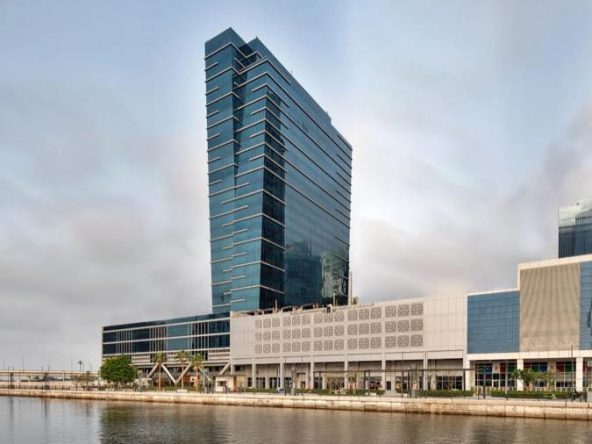
| Commercial stock | 2 Grade A office buildings, Business Bay |
Full price ladder, area-by-area net yields and purchase costs are on the Dubai page. Background reading: can foreigners buy apartments in Dubai, freehold vs leasehold and the rules for buying.
The federal tax position
This part is genuinely simple, which is why it is the UAE’s strongest selling point — and why it is worth stating precisely rather than in slogans.
| Tax | Position for an individual property owner |
|---|---|
| Personal income tax | None — including on rental income |
| Annual property tax | None |
| Capital gains tax on resale | None |
| Inheritance tax | None |
| VAT | 5%; residential resale is generally outside its scope |
| Corporate tax | 9% on profits above the threshold — applies if you hold through a company |
| Transfer fee | Emirate-level. Dubai charges 4% to the Land Department; other emirates differ — confirm locally |
Two cautions. First, “no tax in the UAE” is true of you and untrue of your company. Corporate tax at 9% has applied since 2023 to business profits above the threshold, and holding property through a corporate vehicle can bring you inside it. If you are considering a company structure, take advice before you buy, not after. The Federal Tax Authority publishes the rules at tax.gov.ae.
Second, the UAE not taxing you does not mean nobody does. Your country of tax residence may tax UAE rental income or gains regardless of where the property sits. That is a question for your own adviser, and it is the single most common gap we see in buyer planning. More in why there are no taxes in Dubai and property tax in Dubai.
Residency: the Golden Visa is federal
The property-linked Golden Visa is a UAE-wide programme, not a Dubai one. A qualifying investment of AED 2,000,000 (about $544,700) supports a renewable ten-year residency covering spouse and children, with no local sponsor.
| Position | |
|---|---|
| Threshold | AED 2,000,000 (~$544,700) |
| Mortgaged property | Counts at full certified value, with a bank NOC |
| Off-plan | Counts, on certified value |
| Combining properties | Up to three |
| Minimum stay in the UAE | None — it does not lapse through time abroad |
| Cheaper tier | AED 750,000 (~$204,200), 2 years — lapses after 6 months outside the UAE |
| Leads to citizenship? | No. There is no citizenship by investment in the UAE. |
The removal of the old requirement to hold AED 1,000,000 of your own equity matters more than the headline number: a leveraged buyer, or one assembling two or three smaller units, now qualifies on certified value rather than cash deployed. Detail in what is the Golden Visa, investor updates, the relaxed ten-year rules and immigration to Dubai. Official position: u.ae.
If a passport is the objective rather than residency, the UAE cannot deliver it and we will tell you so. Türkiye is the market in our range that does offer citizenship by investment — with a currency risk the UAE does not carry.
Inheritance: the part almost nobody plans for
This is the most consequential thing on this page that will not appear in a developer’s brochure, and it is federal, so it applies wherever in the UAE you buy.
Federal Decree-Law No. 41 of 2022 on Civil Personal Status took effect on 1 February 2023 across all seven emirates. It applies to non-Muslim residents unless they elect for the law of their home country to apply. Where there is no registered will and no proof of home-country law, the Act supplies its own statutory default distribution rather than defaulting to Sharia succession — a significant change from the position most older articles describe.
“Statutory default” is still not the same as “what you wanted”. For non-Muslim owners the practical route is a registered will. The DIFC Wills Service Centre registers English-language wills drawn on common-law principles, which can cover UAE assets and, in its full form, worldwide assets and guardianship of minor children.
Our blunt advice: if you own UAE property and have not registered a will, that is the highest-value hour of admin available to you. It costs a fraction of the property’s transfer fee and it decides what happens to an asset that will very likely outlive the purchase decision. More in inheritance for foreign property owners.
Currency, and why it removes an argument
The dirham is pegged to the US dollar at 3.6725, and the UAE does not restrict the movement of capital or the repatriation of rental income and sale proceeds. For a dollar-denominated buyer, exchange risk on a UAE purchase is close to zero.
This matters most in comparison. Currency is the dominant variable when weighing Türkiye, where the lira fell roughly 17% against the dollar in the twelve months to August 2026. It is a non-issue between the UAE and Oman, since both are dollar-pegged — which is why comparisons between those two should start somewhere else entirely, as we set out in Oman vs Dubai and Dubai vs Türkiye.
The UAE against the other markets we cover
| UAE | Oman | Türkiye | |
|---|---|---|---|
| Citizenship by investment | No | No | Yes |
| Foreign freehold | Designated zones, emirate by emirate | Integrated Tourism Complexes only | Broadly available |
| Income tax on rent | None | None | Applies |
| Currency | Pegged to USD | Pegged to USD | Floating, and it has fallen |
| Residency threshold | AED 2M (~$544,700) | OMR 200k (~$520,160), or no minimum on the Owner Visa | Tied to the citizenship route |
| Our projects | 69 | 43 | 11 |
| Entry price | $110,000 | $76,700 | Varies by city |
| Market depth | Deepest of the three | Thin resale market | Large but currency-exposed |
Read that as three genuinely different products rather than a ranking. The UAE is the liquid, tax-free, dollar-pegged option with no path to a passport. Oman is cheaper and quieter with the same tax and currency profile and a much thinner exit. Türkiye is the only one that ends in a passport, and the only one where the currency can move against you. We also cover Northern Cyprus, Southern Cyprus and Georgia.
What the market is doing right now
Dubai is the UAE market with published data, and it is worth looking at squarely. In the first half of 2026 Dubai recorded roughly 79,000 residential sales against about 92,000 in the same period of 2025, while price per square foot rose around 12.5% year on year to roughly AED 1,770.
Prices rising on falling volume is a combination to watch rather than to celebrate or to panic about. It does not signal an imminent turn. It does mean the market is no longer in the phase where everything sells, and it makes the specifics — which building, which service charge, which developer — matter more than they did two years ago.
The structural demand case remains strong: Dubai’s population passed 4 million in 2025 and the emirate’s 2040 plan targets around 5.8 million residents. Our detailed reading is in the market investment guide, will prices rise and is it still a wise investment.
Buying from abroad, end to end
Most of our UAE buyers complete without being in the country, which surprises people who expect a Gulf property purchase to be bureaucratic. It is not — but there are a few steps where being organised early saves weeks.
| Stage | What actually happens | Do you need to be there? |
|---|---|---|
| 1. Shortlist | Budget, emirate, ownership type and goal — yield, residency or use — agreed on a call | No |
| 2. Reservation | Unit held with a booking form and deposit; the developer issues the contract | No |
| 3. Contract | Sale and purchase agreement reviewed — escrow account, payment schedule, completion date, penalties | No |
| 4. Payment | Instalments to the project escrow account, released against verified construction progress | No |
| 5. Registration | Title registered with the emirate’s land department, in your name | Usually not — a power of attorney covers it |
| 6. Golden Visa | Valuation, application, medical and biometrics | Yes — biometrics require one short visit |
| 7. Handover | Snagging, utilities connection, furnishing, letting | No, if you appoint a manager |
The honest friction points are stages three and six. The contract is where a bad purchase becomes irreversible — the escrow account name, the completion date and what happens if the developer misses it are the three clauses worth reading twice, and they are the three most often skimmed. And the residency application will eventually require you in person for biometrics and a medical, however remote the rest of the process has been. Anyone promising a Golden Visa with no visit at all is misdescribing it.
A power of attorney, properly drafted and legalised in your home country, covers registration and most of the administration around it. Get it prepared early rather than at the point it blocks a transfer — legalisation timelines vary by country and are the most common cause of a delayed completion we see.
One practical note on banking: a UAE bank account is not required to buy, but it makes paying instalments, service charges and utilities materially easier, and residency makes opening one easier in turn. If you intend to hold the property long term, treat the account as part of the plan rather than an afterthought.
The risks, stated plainly
- No citizenship, at any price. Renewable residency only. Anyone offering an Emirati passport for investment is describing something that does not exist.
- Ownership rights differ by emirate, and a usufruct is not freehold. Price it for what it is.
- Corporate tax can catch structured purchases at 9% even though you personally pay nothing.
- Your home country may still tax you on UAE income and gains.
- Without a registered will, a statutory default decides who inherits your property.
- Dubai is cyclical and volume is currently cooling while prices rise. The dollar peg protects your currency, not your valuation.
- Service charges vary enormously by building and are the main thing that turns a good gross yield into an ordinary net one.
Seven checks before you buy anywhere in the UAE
- Confirm which emirate’s law applies and whether the specific plot is freehold, leasehold or usufruct.
- Confirm the zone is designated for foreign ownership — not just that the emirate permits it somewhere.
- Get the transfer fee for that emirate in writing. Dubai’s 4% is not universal.
- Get the building’s service charge in AED per square foot per year, for that building, in writing.
- Check the escrow account named in the contract on any off-plan purchase, and verify it with the relevant land department.
- Register a will — or formally elect your home-country law — before you need it.
- Take tax advice in your country of residence, not only in the UAE.
Frequently asked questions
Can foreigners buy property anywhere in the UAE?
No. Each emirate decides. Dubai and Abu Dhabi allow full freehold to foreigners in designated zones; Sharjah offers usufruct of up to 100 years rather than freehold; Ras Al Khaimah, Ajman, Umm Al Quwain and Fujairah have selective freehold areas alongside leasehold and usufruct.
Is buying in Abu Dhabi different from Dubai?
The tax and visa position is identical because both are federal. Ownership differs: Abu Dhabi permits foreign freehold only inside designated investment zones, a right introduced by Law 13/2019 — before that foreigners were limited to a 99-year leasehold.
Can I own freehold in Sharjah?
Not as a non-GCC national. Sharjah grants usufruct rights for up to 100 years in areas the government designates, registered with the emirate’s real estate registration department. It is a long-dated, registrable right — but it is not freehold ownership of the land.
Does buying property give me UAE citizenship?
No. The UAE has no citizenship-by-investment programme. Property can support a renewable ten-year Golden Visa from AED 2,000,000, which never converts to a passport.
Do I pay tax on UAE rental income?
Not in the UAE, as an individual. There is no personal income tax, no annual property tax and no capital gains tax. A 9% corporate tax applies to company profits above the threshold, and your own country of tax residence may tax the income regardless.
What happens to my UAE property when I die?
Federal Decree-Law No. 41 of 2022 has applied since February 2023 and gives non-Muslim residents a statutory default distribution unless they registered a will or can show their home-country law applies. Registering a will, for example through the DIFC Wills Service Centre, is how you take control of the outcome.
Why are all your UAE listings in Dubai?
Because Dubai has the deepest foreigner-eligible freehold market, the longest price history, the most established off-plan escrow regime and by far the easiest resale. We would rather represent one emirate properly than list stock we cannot support.
Is the UAE cheaper than Oman?
No — Oman is cheaper at entry. Our cheapest Omani project starts at $76,700 against $110,000 in the UAE. The UAE gives you far more choice and much better liquidity for the difference. The comparison is worked through in Oman vs Dubai.
Related searches on this site
Dubai in depth: buy property in Dubai, best areas to invest, how much an apartment costs, off-plan guide, mortgages for foreigners. Other markets: Oman, Türkiye, Northern Cyprus, Southern Cyprus, Georgia.
The verdict
The UAE is the most straightforward major property jurisdiction in the region on everything federal — no personal income tax, no property tax, no capital gains tax, a dollar-pegged currency, free movement of capital and a well-defined residency programme that does not require you to live there. Those advantages are real, they are the same in all seven emirates, and they are why the market attracts the buyers it does.
Where it demands care is everything the federation does not decide. Ownership rights are emirate law, they differ materially, and the difference between freehold in Dubai and a 100-year usufruct in Sharjah is not a technicality. Add a registered will and proper tax advice at home, and the UAE becomes one of the cleanest cross-border property purchases available anywhere.
UInvest Group represents 69 projects in Dubai and works across Oman, Türkiye, Cyprus and Georgia. We will tell you which emirate’s rules apply to the unit in front of you, what it actually costs to acquire and run, and — where the honest answer is another country — we will tell you that too.
Request a free UAE property and residency consultation
Further reading: u.ae on expatriates buying property is the official federal summary; the Dubai Land Department and Abu Dhabi’s Department of Municipalities and Transport are the two main registries; the Federal Tax Authority publishes the corporate tax and VAT rules; the DIFC Wills Service Centre handles non-Muslim will registration.
