






Dubai recorded AED 286.43 billion ($77.99 billion) in property sales across 79,229 transactions in the first half of 2026, according to Dubai Land Department (DLD) data reported by Khaleej Times on 14 July 2026, after the DLD reported that total real estate transactions in Q1 2026 reached AED 252 billion ($68.62 billion), up 31% year-on-year. Later data are cooler: Savills counted about 34,500 residential sales in Q3 2026, down 38% year-on-year. For anyone weighing whether Dubai still makes sense as a place to put capital, the market is large, active and light on annual taxes for individuals, but that doesn’t mean every building, every developer, and every price point deserves your money equally. This guide walks through where the market stands in 2026 according to named, dated sources, which areas investors look at, how foreigners buy, what it costs in tax and fees, and how Dubai compares with other freehold markets we work in, including Oman. Figures are as of 27 October 2026, and AED amounts are shown with US dollars in brackets at the fixed rate of 3.6725 dirhams per dollar.
Dubai Real Estate Market Overview 2026
The DLD reported on 9 April 2026 that Q1 2026 brought 60,303 real estate transactions (up 6% on Q1 2025) with a total value of AED 252 billion ($68.62 billion, up 31%). Knight Frank’s Q1 2026 residential review counted 45,158 residential sales worth AED 137.3 billion ($37.39 billion), and found that off-plan sales made up 72% of transactions: 32,607 off-plan sales against 12,551 ready-property sales. The providers count different things (all transactions, sales only, or residential only), so their totals should not be compared directly. For the first half, the DLD figures reported by Khaleej Times were AED 286.43 billion in sales across 79,229 transactions. The Savills Q3 2026 report then showed about 34,500 residential transactions worth AED 70.8 billion ($19.28 billion), down 14% on the previous quarter, and linked the slowdown mainly to fewer off-plan launches: about 5,000 units in Q3 against about 36,400 in Q2. Ready-property sales value rose over the same period, from AED 21.3 billion to AED 25.1 billion.
Investment activity, as opposed to end-user purchasing, is also reported by the DLD: 57,744 investment transactions in Q1 2026, up 7%, with a total investment value of AED 173 billion ($47.11 billion), up 22%. The DLD also reported that foreign investment accounted for AED 148.35 billion of that value, up 26%.
Why Investors Keep Choosing Dubai
Strip away the marketing and the reasons investors cite for Dubai rest on a handful of structural features of the legal and tax system, which are worth checking against the primary sources:
- No personal income tax and no annual property tax for owners. The UAE government portal (u.ae) states that the UAE does not levy income tax on individuals, and Dubai charges owners no annual tax for holding a home. Under the Federal Tax Authority’s guide on real estate investment by natural persons (October 2024), an individual’s income from renting or selling property is outside corporate tax unless it is earned through a licensed activity such as holiday-home letting. Tax residents of other countries may still owe tax at home on Dubai income. We break down what you do and don’t pay in our guide to property tax in Dubai and our explainer on why Dubai has no property taxes.
- Freehold ownership for foreign nationals in designated areas. Dubai Law No. 7 of 2006 (Article 4) allows non-UAE nationals to hold freehold ownership in areas determined by the Ruler, and areas such as Downtown, Marina, Palm Jumeirah, Business Bay and JVC are among those investors commonly look at. Always confirm that the specific project sits in a designated area before buying.
- Residency through property via the Golden Visa program, which we cover in full in our Dubai Golden Visa guide.
- A currency pegged to the US dollar. The dirham trades at 3.6725 per US dollar on the Central Bank of the UAE’s published rate list, so dirham prices are stable against the dollar for USD-based buyers; buyers whose own currency moves against the dollar remain exposed to that movement.
- Transaction depth. With 60,303 real estate transactions recorded by the DLD in a single quarter (Q1 2026), Dubai’s market is active, although the number of past transactions does not guarantee that a particular unit will sell at a given price or time.
Popular Areas for Investors in Dubai in 2026
Dubai isn’t one market — it’s a collection of micro-markets moving at different speeds, and treating “Dubai real estate” as a single decision is a common mistake first-time investors make. We go area-by-area in our dedicated guides to the best areas to invest in Dubai and the best areas to buy an apartment. Price levels below are Knight Frank’s Q1 2026 figures per square foot:
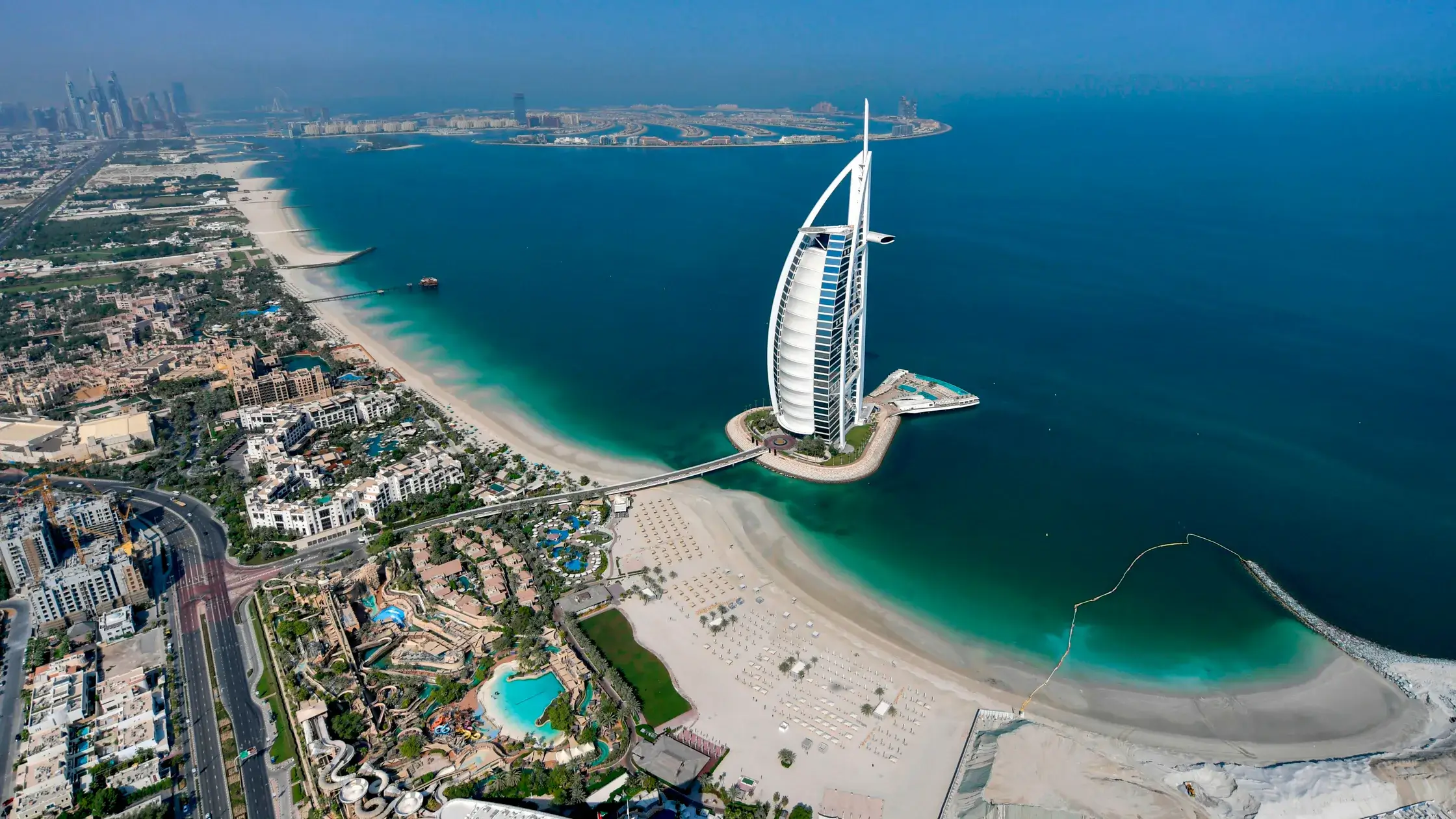
- Downtown Dubai — the area around Burj Khalifa and Dubai Mall; apartment values reached AED 3,010 ($820) per sq ft, up 4% year-on-year. Compare it directly against the marina lifestyle in our Downtown vs Marina Dubai breakdown.
- Dubai Marina — a waterfront community popular with holiday-let investors; short-term letting needs a holiday-home permit (see the rental section below).
- Business Bay — a neighbouring district to Downtown with a lower figure: AED 2,613 ($712) per sq ft, up 11% year-on-year.
- Jumeirah Village Circle (JVC) — a large mid-market apartment community. See our full case for the area in why JVC is ideal for apartment buyers.
- Palm Jumeirah — a waterfront prime market where Knight Frank recorded AED 4,525 ($1,232) per sq ft, up 19% year-on-year; our Palm Jumeirah guide covers what drives pricing there.
- Dubai South and the Dubai Green Spine corridor — newer growth areas around Al Maktoum International Airport and a planned sustainable corridor reshaping how the city plans new districts. We cover the investment case in Dubai Green Spine: What the 64km Sustainable Corridor Means for Property Investors.
- Villa communities — for buyers prioritizing space and long-term family living over rental yield, our best villa communities in Dubai and best affordable villa community guides compare the main options.
Published figures differ sharply by district. In Property Monitor’s August 2026 data, as printed by Engel & Völkers, gross rental yields among apartment communities ranged from 4.58% on Palm Jumeirah to 8.93% in International City, and the districts with the lower yields are generally those with the higher prices per square foot. Yields are gross, before service charges and other costs, and past figures do not show what a given unit will earn.
Dubai Property Prices in 2026
Knight Frank’s Q1 2026 review put citywide residential prices at AED 1,933 ($526) per square foot, up 1.8% on the quarter and 10.5% year-on-year. It reported apartments at AED 1,872 ($510) per sq ft and villas at AED 2,369 ($645), with villa values up 13.5% year-on-year. Savills’ Q3 2026 report, which uses a different method, put average apartment prices at AED 1,817 ($495) per sq ft, down 4.8% on the quarter (down 1.7% like-for-like), and villa and townhouse prices at AED 1,523 ($415), down 3.3% (unchanged like-for-like). Averages hide large variation by district — Knight Frank’s submarket figures run from AED 2,613 per sq ft in Business Bay to AED 4,525 on Palm Jumeirah — so we maintain a full area-by-area price breakdown in Dubai Apartment Price Per Square Meter: Complete Area-by-Area Guide, which is the resource to check before you set a budget rather than anchoring on a citywide average.
Off-Plan vs Ready Property
With off-plan accounting for 72% of Q1 2026 residential transactions according to Knight Frank, understanding how off-plan buying actually works — payment plans, developer escrow protections, handover risk, and how to vet a developer’s track record — matters. We cover the full process in Off-Plan Property in Dubai: The Complete Buyer’s Guide. The short version: the payment schedule is set in the developer’s sales contract, and under Dubai Law No. 8 of 2007 off-plan buyers’ payments go into a project escrow account with an escrow agent accredited by the DLD. Off-plan carries handover-timeline and finishing-quality risk that ready property doesn’t. Ready property can be inspected and, once title is registered, let from day one — which is why some buyers split budget across both.
How Foreigners Buy Property in Dubai
Dubai allows foreign ownership in designated areas under Law No. 7 of 2006: no local partner is needed, and the DLD’s sale registration page accepts a valid passport from a non-resident foreigner. Article 4 of the law provides for freehold, and also for usufruct or leasehold of up to 99 years, so check which right your title gives. We’ve written detailed guides on the specifics: can foreigners buy apartments in Dubai, the practical rules for buying property in Dubai, and how to buy property in Dubai from the USA. For a resale, the broker creates the sale contract (Contract F, often called Form F) in the DLD system, the developer’s no-objection e-certificate (e-NOC) is requested through the Dubai REST app for a freehold area, and buyer and seller (or their representatives holding an official power of attorney) register the sale at a DLD trustee office.
Financing and Mortgages
UAE banks lend to foreign buyers within the Central Bank of the UAE’s mortgage regulations. As reported by Khaleej Times on 30 August 2026, the maximum loan-to-value (LTV) limits for expatriates are:
| Purchase | Maximum LTV |
|---|---|
| First home, value up to AED 5,000,000 ($1,361,470) | 80% |
| First home, value above AED 5,000,000 ($1,361,470) | 70% |
| Second or subsequent home, or investment property | 60% |
| Off-plan property (any buyer) | 50% |
These are ceilings, and the down payment must come from the borrower’s own resources rather than other borrowing such as personal loans or credit cards. Non-resident buyers are commonly offered lower ratios by individual banks, and rates, required documentation and minimum property values vary by bank, so ask the bank for its ratio before budgeting. If a full cash purchase isn’t the plan, it’s worth reading our guide on how to buy property in Dubai without a large down payment, which covers developer payment plans as an alternative or supplement to bank financing.
Rental Yields and Return on Investment
Published gross rental yields differ by source and area. Property Monitor’s August 2026 data, as printed by Engel & Völkers, put the citywide average at 6.34% gross, with apartments at 6.66%, townhouses at 5.06% and villas at 4.45%. A gross yield is annual rent divided by price, before service charges, vacancy, maintenance, management and purchase costs, so net returns are lower, and short-term holiday-let income is more variable than a registered annual lease. An individual’s rental income is not subject to UAE income tax, though the owner’s home country may tax it, and no yield figure is a promise of what a particular unit will earn.
The Dubai Golden Visa Through Property
According to the Dubai Land Department’s investor Golden Visa service page (as of 27 October 2026), a property worth AED 2 million ($544,588) or more, wholly owned by the applicant, qualifies for a 10-year renewable residence permit. The property may be mortgaged, but the bank must issue a no-objection letter stating the amount paid and the balance. A spouse, children and parents can be sponsored, and the DLD lists a government fee of AED 9,884.75 ($2,692) for the 10-year permit. The UAE government portal (u.ae) lists the ability to stay outside the UAE for more than the usual six months among the Golden Visa benefits. We cover eligibility, required documentation, and the application timeline in full in What Is the Dubai Golden Visa?
Taxes and Fees When Buying in Dubai
There’s no annual property tax for owners, but buyers should still budget for transaction costs. The DLD’s property sale registration page (updated 14 October 2026) lists a registration fee of 2% of the sale value for the seller and 2% for the buyer, 4% in total, so the sales contract should state who bears each part. It also lists AED 250 ($68) for the title deed, AED 250 ($68) for the unit map, AED 10 ($3) each for knowledge and innovation fees, and a trustee-office fee of AED 4,000 ($1,089) plus VAT where the sale value is AED 500,000 ($136,147) or more (AED 2,000, or $545, plus VAT below that). Agency commission is set by the agreement with the broker; the DLD publishes no fixed rate. On the ownership side, the 5% housing fee is paid by tenants, not owners: the UAE government portal (page updated 20 January 2026) says tenants pay Dubai Municipality 5% of the annual rent, added to the monthly electricity and water bill, and the DLD’s FAQ says the same. Our full breakdown is in Property Tax in Dubai: Costs and Tax-Free Benefits for Investors.
The Step-by-Step Buying Process
The mechanics of a Dubai purchase follow a fixed sequence, and how long it takes depends on the contract, the developer’s NOC and any financing:
- 1. Select and reserve. Once you’ve chosen a unit, a reservation deposit may be requested to take it off the market while the paperwork is prepared; the amount is set by the seller or developer.
- 2. Sign the sale contract (Form F). For a resale, the broker creates the sale contract in the DLD system, linked to the buyer’s side of the transaction; the deposit and its handling are set out in the contract.
- 3. Obtain the NOC. The developer’s no-objection e-certificate (e-NOC), requested through the Dubai REST app, is required to register a sale in a freehold area; the developer decides what it charges.
- 4. Transfer title. Buyer and seller (or their representatives) attend the DLD trustee office, the registration fee and the other fees listed above are paid, and the property title is registered in the buyer’s name.
- 5. Utilities and handover. The new owner registers with DEWA (utilities) and, for off-plan purchases, awaits the developer’s handover notice and the move from the interim register to a title deed once the building is complete.
Off-plan purchases follow a parallel but distinct process: you sign a Sales and Purchase Agreement (SPA) directly with the developer, your payments go into the project’s escrow account, and the contract is recorded in the DLD’s Interim Property Register (the “Oqood” system) within 90 days of signing, until the building is complete and full title is issued. The DLD’s initial-sale page lists 2% each for purchaser and seller, plus the AED 10 knowledge and innovation fees.
Service Charges and Ongoing Ownership Costs
Beyond the purchase price, owners pay an annual service charge to the building’s management entity for maintenance, security and shared facilities. Under Dubai Law No. 6 of 2019, the management entity may not collect charges without the Real Estate Regulatory Agency’s (RERA) approval of the budget, each owner’s share follows the unit’s area, and the owner stays liable even when the unit is let. The approved rate for any project can be looked up in the DLD’s Service Charge Index. One compilation of the DLD’s 2026 service charge register (datadubai.ae, data to 22 October 2026) shows a citywide median of AED 15.8 ($4.30) per sq ft per year, with community medians of AED 19.0 ($5.17) in Downtown Dubai and AED 16.6 ($4.52) in JVC. This is a meaningful ongoing cost that should factor into any yield calculation. Unlike a property tax, the fee goes toward the building rather than to government revenue, and under Article 32 of the same law a unit cannot be sold until its unpaid service charges have been paid.
Branded Residences
One of the distinct trends in Dubai’s luxury segment is branded residences — apartments and villas operated in partnership with international hotel groups (Address, St. Regis, Six Senses, Bugatti, and others) that combine hotel-grade services with private ownership. Pricing relative to non-branded stock differs project by project, so compare prices per square foot, service charges and the operator’s terms against comparable non-branded buildings in the same neighborhood before deciding whether the premium suits your goals.
Short-Term vs Long-Term Rental Strategy
Short-term rental in Dubai requires a holiday-home permit from the Dubai Department of Economy and Tourism (DET), and it comes with higher management overhead, seasonal occupancy swings, and permit and furnishing costs that reduce headline yield figures. Long-term rental runs on tenancy contracts registered through Ejari with the DLD. The tax treatment can differ: the Federal Tax Authority’s real estate guide for individuals states that a DET holiday-home permit counts as a licence for corporate tax purposes, so income from licensed holiday-home letting falls outside the real-estate-investment exclusion, while income from Ejari-registered residential tenancies stays inside it.
Frequently Asked Questions
Can foreigners own property outright in Dubai, or only long leases?
In areas designated under Law No. 7 of 2006, non-UAE nationals can hold freehold ownership, registered directly with the Dubai Land Department in the buyer’s name. The same law also provides for usufruct or leasehold of up to 99 years, so check which right your title confers.
Is there a minimum investment to buy property in Dubai?
The DLD’s sale registration pages set no minimum purchase price. The AED 2 million ($544,588) property value applies to the Golden Visa route listed on the DLD’s investor Golden Visa page.
How long does it take to receive rental income after buying?
For ready property, rental income can begin once title is registered and a tenancy contract is signed. For off-plan purchases, rental income only begins after handover, and the handover date is set out in the sale and purchase agreement.
Do I need to visit Dubai in person to complete a purchase?
Not necessarily. DLD trustee offices accept an official power of attorney from a representative acting for the applicant, though lenders and developers may set their own requirements, and many investors choose to visit at least once to inspect the property or building in person.
Risks and Considerations
No market is risk-free, and Dubai’s 2026 numbers sit against a backdrop worth understanding before you commit capital. Off-plan concentration (72% of Q1 2026 residential transactions, per Knight Frank) means handover-timeline risk affects many projects, not just one; always check a developer’s delivery track record before signing. The supply pipeline is also substantial: Moody’s Ratings (10 February 2026) said Dubai would see about 180,000 new homes delivered over 2026–2028, roughly 60,000 a year against a historical 30,000–40,000, and Savills (Q3 2026) reported more than 525,000 units scheduled for handover in 2027–2030. Savills also recorded a quarterly fall in apartment prices in Q3 2026, and Knight Frank reported that prices across Dubai’s ten prime neighborhoods fell 5% from Q2 to Q3 2026. And because Dubai draws international buyers, it is exposed to shifts in international investor sentiment and interest rate cycles.
Dubai vs Oman: Which Should You Choose?
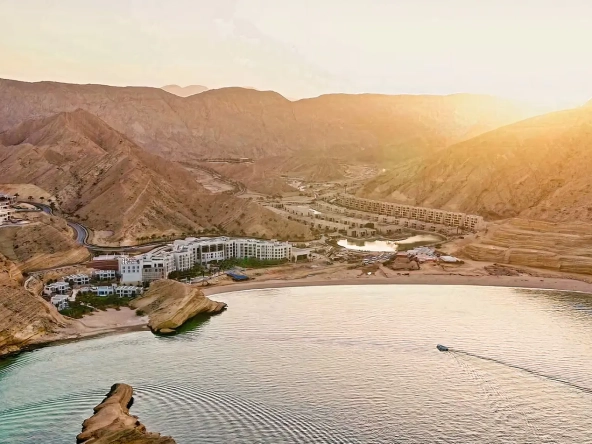
We get this question from clients weighing the two markets side by side. The two differ in structure rather than in one clear answer. Dubai recorded 60,303 real estate transactions in Q1 2026 according to the DLD and, as set out above, offers a Golden Visa route at a stated AED 2 million property value. Oman’s rules for foreign ownership and property-linked residency are different: the Oman Observer reported on 25 June 2026 that Royal Oman Police Decision No. 87/2026 allows foreign owners of registered units to receive sponsor-free residency, which ends if ownership is transferred, and Oman’s own Golden Residency has its own separate conditions. We’ve laid out the full side-by-side comparison — pricing, tax, residency, yields, and risk profile — in Oman vs Dubai Real Estate Investment: Which Is Better in 2026?
Who Dubai Real Estate Suits Best
Dubai isn’t the right fit for every investor profile, and being honest about that up front saves everyone time. Buyers who consider it typically include income-focused investors who want a professionally managed rental asset with no UAE income tax on the rent, buyers looking for a USD-pegged asset outside their home currency, and families pursuing long-term residency through the Golden Visa route who want their capital in real estate rather than a bank deposit. It suits less well investors who cannot accept the risks set out above, such as a large supply pipeline and off-plan handover timelines, or who need a quick exit at a fixed price. Investors with a smaller budget may also compare Dubai against other markets such as Oman, where entry prices and ownership rules differ.
2026–2027 Outlook
Published outlooks are cautious rather than uniform. Moody’s Ratings (10 February 2026) expected a “modest cooling” in UAE residential prices and developer sales over the following 12–18 months, with modest outright price declines probable only in the apartment segment, mainly studios and one-bedroom units in the mid-market, and said that it expected population growth to absorb much of the new supply. Savills (Q3 2026) reported about 50,000 units launched in the first nine months of 2026, around 64% fewer than in the same period of 2025, early signs of rental rate stabilisation, and more than 525,000 units scheduled for handover in 2027–2030. The variable to watch is how supply absorption develops in the off-plan-heavy growth corridors against population and demand; none of the figures above is a forecast by us.
How Uinvest Group Can Help
Whether you’re buying your first Dubai apartment or building a multi-property portfolio across the UAE, our team handles sourcing, due diligence, financing introductions, and after-sales management from a single point of contact. Browse current listings on our Dubai property page, or explore opportunities across the wider UAE market. If you’d rather talk it through first, our team is available via our contact page for a no-obligation consultation.
Last updated: 27 October 2026. Sources: Dubai Land Department, Q1 2026 release, Khaleej Times (DLD H1 2026 data), Knight Frank Q1 2026, Savills Q3 2026, Knight Frank prime Q3 2026 (Khaleej Times), Moody’s Ratings (The National), Property Monitor data (Engel & Völkers), DLD sale registration, DLD investor Golden Visa, DLD initial sale, DLD Service Charge Index, DLD FAQ, u.ae leasing a property, Khaleej Times (CBUAE mortgage limits), Dubai Law No. 7 of 2006, Law No. 8 of 2007, Law No. 6 of 2019, Federal Tax Authority real estate guide, Oman Observer.