









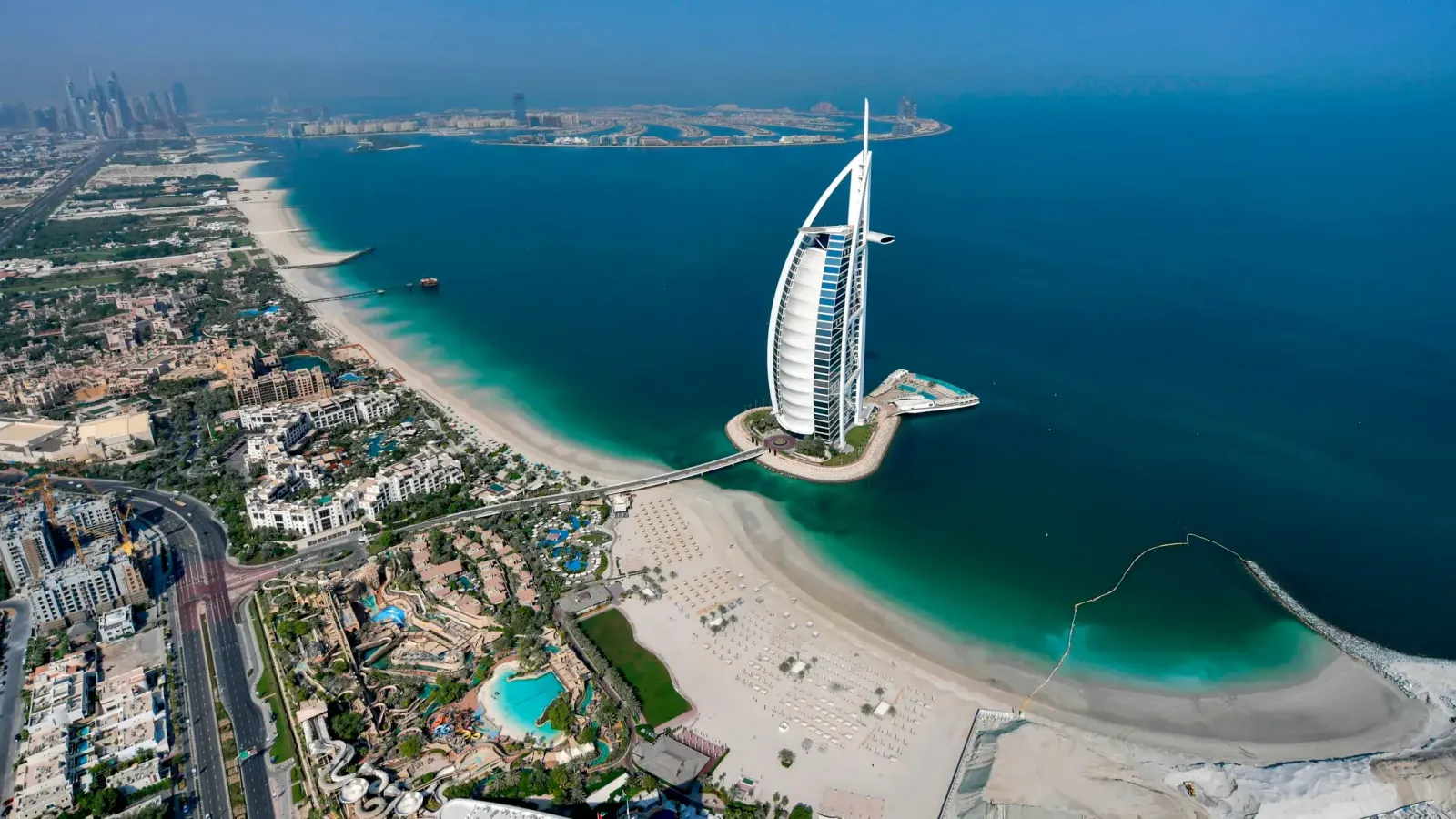


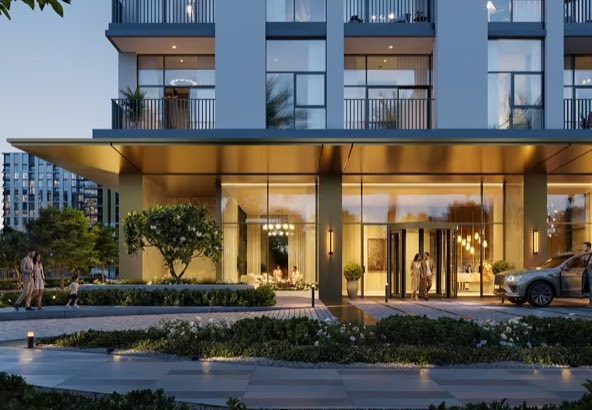
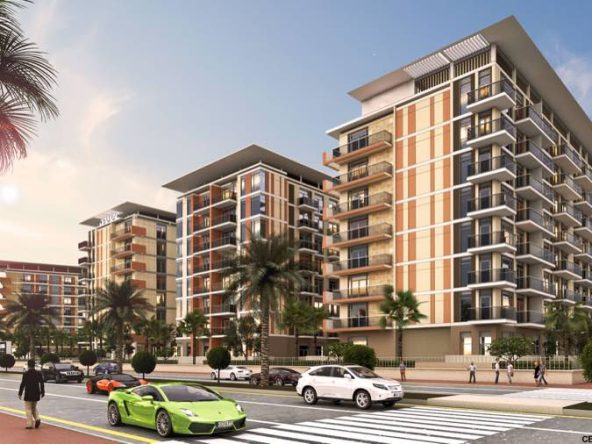
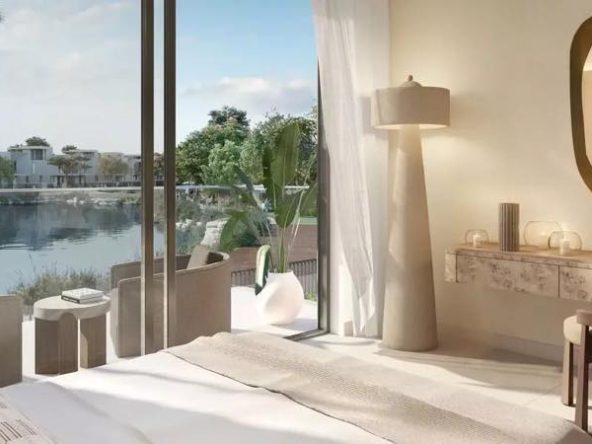
Dubai in one paragraph, honestly
Dubai is the most liquid, most transparent and most internationally recognised freehold property market in the Gulf. A foreign buyer takes 100% title in their own name in designated zones, pays no annual property tax, no capital gains tax on resale and no income tax on rent, and can convert a large enough purchase into ten-year residency. Nothing on that list is marketing — it is all verifiable.
Here is the part that usually gets left out. In the first half of 2026 Dubai recorded roughly 79,000 residential sales against about 92,000 in the same period of 2025 — a meaningful drop in volume — while price per square foot rose around 12.5% year on year to roughly AED 1,770. Prices up on thinner volume is a combination worth understanding before you buy, not one to skip past. It does not mean the market is about to turn. It does mean “Dubai only goes up” is not a thesis, and anyone selling you that is not describing 2026.
This page sets out what UInvest Group actually has in Dubai, what it costs, what it yields after costs rather than before, and who the market genuinely suits.
Dubai at a glance
| Dubai | |
|---|---|
| Foreign ownership | 100% freehold in designated zones, title in your own name, no local sponsor |
| Annual property tax | None |
| Capital gains tax | None |
| Income tax on rent | None for individuals |
| Inheritance tax | None |
| Corporate tax | 9% on profits above the threshold — relevant if you own through a company |
| Residency | 10-year Golden Visa from AED 2,000,000 (~$544,700); 2-year visa from AED 750,000 |
| Citizenship | Not available by investment, at any price |
| Purchase costs | ~7–8% all in (4% DLD transfer fee plus agency, trustee, NOC) |
| Currency | AED pegged to the US dollar at 3.6725 |
| Our entry price | $110,000 |
| Our portfolio | 69 projects |
| Population | Passed 4 million in 2025; targeted at 5.8 million residents by 2040 |
What a foreigner can actually own
Foreign nationals can buy full freehold title in Dubai’s government-designated freehold zones — a list that covers most of the city people actually want to live in: Dubai Marina, Downtown, Palm Jumeirah, Business Bay, Jumeirah Village Circle, Dubai Hills, Creek Harbour, Dubai South, Al Furjan, Arjan, JLT, Silicon Oasis and many more. Inside those zones your title is registered with the Dubai Land Department in your own name, identical to the title a UAE national would hold.
Outside the designated zones, foreign freehold is not available. That is the one hard constraint, and it matters less in Dubai than almost anywhere else in the region simply because the designated zones are so extensive. Compare that with Oman, where foreign freehold is confined to Integrated Tourism Complexes and a buyer is locked out of the highest-yielding districts entirely — the contrast we work through in Oman vs Dubai.
The mechanics — zones, registration, agent regulation and the escrow system that protects off-plan money — are covered in the rules for buying property in Dubai, can foreigners buy apartments in Dubai and freehold vs leasehold. Title and transfer services run through the DLD’s e-services.
Our Dubai portfolio: what $110,000 to $2.4 million actually buys
Rather than describe the market in the abstract, here is the actual price ladder across the 69 Dubai projects we represent, in US dollars.
| Project | Area | From (USD) |
|---|---|---|
| Glamz by Danube | IMPZ | $110,000 |
| Celestia | Dubai South | $119,000 |
| Oxford Terraces | JVC | $123,900 |
| Bayswater Tower — offices | Business Bay | $182,400 |
| The Binary — offices | Business Bay | $220,500 |
| The Royal Oceanic | Dubai Marina | $265,500 |
| Square Residences | Dubai | On application |
| Windsor House II | Dubai South | $326,700 |
| Diamondz by Danube | JLT | $330,000 |
| Terra Woods | Expo Living | $435,600 |
| JLT apartments | Jumeirah Lakes Towers | On application |
| Valia | Dubai Creek Harbour | $582,700 |
| Dreamz by Danube — townhouses | Al Furjan | $650,000 |
| Alana — villas | The Valley | $953,000 |
| Oceanmare House | Palm Jumeirah | On application |
| Ovelle by Emaar — villas | The Valley | $2,423,000 |
Three things worth saying plainly about that list.
The range is 22 to 1. The most expensive project on our books costs twenty-two times the cheapest. Very few city property markets offer that spread inside one set of ownership rules, one currency and one tax regime — and it is the single strongest practical argument for Dubai over its regional rivals.
Twenty-nine of the 69 are priced on application; the other forty carry a published price. Mostly newly released or ultra-prime stock where the developer controls the price list. We will send current pricing on any of them; we would rather say that than publish a number that moves next week.
Thirty of the 69 projects — 43% — are by Danube. That is a genuine concentration and you should know about it. Danube built its business on flexible instalment plans at the affordable end of the freehold market, which is exactly the segment most international buyers ask us for, so the weighting is not accidental. It does mean that if you want to spread developer risk across a portfolio, ask us specifically — see Danube property in Dubai for what that developer does well and where it does not fit.
Note too that the list includes commercial stock: Bayswater Tower and The Binary are Grade A offices in Business Bay, a route most residential buyers never consider and one with a completely different tenant profile.
The cheapest freehold property in Dubai
This is the question we are asked more than any other, so here is the answer with the actual listings behind it. Across the forty Dubai projects that carry a published entry price, five start under $150,000, twenty-four start under $200,000 and thirty-two start under $300,000. The median entry price across the priced portfolio is $176,500.
| Project | Area | Type at entry | From (USD) |
|---|---|---|---|
| Glamz by Danube | IMPZ | Studio | $110,000 |
| Timez by Danube | Dubai Silicon Oasis | Studio | $115,000 |
| Celestia (DAMAC) | Dubai South | Furnished apartment | $119,000 |
| Oxford Terraces | JVC | Studio | $123,900 |
| Lawnz by Danube | International City | Studio | $136,000 |
| Starz by Danube | Al Furjan | Studio | $150,000 |
| Petalz by Danube | Al Warsan | Studio | $150,000 |
| Glitz by Danube | Dubai Studio City | Studio | $150,000 |
| Gemz by Danube | Al Furjan | Studio | $150,000 |
| Oceanz by Danube | Dubai Maritime City | Studio | $150,000 |
| Bayz by Danube | Business Bay | Apartment | $150,000 |
| Pearlz by Danube | Al Furjan | Studio | $155,000 |
Three honest caveats before anyone uses that table as a shopping list. Every entry price on it buys a studio or a compact one-bedroom — there is no freehold house in Dubai at these numbers, and the cheapest villa on our books costs nearly nine times the cheapest studio. Ten of the twelve are Danube projects, which is a concentration you should weigh rather than ignore. And most are off-plan, so the headline figure is the contract price, not cash you need on day one; the instalment structure is what makes these numbers reachable, and it is also what makes them easy to misjudge.
If the budget is the binding constraint, read buying property in Dubai on a low budget and buying without a down payment before you shortlist anything. The cheapest entry price and the cheapest total cost of ownership are rarely the same project.
Villas and townhouses: what the cheapest actually cost
Dubai’s affordable end is overwhelmingly apartments, and search results that promise “affordable villas in Dubai” almost always mean townhouses or off-plan apartments. Here is the honest position across our 69 projects: five are villa projects and three include townhouses, and the step up from the apartment stock is the biggest single jump in the ladder.
| Project | Area | What it is | From (USD) |
|---|---|---|---|
| Eleganz by Danube | JVC | Apartments, lofts and townhouses | $190,000 (apartment) |
| Terra Woods (Emaar) | Expo Living | Apartments and townhouses | $435,600 (apartment) |
| Dreamz by Danube | Al Furjan | Townhouses only | $650,000 |
| Alana at The Valley | The Valley | Villas | $953,000 |
| Ovelle by Emaar | The Valley | Villas | $2,423,000 |
| Dubai Hills | Dubai Hills Estate | Villas and houses | On application |
| Palm Jumeirah Villas | Palm Jumeirah | Villas | On application |
| Sanmarino | Dubai | Villas and houses | On application |
The cheapest freestanding villa we can publish a price for is Alana at The Valley, $953,000 — 8.7 times the cheapest apartment in the portfolio. Three further villa communities are priced on application because the developer controls the release list, not because we are withholding anything; ask and we will send the current sheet.
If what you actually want is a house with its own front door rather than a flat, the townhouse route is the realistic one. Dreamz by Danube in Al Furjan, from $650,000, is the only project on our books sold purely as townhouses. Eleganz in JVC and Terra Woods at Expo Living both include townhouses, but the entry prices above are for their apartments — ask us for the townhouse-specific number rather than assuming the headline figure applies. For the wider market, best villa communities in Dubai and the most affordable villa community set out where the value sits.
Where the yield actually is — gross versus net
Dubai’s headline rental yields are the best of any major global city, and they are also the most commonly misquoted number in Gulf property. The gap between gross and net is where most of the argument lives.
| Area | Typical gross yield | Typical net after costs | Character |
|---|---|---|---|
| JVC | 8.5–9.5% | 5.5–6.5% | Affordable, high turnover, heavy supply |
| Dubai Marina | 6–6.8% | 5.5–6.5% | Dense waterfront, strong short-let demand |
| Downtown Dubai | 4–6% | 3.2–4.8% | Prime, trophy address, lower yield |
Read the middle two columns together, because that is the finding. On gross yield JVC beats Downtown by roughly 3.5 percentage points. On net yield the gap narrows to about 1.5. Service charges, higher vacancy churn and management costs eat a far larger share of a JVC gross yield than of a Downtown one. JVC still wins — but by less than half as much as the headline suggests, and you are taking more supply risk to get it.
The practical conclusion: never compare Dubai areas on gross yield alone. Ask for the service charge per square foot on the specific building and recompute. Our area guides go further: JVC, Downtown vs Marina, Palm Jumeirah, best areas to invest and best areas to buy an apartment.
What each budget buys
| Budget | What it realistically buys | Where |
|---|---|---|
| $110k–150k | Studio or compact 1-bed, off-plan, instalment plan | IMPZ, Dubai South, JVC, International City |
| $150k–250k | 1-bed in a completed or near-complete building | JVC, Arjan, Al Furjan, Silicon Oasis |
| $250k–450k | Quality 1–2 bed in an established district | Dubai Marina, JLT, Business Bay, Dubai South |
| $450k–950k | 2–3 bed apartment, or a townhouse | Creek Harbour, Al Furjan, The Valley |
| $950k+ | Villa, or branded/waterfront residence | The Valley, Palm Jumeirah, Dubai Hills |
Full breakdowns in how much it costs to buy an apartment in Dubai, price per square metre, buying on a low budget and best property types to invest in. For houses rather than apartments, see best villa communities and the most affordable villa community.
The Golden Visa, and the rule change that matters
A qualifying property investment of AED 2,000,000 (about $544,700) supports a renewable ten-year Golden Visa covering spouse and children, with no local sponsor. That headline has been stable for years. What changed recently is far more important than the number.
| Position now | |
|---|---|
| Does a mortgaged property count? | Yes — at full certified value, with a bank NOC. The old requirement to have AED 1,000,000 of your own equity in has gone. |
| Does off-plan count? | Yes, on certified value |
| Can several properties be combined? | Yes — up to three |
| Minimum stay in the UAE? | None. The visa does not lapse through time spent abroad |
| Cheaper tier? | AED 750,000 (~$204,200) for 2 years — but it lapses after 6 months outside the UAE |
Taken together, those rules make the AED 2 million threshold far easier to reach than the raw figure implies: a leveraged buyer, or someone assembling two or three smaller units, now gets there on certified value rather than cash deployed. Detail in what is the Dubai Golden Visa, the latest investor updates, the relaxed ten-year visa conditions and our full immigration to Dubai guide. Official government information sits at u.ae.
What it is not is a passport. The UAE does not operate citizenship by investment. Residency here is renewable indefinitely and never converts. If a passport is the actual objective, Dubai is the wrong market and we will say so.
What it costs to buy
| Cost | Amount |
|---|---|
| DLD transfer fee | 4% of price (in practice paid by the buyer) |
| Agency commission | 2% + 5% VAT |
| Registration trustee | ~AED 4,000 + VAT |
| Developer NOC | AED 500–5,000 |
| Valuation (for the visa) | ~AED 4,020 |
| Mortgage registration, if financed | 0.25% of the loan |
| Total acquisition cost | ~7–8% |
On a $300,000 purchase that is roughly $21,000–24,000 on top of the price. Budget for it from the start — it is the most common thing first-time Dubai buyers under-model. See property tax in Dubai and why there are no taxes in Dubai, and if you are borrowing, mortgages for foreigners. Estate-planning questions are covered in inheritance for foreign owners.
Running costs: the number that decides your return
Dubai charges you nothing in tax and a great deal in service charges. Service charges are billed per square foot per year and vary enormously between buildings — far more than between areas. Two towers on the same street can differ by a factor of two, and the difference goes straight through to your net yield.
This is the single largest recurring variable in a Dubai investment, and the one most often left vague in a sales conversation. Ask for the current figure, in AED per square foot per year, for the specific building — not the community average, not last year’s number, and not “around market”. A building with a chilled-water plant, extensive podium amenities or a swimming pool on every third floor will cost more to run, permanently.
Then model eleven months of rent rather than twelve. Dubai’s tenant market is mobile and turnover is real, particularly in the high-yield affordable districts where tenants move for a better deal each year.
Off-plan or ready?
Most of our Dubai stock is off-plan, sold on developer payment plans structured around construction milestones — typically a booking deposit, staged instalments to handover, and in many cases a post-handover plan running some years beyond completion. Instalments on a project under construction are held in a project escrow account regulated by RERA and released against verified construction progress rather than paid to the developer up front. It is among the more established buyer-protection regimes in the region.
| Off-plan | Ready | |
|---|---|---|
| Entry price | Lower | Higher |
| Payment | Staged, often post-handover | Full on transfer |
| Rent starts | On completion | Immediately |
| Main risk | Delivery timing and finish quality | You inherit the building’s condition and charges |
| Golden Visa | Counts on certified value | Counts |
Neither is better in the abstract. Off-plan suits a buyer with time and a payment plan; ready suits a buyer who needs income now and wants to inspect what they are buying. More in the off-plan buyer’s guide, the best time to buy and finding below-market-value property.
Short-let or long-let? A Dubai-specific decision
In most property markets this is a footnote. In Dubai it changes the economics enough that you should decide before you choose the unit, because the right apartment for one strategy is often the wrong one for the other.
| Short-let (holiday rental) | Long-let (annual contract) | |
|---|---|---|
| Gross income | Materially higher in tourist districts | Lower but predictable |
| Costs | Management, cleaning, furnishing, utilities, platform fees | Minimal once tenanted |
| Occupancy | Seasonal — strongest October to April | Effectively full, with turnover gaps |
| Admin | Permit required, active management | One contract a year |
| Best suited to | Studios and 1-beds near the water or attractions | 2-beds and family stock in residential districts |
| Where it works | Dubai Marina, Downtown, Palm Jumeirah, JBR | JVC, Al Furjan, Dubai South, Arjan |
The trap is assuming short-let is simply the higher-earning option. It is higher gross and materially higher cost, and it only outperforms in locations with real visitor demand. A studio in an inland community running on a short-let model competes with hotels it cannot beat, carries the furnishing and management costs anyway, and frequently nets less than the same unit on a straightforward annual contract.
Dubai’s summer is the other half of the calculation. Peak leisure demand runs roughly October to April; the deep summer months are quiet in a way that annual contracts simply do not experience. If you model short-let income on peak-season nightly rates across twelve months, the number you produce will not survive contact with the year.
Our general guidance: if the unit is walkable to the beach, the Marina or a major attraction, short-let is worth modelling properly. If it is not, the annual contract usually wins on net. Either way the deciding input is the same one that decides everything else here — the building’s service charge — and we will get you the current figure before you commit.
The demand side
The strongest structural argument for Dubai is not price — it is people. The population passed 4 million in 2025, and the Dubai 2040 Urban Master Plan targets around 5.8 million residents by 2040, with a daytime population including commuters and visitors approaching 7.8 million. That is roughly 45% resident growth planned over fifteen years, in a city that has consistently delivered the infrastructure to match.
Housing that many more people requires a lot of homes, which is both the bull case and the bear case: it underwrites long-run tenant demand, and it guarantees a substantial delivery pipeline that will keep pressure on rents in the districts where supply is heaviest. Both things are true at once. Our reading is in the Dubai market investment guide, will Dubai property prices rise, is it still a wise investment and the Green Spine project.
The risks, stated plainly
- Volume is falling while prices rise. Roughly 79,000 H1 2026 sales against 92,000 a year earlier, with price per square foot up about 12.5%. Watch it; do not ignore it.
- Supply is concentrated where entry prices look best. The affordable high-yield districts are also where the most units are being delivered. That is where rents come under pressure first.
- Service charges are the silent yield killer, and they are building-specific. A great gross number can become an ordinary net one.
- Dubai is cyclical and has corrected before. The dollar peg protects your currency, not your valuation.
- No citizenship, ever. Renewable residency only.
- Off-plan carries delivery risk even with escrow. Escrow protects the payment schedule, not your completion date.
None of that is an argument against buying in Dubai. It is an argument for buying it as what it is: a liquid, tax-efficient, dollar-pegged asset in a growing city, priced accordingly.
Seven checks before you buy
- Confirm the zone is designated freehold. No freehold, no title in your name and no Golden Visa.
- Get the service charge in AED per sq ft per year for that building, in writing.
- Recompute the yield net, not gross. Then model eleven months of rent.
- Check the escrow account named in the SPA on any off-plan purchase, and confirm it with the DLD.
- Ask how many comparable units resold in that building last year, and at what price. Liquidity is building-specific too.
- If you are borrowing, confirm the visa position early. Mortgaged property now counts at full certified value — but get it confirmed for your case.
- Ask who the developer is and what they have delivered, especially at the affordable end, where the payment plan is often more attractive than the building.
Frequently asked questions
Can foreigners buy freehold property in Dubai?
Yes. Foreign nationals take 100% freehold title in their own name within Dubai’s designated freehold zones, registered with the Dubai Land Department, with no local sponsor required. Outside those zones, foreign freehold is not available.
What is the cheapest freehold property in Dubai?
Glamz by Danube in IMPZ, from $110,000 — a freehold studio, off-plan, on an instalment plan. Timez by Danube in Silicon Oasis at $115,000, Celestia in Dubai South at $119,000 and Oxford Terraces in JVC at $123,900 are the next steps up. Five of our Dubai projects start under $150,000 and twenty-four under $200,000, and every one of them is a studio or a compact one-bedroom.
Are there affordable villas in Dubai?
Not in the way the phrase is usually meant. The cheapest villa we can publish a price for is Alana at The Valley at $953,000 — about 8.7 times our cheapest apartment. Townhouses are the realistic middle ground, starting at $650,000 with Dreamz by Danube in Al Furjan. Anything advertised as an “affordable villa in Dubai” below that is almost always a townhouse or an off-plan apartment.
Can a foreigner buy and sell property in Dubai freely?
Yes. Freehold title in a designated zone carries an unrestricted right to resell, to a buyer of any nationality, with no minimum holding period and no capital gains tax on the profit. The transfer is executed at a DLD-registered trustee office and costs the 4% transfer fee plus agency commission. Off-plan is the one exception: most developers only permit assignment once a set percentage of the price has been paid, so check that clause before you sign.
How much do I need for the Golden Visa?
AED 2,000,000, about $544,700. Since the rules were relaxed, mortgaged and off-plan property counts at full certified value and up to three properties can be combined, which makes the threshold considerably easier to reach than it looks. There is also a two-year visa from AED 750,000, but it lapses after six months outside the UAE.
Does Dubai charge property tax?
No annual property tax, no capital gains tax on resale, and no income tax on rent for individuals. There is a one-off 4% DLD transfer fee at purchase, and a 9% corporate tax applies to company profits above the threshold if you hold through a company.
What rental yield can I expect?
Gross yields typically run about 8.5–9.5% in JVC, 6–6.8% in Dubai Marina and 4–6% in Downtown. Net of service charges and vacancy those become roughly 5.5–6.5%, 5.5–6.5% and 3.2–4.8% — a much narrower spread than the gross figures suggest.
Can I get citizenship through property in Dubai?
No. The UAE has no citizenship-by-investment programme. The Golden Visa is renewable residency and does not convert to a passport at any investment level.
Is it better to buy off-plan or ready?
Off-plan is cheaper and payable in stages but pays no rent until handover and carries delivery risk. Ready costs more but produces income immediately and can be inspected. Both qualify for the Golden Visa.
How does Dubai compare with Oman?
Dubai gives you far greater liquidity, choice and gross yield; Oman gives a lower entry price, lower running costs and a quieter, earlier-stage market. Residency thresholds are within about 5% of each other in dollars. The full comparison is in Oman vs Dubai.
Related searches on this site
By area: best areas to invest, Downtown vs Marina, Palm Jumeirah, JVC. By type: villa communities, affordable villas, property types. By process: buying rules, off-plan, mortgages, buying from the USA. Elsewhere: all UAE property and Oman.
The verdict
Buy in Dubai if you want the deepest and most liquid freehold market in the Gulf, the widest choice at every budget from $110,000 upward, genuinely strong net yields, and residency that survives long absences abroad. Accept in exchange that you are buying into a cyclical market at a point where volume is cooling even as prices rise, that service charges will decide your actual return, and that no amount of investment produces a passport.
UInvest Group represents 69 projects across Dubai and 43 in Oman, and has no reason to push you toward either. We will give you the building-specific service charge, the honest net yield rather than the brochure gross, the developer’s delivery record, and a straight answer on whether the unit in front of you is the right one for what you are trying to do.
Request a free Dubai property consultation
Further reading: the Dubai Land Department publishes official transaction data and regulates the market; DLD e-services handle title and transfer; u.ae is the UAE government’s official portal for visa and residency rules.
