


























In the 76 years before October 2023, 176 cyclones formed in the Arabian Sea, and 30 of them directly affected Oman. That is the count from the Ministry of Agriculture, Fisheries and Water Resources, quoted when it reviewed the safety of the country’s dams. It works out at a direct impact roughly every two and a half years, in a country where most foreign buyers’ first mental picture of the weather is a cloudless blue sky over a marina.
This article is not meant to frighten anyone away from Oman. The authorities’ emergency preparations are visible and the storms are well documented, and several of the places we sell in sit in parts of the coast that have been comparatively spared. It is meant to do something that most property brochures do not: to put the hazard on the table next to the price. A buyer of a sea-view apartment, a villa near a wadi or a plot on a lagoon should know which storms have hit which stretches of coast, what the damage looked like, what insurance did and did not cover, and what documents to ask for before the first instalment is paid.
We have written it from published sources, quoted at their own size and attributed to their own authors. Where a statement is regional we say so. Nothing here is a flood map of any individual plot, and no article can be. The aim is to give you the right questions, in the right order, to take to a developer, a surveyor and an insurer.
What the record says: five storms in twenty years
Oman’s meteorological history is longer than most buyers assume. The Oman Observer, drawing on a researcher’s climate archive, lists a devastating cyclone in the north as long ago as the year 865, a ship lost off the south coast with all 141 passengers in 1959, the 1977 cyclone on Masirah Island described as the worst natural disaster of the twentieth century in the country, a 2002 storm that killed nine people and caused about $25 million of damage, and then the sequence most buyers will recognise: Gonu in 2007, a tropical depression in 2020 that the list describes as bringing the highest rainfall amount in the country, and Shaheen in 2021. The Observer’s list is short, and it is a useful corrective to the idea that the recent storms are an anomaly.
The Muscat Daily’s report on the ministry’s figures adds the frequency: the southern coast, it says, is exposed to cyclones every five to seven years, and the study it cites expects temperatures to rise by 2°C to 5°C between 2041 and 2060, with higher precipitation in Dhofar. Whatever you think of that projection, the point for a buyer is that the planning assumption should be “a major event during the life of this building”, not “never”. The full Muscat Daily report is worth reading in the original.
Here are the five most recent major events, as described in public sources. The figures are the ones those sources give; different agencies count damage differently, so treat the dollar numbers as orders of magnitude, not as an audit.
| Storm | When | Where it struck Oman | What the sources record |
|---|---|---|---|
| Gonu | June 2007 | Eastern tip of the mainland, then the Muscat and Sur coast | Strongest cyclone on record in the Arabian Sea; about 50 deaths and about $4.2 billion damage in Oman; rainfall up to 610 mm; most of Muscat lost power; over 20,000 people evacuated |
| Phet | June 2010 | Eastern Oman; peak rainfall at Qurayyat | 24 deaths and about $780 million damage; rain collected in wadis; thousands of homes wrecked |
| Mekunu | May 2018 | Dhofar, landfall near Raysut | Strongest storm to strike Dhofar since 1959; seven deaths and about $1.5 billion damage in Oman |
| Shaheen | October 2021 | North and South Al Batinah, and Muscat Governorate | Insured losses of about RO 62 million and over 9,800 claims; at least 5,000 people in 80 temporary shelters; clean-up in Batinah expected to take months |
| Tej | October 2023 | Dhofar and Al Wusta (landfall in Yemen) | Rainfall of 50 to 300 mm forecast; Salalah port closed; shelter prepared for 15,000 people in Dhofar; public and private holiday declared in the affected areas |
Three things are worth noticing. The first is the geography. These storms have not hit one place. They struck the north-eastern capital coast, the eastern Hajar-backed coast, the south, the northern Batinah plain and, in 2023, the south-east. There is no coastal town in this list that can be called immune on the strength of the record, and there is no single stretch that has taken every hit.
The second is the season. Gonu and Phet came in early June, Mekunu in late May, Shaheen and Tej in October. That is the pattern of the Arabian Sea’s two cyclone windows, before and after the summer monsoon, and it bears directly on how you read a construction timetable: a handover date in June or October is a handover date in storm season. The third is the cost. Even with the caveat about methods, the order of magnitude has been hundreds of millions to billions of dollars per storm in a country whose property market is measured in the low billions, which is why insurance, and the lack of it, has become a national policy question.
Cyclone, flash flood and storm surge are three different risks
“Flood risk” in Oman is not one thing, and the right question depends on which version you are asking about.
Wind and rain from a cyclone is the hazard the headlines cover. It is a regional risk: a storm crosses a stretch of coast and hits whatever is there. It damages roofs, cladding, windows, solar panels, external plant and anything that was built to a cheaper standard than it should have been. The mitigation is the quality of the build and the maintenance of the building after handover.
Flash flooding from wadis is a different animal. A wadi is a dry riverbed, and the Wikipedia summary of Phet notes that the rain of that storm collected in the wadis, the normally dry riverbeds, and flooded the arid areas around them. Flash floods can arrive from rain that fell a long way upstream, and in a country with steep mountains they can reach a plot that had no rain at all. The Observer quotes an insurance-committee chair at the Oman Chamber of Commerce and Industry saying that the rugged landscape turns floods into “rampaging rivers” after a wet spell. This is a parcel-level risk: the question is whether your specific plot, or the road you need to reach it, sits in or near a natural channel. A villa that is five hundred metres from the sea and well above it may be at more risk from a wadi than an apartment on the beach.
Storm surge and wave action matter only for the coastal strip. They are the reason the first row of a beachfront development is a different risk product from the third row. The Wikipedia summary of Gonu describes strong waves and heavy rain flooding streets and some buildings in Muscat. The height of the finished floor, the setback from the shoreline and the design of the sea defences are the questions that matter here.
Most real incidents combine all three. When you ask a developer, “is this site at risk of flooding?”, the honest answer is a three-part one, and a developer who gives you a single word has not looked.
What our listings look like on the map of past storms
We list properties in most of the regions in the table above. The table below is an editorial reading of the public record: which of our listing areas sit in parts of Oman that have been hit by a documented storm, and what kind of hazard that history points to. It is regional, not parcel-level. It says where to ask the hard questions; it does not say the answer.
| Area | Our listings there | Documented events in the sources | Main hazard to ask about |
|---|---|---|---|
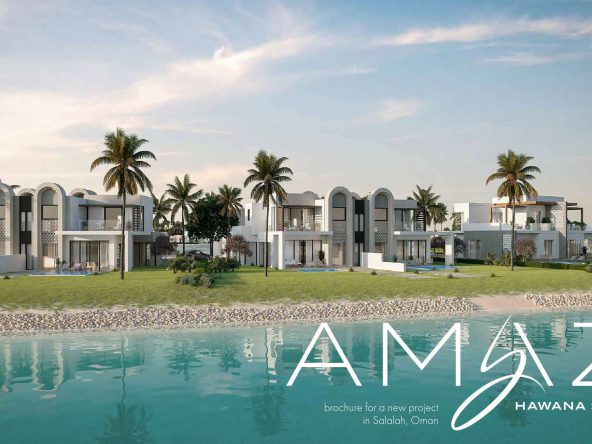
| Salalah, Hawana and Taqah (Dhofar) | Mira Ocean Estates, Lubana Island, Taqah Long Beach Boutique, The Sea Front Residences, Salalah Land Plots | Mekunu 2018; the 2020 depression with the highest rainfall recorded; Tej 2023 preparations | Cyclone wind, surge on the first rows, lagoon and wadi drainage |
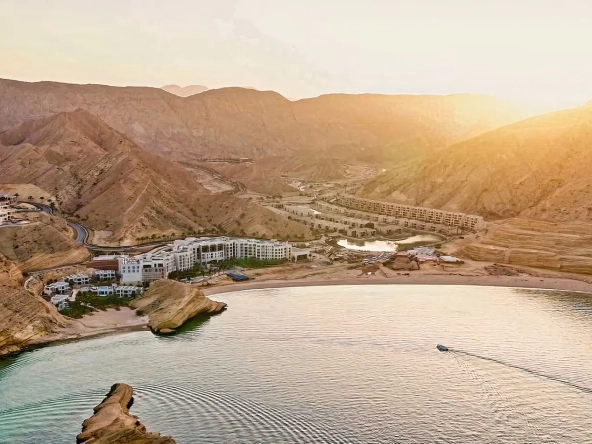
| Muscat coast: Al Mouj, Muscat Bay, Shatti Al Qurum, Yiti | The St. Regis Residences, Azura Beach Residences, Al Mina, Mandarin Oriental Residences, The Sustainable City Yiti, AIDA | Gonu 2007 (Muscat lost power; streets and buildings flooded); Shaheen 2021 (Muscat Governorate flooded) | Surge and wave action on the seafront; road and basement flooding; wadi runoff from the hinterland |
| Jebel Sifah (east of Muscat) | Olive Farms, Raya, Solaris, Jebel Sifah Land Plots | Phet 2010 recorded its peak rainfall at Qurayyat, further along the same mountain-backed coast; Gonu 2007 | Wadi flash flooding from the mountains behind the coast; access road washouts |
| Sohar (North Al Batinah) | Plumeria | Shaheen 2021 struck North and South Al Batinah; Sohar Port closed marine operations | Flat coastal plain; rain and wadi water spreading across it; drainage |
| Sur and the Sharqiyah coast | Nismat Zain | Gonu 2007 caused extensive damage along the coastline, including Sur | Cyclone wind and surge on the exposed east coast |
| Duqm | Maysan | The Duqm master-plan guidelines address wadi flooding directly (see below) | Wadi channels through the planned city |
| Inland Muscat and Bidbid | Wadi Zaha, Jood, Uptown Muscat, Husn Al Zain | Gonu and Shaheen both disrupted the wider Muscat Governorate | Not surge, but local drainage and proximity to wadi channels |
One example in the table is worth reading closely, because the project name makes the point on its own: Wadi Zaha. A name is not a risk assessment, and the fact that a project is called a wadi or sits on a former one does not by itself say anything about its safety. It is simply a prompt to ask the question the next section sets out. Developers who have done the work will welcome it, since the answer is usually a sales point.
What a planning authority says when it is being frank
Most developers’ materials say little about flood design. One of the clearest public statements we found is in the urban-planning guidelines for Duqm City, issued under the Special Economic Zone Authority at Duqm. Describing a residential district that has been replanned around existing wadi channels, the document says that any existing development built in the wadis will be removed and that no further built development will be allowed in them, because it would put future residents in danger from risk of flooding. It says the same for the eastern neighbourhood. The wadis are being turned into park corridors and street layouts instead. You can read the original in the Duqm urban planning guidelines.
The significance of this passage is not that Duqm is dangerous. It is that a planning authority treated flood channels as a design constraint written into the master plan, and said in public that building in them is something it will not allow. That is the standard to hold other sites against. If a project is on a coastal plain or at the foot of a mountain, you should be able to ask the same question, “where does the water go?”, and receive an answer that references a plan. Our own guide to the Duqm Special Economic Zone covers the broader investment case, including why its tenure has to be read carefully.
Insurance in Oman: where the gaps are
Insurance is where a hazard becomes a financial loss, and the public record on Oman is candid about the gaps.
| Layer | What the public record says | What to take from it |
|---|---|---|
| Motor insurance | The Capital Market Authority stated in October 2023 that the unified comprehensive motor policy covers damage from natural calamities including storms, cyclones and flowing wadis, but that policyholders must take reasonable precautions and that deliberately crossing a wadi against police instructions may forfeit compensation | Cover exists, with conditions attached. The same logic, reasonable precautions and compliance with official instructions, tends to run through property policies too |
| Home insurance take-up | After Shaheen, reports noted a widespread lack of home insurance in Oman, with fears that private funds would not cover repairs | Do not assume that any owner around you is insured, including the building’s other owners |
| Insured losses after a major storm | Shaheen produced insured losses of about RO 62 million and over 9,800 claims | Insurers pay claims, but they also reprice after them |
| Reinsurance terms | A local insurer’s 2021 annual report, quoted by the Oman Observer, describes reinsurance terms hardening, with sub-limited storm, tempest and inundation cover and reduced capacity for Oman | Check for sub-limits and deductibles on storm and flood in any policy, not just the headline sum insured |
| National catastrophe pool | The Oman Observer reported a proposed Natural Catastrophe Pool to be managed by Oman Re, planned for 2022; a later Observer report quotes an industry official saying a related catastrophe fund proposed in 2020 had since languished | Do not assume a state backstop exists for uninsured loss. Ask your insurer what is in force today |
The pattern across these sources is consistent: insurance exists, it is conditional, and the market itself has been calling for more systematic cover. The Oman Observer’s coverage quotes the Chamber of Commerce’s insurance-committee chair saying that flash floods and cyclones have prompted insurers and the public to reconsider what comprehensive property cover includes, and that household contents are now being added to policies. For a buyer the practical rule is that insurance is something to buy deliberately, read, and price into the investment, not something that arrives with the title deed. The sources are the Oman Observer’s reports on the proposed Natural Catastrophe Pool and on managing flood risks, and the Capital Market Authority’s notice on Cyclone Tej.
The most useful practical question is who insures what in a strata building. In a strata development the structure and the common areas are managed through the owners’ association and funded through the service charge, while the inside of your unit and your belongings are yours. Our guide to service charges in Oman sets out what the charge normally covers. Ask for the building insurance certificate: the insurer, the sum insured, whether storm and flood are covered, the deductibles, and the policy period. Our guide to Oman’s Real Estate Law 79/2025 explains the escrow, registration and owners’-association protections for off-plan buyers; none of them promises a flood policy, and it is better to ask than to assume.
The documents to ask for before you pay
Buyers are used to asking for a payment schedule, a floor plan and a sales and purchase agreement. For a property on or near a coast, a mountain front or a wadi, there are five more documents worth requesting in writing. A serious developer will either have them or will tell you honestly that they do not exist, and both answers are information.
| Document or answer | Why it matters | A red flag looks like |
|---|---|---|
| The planning approval and development-control conditions for the plot | States the setbacks, levels and any flood-related conditions the authority attached | “It’s all approved” with nothing shown |
| A flood-risk or drainage study (hydrology) for the site, or a statement of what it concluded | Shows whether anyone modelled where rain and wadi water go | The answer is that the area has never flooded, with no study behind it |
| Finished-floor level against the road and against the nearest wadi or shoreline | The simplest single measure of whether water gets in | Ground-floor units and car parks below road level with no explanation of the pumps and drains |
| Location of critical plant: electrical rooms, generators, pumps, lift motors | A building can be unusable because its power or lifts failed, even if no water ever reaches the flats | Plant rooms in the basement of a low-lying block |
| The building insurance certificate and a copy of the policy schedule | Confirms storm and flood are covered and what sub-limits or deductibles apply | “The owners’ association will arrange it” with no policy yet in place |
Two further points apply to off-plan projects. The first is the construction programme. If the developer’s handover date falls in the May to June or October windows in which the Arabian Sea’s recent major storms have clustered, ask what happens to the date if a storm closes the site, and whether the contract treats such a storm as a force majeure delay. The second is the quality of the shell. A wind-driven rain event tests the windows, the roof membrane, the balcony drainage and the cladding fixings of a new building long before it tests its foundations. Ask whether there is a defects-liability period after handover, how long it is, and who inspects. Our guide to who builds property in Oman and our handover calendar can help you see which developers have a record of handing over, which is the best single predictor of how they handle the unglamorous parts of a building.
The seafront premium and what you are paying for
Several of the projects with the highest price per square metre on our site are the ones with water views and direct beach access, and part of the price is the exposure. This is an uncomfortable sentence for a sales site to write and it is an important one. If a first-row apartment costs 40% more per square metre than a unit three rows back in the same development, you are paying for a view and for exposure to the hazard that makes the view possible. That does not make the first row a poor purchase. It makes the first row a purchase to underwrite differently: confirm the finished-floor level, the sea defence, the building insurance and the flood-resistance of the ground floor, and look at the service-charge budget for how much of it goes on maintaining those things.
Our price per square metre ranking shows where the premium sits across 29 projects, and our guide to beachfront property in Oman covers the owner’s side of it. For the specific communities, see our guides to Hawana Salalah, Jebel Sifah and Al Mouj, which are the areas where the seafront question comes up most.
The same logic cuts the other way for the inland projects. Sultan Haitham City, Muscat Hills and Knowledge Oasis are not exposed to surge in the way the seafront is, and a buyer whose priority is to minimise the storm hazard has a legitimate reason to start there. The residual question is the local one, drainage and the wadi, and the documents in the table apply in exactly the same way.
Land plots: the highest-variance case
Several of our Oman listings are plots rather than finished homes, among them the Salalah land plots with lagoon and sea views and the Jebel Sifah land plots. A plot is where the hazard question matters most, because you, not the developer, will decide where the building sits and how it is built. Two plots in the same master-planned community can have very different exposure, depending on how the ground falls and where the drainage runs.
Ask for the plot’s survey level and the levels of the surrounding roads, for any drainage easement or channel that crosses or borders it, and for the building conditions that attach to it, including any minimum plinth height. Ask what the master developer has built for stormwater: culverts, retention basins, sea walls. Then ask who maintains them after the developer leaves, and how that is paid for. A well-engineered community drainage network is an asset, and a neglected one is a liability that arrives after a good storm. If you intend to build, the cost of raising the plinth or adding retaining works belongs in the budget from the start.
Reading a developer’s answer
You will get a range of replies to the questions in this article, and it helps to know how to read them. The best reply is specific. It names the study, gives the level, shows the drawing and says who insured what. A good reply is candid: it admits that an area has flooded in the past and explains what was changed. A weak reply is vague, such as “the area has never had problems”, “everything meets code” or “insurance is handled by the association”, and it does not offer a document. The worst reply is hostile to the question, which tells you about the culture of the company more than the risk of the site.
Be careful with the claim that an area has never flooded. Oman’s own record, as the Observer’s list shows, runs from the year 865 through 1959 and 1977 to the present, and events in the last twenty years have reached places that had no recent memory of water. “Never in my time” is true of a great many places that were flooded in someone else’s time. The useful question is what the design assumes, not what anyone remembers.
Visit after the rain, not before it
Most buyers see a site on a bright day with a sales team and a scale model. If you can, see it after rain as well, or ask for photographs from the last wet spell from the property manager or from existing owners. Look at where water stands, whether the gutters and drains run clear, whether there are water marks on walls or kerbs, and whether the access road is passable. In the south, the khareef monsoon between June and September brings regular rain, mist and a very different landscape from the summer most visitors see, which is another reason to visit in more than one season. Existing residents are the most reliable witnesses to how a community behaved in the last storm, and a developer who has nothing to hide will introduce you to them.
What 25 years of climate projection means for a buyer
The study cited by the Muscat Daily expects temperatures to rise by 2°C to 5°C between 2041 and 2060 and rainfall to increase in Dhofar. The Oman Chamber of Commerce and Industry’s insurance chair, in the Observer, speaks of natural catastrophes arriving once every three to five years. These are expert views, not forecasts we can verify, and they come from people with a professional interest in the question. A buyer does not need to adopt them to see the planning point. If you buy a property with a thirty-year horizon, a design that assumes a once-in-a-generation storm may be exposed to several. The reasonable response is not to avoid the coast, but to prefer developments and plots where the design standard is explicit and where the owners’ association has a maintenance fund that can pay for repairs without calling a crisis meeting.
Owning through a storm: what an absentee owner should arrange
Many of our buyers live abroad. A cyclone warning that a resident handles in an afternoon, by bringing in the furniture, switching off the supply and moving the car, is a problem for an owner who is four time zones away and may not see the warning until it is over.
The sensible arrangements are modest. Appoint a property manager or a trusted local contact with authority to act, and write down what you want done. Make sure your tenant, if you have one, knows the building’s emergency procedure, and that the lease says who is responsible for what. Confirm that your contents and landlord’s liability are insured, in addition to the building policy. Keep a dated photographic record of the unit’s condition, because a claim is easier to make when you can show what was there before. Our guide to renting out your Oman property from abroad has the broader landlord checklist, including the power of attorney that lets someone act for you.
Follow the official channels. The sources above refer to the Civil Aviation Authority’s weather bulletins and the Royal Oman Police’s instructions as the authoritative warnings, and the Capital Market Authority’s Tej notice calls on property owners to adhere to security and safety instructions. For an owner abroad, a local contact who is on those channels is worth more than any app.
Does hazard show up in the price, the yield and the resale?
The honest answer from the record is: not much, so far, and that is not the same as never. Our rental yield analysis and our guide to selling in Oman do not treat storm risk as a pricing factor, and we are not aware of a published study that measures a storm discount on comparable Omani units. What the insurance reports do show is that the market for cover is tightening, with sub-limits and higher retentions for storm and inundation, and costs of that kind tend to flow through to service charges, owners’ costs and eventually net yields. A buyer can plan for that in the same way that a buyer plans for any rising running cost.
Resale buyers, for their part, ask the same questions this article lists. A building with a current insurance certificate, a documented drainage design and a clean record through the last major storm will present better to a careful buyer than one without. Treat the documents in the table as resale assets as well as purchase protections.
A buyer’s checklist
- Which of the three hazards applies to this plot: cyclone wind and rain, wadi flash flooding, storm surge, or a combination?
- Has anyone commissioned a flood-risk or drainage study for the site, and can I read the summary?
- What is the finished-floor level of the ground floor and the car park relative to the road and to the nearest wadi or shoreline?
- Where are the electrical room, the generator, the pumps and the lift machinery?
- What is the building insured against, by whom, for how much, with what deductible, and may I see the certificate?
- Does the contract treat a storm closure as a force majeure delay, and does the handover date fall inside a storm window?
- How long is the defects-liability period, and who inspects after a storm?
- Is there a property manager or local contact who can act on my behalf?
- Have I bought contents and landlord cover, in my own name, for the unit?
Frequently asked questions
How often do cyclones hit Oman?
According to records of the Ministry of Agriculture, Fisheries and Water Resources quoted by the Muscat Daily, 176 cyclones formed in the Arabian Sea over 76 years, and 30 of them directly affected Oman. A study cited in the same report puts the southern coast’s exposure at once every five to seven years.
Which part of Oman is safest from cyclones?
None is immune on the public record, which includes storms in the north-east, the capital coast, the east, the Batinah plain and the south. Inland sites are less exposed to storm surge, but they can still be exposed to flash flooding and to local drainage problems. The question has to be answered plot by plot.
Is flash flooding a bigger risk than cyclones?
They are different risks and they overlap. A cyclone is a regional event, and flash flooding is the local result of rain meeting a wadi, a mountain slope or a poorly drained plain. Many of the worst impacts in the record, including those of Phet and Shaheen, involved the rain turning dry wadis into rivers.
Does home insurance in Oman cover cyclones and floods?
It can, but it is conditional. After Shaheen, reports noted that home insurance was not widespread, and a reinsurance report quoted by the Oman Observer described sub-limits on storm, tempest and inundation. Read the policy for exclusions, sub-limits and deductibles, and ask what the building’s own policy covers.
What documents should I ask a developer for on flood safety?
The planning approval and its conditions, a flood-risk or drainage study or a summary of it, the finished-floor level against the road and the nearest wadi or shoreline, the location of electrical and mechanical plant, and the building insurance certificate. If any of them does not exist, ask the developer to say so in writing.
Will a storm delay my off-plan handover?
It can. The recent major storms struck in May, June and October, so a handover date in those months deserves a question. Ask whether the contract treats a storm closure of the site as a force majeure delay and what notice the developer must give you.
Do you list properties in storm-affected areas?
Yes. Our Oman listings include projects in Dhofar, along the Muscat coast and in Jebel Sifah, Sohar, Sur and Duqm, and in inland areas. The table in this article maps each area to the storms in the public record. It is a regional guide, and the plot-level questions are the ones to ask us and the developer.
Ask us for the flood and insurance documents on any Oman project
Sources: Muscat Daily, 30 cyclones hit Oman in last 76 years (24 October 2023). Oman Observer, List of Oman’s cyclones over the years; Natural catastrophe pool; Managing flood risks. Capital Market Authority, notice of 23 October 2023. Duqm Special Economic Zone Authority, Urban Planning Guidelines. Storm summaries: Wikipedia articles on Cyclones Gonu, Phet, Mekunu, Gulab and Shaheen and Tej, which compile meteorological-agency and press reports; damage figures differ between sources. The area table is our own regional reading of these sources, not a hazard map, and it does not assess any individual plot. This article is general information, not engineering, legal or insurance advice.