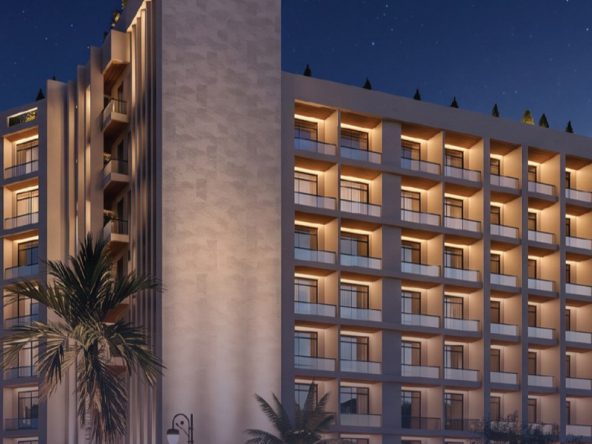





















Most conversations about buying property in Oman start and end in Muscat — Al Mouj’s marina towers, Jebel Sifah’s golf villas, Muscat Bay’s cliffside residences. That’s not surprising: Muscat’s Integrated Tourism Complexes were the first freehold zones opened to foreign buyers, and they remain the most polished, most photographed corner of the Omani market. But roughly 550 kilometres south of the capital, on a stretch of coastline that was virtually undeveloped fifteen years ago, the Omani government is building something categorically different — and largely overlooked by foreign investors who haven’t looked past the marina brochures.
The Special Economic Zone at Duqm (SEZAD) is Oman’s largest single development project, an industrial, logistics and tourism city being built from scratch around a deep-water port, a newly completed oil refinery, and a masterplan that runs in phases out to 2040 and beyond. It is not a resort extension of Muscat. It is a standalone economic engine with its own airport, its own port authority, and — increasingly — its own residential real estate market aimed squarely at the workforce, executives and investors that its industrial base is pulling in. For buyers willing to look at an earlier-stage market with a longer horizon, Duqm is arguably the most interesting real estate story in Oman right now, and one of the least written-about.
This guide breaks down what the Duqm Special Economic Zone actually is, why its industrial backbone matters to anyone considering property there, how ownership works compared with Muscat’s ITCs, what’s realistically available to buy today, and the risks that come with investing in a market this early in its growth curve.
What Is the Duqm Special Economic Zone?
The Special Economic Zone at Duqm sits in Oman’s Al Wusta Governorate, on the central coast facing the Arabian Sea. It covers close to 2,000 square kilometres — roughly the land area of Singapore — making it one of the largest special economic zones anywhere in the Middle East. The zone is governed by the Public Authority for Special Economic Zones and Free Zones (OPAZ), which succeeded the original Special Economic Zone Authority at Duqm (SEZAD) as the regulatory body overseeing land allocation, licensing and investment approvals inside the zone.
What makes Duqm a special economic zone rather than simply another Omani town is the package of incentives OPAZ offers investors: 100% foreign ownership of businesses established inside the zone, exemption from customs duties on imported equipment and materials, long-term land usufruct rights at competitive rates, and streamlined licensing that lets foreign investors set up without a local partner. That regulatory framework was originally built to attract industrial and logistics operators — and it has succeeded. It’s only in the past few years that the same zone has started generating meaningful, buyer-facing residential real estate, as the workforce living and working around the port and refinery has grown large enough to need somewhere to live.
The Industrial Engine Behind Duqm’s Property Market
Understanding why anyone would buy residential property in Duqm requires understanding what’s being built around it, because unlike Muscat’s lifestyle-driven ITCs, Duqm’s housing demand is fundamentally an industrial story.
At the centre of the zone is a deep-water commercial port with container handling capacity in the millions of TEU, positioned to serve as a transhipment hub between Asia, East Africa and the wider Indian Ocean basin — a location advantage Muscat’s port simply doesn’t have. Next to it sits the Oman Drydock Company’s ship repair facility, expanded with a third dry dock large enough to service Very Large Crude Carriers, one of only a handful of facilities in the region with that capability.
The zone’s largest single asset is the Duqm Refinery, a joint venture between Oman’s state oil company and Kuwait’s state petroleum company, built to process 230,000 barrels of crude per day. The refinery reached full nameplate production capacity in mid-2025, and a downstream petrochemical complex is now under construction alongside it, with its first phase targeted for 2027. Layered on top of the refinery and port infrastructure is the multi-billion-dollar Sino-Oman Industrial Park, a joint venture bringing Chinese manufacturing and processing investment into the zone, and OPAZ has separately signed billions of dollars in additional investment agreements and memoranda of understanding for new projects inside the zone in recent years.
None of that is, on its own, a reason to buy an apartment. But every one of those projects requires a permanent, on-site workforce — engineers, technicians, port operators, refinery staff, logistics managers, and the service businesses that support them — and that workforce needs housing. That is the demand base underpinning Duqm’s residential market: not tourists booking a week in a beach villa, but a resident and rotational workforce tied to decades-long industrial infrastructure that isn’t going anywhere. It’s a fundamentally different, arguably more durable, demand driver than the tourism-led ITCs further north, even if it’s a less glamorous one.
Duqm vs Muscat’s Coastal ITCs: A Different Kind of Opportunity
It’s worth being direct about how different Duqm is from the established coastal investment areas most foreign buyers already know. Al Mouj, Muscat Bay and Jebel Sifah sit within a 30-to-45-minute drive of Muscat International Airport, wrapped around marinas and golf courses, marketed on lifestyle and short-term rental potential to tourists and second-home buyers. Duqm is a six-to-seven-hour drive south of the capital — or a short domestic flight via Duqm International Airport, which connects directly to Muscat International — and it is not, and doesn’t pretend to be, a resort town. It’s a working industrial city with a growing residential and commercial core built around it.
That difference shows up directly in pricing and market maturity. Muscat’s ITCs are a comparatively mature, well-documented market with years of resale transaction history and established rental benchmarks. Duqm is, by most honest assessments, in an earlier pre-growth phase: unit prices are meaningfully lower than in Muscat or Salalah today, transaction volumes are smaller, and there’s less resale history to lean on. That cuts both ways — it’s the reason entry prices in Duqm can look remarkably low next to a comparable unit in Al Mouj, and it’s also the reason Duqm carries more market-maturity risk than a buyer picking up a resale villa in an established Muscat community. Investors drawn to Duqm are, in effect, buying earlier into an infrastructure-led growth story rather than buying into an already-proven lifestyle destination.
| Factor | Duqm | Muscat Coastal ITCs |
|---|---|---|
| Entry price | Lowest in Oman | Significantly higher |
| Distance from Muscat | ≈5.5 hours | Within or near the capital |
| Demand driver | Industry, port, logistics | Tourism and lifestyle |
| Tenant base | Industrial and logistics workers | Expatriate professionals, tourists |
| Market maturity | Pre-growth | Established |
| Investment horizon | Long | Short to medium |
Ownership Structure: Freehold, Usufruct, and What It Actually Means
Ownership mechanics are one of the most misunderstood parts of the Duqm market, so it’s worth being precise. In Muscat’s Integrated Tourism Complexes, foreign buyers typically acquire full freehold title — outright, perpetual ownership recognised under Oman’s ITC framework, the same structure covered in our broader guide to freehold property and ITCs in Oman.
Inside the Duqm Special Economic Zone, the standard mechanism has historically been a usufruct arrangement rather than immediate freehold: buyers acquire the right to use, occupy, lease and sell a property for a long, renewable term — typically structured around a 99-year lease — administered under OPAZ’s regulations for the zone. Developers marketing residential projects in Duqm have publicly stated an expectation that these usufruct titles will convert to full freehold as the zone’s regulatory framework matures, mirroring the trajectory freehold ownership took in Muscat’s own ITCs when they were first opened to foreign buyers. That conversion has not been formally completed at the time of writing, and any buyer evaluating a Duqm property should treat “usufruct with an expected path to freehold” as the accurate, current legal position rather than assuming outright freehold from day one — and should confirm the exact title structure and any conversion timeline directly with the developer and a qualified Omani legal adviser before signing.
What is consistent across both structures is the practical bundle of rights buyers actually care about: the right to occupy, lease out, and sell the property, typically alongside 100% foreign ownership, no requirement for a local sponsor, and — in most current Duqm residential offerings — a residence visa for the buyer and immediate family bundled into the purchase.
Title is registered with the Ministry of Housing and Urban Planning, which maintains Oman’s official property register and determines which zones carry freehold status for foreign buyers.
Master Plan and Timeline: What’s Built, What’s Coming
OPAZ’s masterplan for Duqm’s urban core is structured in five broad phases. The first phase established the initial city area and core infrastructure. The second phase, running roughly from 2023 to 2027, is focused on developing the Duqm Heights and Boulevard Districts alongside the zone’s early tourism developments — this is the phase most current residential projects, including the developments around Duqm’s waterfront, sit within. A third phase, pencilled in for 2028 to 2032, is expected to complete the remaining build-out of that second-phase area. A fourth phase, from roughly 2033 to 2040, is earmarked for light industrial development in the zone’s southern district, with a fifth and final phase releasing remaining land beyond 2040.
More recently, OPAZ has publicly unveiled a dedicated masterplan for Duqm’s waterfront district specifically, aimed at building out one of Oman’s largest integrated tourism and mixed-use waterfront developments alongside the zone’s industrial core — a signal that Duqm’s own leadership sees lifestyle and tourism real estate as a genuine second pillar of the zone’s growth, not just an afterthought to the port and refinery. For a market this early, that combination of a long, published masterplan and a dedicated waterfront tourism strategy is a meaningfully different risk profile than betting on a single project with no wider public planning framework behind it.
Spotlight: Maysan Square — Duqm’s Business and Lifestyle Hub
The clearest real-world example of what’s actually being delivered in Duqm today is Maysan, at Maysan Square, developed by Maysan Properties in partnership with OPAZ. Maysan Square is a roughly 122,000-square-metre mixed-use masterplan comprising around 20 buildings across five development phases that began in 2021, combining Maysan’s residential apartments with commercial space, retail, restaurants, cafés, a business hotel and office space — positioning it as Duqm’s central business and lifestyle district rather than a single standalone residential tower.
Studio, one- and two-bedroom apartments at Maysan currently start from around OMR 29,500 (roughly USD 76,700), rising to around USD 115,700 for larger units, sold with 0% VAT, a 0.5% registration fee, and an Oman residence visa included for the buyer and their family. What distinguishes Maysan from a purely off-plan pitch is that its first delivered phase, Residence One, has already been completed and handed over, and is actively generating rental income for its owners today — giving prospective buyers an operating track record to evaluate rather than relying purely on projected yields. Later phases remain in delivery, so buyers can currently choose between an already-completed, income-producing unit and an off-plan unit in a subsequent phase, typically at different pricing.
| Component | Status | What It Means For Buyers |
|---|---|---|
| Port of Duqm | Operational | Anchor employer driving rental demand |
| Drydock and refinery | Operational | Long-term industrial workforce |
| Maysan Square | Delivering | First freehold-track residential offer |
| Retail and hospitality | In progress | Amenity base still maturing |
| Airport and road links | Operational | Access improving but distance remains |
Residency Through Property Investment in Duqm
Property investment inside a recognised Special Economic Zone or Integrated Tourism Complex is one of the routes into Oman’s residency system, and Duqm developments marketed to foreign buyers are typically structured to include a residence permit for the buyer and their immediate family as part of the purchase. It’s important not to conflate this project-level residence benefit with Oman’s national investment-residency programmes: the long-established Golden Residency programme currently carries a unified minimum qualifying investment of OMR 200,000 (about USD 520,000) for a renewable ten-year permit covering the applicant’s spouse and children, while a newer, sponsor-free Owner Visa introduced in 2026 offers a separate, lower-threshold route tied simply to owning a home in the Sultanate. We’ve broken down exactly how these two programmes differ, and which one a given buyer should actually be applying for, in our dedicated guide to Oman’s Golden Residency and Owner Visa in 2026. Anyone buying in Duqm specifically for the residency benefit should confirm in writing, before reserving a unit, exactly which visa route their purchase qualifies them for and under what conditions it can be renewed.
Official visa and residency requirements are published by the Royal Oman Police, which administers residency applications. Confirm the current criteria before filing, as thresholds and documentation requirements are periodically revised.
Pricing and Entry Point: What You Can Buy in Duqm Today
The single biggest practical difference between Duqm and Muscat’s coastal ITCs is the entry price. A studio or one-bedroom apartment in a project like Maysan starts in the mid-to-high USD 70,000s — a price point that, in Al Mouj or Jebel Sifah, would typically only buy a small studio at the very bottom of the market, if it buys anything at all. Two-bedroom units at Maysan run up to roughly USD 115,700, still well under the entry price for comparable unit types in Muscat’s established ITCs.
That gap exists for a reason: Duqm is earlier in its growth cycle, with less transaction history, less immediate lifestyle infrastructure, and a longer runway before the zone’s residential market matures the way Muscat’s has. Buyers should read the lower price as compensation for that earlier-stage risk, not as evidence that Duqm real estate is simply “cheaper” for the same underlying asset. For investors specifically looking for a lower-capital entry point into Oman’s freehold-track market, though, Duqm currently offers one of the lowest entry costs anywhere in the country’s foreign-ownership zones — a point worth weighing against the rental yield data across Oman’s different investment areas before deciding where a given budget is best deployed.
| Property Type | Indicative Entry | Notes |
|---|---|---|
| Studio | From about USD 76,700 | Lowest entry point in Oman |
| One-bedroom apartment | Mid range of the band | Strongest letting demand |
| Two-bedroom apartment | Up to about USD 115,700 | Suits families of industrial staff |
| Freehold land plot | Price on application | Longer-horizon play |
Risks and Realities: What to Weigh Before Investing in a Pre-Growth Market
None of this is a reason to treat Duqm as a guaranteed win, and a credible guide to the zone has to say so plainly. Four risks deserve specific attention before committing capital.
Liquidity and resale history. Duqm does not yet have the depth of resale transaction data that Al Mouj or Jebel Sifah have built up over more than a decade of trading. Exiting a position in Duqm may take longer, and pricing on resale is less predictable, simply because the comparable-sales dataset is thinner.
Ownership structure timing. As covered above, most current Duqm titles are usufruct-based with an expected — not yet guaranteed — path to freehold. Buyers should treat any freehold-conversion claim as a stated intention to verify, not a completed legal fact, and should get independent confirmation of exactly what they’re purchasing.
Delivery and construction risk. Where a specific phase or building is still off-plan, buyers carry the same construction and delivery timeline risk that applies to any off-plan purchase anywhere in the world — mitigated in Duqm’s case by the fact that at least one major project (Maysan’s Residence One) has already delivered and is generating income, which is a genuinely useful reference point, but not a guarantee that every subsequent phase, or every other developer’s project, will deliver on schedule.
Distance and lifestyle amenities. Duqm is a working industrial city first. Buyers expecting Al Mouj’s marina restaurants and boutique retail on their doorstep from day one will be disappointed; the zone’s tourism and lifestyle infrastructure, including the newly unveiled waterfront masterplan, is still being built out in parallel with the industrial base, not ahead of it.
Weighed honestly, Duqm suits a specific kind of investor: one with a longer time horizon, a higher tolerance for early-stage market risk, and a clear-eyed read on the difference between buying into infrastructure-led industrial growth versus buying into an already-mature lifestyle destination. It is not, and shouldn’t be marketed as, a like-for-like substitute for an Al Mouj or Jebel Sifah purchase.
Why Now: Oman Vision 2040, Currency Stability, and the Bigger Picture
Duqm’s build-out doesn’t exist in isolation — it’s one of the flagship projects inside Oman’s Vision 2040 national development strategy, the long-term plan driving the country’s push to diversify away from oil revenue toward logistics, manufacturing, tourism and financial services. We’ve covered how that national strategy is reshaping where investors should be looking across the whole country in our guide to Oman Vision 2040 and real estate, and Duqm is arguably the single largest physical expression of that strategy on the ground today.
Underneath that growth story sits a currency and tax environment that’s genuinely unusual for a frontier-stage real estate market. The Omani rial has been fixed to the US dollar at a rate of 1 OMR to 2.6008 USD by the Central Bank of Oman, a peg that has held continuously through multiple oil price cycles and regional shocks — which means a foreign buyer’s exposure to Duqm real estate isn’t compounded by the currency volatility that typically accompanies early-stage, high-growth property markets elsewhere. Combine that with Oman’s 0% personal income tax, 0% capital gains tax on property, and 0% annual property tax — the same framework we cover in detail in our guide to property tax in Oman — and Duqm ends up in an unusual position: a genuinely early-stage, higher-risk growth market wrapped inside one of the more currency-stable, tax-efficient ownership environments in the region.
| Risk | Why It Matters | Mitigation |
|---|---|---|
| Distance from Muscat | Hard to inspect or self-manage | Appoint local management from the outset |
| Single-sector demand | Rental market tied to industry | Model yields on average, not peak, occupancy |
| Thin resale market | Few comparable transactions | Plan a long hold, not a quick exit |
| Delivery timing | Off-plan phases can slip | Verify escrow registration before any deposit |
Trade, population and economic indicators for the Al Wusta governorate are published by the National Centre for Statistics and Information, giving an independent read on whether Duqm’s growth assumptions are being met.
How to Buy: Practical Steps for Foreign Investors
The mechanics of buying in Duqm follow the same broad process as buying anywhere in Oman’s foreign-ownership zones, which we walk through step by step in our guide to whether and how foreigners can buy property in Oman. In practice, for a Duqm purchase specifically, that means: confirming the exact title structure (usufruct versus any completed freehold conversion) in writing with the developer before reserving a unit; verifying the developer’s track record and, where possible, inspecting a completed and handed-over phase such as Maysan’s Residence One rather than relying solely on renderings; engaging an Omani lawyer independent of the developer to review the sale and purchase agreement; confirming exactly which residency route, if any, the purchase qualifies for and its renewal conditions; and building a realistic view of rental demand from Duqm’s actual workforce — port, refinery, drydock and industrial park employees — rather than assuming tourism-style occupancy rates.
Buyers should also take the time to compare Duqm against the other freehold and freehold-track areas covered across our best areas to invest in Oman guide, and against Oman’s broader villa and house listings, before committing — Duqm is a compelling opportunity for the right investor profile, but it’s one option among several distinct markets inside the same country, each with a different risk and return profile.
Frequently Asked Questions
Can foreigners buy property in Duqm, Oman?
Yes. As a designated Special Economic Zone under OPAZ, Duqm permits 100% foreign ownership of approved residential and commercial developments, without the need for a local sponsor or partner.
Is property in Duqm freehold or leasehold?
Most current residential developments in Duqm are sold on a long-term usufruct basis, typically structured around a 99-year renewable term, with developers stating an expectation of future conversion to full freehold as the zone’s regulations mature. This differs from Muscat’s Integrated Tourism Complexes, where foreign buyers generally acquire full freehold title today. Always confirm the exact current title structure with the developer and an independent Omani lawyer before purchasing.
How far is Duqm from Muscat?
Duqm is approximately 550 kilometres south of Muscat, roughly a six-to-seven-hour drive. Duqm International Airport also operates flights connecting to Muscat International Airport for a much faster journey.
Does buying property in Duqm come with Omani residency?
Most developments marketed to foreign buyers in Duqm include a residence permit for the buyer and immediate family as part of the purchase. This is separate from Oman’s national Golden Residency and Owner Visa programmes, which carry their own investment thresholds and conditions — buyers should confirm exactly which route a specific purchase qualifies them for.
Is Duqm a good real estate investment compared to Muscat?
It depends on the investor’s goals. Duqm offers a significantly lower entry price and exposure to an infrastructure-led, industrial growth story, but with less resale transaction history, more construction and title-conversion risk, and fewer immediate lifestyle amenities than Muscat’s established coastal ITCs. It generally suits investors with a longer time horizon and higher tolerance for early-stage market risk, rather than buyers looking for a proven, liquid, lifestyle-driven asset.
What is driving demand for housing in Duqm?
Demand is primarily driven by the workforce employed across Duqm’s industrial base: the deep-water port, the Oman Drydock Company’s ship repair facility, the 230,000-barrel-per-day Duqm Refinery, its associated petrochemical complex, and the Sino-Oman Industrial Park, alongside a growing tourism and lifestyle sector centred on the zone’s waterfront masterplan.
The Bottom Line
Duqm isn’t a replacement for Muscat’s established freehold ITCs, and it shouldn’t be sold as one. It’s a different kind of opportunity entirely: an early-stage, infrastructure-anchored real estate market riding on the back of one of the largest industrial development projects in the Gulf, wrapped inside a currency-stable, zero-property-tax ownership environment, with a published masterplan that runs out to 2040. For investors who understand and accept that trade-off — lower entry prices and genuine long-term upside, against thinner resale history and an ownership structure still completing its transition to full freehold — Duqm deserves a place on the shortlist, not as a speculative afterthought, but as a serious, differentiated addition to a broader Oman property strategy.
If you’re weighing Duqm against Oman’s other investment areas, or want a walkthrough of current availability at Maysan Square specifically, our team can put together a comparison tailored to your budget and residency goals — get in touch with UInvest Group to start the conversation.