




























Freehold property in Oman is open to foreign buyers inside designated areas, chiefly licensed Integrated Tourism Complexes (ITCs), where non-Omani nationals can own an apartment, townhouse or villa with title registered in their own name. For international investors, ITCs are the main concept to understand before buying, because they define where a foreigner can hold freehold ownership in practice. Foreign ownership is not open across the Sultanate: the Ministry of Housing and Urban Planning said in June 2026 that it is limited to designated areas, as set out in our guide on whether foreigners can buy property in Oman. This guide explains what ITCs are, where they are located, what they cost to buy into, and the residency benefits that come with them.
What are Integrated Tourism Complexes (ITCs)?
An Integrated Tourism Complex is a master-planned development licensed by the Ministry of Heritage and Tourism under Royal Decree 12/2006 (as amended by Royal Decree 76/2010), in which non-Omanis, including non-GCC foreigners, may own units and plots. Outside ITCs, non-Omani ownership of land and real estate is restricted and is allowed only in other designated areas: freehold units in qualifying special economic zone and free zone projects under Royal Decree 38/2025, and the future cities and integrated residential neighbourhoods named by the Ministry of Housing in June 2026 (both covered below). ITCs are the longest-established of these routes.
ITCs are designed as self-contained lifestyle communities rather than standalone apartment blocks. A typical complex combines residential property with hotels, marinas, golf courses, retail, dining and beachfront amenities. Key features include:
- Freehold title registered in the buyer’s name (in Musandam, non-Omanis may buy only built units, under usufruct of up to 99 years). Whether ITC property passes to heirs automatically is not settled in the sources we found.
- No nationality restrictions on ownership within the complex.
- A mix of property types — apartments, townhouses, villas and branded residences.
- Managed communities with security, maintenance and resort-style facilities.
Understanding this framework is the foundation of buying property in Oman as a foreigner, and it shapes every decision that follows.
Where can foreigners buy freehold property in Oman?
Freehold property in Oman for foreign buyers is found in licensed ITCs, many of them along the coast near Muscat and in Salalah. Communities marketed to foreign buyers include:
- Al Mouj Muscat — a large waterfront community with a marina, golf course and apartments through to villas.
- Jebel Sifah — a marina and golf resort about 45 minutes from Muscat, popular for holiday homes and rentals.
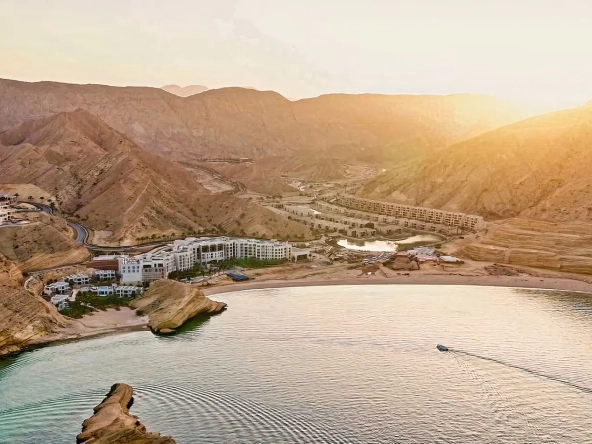
- Muscat Bay and Saraya Bandar Jissah — boutique coastal developments set between the mountains and the sea.
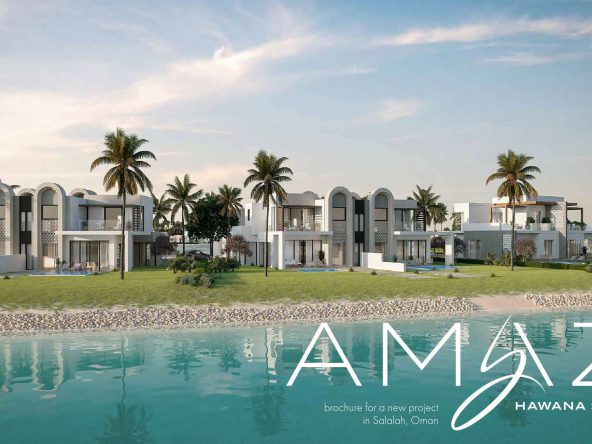
- Hawana Salalah — a resort community in the south that comes alive during the Khareef (monsoon) season.
Each community has its own price points, rental profile and lifestyle. You can browse current listings in coastal hotspots such as As Sifah, and our breakdown of what you can buy in Oman at different budgets shows how far USD 200,000 to USD 600,000 stretches across these zones.
| ITC | Location | Property Types | Best Suited To |
|---|---|---|---|
| Al Mouj Muscat | Muscat, seafront | Apartments, townhouses, villas | Established community, marina and golf |
| Jebel Sifah | ~40 min from Muscat | Apartments, villas, land | Lifestyle and holiday-home buyers |
| Muscat Bay / Saraya Bandar Jissah | Muscat, coastal | Villas, branded residences | Premium end users |
| Hawana Salalah | Salalah, Dhofar | Apartments, villas | Seasonal rental and tourism demand |
Costs, fees and the buying process
Buying freehold property in Oman through an ITC is a straightforward process, but budget for costs beyond the headline price. Typical considerations include:
- Registration fee — a government registration fee of 3% of the asset value (cut from 5% in November 2020, according to the Oman Observer and Times of Oman); the reports we read do not say who pays it. It is collected through the Ministry of Housing and Urban Planning.
- Service charges — annual community fees covering security, maintenance and shared amenities.
- Off-plan payment plans — many developers offer staged payments during construction, with the balance due on handover.
- Legal and agency support — recommended to verify title, developer track record and the sale-and-purchase agreement.
No annual residential property tax was found in the sources we read, although this has not been confirmed by the tax authority and municipal charges were not checked. Separately, personal income tax under Royal Decree 56/2025 takes effect on 1 January 2028 and lists rent and real-estate disposal proceeds as taxable income (5% above OMR 42,000 gross, with exemptions for a primary and a secondary residence). For the full picture on what buyers and investors actually pay, see our guide to property tax in Oman.
| Cost | Typical Amount | When Payable |
|---|---|---|
| Reservation deposit | Set by the developer (market practice; no official figure found) | At reservation |
| Property transfer / registration fee | ≈3% of purchase price | At title transfer |
| Legal and agency fees | Market-set; no official figure found (commercial guides quote roughly 1–2% for legal fees) | At purchase |
| Annual service charge | Varies by ITC and unit size | Annually, from handover |
| Annual property tax | None found (not confirmed by the tax authority) | — |
| Tax on rental income | Not established for today; personal income tax from 1 January 2028 (Royal Decree 56/2025) lists rent as income | — |
| VAT | 5% on the first supply of new residential property; resale of residential property is exempt | On purchase from a developer |
Residency and lifestyle benefits of ITC ownership
One of the draws of owning property in Oman is residency, although ownership and residency are separate questions. Two permits are relevant. The Golden Residency, launched in August 2025, requires at least OMR 200,000 of investment; on the real estate route, as reported, that means units in an ITC with a valid title deed, and the residency is renewable for 10 years with family members covered. The sponsor-free Owner Visa, introduced by Royal Oman Police Decision 87/2026 (Official Gazette 1653 of 21 June 2026, effective 22 June 2026), has no minimum property value in the reports we read and ends if the property is transferred. Neither permit widens where a foreigner may own.
Beyond the paperwork, ITC ownership comes with a particular lifestyle: managed communities, with beaches and marinas close by in several of them. Rental demand differs between communities and is not guaranteed. To understand the residency pathway in detail, read our guide to the Oman Golden Visa through property investment.
Oman’s Legal Framework For Foreign Freehold Ownership
The ownership system for non-Omanis in ITCs comes from Royal Decree 12/2006 (as amended by Royal Decree 76/2010) and its executive regulation, Ministerial Decision 191/2007 (as amended by Ministerial Decision 109/2022). ITCs are licensed by the Ministry of Heritage and Tourism, while the Ministry of Housing and Urban Planning registers title; a ministerial decree reported for Jebel Sifah also requires approval from both ministries before a developer sells a unit. The Ministry of Heritage and Tourism announced 19 valid ITC licences in July 2023, and no official list of all projects was found. Status attaches to a licensed site, so a developer can sell freehold to buyers of any nationality only within the boundaries of a licensed complex. This is an important distinction for buyers to understand: freehold rights in Oman are not a blanket national policy but a zone-by-zone designation, which is why verifying a development’s official ITC status — rather than relying on a developer’s marketing material — is one of the first steps any serious buyer should take.
Outside ITCs, non-Omani ownership of land and real estate is restricted to other designated areas, and the rules differ by route. Royal Decree 38/2025 (Article 42) allows developers in special economic zones and free zones to sell project units to non-Omanis as freehold, in the manner set by an executive regulation (OPAZ Regulation 81/2026, reported in September 2026; its text was not seen, and no report names a zone with a freehold-eligible project). The Ministry of Housing and Urban Planning said on 28 and 29 June 2026 that foreigners may own only in designated developments: ITCs, the future cities Sultan Haitham City, Al Thuraya City and Al Jabal Al Aali, and integrated residential neighbourhoods such as Surooh; the statement does not say whether title there is freehold or usufruct. A 2020 ministerial decision (357/2020) lets expatriate residents hold usufruct of apartments in approved Muscat areas, with an initial term of up to 50 years, renewable to a maximum of 99 according to Trowers; its 2026 status was not confirmed. In ITCs in Musandam, non-Omanis may buy only built units, under usufruct of up to 99 years. GCC citizens are treated separately under GCC agreements and Omani regulations. For investors specifically targeting Oman for its residency-linked freehold model, confirming ITC status before signing any reservation agreement is essential.
Oman’s Major ITCs In Depth
No official list of ITCs was found (19 licences were announced in July 2023), and no transaction-share figures were found; the communities below are among those named in press reports or marketed to foreign buyers:
Al Mouj Muscat
A large waterfront freehold community in Muscat, built around a 400-berth marina, an 18-hole Greg Norman golf course, and the W Muscat hotel, with more than a decade of delivered phases. See our full Al Mouj Muscat investment guide for pricing by collection and district.
Jebel Sifah
A marina-and-golf resort community roughly 45 minutes south of Muscat, offering a lower entry price than Al Mouj alongside similar lifestyle amenities. Popular with holiday-home buyers and rental investors seeking a smaller, more resort-oriented market. Read our dedicated Jebel Sifah guide for full detail.
Muscat Bay And Saraya Bandar Jissah
Boutique coastal developments set dramatically between the Hajar Mountains and the sea, generally positioned at the premium end of the market with lower unit counts and a strong emphasis on privacy and natural scenery.
Sultan Haitham City
Listed by the Ministry of Housing and Urban Planning (June 2026 statement) as a future city in which foreign ownership is permitted, not as a tourism complex. The statement does not say whether title is freehold or usufruct, so the form of title is a question to put to the developer for each project. It is part of a wider capital-area masterplan with a longer development horizon than the established communities, so infrastructure may take longer to mature. See our Sultan Haitham City investor guide.
Hawana Salalah
A resort community on Oman’s southern coast that comes alive during the Khareef monsoon season, when Salalah’s climate transforms into lush greenery and draws Gulf-wide tourism. Full detail in our Hawana Salalah guide.
Freehold Vs Usufruct: Understanding Oman’s Ownership Tiers
Buyers new to the Omani market sometimes conflate freehold and usufruct rights, but the two carry meaningfully different implications for investors:
- Freehold (ITCs and other designated areas): Perpetual title registered in the buyer’s name, the standard structure for foreign purchases inside ITCs (except Musandam, where non-Omanis buy built units under usufruct) and, as reported, for qualifying special economic zone and free zone projects. Whether ITC property passes to heirs automatically is unsettled: a 2020 Trowers note says there is no automatic right of inheritance, while other commentary says the ITC regulation covers succession.
- Usufruct (specific schemes outside freehold areas, and Musandam ITCs): A time-limited right to use and benefit from a property without transferring underlying land ownership. Under the 2020 ministerial decision for apartments in approved Muscat areas, the initial term is up to 50 years, renewable to a maximum of 99 according to Trowers; in Musandam ITCs, non-Omanis may buy built units under usufruct of up to 99 years. Under the 2020 scheme the right passes to a legal heir and may be mortgaged.
For investors targeting the Golden Residency, the real estate route is tied to ITC units with a valid title deed, so ITC freehold is the structure that matters for that route. No figures on transaction volume by route were found.
| Feature | Freehold | Usufruct |
|---|---|---|
| Ownership term | Perpetual | Fixed term (up to 50 years, renewable to 99, under the 2020 scheme; up to 99 years in Musandam ITCs) |
| Registered in your name | Yes | Yes, as a right of use |
| Can be sold | Yes (an undeveloped ITC plot cannot be sold before completion) | Yes, for the remaining term (the 2020 scheme bars sale or letting for 4 years unless exempted) |
| Can be inherited | Not settled for ITC property (see above) | Yes under the 2020 scheme (passes to a legal heir) |
| Available to foreign buyers | Inside licensed ITCs and other designated areas | Specific schemes only (2020 Muscat apartment scheme, Musandam ITCs) |
| Supports residency application | ITC units with a valid title deed can support the Golden Residency (OMR 200,000) | Not established in the sources we read |
Step-By-Step: How To Buy Freehold Property In Oman
- Define your budget and goals. Decide whether you’re buying primarily for residency qualification, rental yield, capital growth, or a combination, since this shapes which ITC and price point makes sense.
- Shortlist properties. Work with a licensed broker to compare off-plan and resale options across your target communities — pricing, payment plans, and delivery timelines vary significantly between developments.
- Verify ITC status and developer credentials. Confirm the development’s ITC licence (issued by the Ministry of Heritage and Tourism) and the approvals the developer holds from the Ministry of Housing and Urban Planning before signing anything.
- Reserve and sign the Sale and Purchase Agreement. This sets out price, payment schedule, and handover terms for off-plan purchases, or a transfer agreement for resale transactions.
- Complete payment and title transfer. Off-plan purchases typically use staged payments tied to construction milestones and an escrow arrangement; resale purchases settle on completion, with title then registered in the buyer’s name.
- Apply for residency, if eligible. Once title is registered, buyers can look at the residency options: the Golden Residency (OMR 200,000, ITC units with a valid title deed) or the Owner Visa (ROP Decision 87/2026, no minimum value in the reports we read). These are separate applications to the competent authorities.
Off-Plan Vs Ready Property: Which Should You Buy?
Both off-plan and ready (completed) property have a place in the Omani freehold market, and the right choice depends on an investor’s risk tolerance and timeline. Off-plan purchases, common in newer developments such as Sultan Haitham City, are often priced lower at entry and sold with staged payment plans that ease cash-flow pressure (market practice, not an official figure), but carry construction and delivery-timeline risk. Ready property in established communities like Al Mouj or Jebel Sifah is typically priced higher but removes construction and delivery risk and can begin generating rental income immediately, with the added benefit of a visible resale track record to benchmark pricing against.
Financing Freehold Property In Oman
Some banks in the Sultanate offer mortgage financing to resident and non-resident expatriates for property in ITC projects they have registered. BankDhofar advertises up to 70% of property value over up to 20 years (August 2026), while Sohar International lists 70% for resident expatriates and 50% for non-residents, with a shorter maximum term for non-residents. Loan-to-value ratios, interest rates, and eligibility criteria vary by lender and by the buyer’s residency status, so it’s worth approaching a local bank or your broker early in the process if financing is part of your plan, rather than assuming cash is the only route.
No Central Bank of Oman rule setting a separate loan-to-value limit for non-resident borrowers was found; the terms above are set by the individual banks. Loan-to-value limits and eligibility criteria differ between banks, so it is worth comparing offers before committing to a reservation.
Oman’s Residency Pathways: Golden Residency And The Owner Visa
What Is The Difference Between Freehold And Usufruct In Oman?
Freehold title, available inside ITCs and in other designated areas, is perpetual ownership registered in the buyer’s name; whether ITC property passes to heirs automatically is not settled in the sources we found. Usufruct is a time-limited right to use a property without transferring underlying land ownership; under the 2020 scheme for apartments in approved Muscat areas the initial term is up to 50 years, renewable to 99 according to Trowers, and in Musandam ITCs it is up to 99 years.
Can I Get A Mortgage To Buy Freehold Property In Oman As A Foreigner?
Yes, some banks in Oman offer mortgage financing to foreign buyers for property in ITC projects they have registered, though terms vary by lender and residency status (for example, up to 70% of value at BankDhofar, and 70% for resident and 50% for non-resident expatriates at Sohar International). Financing is worth exploring early.
Should I Buy Off-Plan Or Ready Property In Oman?
Off-plan property is often priced lower at entry and sold with staged payment plans but carries construction risk, while ready property in established communities is typically priced higher but removes delivery risk and can generate rental income immediately. The right choice depends on your risk tolerance and investment timeline.
Which Oman ITC Is Best For Rental Yield Versus Capital Growth?
No sourced yield or price-growth figures were found for any Omani community, so this question cannot be answered with data. Established communities with delivered phases, such as Al Mouj and Jebel Sifah, carry less delivery risk, while newer developments such as Sultan Haitham City carry more; check any yield or growth expectation against current listings and rents.
Official entry, visa and residency requirements are published by the Royal Oman Police, which administers residency applications in Oman. Requirements can change between application rounds, so confirm the current criteria before you file.
Ongoing Costs Of ITC Ownership
Beyond the one-off registration fee, owning freehold property inside an Omani ITC comes with a small number of recurring costs that buyers should budget into their yield calculations. Annual service charges, set by the developer under each project’s bylaws, cover maintenance of shared facilities, security, landscaping, and amenity upkeep such as marina berths, golf courses, or beach clubs — these vary by community and unit size and should always be confirmed directly before purchase rather than estimated from another development. Utility connection and setup costs for electricity, water, and community services typically apply on handover of a new unit. No annual residential property tax was found in the sources we read (this is not confirmed by the tax authority, and municipal charges were not checked), and personal income tax under Royal Decree 56/2025 starts on 1 January 2028 and lists rent as income — see our dedicated guide to property tax in Oman for the full breakdown, including transfer fees and any tax implications of rental income.
How Oman’s Freehold Market Compares To Dubai And Cyprus
International investors comparing Oman with other markets should compare like with like. The sale registration fee in Oman is 3% of the asset value (cut from 5% in November 2020), while the Dubai Land Department’s sale registration page shows 2% from the seller and 2% from the buyer plus flat fees. Residency thresholds also differ: Oman’s Golden Residency starts at OMR 200,000 and, on the real estate route, applies to ITC units with a valid title deed, while the Owner Visa has no minimum property value in the reports we read. We found no sourced basis in our Oman research for comparing pricing, yields or regulatory maturity with Dubai or Cyprus, so this guide does not do so. The deciding factors typically come down to residency priorities, rental yield expectations and appetite for risk in each market.
Do I Need To Visit Oman In Person To Buy Freehold Property?
While an in-person visit is recommended to view properties and communities firsthand, it is not always strictly required. Many international buyers complete initial due diligence and reservation remotely with a licensed broker, travelling only for final contract signing, title transfer, or in some cases granting power of attorney to complete the transaction on their behalf.
Can I Resell My Freehold Property In Oman As A Foreigner?
Generally yes for completed ITC units: ITC owners may be Omani or non-Omani, and no general lock-in period was found. Conditions apply: an undeveloped plot cannot be sold before it is built, the owner must notify the developer on sale, and ownership passes only on land registry registration. Owner Visa and residency permits tied to the property end on transfer.
| Market | Foreign Ownership | Annual Property Tax | Residency Threshold |
|---|---|---|---|
| Oman | Freehold in licensed ITCs and other designated areas | None found (not confirmed) | OMR 200,000 (Golden Residency, ITC units) |
| Dubai (UAE) | Freehold in designated zones | None | AED 2,000,000 (Golden Visa) |
| Northern Cyprus | Open to foreign buyers | Low annual charge | Property-linked permit |
| Southern Cyprus (EU) | Open to foreign buyers | Annual charges apply | EUR 300,000 (permanent residency) |
Population, tourism and economic indicators underpinning these comparisons are published by the National Centre for Statistics and Information, Oman’s official statistics authority.
Who Buys Freehold Property In Oman?
Foreign buyers in Oman’s ITC market generally fall into a few recognisable profiles. Residency-focused investors are drawn primarily by the Golden Residency and Owner Visa pathways, often prioritising a single qualifying asset in an established, lower-risk community over the highest possible yield. Buy-to-let investors weigh rental demand, service charges, and resale liquidity across communities before committing. Lifestyle and holiday-home buyers are typically drawn to specific amenities — a marina berth, golf course access, or Salalah’s Khareef season — more than pure investment metrics. And earlier-stage capital-growth investors tend to look toward newer developments such as Sultan Haitham City, accepting a longer horizon and more execution risk. Understanding which profile you fall into is usually the fastest way to narrow down which of Oman’s ITCs, and which specific collection within it, is the right fit.
Is There A Minimum Property Value To Buy Freehold In Oman?
No minimum purchase price to buy freehold property in an Oman ITC was found in the sources we read — entry-level apartments in communities like Al Mouj’s Juman collection start well below the OMR 200,000 Golden Residency threshold. The minimum only becomes relevant if residency qualification is a specific goal: the Golden Residency requires OMR 200,000 in ITC units with a valid title deed, while the Owner Visa has no minimum property value in the reports we read.
How Long Does It Take To Register Freehold Title In Oman?
For a straightforward ready-property purchase, no official or law-firm timeline for title registration at the Ministry of Housing and Urban Planning was found, and commercial guides that quote one do not source it. Off-plan purchases follow a longer timeline tied to the construction and handover schedule, with title registration finalised once the developer delivers the completed unit.
Oman has two residency routes linked to property ownership. The Golden Residency, launched in August 2025 with a single threshold of OMR 200,000, covers real estate through units in an ITC with a valid title deed (not any property), and grants a renewable 10-year residency to the buyer and family members. The sponsor-free Owner Visa, introduced under Royal Oman Police Decision 87/2026 (Official Gazette 1653 of 21 June 2026, effective 22 June 2026), has no minimum property value in the reports we read; it is a shorter-term permit (six months to one year, renewable) that ends if the property is transferred, and it is not a route for buyers below the Golden Residency threshold. We break down the eligibility requirements, costs, and application process for both routes in detail in our dedicated guide to Oman’s Golden Residency vs. the Owner Visa.
Frequently Asked Questions
Can foreigners own freehold property in Oman?
Yes, in designated areas. Foreigners of any nationality can own property in Oman inside licensed Integrated Tourism Complexes (ITCs), with title registered in their own name (in Musandam ITCs, built units only, under usufruct of up to 99 years). Outside ITCs, foreign ownership is limited to other designated areas: freehold units in qualifying special economic zone and free zone projects under Royal Decree 38/2025, and areas named by the Ministry of Housing in June 2026. GCC citizens are treated separately.
What is an Integrated Tourism Complex (ITC)?
An ITC is a master-planned tourism development licensed by the Ministry of Heritage and Tourism in which non-Omanis may own units. Examples include Al Mouj Muscat, Jebel Sifah, Muscat Bay and Hawana Salalah.
Does buying property in Oman give you residency?
Possibly. The Golden Residency (OMR 200,000, ITC units with a valid title deed) gives a renewable 10-year residency, and the sponsor-free Owner Visa (ROP Decision 87/2026) has no minimum property value in the reports we read and ends if the property is transferred. Ownership and residency are separate questions.
How much does it cost to buy freehold property in Oman?
Prices vary by community and property type, from entry-level apartments to luxury villas. On top of the purchase price, budget for a registration fee of 3% of the asset value (VAT of 5% also applies to the first supply of new residential property) and ongoing annual service charges for the community.
Is freehold property in Oman a good investment in 2026?
Whether it is a good investment depends on location, timing and property choice; we found no sourced yield or price-growth data for Oman’s complexes. The factors to weigh are the ownership route, the residency options and the costs described above.