- Developers Developers in Oman
 Muriya8 projects
 Dar Global7 projects
 Al Mouj Muscat5 projects
 OMRAN Group4 projects
 Al Osool2 projects
 Al Zaid Real Estate & Development (AZD)2 projects
 Diamond Developers2 projects
 Muscat Bay2 projects

 Wujha Real Estate Development2 projects
 Zain Property Development2 projects
 Adanté Realty1 project
 Al Ahly Sabbour1 project
 Al Nama Real Estate1 project
 Barr Al Jissah1 project
 Dar Arabia1 project
 Dream Villa1 project
 Eagle Hills Muscat1 project
 Maysan Properties1 project
 Mira Developments1 project
 Rozal Development1 project
 Sohar Real Estate Development (Majd)1 project
 Zen Development and Investment1 project




























Jood, Sultan Haitham City — Freehold Apartments & Villas in Muscat, Oman


For Sale
Jood, Sultan Haitham City, Muscat, Oman
Jood, Sultan Haitham City — Freehold Apartments & Villas in Muscat, Oman
Description
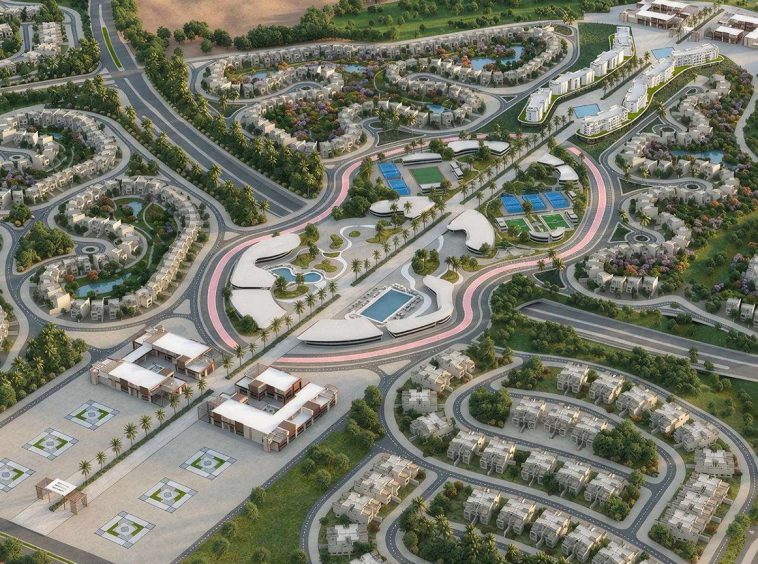
Jood is a masterplanned community of 2.7 million m² (per the developer’s sales material) inside Sultan Haitham City, the new district Oman is building in Al Seeb for around 100,000 residents under Oman Vision 2040. It comprises 7,746 homes across apartments and villas, and it is being delivered by Talaat Moustafa Group, the Egyptian developer behind Madinaty and Al Rehab.
Apartments start from $204,000 and villas from $412,400, on a 4.5-year payment plan that opens at 2.5%, with handover scheduled for Q1 2030. This guide sets out the sizes, prices, payment structure, location and ownership rules — with the numbers in tables so you can compare them at a glance.
Jood at a Glance
| Location | Sultan Haitham City, Al Seeb, Muscat |
| Developer | Talaat Moustafa Group (founded 1970) |
| Ownership | Freehold, open to all nationalities (Integrated Tourism Complex, per the sales agent) |
| Site area | 2.7 million m² (per the developer’s sales material) |
| Total homes | 7,746 — 5,352 apartments and 2,394 villas |
| Formats | Apartments, quatro villas, standalone villas |
| Bedrooms | 1–4 in apartments; 3–4 plus guest or maid’s room in villas |
| Apartments from | $204,000 (approx. OMR 78,437) |
| Villas from | $412,400 (approx. OMR 158,567) |
| Payment plan | 4.5 years, from 2.5% on booking |
| Green and open space | Nearly 50% of the site; buildings cover only 15% |
| Handover | Q1 2030 |
| Handover condition | Fully finished, unfurnished |
Apartment and Villa Sizes and Prices
The published price list covers four product lines. Prices below are entry points for each type — the figure moves with floor level, orientation and plot, and availability changes as phases release. The four lines are the two-, three- and four-bedroom apartments and the villa.
| Home type | Size from | Price from | Approx. per sq ft |
|---|---|---|---|
| 2-bedroom apartment | 1,141 sq ft (106 m²) | $204,000 | $179 |
| 3-bedroom apartment | 1,550 sq ft (144 m²) | $285,100 | $184 |
| 4-bedroom apartment | 1,981 sq ft (184 m²) | $318,800 | $161 |
| Villa | 2,400 sq ft (223 m²) | $412,400 | $172 |
Across the whole community the built range runs from roughly 69 m² (748 sq ft) for one-bedroom apartments to about 367 m² (3,946 sq ft) for villas. One-bedroom apartments are part of the mix — ask for the live availability sheet if that is the size you want.
Note the shape of the pricing: the four-bedroom apartment works out at roughly $161 per square foot, while villas sit at about $172. The two- and three-bedroom apartments sit at about $179 and $184 per square foot.
Unit-by-Unit Walkthrough of the Price List
Read in order, the four rows of the price table step up by 409 sq ft and $81,100 (two- to three-bedroom), by 431 sq ft and $33,700 (three- to four-bedroom) and by 419 sq ft and $93,600 (four-bedroom apartment to villa). The rate per square foot therefore runs from about $179 to $184, then $161, then $172 for the villa, which starts at 2,400 sq ft (223 m²).
| Home type | Entry price (USD) | Entry price (OMR) | Against OMR 200,000 |
|---|---|---|---|
| 2-bedroom apartment, 1,141 sq ft | $204,000 | OMR 78,437 | Below |
| 3-bedroom apartment, 1,550 sq ft | $285,100 | OMR 109,620 | Below |
| 4-bedroom apartment, 1,981 sq ft | $318,800 | OMR 122,578 | Below |
| Villa, 2,400 sq ft | $412,400 | OMR 158,567 | Below |
The rial figures use the fixed peg of OMR 1 = USD 2.6008, and all four entry prices are below OMR 200,000.
The Three Home Formats
Jood is built around three residential products rather than a single tower typology:
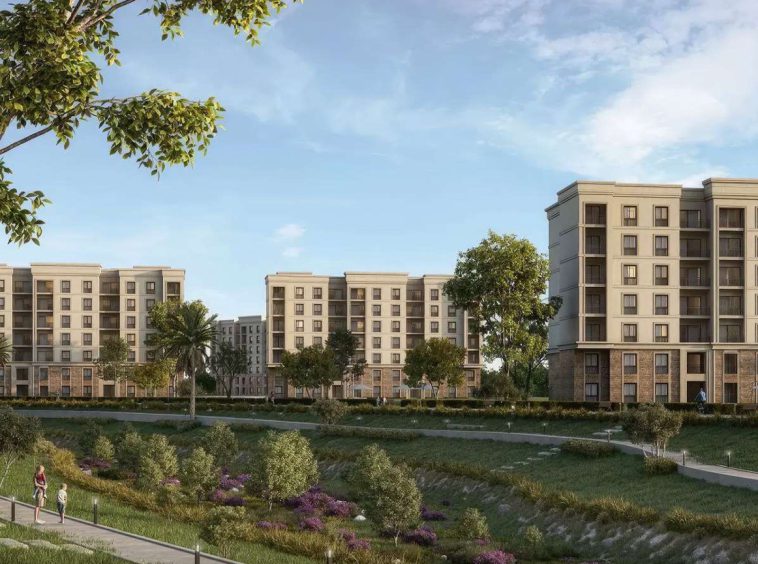
- Apartments — 1 to 4 bedrooms in low- and mid-rise buildings of about six to seven storeys, with private terraces and stone-clad ground floors. A representative one-bedroom layout is 79.53 m² (856 sq ft).
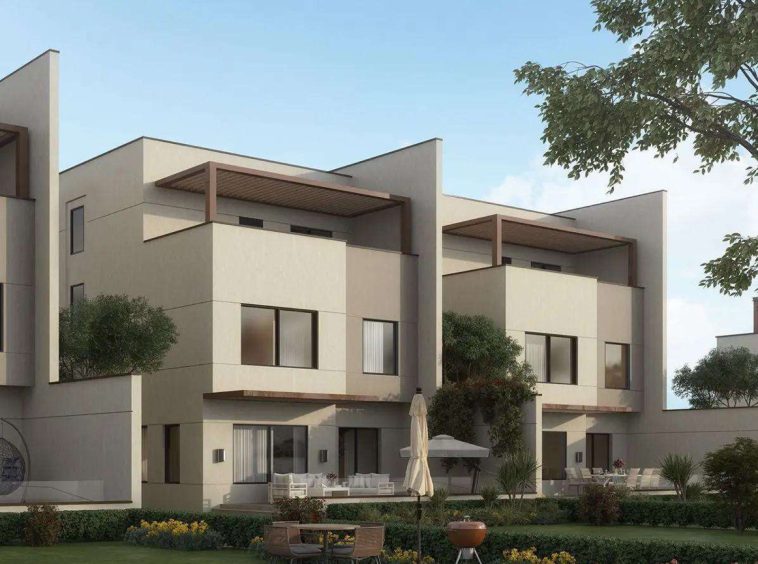
- Quatro villas — semi-detached homes grouped in fours, with private gardens. A representative three-bedroom-plus-guest layout is 223.03 m² (2,400 sq ft).
- Standalone villas — detached three-storey houses for larger households. A representative four-bedroom-plus-maid layout is 264.43 m² (2,846 sq ft).
Every villa comes with two covered parking spaces at ground level. Apartment buildings are served by their own parking within the block.
Payment Plan
Jood runs a 4.5-year instalment plan with 2.5% to reserve and 20% in total paid within the first month, the 17.5% second instalment falling due within one month of booking. Three quarters of the price is spread across construction.
| Instalment | Share | When |
|---|---|---|
| 1st | 2.5% | On booking |
| 2nd | 17.5% | Within 1 month of booking |
| 3rd | 15% | 12 months after booking |
| 4th | 15% | 24 months after booking |
| 5th to 7th | 15% each (45%) | Every 6–8 months across the following 2 years |
| 8th | 5% | On completion |
| Total | 100% | 4.5-year plan, per the developer |
On a $204,000 apartment that is roughly $5,100 to reserve and about $40,800 paid in the first month. On a villa from $412,400 the 2.5% is $10,310. Buyers financing locally can discuss off-plan lending in Sultan Haitham City with their lender. Current mortgage benchmarks are published by the Central Bank of Oman.
Location and Drive Times
Jood sits in the heart of Sultan Haitham City, roughly 24 km from Muscat International Airport. The district is laid out with separated routes for pedestrians, cyclists and vehicles, and drive times to everyday destinations are listed below, from 4 minutes (Al Meera Hypermarket) to approximately 21 minutes (Sultan Qaboos University).
| Destination | By car |
|---|---|
| Al Meera Hypermarket | 4 min |
| Oman Avenues Mall | 4 min |
| Al Ibdaa International Private School | 6 min |
| A’Sharqiyah University | 6 min |
| The Royal Hospital | 6 min |
| Azayba Beach | 6 min |
| The American International School of Muscat | 8 min |
| Baby Sky Nursery | 9 min |
| Muscat College | 10 min |
| Ghala Golf Club | 10 min |
| University of Technology and Applied Sciences | 11 min |
| Bawshar Park | 13 min |
| Ansab Heights Park | 14 min |
| Seeb Beach | approx. 15 min |
| Sultan Qaboos University | approx. 21 min |
Drive times are the developer’s own estimates and will vary with traffic. Four international and private schools are listed within ten minutes by car: Al Ibdaa International Private School at six minutes, The American International School of Muscat at eight, Baby Sky Nursery at nine and Muscat College at ten.
Master Plan: Green Space and Density
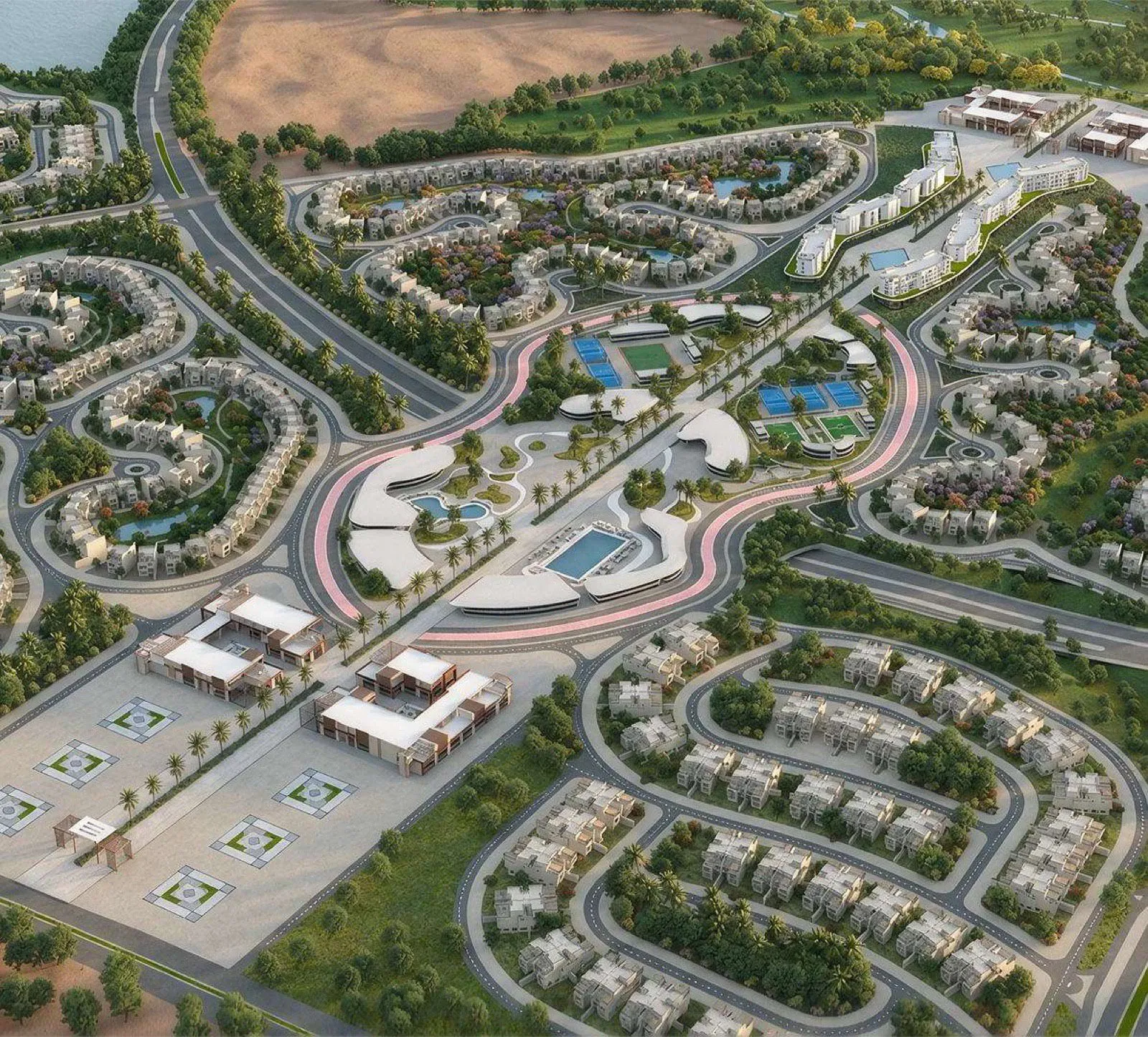
Land use at Jood is split as follows. Nearly 50% of the roughly 2.7 million m² site is landscaped or open space, and buildings occupy only 15% of the land. The remainder is roads, paths and services.
Residential neighbourhoods are linked by parks and by walking and cycling routes, with dedicated lanes separating pedestrians, cyclists and cars. In the developer’s master plan, most homes face green space rather than another façade.
Community Facilities and Amenities
Jood carries its own social and retail infrastructure rather than relying on the wider district:
| Facility | Scale |
|---|---|
| Sports and Social Club | Part of the master plan |
| Retail and services hub | Part of the master plan |
| Government Cultural Centre | 11,000 m² |
| Green and open space | Nearly 50% of site |
| Building footprint | 15% of land |
| Villa parking | 2 covered spaces, ground level |
Within the community there are swimming pools with sunbathing terraces, relaxation areas, sports courts, children’s playgrounds, walking areas and cycling paths, parks and green spaces, shops and restaurants, and mosques.
Architecture, Specification and Handover Finish
The architectural concept takes its cue from Oman’s landscape: façades are finished in sandstone-toned cladding panels, a natural palette meant to tie the buildings to the desert setting, with wrought-iron balustrades on the balconies. Windows are panoramic, double-glazed and aluminium-framed.
Homes are handed over finished but unfurnished, to the following specification:
- Porcelain stoneware flooring throughout
- Painted plastered walls and ceilings
- Wooden internal doors
- Porcelain stoneware wall cladding in kitchens and bathrooms
- Sanitary ware installed
- Split-system air conditioning; wall-mounted extract ventilation in kitchens and bathrooms
Budget separately for kitchen units, wardrobes and furniture. On an apartment in this bracket a reasonable fit-out allowance is 8–12% of the purchase price.
The Developer: Talaat Moustafa Group
Talaat Moustafa Group is an Egyptian real estate group founded in 1970, with more than 55 years in large-scale residential communities, mixed-use destinations, hotels and resorts. The developer’s sales material states that the group has developed over 50 million m² of land and delivered more than 130,000 homes.
Its destinations include Madinaty, Al Rehab and Noor in Egypt, and Banan in Riyadh. In Oman, TMG is building two communities in Muscat with a combined area of roughly 4.9 million m²: Jood in Sultan Haitham City, and Yamal, a separate waterfront destination.
Sultan Haitham City: The Wider Context
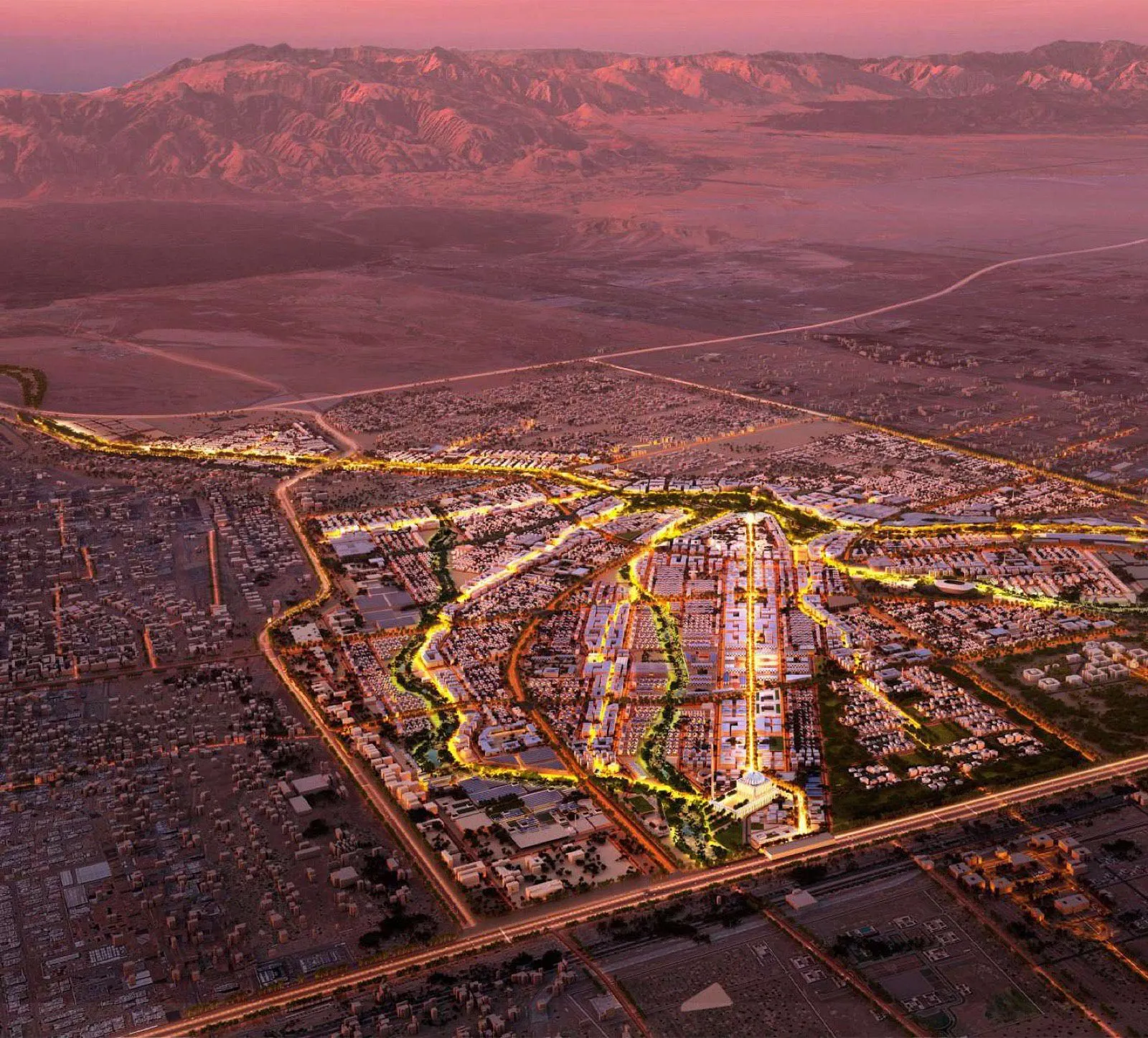
Sultan Haitham City was announced in 2023 and is being developed under Oman Vision 2040 as a smart, sustainable district for approximately 100,000 residents, with more than 20,000 homes planned across the wider city. Neighbourhoods are connected by green corridors and supported by healthcare, education, cultural facilities and intelligent city infrastructure.
For a full picture of the district’s phasing, infrastructure and investment case, see our complete Sultan Haitham City investor guide. Government context on Oman’s property and urban planning framework is published by the Ministry of Housing and Urban Planning, and national investment policy by Invest Oman.
How Jood Compares Within Sultan Haitham City
Jood is not the only freehold option in the district. The table below sets it against the two Sarooj Oasis products.
| Project | Formats | From | Handover |
|---|---|---|---|
| Jood | Apartments and villas | $204,000 | Q1 2030 |
| Sarooj Oasis Apartments | Apartments, 1–3 bed | See the project page | 2028 |
| Sarooj Oasis Villas | Villas, 5–7 bed | $447,800 | Q4 2029 |
Read across, Jood starts at $204,000, against $447,800 for Sarooj Oasis Villas, and offers both apartments and villas inside one master plan. Handover is Q1 2030 at Jood, 2028 at Sarooj Oasis Apartments and Q4 2029 at Sarooj Oasis Villas.
Other freehold options in the district include Wadi Zaha, Yenaier Residences and Hay Al Wafa.
Freehold Ownership and Residency
Homes at Jood are sold freehold and are open to buyers of all nationalities, with title registered in the buyer’s name. Hamptons International Oman, the sales agent, describes Jood as an Integrated Tourism Complex (ITC) development. Our guide to freehold property in Oman covers how the designated zones work and what registration involves.
Golden Residency requires a single ITC property worth at least OMR 200,000 and is decided by the Royal Oman Police; Jood’s published prices are below OMR 200,000. The Owner Visa has no minimum property value, and eligibility is confirmed by the Royal Oman Police, because the purchase alone does not give residency. The routes are distinct — see Golden Residency versus the Owner Visa for which one applies at which investment level. On the tax side, a personal income tax takes effect in Oman on 1 January 2028 under Royal Decree 56/2025, at 5% on income above OMR 42,000 a year, and rental income is within its scope; the transactional costs are set out in our property tax in Oman guide.
Why Muscat, and Why This Price Point
Muscat’s appeal for this buyer profile rests on three things: freehold title in designated zones, a personal income tax that starts only in 2028 and applies above OMR 42,000 a year, and a security record that can be checked on international crime indices. Add a currency pegged to the US dollar, so dollar prices convert to rials at a fixed rate.
A two-bedroom at Jood starts from $204,000 (OMR 78,437) for 1,141 sq ft, with a payment plan that spreads three quarters of the price across construction. The first-month payments (20%) come to $40,800 on the two-bedroom. For a wider view of where the value sits nationally, see the best areas to invest in Oman and our assessment of whether now is a good time to buy.
Rental Yields and Exit
Sultan Haitham City’s first residents arrive as earlier phases complete, and Jood itself hands over in 2030. Our Oman rental yields guide sets out the current ranges by area and property type.
Before completion, resale takes the form of assignment under the developer’s assignment policy. Demand at Jood may be shaped by the schools and the Royal Hospital within ten minutes, which points to family tenants on longer leases rather than short-let. The Royal Hospital is six minutes away by car.
What You Pay, and When, in Dollars
The percentages above translate into the following cash schedule for each entry-level home type. Figures are rounded to the nearest dollar and exclude registration costs, service charges and fit-out.
| Home type | To reserve (2.5%) | By month 1 (20%) | Across construction (75%) | On handover (5%) |
|---|---|---|---|---|
| 2-bed apartment — $204,000 | $5,100 | $40,800 | $153,000 | $10,200 |
| 3-bed apartment — $285,100 | $7,128 | $57,020 | $213,825 | $14,255 |
| 4-bed apartment — $318,800 | $7,970 | $63,760 | $239,100 | $15,940 |
| Villa — $412,400 | $10,310 | $82,480 | $309,300 | $20,620 |
The construction tranche is not a single payment: it is five 15% instalments spread across roughly four years, which on the two-bedroom works out at about $30,600 per instalment. The five instalments of 15% each add up to 75% of the price. Under the plan, three quarters of the price — $153,000 on the two-bedroom — is spread over four years.
Budget beyond the purchase price for registration costs, the annual service charge once the community is operational, and fit-out — kitchens are handed over tiled but without units. On the two-bedroom, an 8–12% fit-out allowance is roughly $16,300 to $24,500.
The 4.5-Year Payment Plan Worked Through
The table follows the plan instalment by instalment on the $204,000 two-bedroom, as an illustration that uses the page’s own percentages.
| Instalment | Share | Amount | Paid to date |
|---|---|---|---|
| 1st, on booking | 2.5% | $5,100 | $5,100 |
| 2nd, within 1 month | 17.5% | $35,700 | $40,800 |
| 3rd, at 12 months | 15% | $30,600 | $71,400 |
| 4th, at 24 months | 15% | $30,600 | $102,000 |
| 5th to 7th, every 6–8 months | 15% each | $30,600 each | $193,800 |
| 8th, on completion | 5% | $10,200 | $204,000 |
On a $412,400 villa the same percentages give $10,310 on booking, $72,170 for the second instalment, $61,860 for each 15% instalment and $20,620 on completion. The payment schedule attached to the contract states each due date and whether it is counted from the reservation date or follows the project timeline.
Schools, Healthcare and Daily Life
Infrastructure around Jood already exists rather than being promised. Four international and private schools sit within eleven minutes by car — Al Ibdaa International Private School at six, The American International School of Muscat at eight, Baby Sky Nursery at nine and Muscat College at ten — alongside two universities in the same radius.
The Royal Hospital, a tertiary referral hospital, is six minutes away. Groceries are covered by Al Meera Hypermarket at four minutes and Oman Avenues Mall at the same distance. Azayba Beach is six minutes, Seeb Beach about fifteen, and Ghala Golf Club ten.
Inside the community, the retail and services hub and the Sports and Social Club are intended to serve weekday errands and weekend activity within Jood itself. For a family relocating to Muscat, that combination is existing schools and hospital within ten minutes, plus on-site retail and sport. The Government Cultural Centre covers 11,000 m².
Who Jood Suits
| Buyer profile | Relevant features |
|---|---|
| Family relocating to Muscat | Schools and hospital inside ten minutes, villas with gardens and parking |
| Investor seeking residency | Owner Visa route (no minimum value); Golden Residency applies at OMR 200,000 or more for a single ITC property |
| Capital-growth buyer with a long horizon | Entry from $204,000, four-year payment runway, district still forming |
Jood’s payment structure suits buyers who can commit capital gradually over the instalment plan and who want the home or the district exposure at the end of it.
Paying From Abroad: Currency and Transfers
Prices at Jood are quoted in US dollars and settled in Omani rials. The rial has been pegged to the US dollar for decades, so dollar prices convert to rials at the fixed rate of OMR 1 = USD 2.6008 under the current peg.
Payments are made into the project’s escrow account, and the SWIFT confirmations form part of your evidence of payment at registration. Current rate and banking-sector information is published by the Central Bank of Oman.
Ownership Costs and the Rial Peg Explained
Once the community is operating, owners pay a service charge towards shared items such as landscaped areas, paths, parks and sports facilities. In Oman it is quoted in rials per square metre per year, so the yearly figure is the rate multiplied by the home’s area; see our service charges guide.
Prices here are in US dollars and convert at the fixed rate of OMR 1 = USD 2.6008. Divide the dollar price by 2.6008 to find rials: $204,000 becomes OMR 78,437. Multiply to go the other way: the Golden Residency threshold of OMR 200,000 equals $520,160. Our rial peg guide explains the rate.
How to Buy: Step by Step
- 1. Shortlist and confirm availability. Fix the format, bedroom count and phase, then request the live price list — published entry prices move as phases release.
- 2. Reserve. Pay the 2.5% booking instalment and sign the reservation form.
- 3. Complete the first-month payment. A further 17.5% falls due within one month, taking you to 20%.
- 4. Sign the sale and purchase agreement. Review the escrow arrangement, the specification schedule and the completion date.
- 5. Pay through construction. Five 15% instalments across roughly four years.
- 6. Handover and registration. Final 5% on completion, then title registration in your name and, if relevant, the residency application.
From Reservation to Keys: The Process in More Detail
The reservation form records the unit number, floor, orientation and exact area, and the buyer can ask for confirmation that the reservation is on the preliminary register. Under Royal Decree 79/2025, a licensed developer opens a separate escrow account for each project, and payments are released against verified progress, according to our guide to the law. Buyers may ask an Omani lawyer of their choice to review the sale and purchase agreement before signing.
At handover the final 5% is paid and the home is inspected against the specification schedule, often called snagging. Title is then registered in the buyer’s name and utilities are connected. The target is Q1 2030, per the developer.
Residency Routes in Detail
Golden Residency needs a single ITC property worth at least OMR 200,000 ($520,160); according to our guide it was relaunched through the Invest Oman platform on 31 August 2025, and two smaller purchases do not combine. The Owner Visa has no minimum value, is sponsor-free and stays linked to ownership of the property. At Jood’s published prices of OMR 78,437 to OMR 158,567, the Owner Visa is the route that matches. See our Golden Residency versus Owner Visa guide.
Talaat Moustafa Group: History, Partners and Track Record
Talaat Moustafa Group (TMG) describes itself as having started in 1970 as a construction enterprise, moving into real estate development from the mid-1980s, and was floated on the Egyptian Exchange on 25 November 2007. In Egypt it built Madinaty (120,000 housing units, launched in 2006) and Al Rehab (about 300,000 residents, launched in 1997).
In Oman the land agreement was signed with the Ministry of Housing and Urban Planning on 19 May 2025. TMG launched Jood and Yamal in December 2025 in partnership with Al Muhaidib Group, and Hamptons International Oman holds the exclusive international sales mandate. On 8 October 2026 the Oman Observer reported a provisional RO 11.285 million letter of award, excluding VAT, to a Saudi contractor for 160 villas at Jood, with the final contract expected on 5 November. Sources are in the Talaat Moustafa Group profile, part of our directory of developers in Oman.
Jood and Yamal Side by Side
| Feature | Jood | Yamal |
|---|---|---|
| Setting | Inland, in Sultan Haitham City | Coastal, with a 1,760-metre shoreline |
| Site area | 2.7 million m² | About 2.21 million m² |
| Entry unit | 2-bedroom, 1,141 sq ft, $204,000 | 1-bedroom, 743 sq ft, $165,800 |
| Handover | Q1 2030 | Q4 2029, per the developer |
| Payment plans | 4.5 years | 4.5, 6 and 8 years |
Both are Talaat Moustafa Group communities in Al Seeb, sold off-plan in dollars. The entry unit at Jood is a 1,141 sq ft two-bedroom at $204,000 and at Yamal a 743 sq ft one-bedroom at $165,800; Yamal’s figures come from its listing page.
Glossary of Terms Used on This Page
- ITC — Integrated Tourism Complex, a designated scheme in which non-Omanis can own property.
- Freehold — ownership registered in the buyer’s name rather than leased for a fixed term.
- SPA — the sale and purchase agreement setting price, payment dates and completion date.
- Escrow — a project account from which funds are released against verified progress.
- Snagging — inspection of the finished home against the specification schedule.
- Assignment — selling your contract to another buyer before completion.
What to Prepare When Reserving
- The plot or unit number, floor, orientation and exact area, as written on the reservation form.
- The escrow account details into which payments are made.
- The service charge schedule for the community.
- The assignment and resale policy, including any fee and the earliest permitted date.
- The completion-date clause and its terms in the sale and purchase agreement.
- The handover specification, matched item by item to the finish schedule above.
- If financing, the lender’s pre-approval for off-plan in Sultan Haitham City.
Frequently Asked Questions
Where exactly is Jood?
In Sultan Haitham City, in the Al Seeb governorate of Muscat, roughly 24 km from Muscat International Airport.
Can foreigners buy at Jood?
Yes. Homes are marketed as freehold and open to all nationalities, with title registered in the buyer’s name. The sales agent, Hamptons International Oman, describes Jood as an ITC development.
How much does a home at Jood cost?
Apartments start from $204,000 and villas from $412,400. The published list runs from a 1,141 sq ft two-bedroom to villas of 2,400 sq ft and above.
How many homes are there?
7,746 in total — 5,352 apartments and 2,394 villas — across a 2.7 million m² site.
When does Jood complete?
Q1 2030.
What is the payment plan?
2.5% on booking, 17.5% within one month, then 15% at twelve months, 15% at twenty-four months, three further 15% instalments every 6–8 months, and 5% on completion, as the developer’s 4.5-year plan; the sale and purchase agreement fixes each due date.
Is parking included?
Each villa has two covered ground-level parking spaces. Apartment buildings have their own parking.
Are the homes furnished?
No. They are handed over fully finished — flooring, painted walls and ceilings, wooden doors, tiled kitchens and bathrooms, sanitary ware and air conditioning — but unfurnished, and without fitted kitchen units.
Who is the developer?
Talaat Moustafa Group, founded in 1970. Its sales material cites more than 50 million m² developed and over 130,000 homes delivered.
Does buying at Jood qualify for Oman residency?
Golden Residency requires a single ITC property worth at least OMR 200,000, and Jood’s published prices are below that. The Owner Visa has no minimum value; the Royal Oman Police decide. See our Golden Residency and Owner Visa guide for which route applies.
What is paid in the first month on a villa?
On a villa from $412,400, the 2.5% booking instalment is $10,310 and the 17.5% second instalment is $72,170, so $82,480 (20%) has been paid by the end of month one.
Who sells Jood?
Hamptons International Oman holds the exclusive international sales mandate for Jood and Yamal, announced in February 2026.
How are dollar prices converted to rials?
Divide the dollar price by the fixed peg of 2.6008. A $204,000 two-bedroom is therefore OMR 78,437.
Features
- Air Conditioning
- Eco-Friendly Design
- Kids' Pool & Play Area
- Landscaped Gardens
- Retail & Dining On-Site
- School & Clinic Access
- Swimming Pool
Contact Information

- uinvest
Enquire About This Property
Property Inquiry
"*" indicates required fields