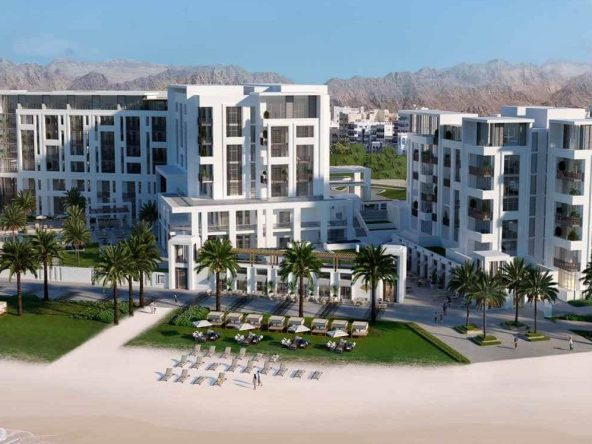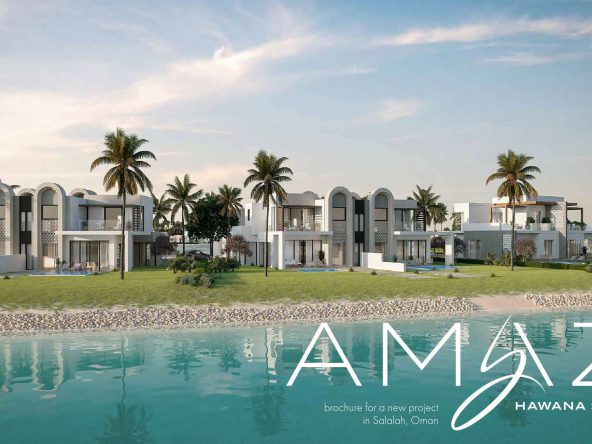




























It is the question that follows almost every enquiry about buying in Oman: can I put it on Airbnb when I’m not using it? The pitch writes itself — a sea-view apartment in an Integrated Tourism Complex, a country adding hotels and flight routes, and a nightly rate that looks flattering against the monthly rent.
The honest answer has three parts, and only the first one is the one people expect. Short-term letting in Oman is legal but licensed. The licence route for individual owners is the last one to open, behind developers, hotel companies and registered SMEs. And even with a licence, your community’s own rules may forbid it, because most of the freehold a foreigner can buy sits inside a managed resort with a say over what happens in its buildings.
Then there is the part nobody puts in a brochure: at the occupancy and nightly rates Muscat actually achieves, a professionally managed short-term let on a typical studio nets less than a long-term tenancy on the same unit — not slightly less, but by a factor of roughly eight. We show that calculation in full below, with the inputs exposed so you can change them.
This is not an argument that short-term letting in Oman never works. It is an argument that it works in specific places, for specific owners, under conditions you should verify before you buy rather than after. Figures are 2026; OMR 1 ≈ $2.60 on the long-standing dollar peg.
The short answer
| Question | Answer |
|---|---|
| Is Airbnb legal in Oman? | Yes — but paid tourist accommodation is a licensed activity, not a private arrangement |
| Who issues the licence? | The Ministry of Heritage and Tourism (MHT) |
| Governing law | Tourism Law, Royal Decree 69/2023 |
| Can an individual foreign owner get one? | The individual-owner track is the last phase of the rollout — developers, hospitality companies and SMEs came first |
| Does my listing need to show anything? | Yes — ministerial circular 2023/32/6421 requires the licence number on the listing |
| Is there a nights-per-year cap? | No. Oman has no 90-day rule; the control is the licence, not the calendar |
| Can my community block it? | Yes. Many ITC community rules restrict short-term letting without management approval |
| Does it change the tax position? | Substantially — see the tax section below |
Read the fourth and seventh rows together, because they are the two that decide your case, and neither appears in a nightly-rate projection.
The law: what a licence actually is
Oman’s framework comes from the Tourism Law, Royal Decree 69/2023. Its logic is that anyone selling accommodation to a tourist is operating a tourism establishment, whatever the building is called. A villa let by the night is, in the ministry’s eyes, the same category of activity as a guesthouse — smaller, but not different in kind.
That means a short-term let is not a private contract between you and a guest. It is a regulated supply, and it carries the obligations that go with one: registration of the property, compliance with health, safety and quality standards, registration of the lease arrangement with the local municipality, and display of the licence number on every listing under ministerial circular 2023/32/6421.
The absence of a nights cap is worth dwelling on, because it cuts both ways. Oman has not copied the 90-day limits used in London, Amsterdam or Barcelona. There is no calendar restriction to plan around. But the reason there is no cap is that the country has chosen a permission model rather than a tolerance model: rather than letting everyone do a little, it lets licensed operators do as much as they like. If you are unlicensed, no number of nights is the safe number.
The realistic consequence of operating outside the framework is fines or administrative action from the tourism authorities. It is not typically criminal, and enforcement in practice is uneven — but “people get away with it” is not a basis on which to commit six figures, and it is certainly not a basis on which to model a yield.
The queue: individual owners come last
This is the single most important thing on this page and the thing most likely to be missing from a sales conversation.
When Oman opened the short-term rental market, it did so in stages by operator type. Property developers, hospitality companies and registered small and medium enterprises came first. Individually owned properties — one person, one apartment, one licence — were explicitly slated for a later stage.
So the question “can I Airbnb my Omani apartment?” has a different answer depending on who “I” am:
| You are… | Realistic position |
|---|---|
| A developer with a licensed rental pool | Yes — this is the route the framework was built for |
| A hospitality company or licensed operator | Yes |
| A registered Omani SME running lettings | Yes |
| An individual owner, resident | Depends on the current phase of the rollout — verify before assuming |
| An individual foreign owner, non-resident | The hardest case. Verify in writing before you buy |
The practical route for most foreign buyers is therefore not “get a licence yourself” but “put the unit into a licensed operator’s programme” — the developer’s rental pool, or a hospitality manager who holds the licence. That is a legitimate and often sensible arrangement. It is also one where somebody else sets the rate, takes a cut, and controls your access to your own property. Those are exactly the terms you should read before you sign, not after.
Your community may forbid it anyway
A licence from the ministry is permission from the state. It is not permission from your building.
Almost all freehold available to foreigners in Oman sits inside an Integrated Tourism Complex — see our guide to what foreigners can buy and the companion piece on what they cannot. ITCs are managed resort communities, and many of their community rules restrict short-term letting without the approval of building management or the owners’ association. Some run their own rental programme and would rather you used it. Some restrict guest access to amenities. Some prohibit nightly letting outright.
None of this is unusual or unreasonable — a resort selling tranquillity has an interest in who walks through the lobby. But it means the sequence most buyers follow is backwards. They confirm the country allows it, buy, and then discover the community does not.
Ask for the community rules in writing, naming short-term letting explicitly, before you exchange. A verbal “of course you can, everyone does” from a sales agent is worth nothing, and the agent will not be there when the association writes to you.
What Muscat actually earns
Now the numbers, which are the part that changes minds.
| Metric | Muscat short-term rental market, 2026 |
|---|---|
| Average occupancy | 34–36% (median around 34.3%) |
| Average daily rate | $71 (some datasets $88) |
| Peak month occupancy | 50.7% |
| Peak month ADR | $100 |
| Nights sold per year at 34.3% | 125 of 365 |
| Implied annual gross | $8,889 |
Sit with the third and fifth rows. A typical Muscat listing is empty roughly two nights in three, and even in its best month it is empty about half the time. The nightly rate is real, but you only collect it 125 times a year.
This is the arithmetic error at the heart of most short-term rental pitches: a nightly rate is multiplied by something close to a full year, when the honest multiplier is a third of one. At $71 a night, 365 nights is $25,915 and 125 nights is $8,889. The gap between those two numbers is the entire investment case.
The wider market is telling you something
Two data points from 2026 matter more than any individual listing’s performance.
First, Oman received 1.80 million visitors to the end of June 2026 — unchanged on the same period of 2025. Arrivals are flat, not growing.
Second, over the same period hotel revenues fell 12.2%, with average hotel occupancy at 44.2%. Revenue falling while arrivals hold steady has one straightforward explanation: supply is growing faster than demand, and rates are being competed down.
You would be entering that market, not a different one. And note that hotels — with brands, distribution, sales teams and restaurants — are running at 44.2% while short-term rentals run at 34%. The independent listing is not outperforming the professional operator; it is trailing it by ten points.
The one genuinely encouraging figure is domestic tourism, up 16.2%. Omani families taking short breaks are a real and growing source of demand, and they behave differently from international tourists: they travel at weekends and holidays, they want larger units, and they are price-sensitive. If you are buying for short-term letting, that is the guest you should be designing for — not the imagined European couple in a one-bedroom sea-view flat.
The tax stack: short-term costs more than long-term
This is where Oman’s rules bite hardest, and it is almost never mentioned.
| Long-term residential let | Short-term tourist accommodation | |
|---|---|---|
| VAT | Exempt | 5% (standard-rated, subject to registration threshold) |
| Municipality tax | 3% of gross rent | 5% on occupancy |
| Tourism tax | — | 4% applies in tourism areas / at rated establishments |
| Licensing | None beyond lease registration | MHT tourism licence |
| Headline burden | ~3% | up to ~14% |
Residential leases in Oman are VAT-exempt. Tourist accommodation is not. So the same apartment, let the same month, sits in two different tax categories depending on the length of the stay — and the short-stay category is the expensive one, before you have paid a platform a single rial.
One nuance in the small operator’s favour. Oman’s mandatory VAT registration threshold is OMR 38,500 of annual taxable turnover (voluntary registration is available above OMR 19,250). Our worked example grosses OMR 3,418 a year — nowhere near it. A single small unit let by an individual therefore has no VAT to charge. But if you place the unit with a licensed operator or a developer’s rental pool, you are inside their VAT registration, and the 5% is in the price. The threshold protects the smallest self-managed hosts and nobody else.
The full cost model, on a real unit
We ran the numbers on a studio from our own portfolio: Solar Residences at Jebel Sifah, $130,040 (OMR 50,000), 403 sq ft, with a published service charge of $1,500 a year — one of the few Omani projects that publishes one at all.
| Line | Amount | Basis |
|---|---|---|
| Gross revenue | $8,889 | $71 ADR × 125 nights (34.3% occupancy) |
| Municipality tax | −$444 | 5% on occupancy |
| Platform fee | −$1,333 | 15%, host-pays pricing |
| Management | −$1,778 | 20% — the going rate for a managed let |
| Cleaning & linen | −$504 | 42 stays × $12 |
| Utilities & internet | −$1,248 | Host pays on a short-term let; OMR 40/month |
| Service charge | −$1,500 | Published figure |
| Furniture, amortised | −$1,600 | $8,000 fit-out over 5 years |
| Net, professionally managed | $481 | 0.4% net on price |
| Net, self-managed | $2,259 | 1.7% net — no management fee, but it is now your job |
Nothing in that table is hostile. The occupancy and rate are market figures, the service charge is the project’s own published number, and the management and platform percentages are ordinary. The result is still that a managed short-term let on this unit returns 0.4%.
The same studio, let long-term
| Line | Amount |
|---|---|
| Gross rent | $6,866 (OMR 220/month) |
| Municipality tax 3% | −$206 |
| Voids & maintenance 8% | −$549 |
| Service charge | −$1,500 |
| Net | $4,611 — 3.5% net |
The long-term tenancy grosses 23% less and nets roughly eight times more. It also requires no licence, no furniture, no cleaning rota, no guest communication and no exposure to a tourism market whose hotel revenues just fell 12.2%.
That is the finding, and it is the opposite of what the nightly rate suggests. Our wider rental yields in Oman guide covers where the long-term rental markets actually are — the same short list applies here, because a unit with no long-term tenant demand usually has no short-term demand either.
What would have to be true
Rather than tell you short-term letting cannot work, here is the threshold it has to clear. For a managed short-term let on this studio to match the long-term net of $4,611, it needs gross revenue of about $16,591. That implies either:
| Route to break-even with a long-term tenancy | Required | Muscat actual |
|---|---|---|
| Hold the rate, raise occupancy | 64% occupancy | 34% |
| Hold occupancy, raise the rate | $133 ADR | $71 average, $100 peak month |
You would need to nearly double the market’s occupancy, or beat its best month’s nightly rate by a third — every night of the year. Neither is impossible for an exceptional property with exceptional management. Both are a long way from the average, and an investment case should not require you to be exceptional by default.
The useful way to read this table is as a specification. If an operator is projecting returns that beat a long-term let, ask which of those two numbers they are claiming, and ask for the evidence from comparable units in that specific building.
Where short-term letting does work in Oman
Three situations genuinely change the arithmetic, and it is worth being precise about them rather than dismissing the whole idea.
Salalah in khareef. The Dhofar monsoon turns the south green from June to September, exactly when the rest of the Gulf is unbearable, and Salalah fills with regional visitors. That is a real, concentrated, high-rate season rather than a thin year-round trickle. A unit at Hawana Salalah is exposed to a demand curve that Muscat simply does not have. The corollary is that the other eight months are quiet, so the annual average still needs checking — but a seasonal peak you can actually sell is worth more than a flat 34%.
Resort units inside a developer’s rental programme. At Jebel Sifah or Al Mouj, the operator holds the licence, handles distribution, and pools risk across many units. Returns are lower per night than a fantasy spreadsheet but far more reliable than a self-run listing, and the compliance problem is somebody else’s. For most foreign buyers this is the only realistic route, and it is not a consolation prize.
Larger units aimed at domestic demand. With domestic tourism up 16.2% and international arrivals flat, the growing guest is an Omani family on a weekend break. They need three bedrooms, not a studio. The unit type that performs worst on the long-term arithmetic — the small, expensive-per-foot studio, see our cost of living guide — is also the one chasing the shrinking share of the short-term market.
The seasonality problem nobody prices
A 34% annual occupancy is not a property that is a third full every week. It is a property that is reasonably busy for part of the year and close to empty for the rest, and the shape of that curve matters more than its average.
Muscat’s difficulty is that its quiet season is long and its reasons are structural. From June to August the city runs above 40°C, international leisure demand collapses, and the Gulf residents who might otherwise take a short break are leaving the region rather than entering it. That is a quarter of the year in which a coastal apartment is competing on price with every other empty coastal apartment. The peak month reaches 50.7% — a good month, not a full one — and the shoulder months carry the average down from there.
This has a specific consequence for the cost model above. Your service charge, utilities, internet and furniture amortisation do not fall in the quiet months. They are fixed. On our worked studio they total about $4,348 a year, or $362 every month, against revenue that arrives unevenly and stops almost entirely in summer. A long-term tenancy converts that same fixed cost into a matched monthly income; a short-term let leaves it exposed for a season.
| Cost behaviour on a short-term let | Annual | Falls when the unit is empty? |
|---|---|---|
| Service charge | $1,500 | No |
| Furniture amortisation | $1,600 | No |
| Utilities & internet | $1,248 | Barely |
| Fixed subtotal | $4,348 ($362/month) | No |
| Platform fee | $1,333 | Yes |
| Management | $1,778 | Yes |
| Municipality tax | $444 | Yes |
| Cleaning & linen | $504 | Yes |
| Variable subtotal | $4,059 | Yes |
Salalah is the exception precisely because its curve is inverted. Khareef fills the south in the months Muscat empties, which is why the two cities are not simply cheaper and dearer versions of one another — see Muscat vs Salalah.
Why a studio is the wrong unit for this
There is a mismatch running through most short-term letting plans in Oman, and it comes from buying the cheapest ticket into the market.
Studios are the most expensive property per square foot in the Omani portfolio and carry the worst service-charge ratio — 1.15% of value a year on our worked example, against 0.15% on a branded Al Mouj one-bedroom. On a short-term let that ratio is punishing, because the charge is fixed while the income is not.
Meanwhile the demand that is actually growing is domestic: Omani families, travelling at weekends and holidays, needing space. A studio is the wrong product for that guest and competes instead for the flat international segment, against hotels running ten points higher on occupancy with brands and distribution behind them.
So the unit that looks cheapest to buy is the one with the worst cost ratio, aimed at the one segment that is not growing. If short-term letting is genuinely your plan, the honest conclusion is that it argues for a larger unit in a resort with a licensed programme — a materially bigger cheque than the studio that started the conversation. Our cheap houses in Oman guide makes the same point from the purchase side.
| Scenario | Who holds the licence | Why it can work | What to verify |
|---|---|---|---|
| Salalah, khareef season | Operator or owner | Concentrated Jun–Sep regional demand at strong rates | What the other eight months actually do |
| Resort rental programme | The operator | Distribution, compliance and risk are pooled | The cut, on gross or net; your own access weeks |
| Larger unit, domestic guests | Operator or owner | Domestic tourism is the only growing segment (+16.2%) | Building-level comparables for that unit size |
| Self-listed studio, foreign individual | You — the hardest track | Rarely does | Whether you are even eligible yet |
What to ask before you buy for short-term letting
- Get the community rules in writing, with short-term letting named explicitly. Not the brochure — the actual association or management rules.
- Ask who holds the licence. If the answer is “you will apply”, ask which phase of the MHT rollout individual owners are currently in, and get it in writing.
- Ask for comparable performance in that building — occupancy and ADR for units like yours, last twelve months. Not a citywide average, and not a projection.
- Ask what the operator’s cut is, whether it is on gross or net, and who pays utilities, cleaning, linen and re-fit.
- Ask about your own access. Rental pools often limit owner use, and often in the weeks you actually want.
- Get the service charge in cash and divide it by the price yourself — see service charges in Oman. On a short-term let it is a fixed cost against a variable income, which makes a high ratio far more dangerous than it looks.
- Confirm the VAT position for your specific arrangement: below the OMR 38,500 threshold as an individual is very different from being inside an operator’s registration.
Where these numbers are soft
- Occupancy and ADR are market aggregates. Muscat’s 34.3% and $71 come from short-term rental datasets covering all listing types and locations. A specific building can materially beat or miss them; that is exactly why we ask for building-level comparables above.
- The rollout phase moves. The individual-owner track was scheduled to open later than the developer and SME tracks. Whether it has fully opened by the time you read this is a question for the ministry, not for an article — verify it rather than quoting us.
- The 4% tourism tax is not uniform. It applies in designated tourism areas and at rated establishments; whether a given licensed apartment falls inside it depends on classification. We have shown it in the stack because it can apply, not because it always does.
- Our cost model uses ordinary assumptions — 15% platform, 20% management, $8,000 fit-out over five years, OMR 40/month utilities. Change any of them and the answer moves. The reason the conclusion is robust is not any single input; it is the 125-night ceiling.
- Long-term rent of OMR 220 for the comparison studio is a Muscat market rate, not a Jebel Sifah quotation. Resort locations can let for more and can also sit empty longer.
So should you?
If you are buying a small unit as an individual foreign owner, intending to self-list it and hoping short-term letting will beat a tenancy, the evidence says no — you would be taking on a licence problem, a community-rules problem, a 14% tax stack, a furniture bill and a management job, in exchange for a return below what a long-term tenant would pay you for doing nothing.
If you are buying inside a resort with a licensed rental programme, at a location with a real seasonal demand curve, in a unit size that matches who is actually travelling, then short-term letting is a reasonable component of the case — provided the operator can show you building-level numbers rather than a citywide average.
And if the reason you want it is to use the place yourself several weeks a year and defray some cost, that is a perfectly good reason. Just do not call it a yield. Our guides to payment plans, property tax and selling in Oman cover the rest of the ownership cycle, and Golden Residency vs Owner Visa covers what the purchase does for your residency — which, for many buyers, is the return that actually matters.
Frequently asked questions
Is Airbnb banned in Oman? No. It is licensed. Paid tourist accommodation requires a permit from the Ministry of Heritage and Tourism under Royal Decree 69/2023, and the licence number must appear on the listing.
Can I short-term let as a foreign individual owner? This is the hardest case. The framework opened first to developers, hospitality companies and registered SMEs, with individually owned properties scheduled for a later phase. Verify the current position in writing before you buy.
Is there a 90-day limit like in European cities? No. Oman imposes no nights-per-year cap. The control is whether you hold a licence, not how many nights you sell.
What does it earn? On Muscat market figures — 34% occupancy at $71 a night — a typical studio grosses about $8,889 and nets roughly $481 professionally managed, or $2,259 self-managed. The same unit let long-term nets about $4,611.
Do I pay more tax on short-term letting? Yes. Long-term residential rent is VAT-exempt with 3% municipality tax. Tourist accommodation is standard-rated at 5% VAT, carries 5% municipality tax on occupancy, and a 4% tourism tax can apply — though a small individual host below the OMR 38,500 VAT threshold has no VAT to charge.
Can my building stop me? Yes. Many ITC community rules restrict short-term letting without management approval, regardless of any licence you hold.
Where does it work best? Salalah during khareef, and resort units inside a developer’s licensed rental programme — particularly larger units suited to domestic visitors, the one growing segment.
Related reading
- Rental yields in Oman — which markets have real rental evidence
- Cost of living in Oman — the rent-vs-buy arithmetic on the same units
- Can foreigners buy property in Oman? — the eligibility rules underneath all of this
- What foreigners cannot buy in Oman
- Service charges in Oman real estate — a fixed cost against a variable income
- Property tax in Oman — VAT, registration and the first-supply trap
- Selling property in Oman — the exit, and why the resale market is thin
- Golden Residency vs Owner Visa
- Jebel Sifah, Al Mouj and Hawana Salalah — the three communities where letting programmes exist
- Beachfront property in Oman and off-plan property in Oman
- Oman real estate market outlook
- Apartments for sale in Oman and villas for sale in Oman
External sources for the market and tax figures above: Muscat Daily on hotel revenues and arrivals, Muscat Daily on domestic tourism, the Oman Tax Authority VAT guidance and PwC on Omani municipal and tourism taxes.