









Turkish Breakfast: Kahvaltı Items, Regions and Protected Names
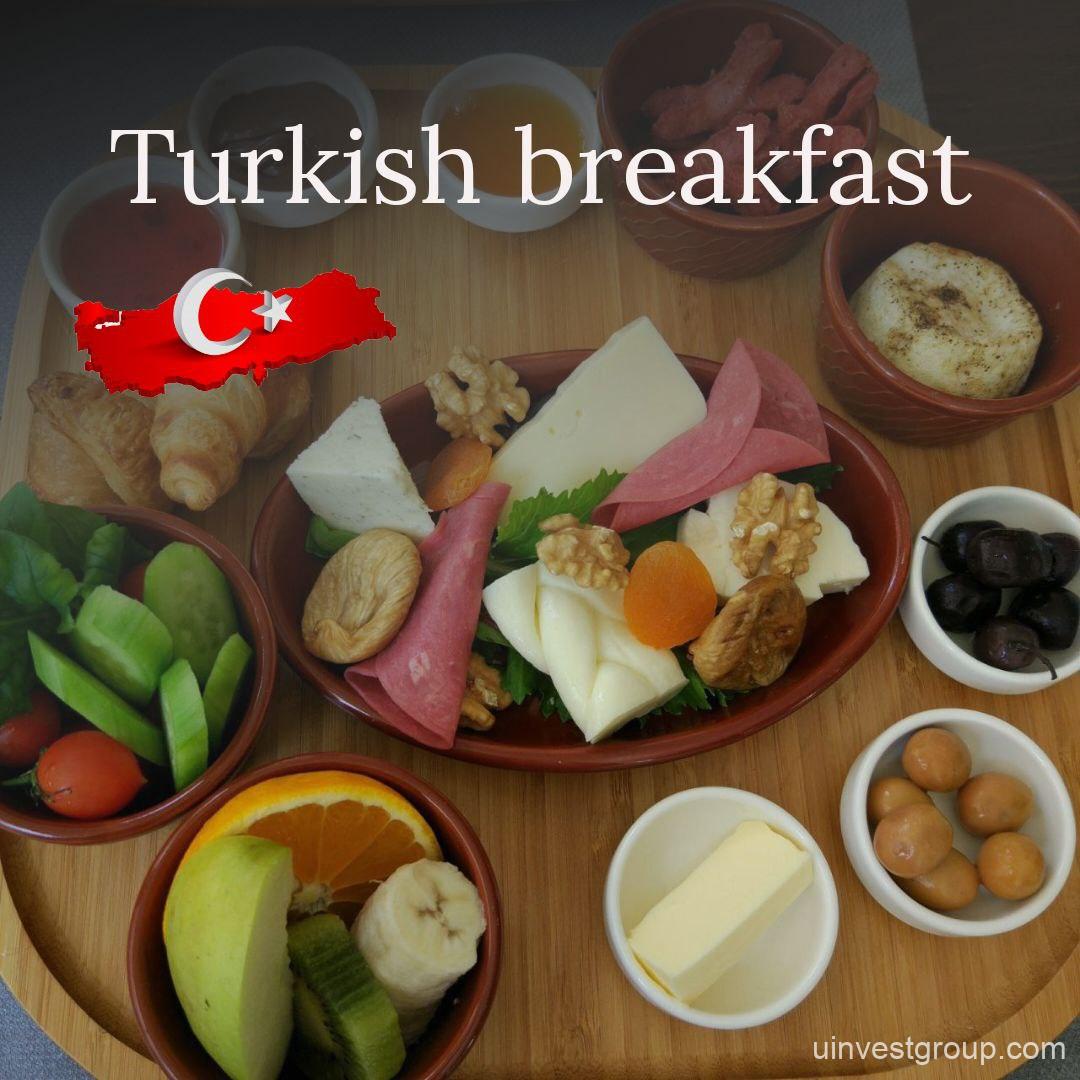
A Turkish breakfast (kahvaltı) is a shared morning meal built from many small dishes: cheese, olives, tomatoes and cucumbers, eggs, honey, clotted cream, jam, bread or simit, and tea poured from a double kettle. The Turkish Language Association (TDK) defines kahvaltı as a light meal usually eaten in the morning, and also as a meal arranged in that way, and its dictionary lists serpme kahvaltı (“spread” breakfast) among the compounds. This guide is checked against official and scholarly sources as of 8 November 2026.
You will find the meaning and history of the word, a glossary of the items with plain English glosses, how a serpme table is served, the regional styles (Van, the Black Sea, Kars, the Aegean, Istanbul, Hatay and Gaziantep), the geographical indications registered with the Turkish Patent and Trademark Office (TÜRKPATENT), the UNESCO entries for Turkish coffee and tea, nutrition points from the Ministry of Health dietary guide, and the national rules on menus, service charges and tips.
What a Turkish breakfast is
The official tourism site of Türkiye (goturkiye.com) describes the Turkish breakfast as a leisurely meal of many sweet and savory small plates, served with bread and tea and shared by everyone at the table. Platters of food are spread across the whole table, and the meal can last for hours, in cafés, in restaurants or in the countryside. A scholarly overview presented at the 1st International Mediterranean Symposium (Say, Esen and Güzeler) lists the usual components in similar terms: white sheep’s-milk cheese and other cheeses, butter, jam, honey, sucuk (spiced sausage), pastırma (air-dried cured beef), olives, boiled and fried eggs, vegetables, simit, pastries and fruit, with tea that is brewed and served in the Turkish way.
The same paper notes that the breakfast table has changed over the last two to three decades under economic and cultural conditions. It reports, citing a 2009 source, that salami and sausage from European breakfast culture and scrambled eggs cooked with milk or cream have begun to appear on Turkish tables, while the traditional pairing is menemen with tomato and pepper in summer and sahanda yumurta with sucuk or pastırma in winter. The dictionary definition (a light morning meal, or a meal arranged in that manner) is broad, and the regional styles described below show how much the contents vary by province.
The rest of this page separates three things that are often mixed together: what the word means, what is physically on the table, and which named products carry a legal origin designation. Each is tied to a source and a date so that readers in any language can check it.
Kahvaltı: the word and its history
The TDK dictionary (Güncel Türkçe Sözlük, consulted 8 November 2026) gives two senses for kahvaltı: “genellikle sabahları yenilen hafif yemek” (a light meal generally eaten in the mornings) and a meal arranged in this manner (bu biçimde düzenlenmiş yemek). Its compounds are serpme kahvaltı and sabah kahvaltısı (morning breakfast), and it defines kahvaltılık as something eaten at breakfast. The entry gives no derivation note.
A widely repeated explanation breaks the word into kahve (coffee) and altı (under, before), meaning the food taken before the first coffee. This reading appears in Turkish food-studies literature and on goturkiye.com. The Say, Esen and Güzeler paper adds the following background, citing secondary sources: Ottoman palace kitchen records show two meals a day, subh (morning) and mesa (evening); small snacks before the first coffee were not a defined main meal; people in the countryside started the day with hot soup and bread, while townspeople might eat leftovers, soup, or cheese and jam taken from a wire-mesh cupboard before coffee; and breakfast began to be described as a main meal toward the end of the 19th century. The paper also states that the habit of three meals a day belongs to the modernization and industrialization period.
Coffee itself arrived earlier. A 2023 article on Ottoman coffee culture based on the Adana Museum collection (Yılmaz) places the drinking of coffee in Ottoman society from the 16th century. The sequence in the sources is therefore: coffee in Ottoman society from the 16th century, a two-meal day in the palace records, and breakfast described as a main meal in the late 19th century. The word-origin explanation is a popular and scholarly shorthand, and the dictionary does not commit to it.
| Question | What the source says | Source (checked 8 Nov 2026) |
|---|---|---|
| Dictionary meaning of kahvaltı | Light meal usually eaten in the morning; a meal arranged in that way | TDK Güncel Türkçe Sözlük |
| Compounds listed | serpme kahvaltı, sabah kahvaltısı | TDK Güncel Türkçe Sözlük |
| Coffee in Ottoman society | Consumed from the 16th century | Yılmaz (2023), Adana Museum coffee-culture article |
| Palace meal pattern | Two meals daily, subh and mesa | Say, Esen and Güzeler, citing palace kitchen records |
| Breakfast as a main meal | Described as such toward the late 19th century | Say, Esen and Güzeler |
What goes on a Turkish breakfast table
The glossary below gives the Turkish name, a plain English gloss, and what an official or scholarly source says about the item. Definitions marked TDK come from the Güncel Türkçe Sözlük; descriptions of the registered products come from the TÜRKPATENT certificates. Different households and regions mix these items differently, and no single list is binding.
| Turkish name | English gloss | What the source says |
|---|---|---|
| çay | black tea | Served in tulip-shaped glasses, usually the first drink of the meal (goturkiye.com) |
| peynir; beyaz peynir | cheese; white brined cheese | TDK: beyaz peynir is made from sheep, goat, cow or buffalo milk; the Say paper treats white cheese, kaşar and tulum as the nationally consumed types |
| kaşar | semi-hard yellow cheese | TDK: usually wheel-shaped, yellowish, fatty cheese |
| otlu peynir | herb cheese | TDK: white cheese with fragrant herbs; Van Otlu Peyniri is a registered appellation of origin |
| lor; çökelek | fresh whey curd; soured-milk curd cheese | TDK: lor is fresh, soft, unsalted white cheese; çökelek is a cheese from boiled skimmed milk or yogurt |
| zeytin | olives | Described by the Say paper as a fixture of the table, often with olive oil in the Aegean |
| domates, salatalık, söğüş | tomato, cucumber, plain sliced vegetables | TDK: söğüş can mean sliced tomato or cucumber eaten without oil, lemon or mixing |
| yumurta: haşlanmış, sahanda | boiled eggs, fried eggs in a pan | Both appear in the Van Kahvaltısı specification |
| menemen | eggs cooked with tomato and green pepper | TDK: made with eggs, onion, green pepper and tomato; the Menemen district registration lists olive oil, tomato, onion, pepper, eggs, salt and black pepper |
| sucuklu yumurta | eggs with spiced sausage | Named in the Van Kahvaltısı specification; TDK: sucuk is spiced minced meat in dried casing |
| pastırma | air-dried cured beef | TDK: meat coated with salt, fenugreek (çemen) and red pepper paste, then dried |
| kavurma | meat cooked and preserved in its own fat | TDK; kavurmalı yumurta appears in the Van specification, with lean meat required |
| kaymak | clotted cream | TDK: a thick fatty layer from milk heated in shallow pans |
| bal; reçel | honey; fruit preserve | Honey is paired with kaymak on the goturkiye.com list; TDK: reçel is fruit boiled with sugar |
| tahin, pekmez | sesame paste, grape or mulberry molasses | Paired together on the table (goturkiye.com); TDK definitions |
| simit | sesame-crusted bread ring | TDK: ring-shaped bread usually topped with sesame; the Istanbul registration specifies molasses dipping |
| börek, poğaça, çörek, kete | filled pastries and enriched breads | TDK definitions; börek is thin yufka dough with cheese, mince or spinach, usually baked |
| pişi | fried yeast dough | TDK: yeast dough cooked by frying in oil |
| acuka | spicy red pepper paste | Listed on goturkiye.com among the breakfast items |
| lokum | Turkish delight | Served with coffee at the end of the meal (goturkiye.com); TDK defines it as a starch-and-sugar confection |
Simit deserves a note because it is both a breakfast item and a registered product. TÜRKPATENT registered İstanbul Simidi as No. 1782 on 8 October 2025, with the Istanbul Commodity Exchange as applicant. The certificate describes it as wheat flour, water, salt, fresh yeast, molasses and sesame, made in Istanbul province, with a double-twist braid and a cold molasses dip. Doughs of 110-140 g are shaped, dipped in carob, fig, grape or mulberry molasses solution at room temperature, coated with sesame and baked, and the finished ring is 12-15 cm across. A short note on simit and a note on roasted chestnuts in Turkey cover related street-food items on this site.
Serpme and other ways a Turkish breakfast is served
Serpme kahvaltı is the spread-out form of Turkish breakfast. The dictionary lists the compound under kahvaltı; the tourism site describes platters spread across the entire table so that dishes are shared and the meal can stretch over hours. The goturkiye.com item list includes cold plates (a cheese plate, a tomato-and-cucumber plate, olives, jams, honey with kaymak) as well as hot egg dishes such as menemen and sahanda yumurta, eggs fried in a small pan.
The Van certificate shows how a specialized format developed. It says breakfast-only shops called süt evi (milk houses) opened from 1947 and were later replaced by breakfast halls, and the Murtuğa registration text describes the Van breakfast venues as typically located in side streets, opening at first light and closing before sunset. That is a regional description for Van, not a national rule on opening hours.
The order of drinks also follows convention. Tea is the first drink of the meal; Turkish coffee, according to goturkiye.com, is served at the end of the meal, often with lokum. The UNESCO description of Turkish coffee (see the coffee section below) adds that the coffee is served in small cups with a glass of water.
Two national rules affect how a serpme table is priced and presented, and they are described in the section on menus and tips. In short, the menu price list must match the price at the till, and since 30 January 2026 restaurants and cafés may not add a service, table or cover charge or charge for appetizers served without being requested.
Regional styles of Turkish breakfast
Scholarly and official sources agree that Turkish breakfast varies by province. The Say, Esen and Güzeler paper singles out Van, İzmir, Trabzon and the Black Sea, Hatay and Gaziantep. The goturkiye.com page notes distinctive local breakfasts built on regional artisan products. TÜRKPATENT records give the legal side: which named breakfast products are registered, to whom, and when.
| Area | Items named in sources | Registered names (TÜRKPATENT) |
|---|---|---|
| Van | otlu peynir, murtuğa, kavut, kaymak, butter, honey, rose jam, cacık, eggs | Van Kahvaltısı No. 504 (16 Jul 2020); Van Otlu Peyniri No. 405 (31 Dec 2018); Murtuğa No. 243 (23 Nov 2017); Van Kavut No. 390 (25 Oct 2018); Van Gül Reçeli No. 505 (16 Jul 2020) |
| Trabzon and Rize (Black Sea) | kuymak or muhlama, butter, fresh tea, corn bread, turşu tavası | Trabzon Kuymağı No. 1644 (2 Oct 2024); Rize Muhlaması No. 704 (26 Mar 2021); Tonya Tereyağı No. 380 (18 Aug 2018); Rize Çayı No. 707 (26 Mar 2021) |
| Kars | Kars çeçil and other cheeses (Say paper); registered kaşar, gravyer, honey and kete | Kars Kaşarı No. 190 (12 Oct 2015); Kars Balı No. 374 (10 Aug 2018); Kars Gravyer Peyniri No. 1640 (17 Sep 2024); Kars Ketesi No. 1366 (25 May 2023) |
| İzmir and the Aegean | boyoz, kumru, İzmir tulum cheese, olive-oil-fried bread, menemen | İzmir Boyozu No. 268 (8 Dec 2017); İzmir Kumrusu No. 262 (7 Dec 2017); Menemen Menemeni No. 1546 (26 Feb 2024); İzmir Tulum Peyniri No. 1006 (24 Jan 2022) |
| Istanbul | simit (registered product) | İstanbul Simidi No. 1782 (8 Oct 2025); Silivri Yoğurdu No. 1180 (26 Jul 2022) |
| Hatay | sürk cheese, tuzlu yoğurt, tahinli pekmez, kaytaz böreği, menemen | Antakya Sürkü No. 330 (26 Feb 2018); Hatay Kaytaz Böreği No. 1053 (23 Mar 2022) |
| Gaziantep | katmer, olives, jam, honey, bread; beyran and liver kebab are named as breakfast dishes | Antep Katmeri No. 264 (7 Dec 2017); Antep Beyranı No. 207 (13 Jan 2017); Antep Peyniri No. 356 (4 Jun 2018) |
Registration dates in the table are the dates shown on the TÜRKPATENT geographical indications portal on 8 November 2026. The portal also lists the date from which protection runs, which is the application date; for example, the Van Kahvaltısı certificate states protection from 29 November 2019 and registration on 16 July 2020.
For travelers building a route around food, the national tourism site is the starting point for food itself, the Istanbul travel guide covers entry rules and transport, and a short piece on five destinations in Turkey adds places to visit; the food is documented in the sections that follow.
Van kahvaltısı and its protected names
Van breakfast is a regional breakfast that is itself registered as a geographical indication. TÜRKPATENT registered “Van Kahvaltısı” as No. 504 on 16 July 2020, as a mahreç işareti (indication of source) for Van province, with Van Yüzüncü Yıl University as the registrant. The certificate’s background section says the style grew from tradesmen who went to the morning prayer and then ate breakfast in the town instead of going home, that the first breakfast shops (called süt evi, milk houses) opened in 1947, and that they were later replaced by breakfast halls. It also states that an open-air breakfast in Van in June 2014 with 51,793 participants was entered in the Guinness records as the world’s largest breakfast table; that figure is the certificate’s own statement.
The specification is detailed, which makes it a useful reference for what the name legally covers:
| Element | What the Van Kahvaltısı specification states |
|---|---|
| Must be included | Van otlu peyniri, murtuğa, Van kavut, kaymak, butter, honey, rose jam, cacık and egg dishes |
| May be included | tea, milk, other jams and cheeses, olives, tahini, molasses, çörek, bread, plain pide, lavaş |
| Not included | fried potatoes, salami, sausage (sosis), ham and börek varieties |
| Produced in Van | kaymak, butter, rose jam and honey; registered items must follow their own registrations |
| Eggs | boiled or fried eggs, sucuklu yumurta, kavurmalı yumurta or menemen; kavurma from lean meat, sucuk from beef |
| Honey | local honey; karakovan (natural-comb) honey preferred |
| Inspection | Board with one member each from the Van Commodity Exchange, Van Yüzüncü Yıl University, the Van Chamber of Commerce and Industry and the provincial agriculture directorate; checks once a year and on complaint |
The same document explains several components. Kaymak for Van breakfast is made from cow or buffalo milk that is boiled, left for 1-2 hours on low heat in large shallow pans called lenger, cooled, rested overnight in a cold place, and skimmed without breaking the surface. Cacık here uses çökelek (the curd obtained from buttermilk after churning) or strained yogurt mixed with chopped dill, green pointed pepper, coriander and, optionally, spring onion. Rose jam uses petals of Rosa damascena and the repeat-flowering variety called yediveren, and the petals must be processed soon after picking, which is why the jam has to be produced in Van. The certificate adds that çörek, plain or filled with walnut or a flour-and-fat mixture called çörek içi, is made from wheat flour, eggs, yeast, fat, salt and water.
Van Otlu Peyniri (herb cheese) has a detailed registration. It is registered as No. 405, an appellation of origin (menşe adı), on 31 December 2018, with the Van Chamber of Commerce and Industry as applicant and the provinces of Van and Hakkâri as the production area. The certificate says it is made mainly from sheep’s milk, or cow’s or goat’s milk or a mixture, with about 20 herbs, of which six are mandatory (including sirmo or wild chive, heliz, siyabo, wild mint and thyme) and thirteen optional. About 2% herbs is added to the curd, and the cheese is ripened for 3-7 months in containers buried underground, which is what separates it from white cheese. Production is seasonal because sheep’s milk and the herbs peak in April-June; storing herbs in brine extends production into July and August.
Two other Van items are registered as part of the breakfast table. Murtuğa (No. 243, 23 November 2017) is flour toasted in butter and bound with beaten egg; for four servings the certificate gives 120 g whole-wheat flour, 100 g butter and one 60 g egg, served hot, plain, salted, or with honey or jam. Van Kavut (No. 390, 25 October 2018) is a porridge-like dish made from a local wheat variety (Tir) that is soaked in milk for 12 hours, dried, ground in a hand mill and cooked in butter for about 15 minutes, traditionally eaten with molasses, rose jam or honey, and served at both breakfast and the pre-dawn sahur meal according to the registration text.
Black Sea and Kars
On the Black Sea coast the signature hot dish is the corn-flour-and-cheese preparation called kuymak in Trabzon and muhlama or mıhlama in Rize and neighboring areas, according to the Say paper. The TDK dictionary defines kuymak as a dish made by toasting corn flour in melted butter, adding water, adding some cheese and boiling, and notes that it is made in the Black Sea region, especially in Trabzon.
The registered Trabzon Kuymağı (No. 1644, registered 2 October 2024, protection from 7 April 2023, applicant the Trabzon Chamber of Commerce and Industry) is described as a dish made from telli peynir (string cheese), butter, corn flour, salt and water, and the certificate says it is particularly preferred at breakfast. The traditional method uses a copper pan and wooden spoon; for one portion the certificate lists 100-120 g butter, 50-60 g corn flour, 80-96 g string cheese and 200-240 ml water, with butter of 82% fat and water-milled corn flour. Its listed composition ranges from 71.90-77.83% moisture, 4.20-10.37% fat and 4.69-8.29% protein. Rize Muhlaması (No. 704, 26 March 2021, Rize Chamber of Commerce and Industry) is made from kolot (also called koleti) cheese, butter, corn flour, salt and water in a copper pan and served hot; the certificate places it among the local wedding dishes.
The ingredients have their own registrations. Tonya Tereyağı (No. 380, 18 August 2018, an appellation of origin) is butter from cows in Tonya district of Trabzon, and the certificate attributes its yellowish color to natural beta-carotene. Çayeli Koloti Peyniri (No. 1199, 24 August 2022) is the cheese of Çayeli in Rize. Rize Çayı (No. 707, 26 March 2021) is a registered appellation of origin for black tea. The Say paper adds that fresh tea is served at Trabzon breakfasts, with corn bread and turşu tavası (pickle fried in a pan) as local companions.
Kars sits in the north-east, and its registered products include dairy, honey and pastry. Kars Kaşarı (No. 190) is an appellation of origin whose specification gives the first kaşar production in Kars as 1926 in the village of Kümbetli and says more than 40 workshops opened between 1927 and 1933; the production area includes Ardahan districts as well as Kars. Kars Balı (No. 374, 10 August 2018) is an appellation of origin applied for by the Kars Province Beekeepers’ Association. Kars Gravyer Peyniri (No. 1640, 17 September 2024, Kars Chamber of Commerce and Industry) is a hard-rinded cheese from raw or pasteurized cow’s milk, ripened for 6-12 months, in wheels of 55-70 cm diameter and 55-85 kg. Kars Ketesi (No. 1366, 25 May 2023) is a layered yeast pastry brushed with sunflower oil and ghee and filled with a salty, sweet or ginger mixture; TDK defines kete as an oil-enriched round of dough, leavened or unleavened.
Aegean, Istanbul, Hatay and Gaziantep
In İzmir, the Say paper names boyoz and kumru first, and notes İzmir tulum cheese and bread fried in Aegean olive oil. Boyoz and kumru are both registered. İzmir Boyozu (No. 268, 8 December 2017) is a baked wheat-flour pastry 7-9 cm across, made with a pastry fat into which tahini equal to at least 15% of the fat quantity is mixed; the specification says home-made boyoz has a 500-year history in İzmir. İzmir Kumrusu (No. 262, 7 December 2017) is a sandwich on a bird-shaped bread, served cold with İzmir tulum cheese, tomato and pepper or hot with grilled sucuk, salami and kaşar; the certificate gives roughly 150 years of production in İzmir and notes hot versions since the 1940s.
The dish named after the Menemen district of İzmir has its own registration. Menemen Menemeni (No. 1546, 26 February 2024, applicant Menemen Municipality) is defined as menemen made in that district with olive oil, tomato, onion, pepper, egg, salt and black pepper; half of the tomatoes are grated and half chopped, the whites are mixed in during cooking and the yolks left runny. The certificate says the dish arose by replacing the meat in a meat-and-tomato casserole with eggs. TDK defines menemen as a dish of eggs, onion, green pepper and tomato, so both the dictionary and the registered specification include onion; recipes elsewhere vary. The site also carries a short piece on winemaking in Turkey for Aegean food-and-drink background.
Istanbul’s registered breakfast items are the simit described above and Silivri Yoğurdu (No. 1180, 26 July 2022), a yogurt from Silivri district. UNESCO lists Istanbul in its Creative Cities Network in the design category (2017), not gastronomy. For visitors, this site’s overview of Istanbul breakfast areas covers the city’s districts, and the Istanbul travel guide covers entry rules and transport.
Hatay and Gaziantep belong to UNESCO’s Creative Cities Network in gastronomy (Gaziantep since 2015, Hatay since 2017, with Afyonkarahisar since 2019 as the third Turkish gastronomy city). The Say paper lists Hatay breakfast items including hummus, sürk cheese, tahinli pekmez, tuzlu yoğurt, kaytaz böreği, menemen and tandır bread, and says Gaziantep breakfasts include bread, olives, jam, honey, tea, coffee and the local katmer, as well as dishes such as liver kebab and beyran. Antakya Sürkü (No. 330) is registered as a cheese of cottage-cheese type shaped by hand into pear-sized cones of 150-200 g, kneaded with wild thyme (zahter) and spices, and the certificate says it is generally eaten fresh at breakfast. Antep Katmeri (No. 264, 7 December 2017) is a square pastry filled with Antep pistachio, sugar, clotted cream and fat that, per the certificate, is eaten on special days and at breakfast and is not soaked in syrup after baking. Hatay Kaytaz Böreği (No. 1053, 23 March 2022) is a baked pastry filled with minced meat, onion, pomegranate molasses and pepper.
Geographical indications on the Turkish breakfast table
TÜRKPATENT’s geographical indications portal explains the two main registration types under Law No. 6769 (the Industrial Property Code, Article 34). A menşe adı (appellation of origin) requires that all stages of production happen in the defined area and that the product’s essential qualities come from natural and human factors there. A mahreç işareti (indication of source) requires that at least one production or processing stage takes place in the area, linked by reputation or other characteristics. The Van specification applies the distinction in practice: otlu peynir is an appellation of origin, while the Van breakfast as a whole is an indication of source that additionally requires that kaymak, butter, rose jam and honey be produced in Van.
The portal’s statistics service (queried 8 November 2026) returns the following totals by type and by product group. They cover all registered names, not only breakfast products.
| Registration type | Count |
|---|---|
| Menşe adı (appellation of origin) | 424 |
| Mahreç işareti (indication of source) | 1,477 |
| Geleneksel ürün adı (traditional product name) | 8 |
| Total | 1,909 |
| Product group (portal wording, translated) | Registered names |
|---|---|
| Prepared dishes and soups | 534 |
| Fruit, vegetables and mushrooms (processed and unprocessed) | 393 |
| Bakery, pastry, dough products and desserts | 387 |
| Cheeses | 49 |
| Chocolate, confectionery and derivatives | 43 |
| Honey | 42 |
| Meat products (processed and unprocessed) | 36 |
| Fats, including butter | 28 |
| Dairy products other than cheese and butter | 24 |
| Non-alcoholic beverages | 23 |
Arithmetic check: 424 + 1,477 + 8 = 1,909, and the 18 product groups on the portal also sum to 1,909. Cheeses (49) and honey (42) together are 91 names, about 4.8% of the total (91 / 1,909). Because the portal files tea under fruit and vegetables and the Van breakfast under “other products”, product-group counts are a guide to categories rather than to how a name is used at the table.
One breakfast cheese also has European protection. Ezine Peyniri is a Turkish appellation of origin (No. 86, registered 10 April 2007, applicant the Ezine cheese makers’ association) and was entered in the EU register of protected designations of origin and geographical indications by Commission Implementing Regulation (EU) 2023/2746 of 30 November 2023, published in the Official Journal on 7 December 2023, as a PDO in the cheese class. The Turkish certificate describes a full-fat tin-type cheese made from a seasonal blend of sheep’s, goat’s and cow’s milk from the Kaz Dağı area of Çanakkale, produced from March to the end of August.
Visible markings matter for the breakfast table. The certificates for Van Kahvaltısı, Trabzon Kuymağı and Kars Ketesi require the name and the indication-of-source emblem to be shown on the product, on its packaging or, where that is not possible, where customers can see it in the venue. The Van Kahvaltısı certificate adds that the inspection board checks conformity with the specification, including the excluded items.
Tea (çay) at breakfast
UNESCO inscribed the “Culture of Çay (tea), a symbol of identity, hospitality and social interaction” in 2022 on the Representative List of the Intangible Cultural Heritage of Humanity (decision 17.COM 7.b.44), as a joint element of Azerbaijan and Türkiye. UNESCO’s description says the practice centers on hospitality and on marking important moments, that black tea is brewed in kettles made by craftspeople, that it is served hot in pear-shaped cups, usually with sweets, sugar, lemon, jam or dried fruit, and that bearers include growers, tearoom operators, tea makers and the artisans of the tools and sweets.
The dictionary gives the equipment vocabulary. A çaydanlık is a kitchen vessel for making tea, generally of two parts and made of metal, and a demlik is the small pot in which the tea is steeped. Tulip-shaped glasses are the serving norm cited by goturkiye.com.
The Ministry of Agriculture and Forestry’s policy institute (TEPGE) publishes tea statistics from Turkish Statistical Institute data. Its 2025 tea report gives the following production by province in 2024, in thousand tons of fresh leaf:
| Province | 2024 fresh tea (thousand tons) | Share of total |
|---|---|---|
| Rize | 958 | 67.7% |
| Trabzon | 273 | 19.3% |
| Artvin | 153 | 10.8% |
| Giresun | 31 | 2.2% |
| Total | 1,415 | 100% |
The shares are the province figure divided by the 1,415 total (for Rize, 958 / 1,415 = 0.677). The report also records tea cultivation on about 81,000 hectares in 2024, 187 factories in operation (49 of them ÇAYKUR’s), and consumption in the 2023/24 season of 13.7 kg of fresh leaf per person, equal to roughly 3.5-4 kg of dry tea, with total consumption of 1,203 thousand tons. The report ranks Türkiye first among countries in per-person tea consumption. ÇAYKUR was established in 1971 and had a monopoly until Law No. 3092 opened tea production to the private sector in 1984.
| Season | 2019/20 | 2020/21 | 2021/22 | 2022/23 | 2023/24 |
|---|---|---|---|---|---|
| Fresh tea consumed per person (kg) | 14.6 | 15.2 | 14.5 | 12.5 | 13.7 |
Turkish coffee after the meal
“Turkish coffee culture and tradition” was inscribed by UNESCO in 2013 (8th session of the Intergovernmental Committee) on the Representative List. The UNESCO entry describes freshly roasted beans ground very fine; grounds, cold water and sugar are combined in a pot and heated slowly on a stove until foam forms; the coffee is served in small cups with a glass of water, most often in coffeehouses where people talk, exchange news and read. It also describes the tradition as expressing hospitality, friendship and refinement, notes its role at engagement ceremonies and holidays, and mentions that some people read fortunes from the grounds. The TDK dictionary names the pot as the cezve, a small handled vessel for cooking coffee.
The UNESCO entry does not mention breakfast. In the format described by goturkiye.com, tea is the first drink of the meal and coffee is served at the end, often with lokum. A related registered name from Gaziantep is Antep Menengiç Kahvesi (No. 627, an appellation of origin registered 16 December 2020), which the portal files under other products.
| UNESCO element | Year | Note |
|---|---|---|
| Turkish coffee culture and tradition | 2013 | Representative List, Türkiye |
| Flatbread making and sharing culture: Lavash, Katyrma, Jupka, Yufka | 2016 | Representative List |
| Culture of Çay (tea) | 2022 | Joint with Azerbaijan, Representative List |
| Traditional knowledge, methods and practices concerning olive cultivation | 2023 | Urgent Safeguarding List |
UNESCO’s page for Türkiye (8 November 2026) lists 32 inscribed elements, 29 on the Representative List and 3 on the Urgent Safeguarding List. The four current nominations shown there are traditional felt making, yogurt-making techniques, baklava, and transhumance. The Turkish breakfast as such is not an inscribed element and does not appear among those nominations.
Nutrition notes for a Turkish breakfast
The Ministry of Health’s Public Health General Directorate publishes the Türkiye Beslenme Rehberi (TÜBER). The edition printed in 2019 (TÜBER 2015) is public; the Ministry has since issued TÜBER 2022, but the points below are taken from the 2015 text as printed. They are statements of the guide, not personal advice.
| Topic | What TÜBER 2015 (2019 print) says |
|---|---|
| Meal pattern | Three main meals a day; breakfast should not be skipped, and skipping it works against keeping a healthy weight |
| Children and adolescents | Breakfast is the meal most often skipped by children and adolescents; the guide calls it the most important meal of the day |
| Example breakfasts | Sample menus include milk, a boiled egg, white cheese, sliced raw vegetables, bread, olives, honey and walnuts |
| Salt | Under 5 g a day; the guide says consumption in Türkiye is generally 2.5-3.5 times the recommendation, and mentions legal salt-reduction rules for bread, cheese, tomato paste, olives, red pepper flakes and processed meat products |
| Processed meat | Sucuk, salami, sausage, pastırma, ham and kavurma are listed among foods containing saturated fat |
| Pastries | Börek, çörek, pastry and similar items are listed among foods high in simple carbohydrate and total or saturated fat that should be avoided in weight management |
| Tea and coffee | Drunk with meals they reduce iron and zinc absorption; the guide suggests keeping them about an hour before or two hours after a meal |
| Caffeine in pregnancy | Up to 200 mg a day, described as about 2 cups of instant coffee or 4-5 glasses of tea |
Worked arithmetic from the salt statement: 5 g × 2.5 = 12.5 g and 5 g × 3.5 = 17.5 g, so the guide’s figures imply a typical intake of roughly 12.5-17.5 g of salt a day. The guide also converts 5 g of salt to 2,000 mg of sodium. Cheese, olives and processed meat are among the foods named in that salt discussion, and all three appear on many breakfast tables; the guide does not analyze breakfast tables item by item.
The guide’s tea-timing remark is worth reading next to the table conventions above. Tea is the first drink of a Turkish breakfast, which is a cultural pattern, while the guidance on iron and zinc absorption appears in the passages on pregnancy, older adults and vegetarian diets, where those needs are discussed.
Menus, service charges and tips
Two decisions of the Ministry of Trade describe how menus and bills must work for restaurants and cafés in Türkiye. The first, announced on 19 December 2023 and effective 1 January 2024, requires tariffs and price lists to be displayed at the entrance and on the tables where service is given, readable before entering, with menu and price-list prices matching what is charged at the till. The ministry said it inspected 65,375 businesses in the first 11 months of 2023 and fined 20,209 of them a total of 37,021,761 TL.
The second changed the Price Tag Regulation. The Official Gazette of 30 January 2026 (issue 33153) published an amendment to Article 8 which states that in restaurants, cafés and similar places, no additional payment may be requested from the consumer under the name of service charge, table charge, cover charge or any similar name, subject to Article 51 of the Labor Law No. 4857, and the regulation took effect on the date of publication. The Ministry of Trade’s announcement adds that appetizers served before the order without the customer asking for them cannot be charged, that menus and price lists may show only the prices of products the customer can order, and that customers pay only for what they order, with any extra payment limited to voluntary ones such as tips.
| Rule | Date | Source |
|---|---|---|
| Price lists at the entrance and on tables; menu price equals till price | Announced 19 Dec 2023; effective 1 Jan 2024 | Ministry of Trade |
| No service, table or cover charge or similar fee | Official Gazette 30 Jan 2026, in force on publication | Official Gazette; Ministry of Trade |
| Unrequested appetizers (kuver items) may not be charged | 30 Jan 2026 | Ministry of Trade |
| Tips voluntary | 30 Jan 2026 | Ministry of Trade |
For a serpme breakfast this means the menu shows the price of the spread being ordered, appetizers served before the order without the customer asking for them cannot be charged, and tipping, in the ministry’s wording, depends entirely on the customer’s own will. The ministry texts set no standard tip percentage, so none is given here.
Before or after the meal, visitors often plan museum visits; this site carries guides to museum tickets and opening hours and to the Museum Pass, and a list of polite phrases in Turkish. Opening hours of breakfast venues are set by each business; the only documented convention in the sources used here is the Van breakfast-salon pattern described above.
Frequently Asked Questions
What is included in a Turkish breakfast?
A Turkish breakfast typically combines several cheeses, olives, tomato and cucumber, eggs, honey, kaymak, jam, butter, bread or simit, and tea, according to the Say, Esen and Güzeler overview and goturkiye.com. The Say paper adds poğaça, börek, gözleme and çörek among the pastries, and hot egg dishes such as menemen and sucuklu yumurta are named in the Van specification. The Van style has a legal list of required and excluded items.
What does kahvaltı mean?
The TDK dictionary defines kahvaltı, the name of the Turkish breakfast, as a light meal generally eaten in the morning and as a meal arranged in that way. A common explanation derives it from kahve altı, the food taken before coffee, which appears in Turkish food-studies papers and on goturkiye.com; the dictionary entry itself gives no derivation.
What is serpme kahvaltı?
Serpme kahvaltı is the spread-out style of Turkish breakfast in which many small plates cover the table and are shared. The TDK dictionary lists it as a compound of kahvaltı, and goturkiye.com describes platters covering the entire table in cafés, restaurants or the countryside.
Is Van breakfast different from a regular Turkish breakfast?
Yes. Van Kahvaltısı is registered as No. 504 (16 July 2020) and is narrower than a general Turkish breakfast. The specification requires Van otlu peyniri, murtuğa, Van kavut, kaymak, butter, honey, rose jam, cacık and egg dishes, requires kaymak, butter, rose jam and honey to be produced in Van, and excludes fried potatoes, salami, sausage, ham and börek.
Which Turkish breakfast products have protected names?
Examples registered with TÜRKPATENT include Van Otlu Peyniri, Van Kahvaltısı, Trabzon Kuymağı, Rize Muhlaması, Kars Kaşarı, Kars Balı, İzmir Boyozu, Menemen Menemeni, İstanbul Simidi, Antakya Sürkü and Rize Çayı. Ezine Peyniri also has EU protected-designation-of-origin status from December 2023. The portal listed 1,909 registered names in total on 8 November 2026.
Is Turkish breakfast on the UNESCO list?
No. UNESCO’s Türkiye page of 8 November 2026 does not list breakfast among the 32 inscribed elements or the four 2026 nominations. Turkish coffee culture and tradition was inscribed in 2013, and the culture of çay (tea), with Azerbaijan, in 2022.
Is service charge or cover charge allowed at breakfast in restaurants?
Not on a Turkish breakfast bill, or any other restaurant bill, since 30 January 2026, when an amendment to the Price Tag Regulation entered into force. Restaurants and cafés may not request service, table or cover charges or similar fees, and unrequested appetizers cannot be charged. Tips remain voluntary, per the Ministry of Trade.
How much tea does Türkiye drink?
The TEPGE 2025 tea report gives 13.7 kg of fresh tea leaf per person in the 2023/24 season, about 3.5-4 kg of dry tea, and 1,203 thousand tons in total. Production in 2024 was 1,415 thousand tons of fresh leaf, with Rize providing 958 thousand tons (67.7%).
What does the Ministry of Health guide say about breakfast?
For a Turkish breakfast or any other morning meal, TÜBER 2015 (2019 print) recommends three main meals and says breakfast should not be skipped. It sets the salt limit at under 5 g a day, lists processed meat such as sucuk and pastırma among foods containing saturated fat, and, in its passages on iron and zinc, suggests keeping tea and coffee apart from meals because they reduce absorption.
How should Turkish coffee be prepared according to UNESCO?
The UNESCO description says finely ground fresh-roasted beans, cold water and sugar are heated slowly in a pot on the stove until foam forms, and the coffee is served in small cups with a glass of water. The inscription is dated 2013.
Last checked: 8 November 2026. Sources: TDK Güncel Türkçe Sözlük; goturkiye.com, Turkish breakfast; Say, Esen and Güzeler, Türk mutfağında kahvaltı kültürü; Yılmaz, Adana Museum coffee culture article (2023); TÜRKPATENT geographical indications portal; Van Kahvaltısı certificate; Van Otlu Peyniri certificate; Murtuğa certificate; Trabzon Kuymağı certificate; İstanbul Simidi certificate; Menemen Menemeni certificate; Rize Muhlaması certificate; Kars Gravyer Peyniri certificate; Regulation (EU) 2023/2746; UNESCO, Turkish coffee; UNESCO, Culture of Çay; UNESCO, Türkiye; UNESCO Türkiye National Commission, Creative Cities; TEPGE tea report 2025; Ministry of Health, TÜBER 2015 (2019 print); Ministry of Trade, Price Tag Regulation amendment; Ministry of Trade, menu and price list rules; Official Gazette, 30 January 2026.