


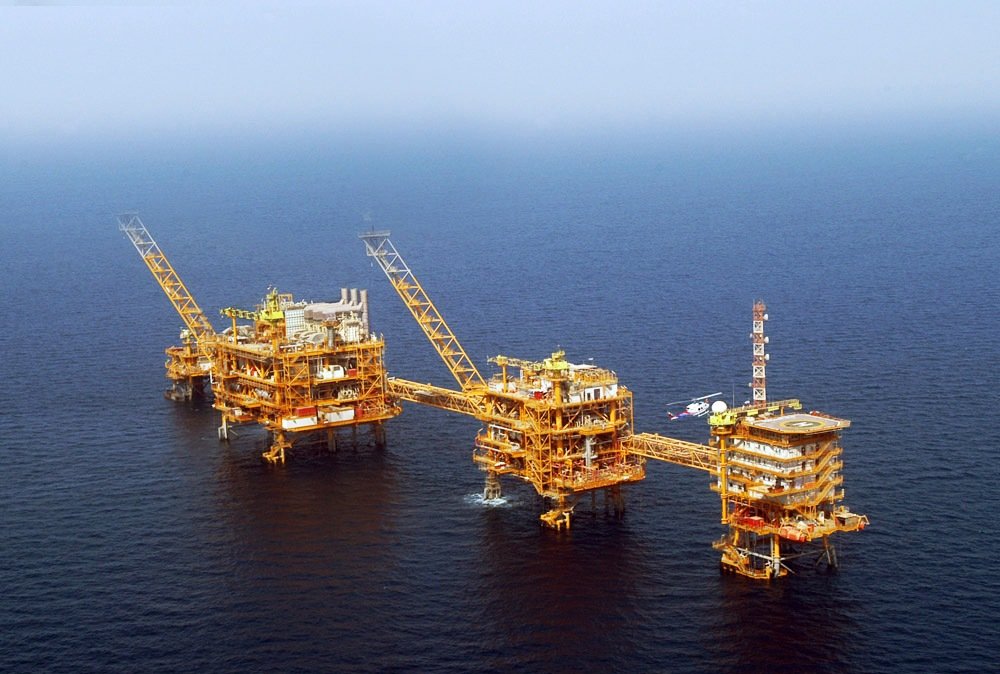
For most of the past century, the oil giants of the Persian Gulf built the region’s wealth on a single commodity. Oil paid for the highways, the hospitals, the sovereign wealth funds, and the skylines of Riyadh, Abu Dhabi, and Muscat. That era is not over, but it is no longer the whole story. In 2024 and 2025, the region’s national oil companies posted some of the largest profits in their history while simultaneously pouring tens of billions of dollars into solar farms, hydrogen plants, and — increasingly — lithium extraction. For investors watching the Gulf from the outside, the shift matters far beyond the energy sector. Economic diversification is the single biggest driver behind the real estate booms reshaping the UAE and Oman, and understanding where the money is moving next is the clearest signal available for where property demand is heading.
Saudi Aramco: Record Profits, and a Bet on What Comes After Oil
2023 was the second-most profitable year in Saudi Aramco’s history, with net income reaching $121.3 billion — a figure that dwarfs the annual profits of almost every other company on earth, even after falling roughly a quarter short of 2022’s exceptional result on the back of softer oil prices. Aramco’s response to that softening was not to retreat into its core business. Chief executive Amin Nasser has committed the company to a rapid build-out of renewable generation capacity, targeting 12 gigawatts of solar and wind power by 2030, alongside a growing push into carbon capture, hydrogen, and — the subject that has drawn the most attention from commodity analysts over the past two years — lithium.
Lithium: The Gulf’s New “White Gold”
Lithium has become the defining raw material of the global energy transition. It is the essential ingredient in the lithium-ion batteries that power electric vehicles, grid-scale storage, and consumer electronics, and global demand is forecast by the International Energy Agency to grow several times over by the early 2030s as EV adoption accelerates worldwide. Historically, lithium production has been concentrated in Australia, Chile, and China. The Gulf’s entry into that supply chain is a relatively recent development, and it is happening through an unusual route: extracting lithium not from hard-rock mines or salt flats, but from the oilfield brine that Gulf producers already handle in enormous volumes as a byproduct of conventional oil extraction.
Saudi Aramco and ADNOC: Turning Oilfield Brine into Battery Metal
Both Saudi Aramco and the UAE’s Abu Dhabi National Oil Company (ADNOC) have announced direct lithium-from-brine extraction programs on their existing fields. The appeal of this approach is straightforward: the brine is already being pumped to the surface as part of normal oil operations, the wells and the processing infrastructure already exist, and direct lithium extraction (DLE) technology has matured to the point where it can pull the metal out of that brine without the years-long evaporation ponds traditional lithium mining requires. For companies that already understand how to move enormous volumes of subsurface fluid safely and profitably, brine-based lithium extraction is less a new industry than an adjacent use of existing expertise — which is precisely why the Gulf’s national oil companies believe they can compete with established lithium producers on cost and speed to market.
“Weaning Off the Oil Needle”: Why the Gulf Is Diversifying Now
The oil monarchies of the Gulf have understood the finite nature of hydrocarbon wealth for decades — Gulf sovereign wealth funds were themselves created partly as a hedge against the day oil revenue declines. What has changed is the urgency. Renewable energy costs have fallen far enough, and EV adoption has moved fast enough, that the long-run demand curve for oil now has a visible ceiling in a way it did not a generation ago. Add to that the price volatility of 2020-2023, and the calculation facing Gulf finance ministries is no longer “should we diversify” but “how fast can we do it.”
That urgency shows up differently across the region:
- Saudi Arabia is pursuing the most capital-intensive version of diversification under Vision 2030 — NEOM, giga-projects, and a domestic industrial base intended to replace oil revenue with tourism, manufacturing, and technology exports.
- The UAE is furthest along the diversification curve of any Gulf state, with oil now contributing well under a third of Abu Dhabi’s GDP and a fraction of Dubai’s, which has built its economy around trade, tourism, logistics, financial services, and — critically for this audience — real estate investment from abroad.
- Oman is running its own version of this transition under Oman Vision 2040, leaning on tourism, logistics (Duqm and Sohar’s port investments), green hydrogen, and a newly opened freehold property market designed specifically to attract the kind of foreign capital that Dubai captured a generation earlier.
Gas: The Bridge Fuel That Is Also a Long-Term Bet
Alongside lithium and renewables, natural gas remains central to the Gulf’s diversification strategy — not as a replacement for oil, but as a parallel revenue stream with a longer runway than crude. Qatar’s LNG expansion, Saudi Arabia’s push into non-associated gas production, and the UAE’s own gas investments are all framed explicitly around global demand for gas as a “bridge fuel” during the multi-decade transition away from coal and oil in power generation. Unlike renewables, gas revenue flows through many of the same institutional channels oil revenue always has, which makes it a politically easier diversification to execute even as it is, strictly speaking, still a hydrocarbon.
Why This Matters If You Are Not in the Energy Business
It is a fair question why an oil-and-lithium story belongs on a real estate investment site. The answer is that in the Gulf, economic diversification and real estate demand are not separate trends — they are the same trend viewed from two angles. Every dollar a sovereign wealth fund redirects from an oil project into tourism infrastructure, logistics hubs, or industrial free zones creates jobs that need to be filled, and those jobs are increasingly filled by an international workforce that needs somewhere to live. The same reforms that opened Gulf economies to foreign direct investment in energy, manufacturing, and technology are, in most cases, the identical legal reforms that opened Gulf property markets to foreign freehold ownership.
Dubai is the clearest historical example: its shift away from oil dependency in the 1990s and 2000s ran in parallel with the freehold reforms that turned it into one of the world’s most active international property markets. Oman is now running a compressed version of the same playbook — diversification policy and freehold property reform arriving within the same decade rather than a generation apart, which is part of why property investment in Oman has accelerated so quickly since the mid-2020s.
Diversification and Property Demand: The Direct Links
- Expatriate employment growth. New industries recruit internationally, and a meaningful share of that workforce becomes a long-term rental or purchase demand base.
- Sovereign wealth reinvestment. A portion of diversification-driven capital flows back into domestic real estate development, tourism infrastructure, and mixed-use masterplans — precisely the kind of freehold communities now available to foreign buyers in Muscat, Sohar, and Salalah.
- Policy signaling. Governments that are serious about attracting foreign capital into energy, logistics, and technology are, by the same logic, serious about attracting foreign capital into property — the legal infrastructure (residency-linked ownership, streamlined company registration, investor visas) tends to be built once and used across sectors.
- Tourism as a diversification pillar. Oman’s Vision 2040 and the UAE’s own tourism targets both treat visitor numbers as a headline diversification metric, which directly drives demand for short-let and holiday-home property in coastal and heritage destinations.
How the Major Gulf Economies Compare
Each Gulf state is diversifying from a different starting point and at a different pace, which matters for anyone trying to judge how mature — and how much upside remains in — a given market’s property sector.
- UAE: Most diversified economy in the Gulf; oil is a minority contributor to GDP; real estate market is mature, liquid, and highly internationalized, with correspondingly higher entry prices.
- Saudi Arabia: Diversification underway at unprecedented capital scale (Vision 2030, NEOM); real estate market opening to foreign investment more recently and more selectively than the UAE’s.
- Qatar: Diversification anchored heavily in LNG and gas exports rather than a broad-based pivot; foreign freehold property remains limited to specific zones.
- Oman: Diversification underway via tourism, logistics, and green energy under Vision 2040; freehold property market younger and comparatively affordable, with residency-by-investment incentives attached to qualifying purchases.
For investors specifically, that comparison usually comes down to a trade-off between market maturity and entry price. The UAE offers liquidity and a long track record; Oman offers earlier-stage pricing in a market that is visibly following the same diversification-then-property-boom sequence the UAE completed a generation ago.
Sovereign Wealth Funds: Where the Diversification Money Actually Comes From
Behind almost every diversification headline sits a sovereign wealth fund, and understanding how these funds are structured helps explain why the pivot away from oil is moving as fast as it is. Saudi Arabia’s Public Investment Fund (PIF) has grown into one of the largest pools of capital on earth, deploying money into everything from NEOM and domestic giga-projects to stakes in global sports, technology, and entertainment companies — a deliberate strategy to build income streams entirely disconnected from the oil price. Abu Dhabi runs a similar model through ADIA and Mubadala, both of which have direct stakes in renewable energy, logistics, and — increasingly — international real estate, giving Abu Dhabi’s diversification strategy a genuinely global reach rather than a purely domestic one.
Oman’s version of this vehicle is the Oman Investment Authority (OIA), formed by merging the country’s previous sovereign funds into a single entity explicitly tasked with driving Vision 2040’s diversification targets. Compared to PIF or ADIA, OIA is working with a smaller balance sheet, which is part of why Oman’s diversification strategy leans more heavily on attracting external foreign direct investment — including foreign property buyers — rather than funding the entire transition from sovereign capital alone. That distinction matters for investors: it is one of the structural reasons Oman’s government has been more aggressive about opening freehold real estate and residency-by-investment pathways than some of its wealthier Gulf neighbors, since foreign capital is doing more of the diversification work.
The Green Hydrogen Angle
Lithium and gas are not the only new pillars. Green hydrogen — produced by using renewable electricity to split water into hydrogen and oxygen — has become a major plank of Gulf diversification strategy, and Oman in particular has positioned itself as a serious contender in this space. The Duqm Special Economic Zone has attracted multiple large-scale green hydrogen project announcements aimed at exporting hydrogen and its derivatives (like green ammonia) to Europe and Asia, leveraging Oman’s combination of abundant sun and wind, coastal port infrastructure, and available land at a scale that is harder to find in the more built-up parts of the UAE and Saudi Arabia. These projects are typically structured as joint ventures between Gulf sovereign entities and major international energy companies, and the construction and operations workforce they bring to secondary cities like Duqm and Sohar is a direct, if less-discussed, driver of regional housing and rental demand outside the traditional Muscat core.
A Closer Look at Each Market
Saudi Arabia: Scale Above All
No Gulf state is diversifying at Saudi Arabia’s capital scale. Vision 2030’s giga-projects — NEOM, the Red Sea Project, Qiddiya — represent hundreds of billions of dollars in committed spending, aimed at building entirely new cities and tourism destinations from scratch. The upside is enormous long-term potential; the risk is execution timeline, since projects of this scale routinely slip against their original targets, and foreign real estate ownership remains more tightly controlled than in the UAE or Oman.
UAE: The Playbook Everyone Else Is Following
The UAE, and Dubai in particular, is the Gulf’s diversification success story to date — oil now represents a small fraction of Dubai’s economy, replaced by trade, tourism, aviation, financial services, and a real estate sector built specifically around foreign ownership. Its market is mature and liquid, which is precisely why entry prices are higher and why later-moving investors increasingly look to markets like Oman for the earlier-stage version of the same story.
Oman: The Compressed Version
Oman is running the UAE’s playbook on a shorter timeline. Vision 2040’s tourism, logistics, and green energy pillars are being pursued alongside — rather than a generation after — the freehold property reforms and residency-by-investment programs that let foreign buyers participate directly. For investors, that compression is the opportunity: rather than diversification and property-market opening happening decades apart, in Oman they are largely simultaneous, which is part of why interest in Oman property investment has accelerated so sharply in the past few years.
What This Means for Different Types of Investors
- Long-horizon investors interested in early-stage exposure to a market following a known growth sequence may find Oman’s current stage more attractive than the UAE’s more fully priced market.
- Investors prioritizing liquidity and track record will generally still prefer the UAE, where transaction volumes, resale markets, and financing infrastructure are the most developed in the region.
- Investors motivated by residency should note that both Oman’s Golden Residency and sponsor-free Owner Visa routes, and various UAE Golden Visa property thresholds, tie directly into the same diversification-driven policy environment described above — governments courting foreign capital across energy, industry, and real estate simultaneously.
- Yield-focused investors should weigh that Oman’s earlier-stage tourism and logistics buildout (Duqm, Sohar, Salalah) is still developing the demand base that will ultimately support rental yields, whereas Dubai’s tourism and business demand base is already largely established.
Risks Worth Weighing
None of this is a guarantee. Diversification programs across the Gulf are large, expensive, and multi-decade undertakings, and not every giga-project announced will be completed on the timeline or scale first advertised. Oil price volatility still matters — a sustained downturn can squeeze the sovereign wealth flows that fund diversification spending even as it, somewhat paradoxically, has less effect on longer-term demand for lithium, gas, and renewables infrastructure. Investors should also weigh regional geopolitical risk, currency-peg dynamics (most Gulf currencies remain pegged to the US dollar, which has its own implications for property investors converting from other currencies), and the ordinary risks of any emerging real estate market — regulatory change, off-plan delivery risk, and liquidity that is thinner than in established Western markets.
Frequently Asked Questions
Why is lithium suddenly important to Gulf oil companies?
Lithium is the key raw material in the batteries powering the global shift to electric vehicles and grid-scale energy storage. Saudi Aramco and ADNOC are extracting it from the same oilfield brine they already produce as part of conventional oil operations, giving them a low-cost entry point into a fast-growing market using infrastructure they already own.
Is Gulf economic diversification actually reducing oil dependency?
It is reducing the *share* of GDP that oil represents in several Gulf states, most visibly the UAE, even as absolute oil production and revenue can remain high. Diversification is best understood as broadening the economic base rather than eliminating oil’s role entirely.
How does this connect to property investment in Oman and the UAE?
The same reforms and capital flows that diversify Gulf economies away from oil dependency — foreign investment liberalization, new industries recruiting international workers, tourism as a growth pillar — are the direct drivers of foreign freehold real estate demand in both markets. Uinvest Group works with investors evaluating exactly this kind of macro-to-property connection when comparing Oman against more established Gulf markets.
Which Gulf real estate market offers better value right now, Oman or the UAE?
The UAE, and Dubai specifically, offers a mature, highly liquid market with a long track record of foreign ownership. Oman is at an earlier stage of the same diversification-driven property cycle, which generally means lower entry prices and stronger relative upside, alongside the higher uncertainty that comes with any less-established market.
A Short Timeline of the Gulf’s Diversification Push
- 2016: Saudi Arabia launches Vision 2030, formally committing the kingdom to reducing oil dependency and building non-oil revenue streams.
- 2019-2020: Oman accelerates freehold real estate reform in its Integrated Tourism Complexes as part of laying the legal groundwork for Vision 2040.
- 2021: UAE and Saudi Arabia both announce large-scale green hydrogen initiatives, with Oman’s Duqm hydrogen projects following shortly after.
- 2023: Saudi Aramco posts near-record profits while simultaneously scaling renewable and lithium investment — the clearest signal yet that diversification spending is now happening alongside, not instead of, record oil income.
- 2024-2025: ADNOC and Saudi Aramco both move from lithium exploration into active brine-extraction programs; Oman introduces its sponsor-free Owner Visa property route, further lowering the barrier for foreign real estate investors.
The pattern across this timeline is consistent: policy commitment comes first, infrastructure and legal reform follow within a few years, and the property market response follows close behind. Investors who position ahead of that final stage — rather than after it is already priced in — are the ones who have historically captured the most upside in Gulf real estate cycles.
Does Gulf diversification depend on oil prices staying high?
Partly, in the near term — diversification spending is funded largely by oil and gas revenue, so a sustained price collapse would slow the pace of investment. Over the longer term, however, the strategic logic runs the other way: diversification exists precisely because Gulf governments do not want their economies dependent on oil price cycles at all, which is why spending on lithium, renewables, and non-oil sectors has continued even through periods of softer crude prices.
How is Oman funding its diversification if it has a smaller sovereign wealth fund than Saudi Arabia or the UAE?
Oman relies more heavily on attracting external foreign direct investment — in energy joint ventures, logistics infrastructure, and increasingly real estate — to supplement its own sovereign capital. This is a key reason Oman’s government has moved faster and more broadly on foreign ownership reforms than some wealthier neighbors: foreign capital is doing proportionally more of the diversification work.
The Bottom Line
The Gulf’s pivot toward gas, lithium, and renewables is not a side story to its oil wealth — it is the mechanism by which that wealth is being converted into the next generation of regional growth, and real estate is one of the clearest downstream beneficiaries. Investors who track where sovereign capital and diversification policy are headed next, rather than only where oil prices sit today, tend to get an earlier read on which property markets in the region are about to move. For those evaluating the next stage of that story, Oman’s parallel push on tourism, logistics, and freehold reform under Vision 2040 is worth watching as closely as the lithium headlines coming out of Riyadh and Abu Dhabi.


