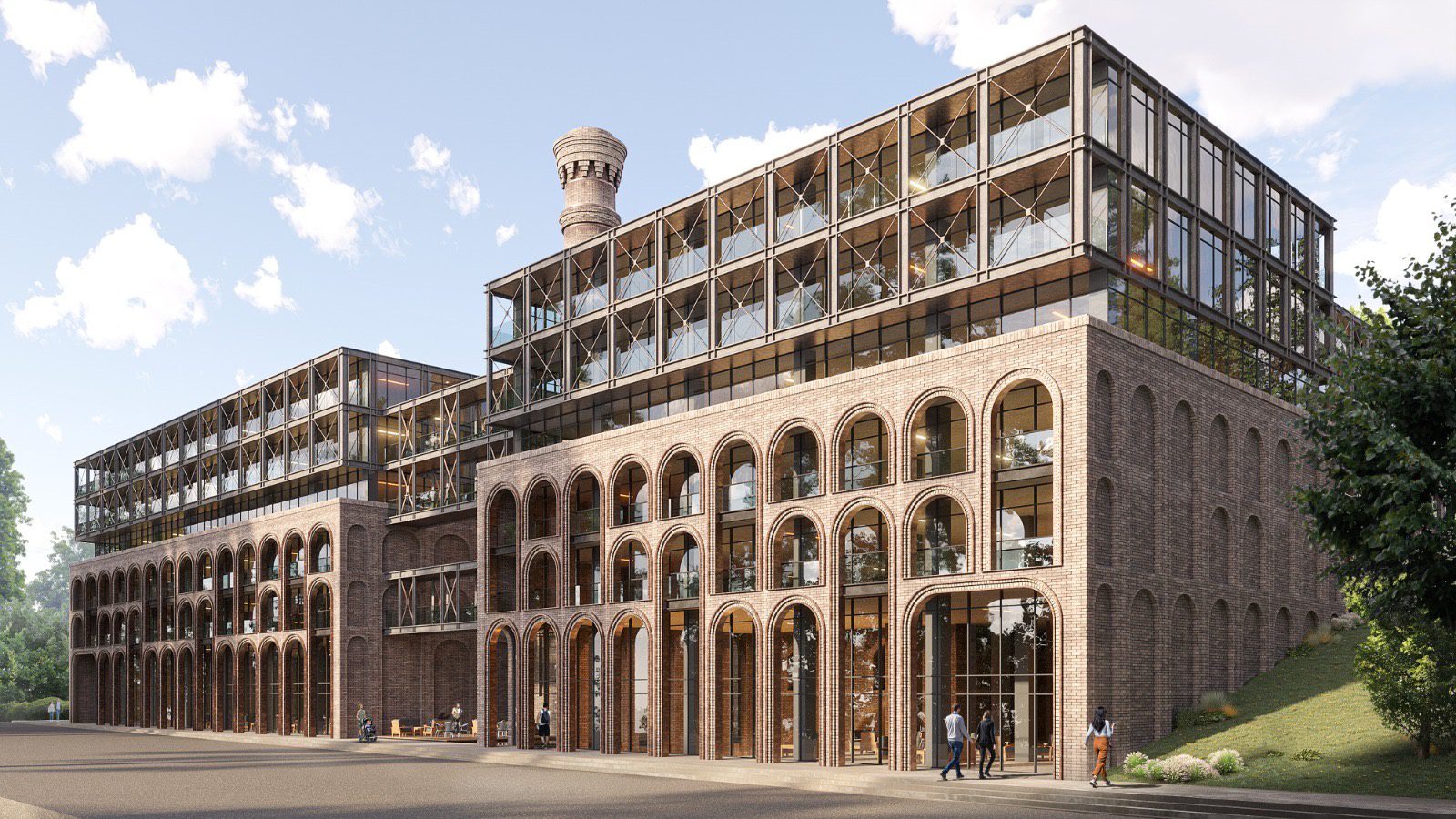
NEU Tbilisi is a project of two low-rise buildings with 199 residences that the Georgian developer NEXT presents for the site of a historic brewery on Dimitri Uznadze Street, on the left bank of the Mtkvari River in Tbilisi, with studios from 31.9 m², a 10% first payment, 42 months of instalments at 0% and a handover that the developer states for December 2029.
This guide reads the developer’s project page as shown on 8 November 2026: a studio from USD 153,120 with renovation, a one-bedroom apartment from USD 244,320, a two-bedroom apartment from USD 367,500 and a three-bedroom type for which no price is printed. It adds sourced context on Tbilisi and on buying a unit in a building under construction in Georgia, and it marks each point on which the developer publishes nothing. The page is next-property.com/neu-tbilisi-by-next.
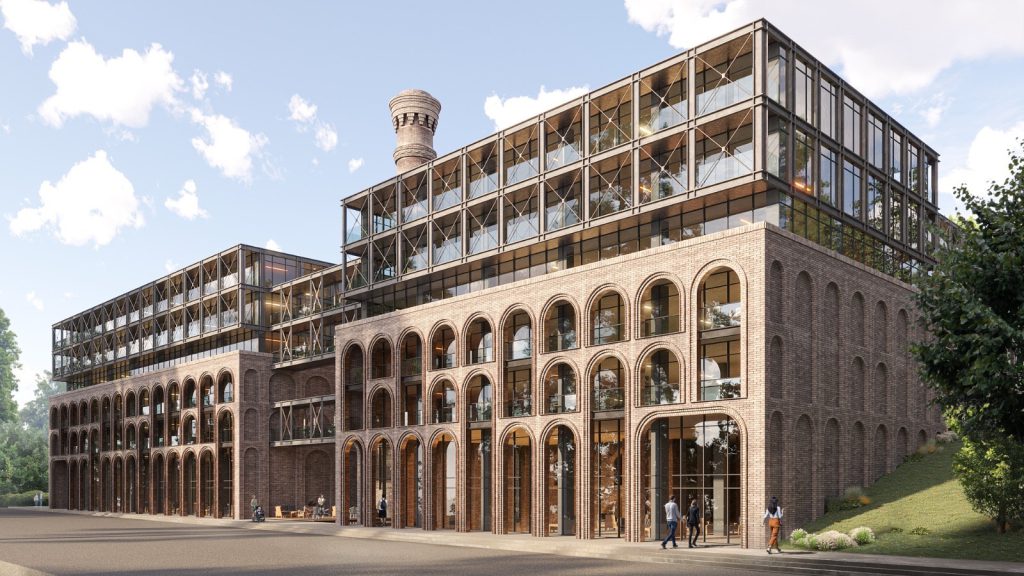
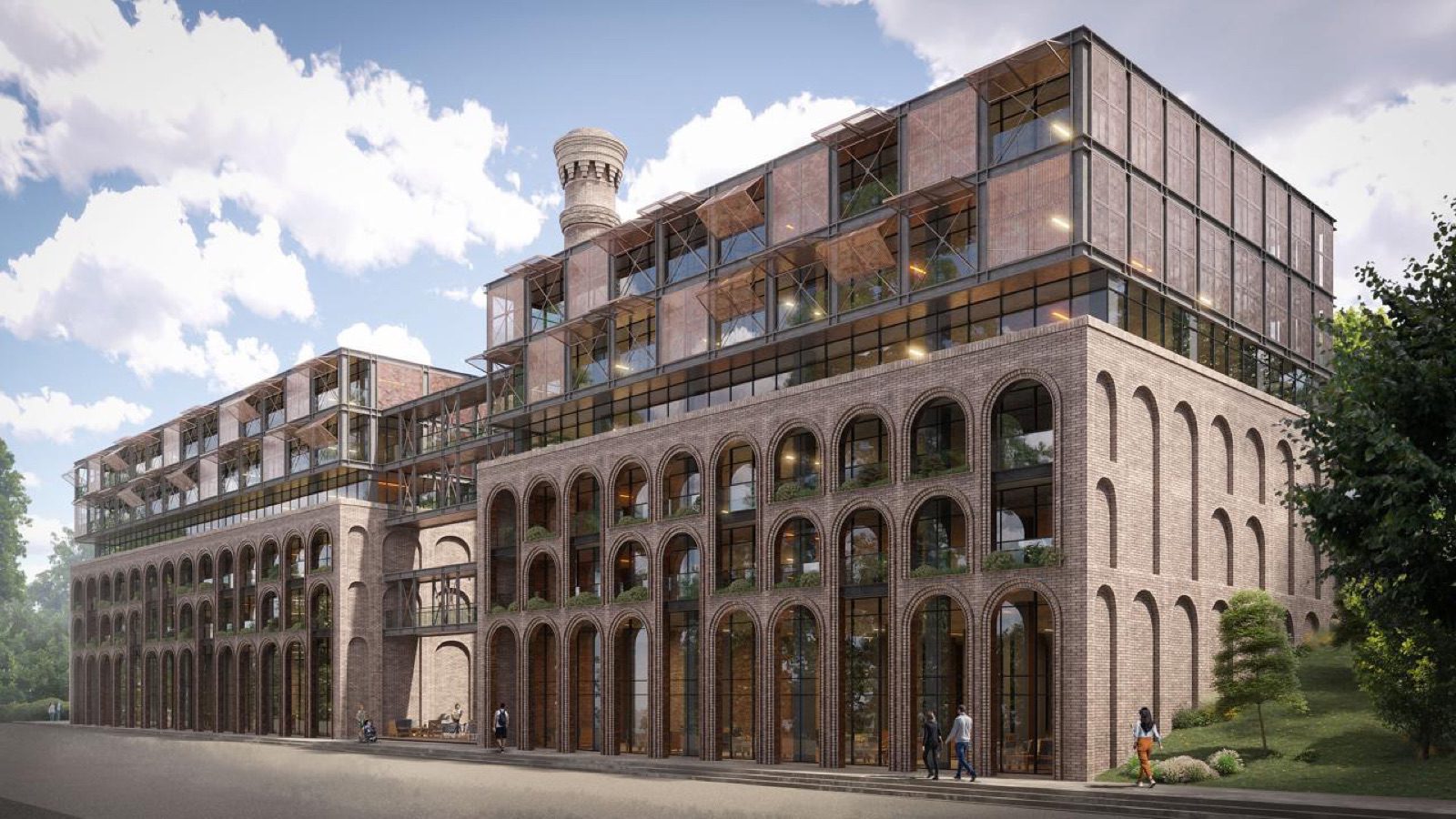
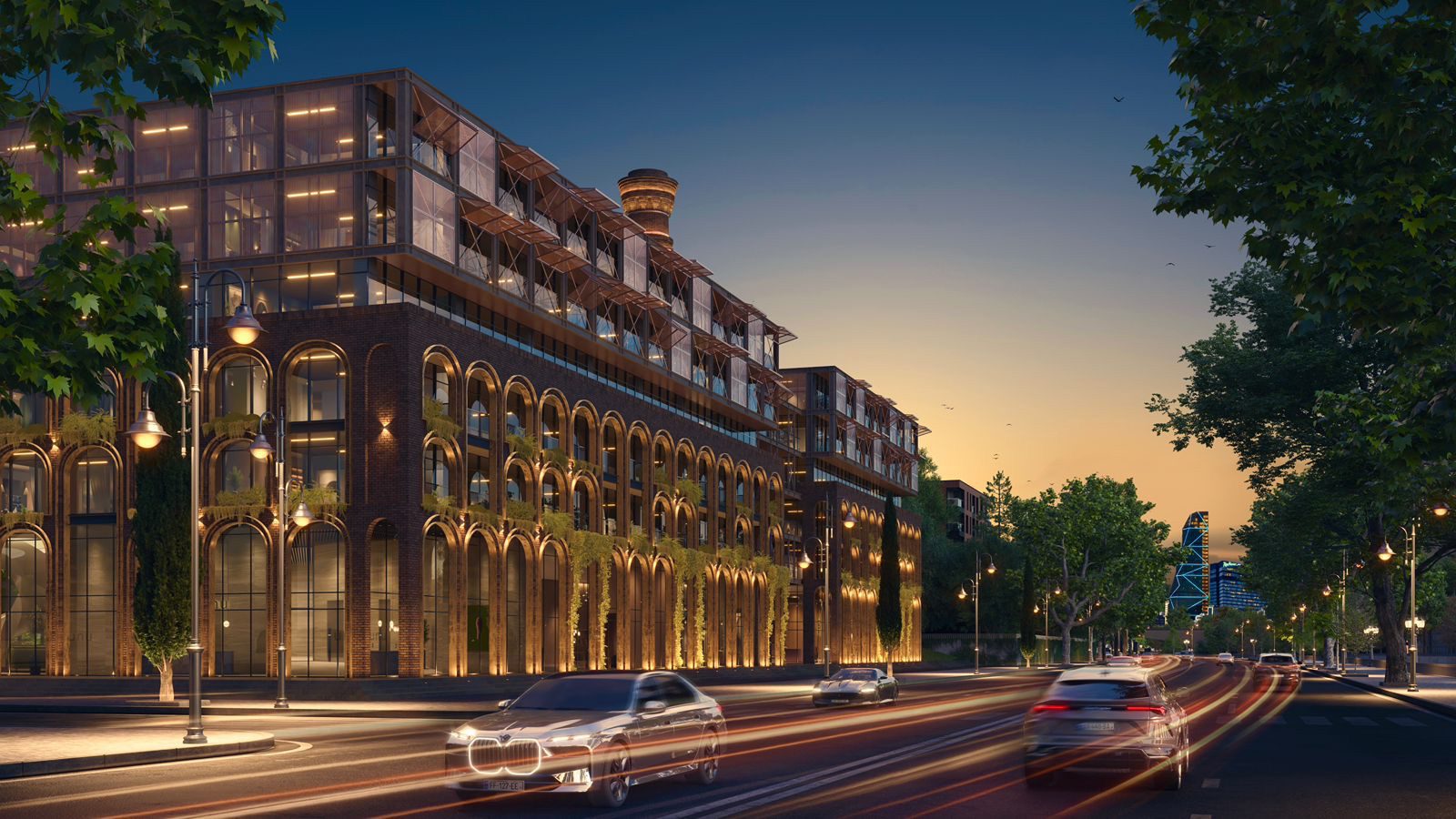
The developer files the project under a series it calls Heritage Series and describes it as a low-rise complex on the site of the 1867 Wetzel Brewery, with brick arches and an industrial chimney of the old brewery kept as visual features. The page describes the buildings as directly overlooking the river on Dimitri Uznadze Street, steps from David Aghmashenebeli Avenue. The images on the page are developer renderings.
The page marks the project PRESALE and gives a handover of December 2029 in the hero block and in the price panel. A separate block on the same page, the one with the developer’s return projections, says the project will be completed turnkey in May 2030. Section 2 sets both months beside the instalment calendar, because the 42 monthly payments run close to the later month.
Four unit types are listed, from a studio of 31.9 m² to a three-bedroom apartment of up to 176.6 m², and every printed price includes renovation. The developer does not publish a number of floors, a count of units per type, a price for the three-bedroom type, a street number, a map pin, coordinates or the name of the district. It does publish a total of 199 residences and a total residential area of 11,600 m².
The project page also carries return and price-growth projections and statements on taxes. Those are the developer’s projections, their terms belong to the sale documents, and this guide restates none of them; the tax and residence rules in section 6 come from official texts.
| NEU Tbilisi key facts | As published by the developer (page seen 8 November 2026) |
|---|---|
| Location | Dimitri Uznadze Street, left bank of the Mtkvari River, Tbilisi; steps from David Aghmashenebeli Avenue; no street number, map pin or district name |
| Developer | NEXT (next-property.com, also styled Next Property) |
| Status | Under construction; the page prints PRESALE |
| Handover | December 2029 in the hero and price panel; a separate block says turnkey completion in May 2030 |
| Buildings and residences | 2 low-rise buildings; 199 residences; unit counts per type not printed; number of floors not printed |
| Residential area | 11,600 m² in total |
| Unit types and sizes | Studio 31.9-35.5 m²; 1 BD 50.9-77.7 m²; 2 BD 70.5-93.3 m²; 3 BD 106.5-176.6 m² |
| Starting price | USD 153,120 for the studio, with renovation |
| Finish | All prices include renovation; the page does not itemise it |
| Payment plan | 10% first payment (USD 15.3k on the studio) and 42 months at 0%; USD 3,281 a month shown for the studio |
| Reservation | Deposit of USD 1,000-3,000 holds a unit for 1 week up to 1 month (generic purchase text on the page) |
| Ceiling height | 3.3 m architectural height in all apartments |
| Facilities listed | Central courtyard, 24/7 security, parking, commercial spaces, co-working, lobby and lounge |
The developer’s size block and price cards agree on the four types. The unit table below repeats them and adds the lari equivalent of each starting price at the official rate of the National Bank of Georgia of GEL 2.5949 per USD for 8 November 2026. The developer prints dollars only, so the lari column is a conversion made here.
| Unit type | Bedrooms | Published size | Published starting price (USD, with renovation) | Same price in GEL (calculated) |
|---|---|---|---|---|
| Studio | 0 | 31.9-35.5 m² | USD 153,120 | GEL 397,331 |
| One bedroom (1+1) | 1 | 50.9-77.7 m² | USD 244,320 | GEL 633,986 |
| Two bedroom (2+1) | 2 | 70.5-93.3 m² | USD 367,500 | GEL 953,626 |
| Three bedroom | 3 | 106.5-176.6 m² | Not printed | Not applicable |
The next table works only with published numbers. A starting price and a starting size may describe different units, so every rate here is an arithmetic result and not a rate that the developer prints. The rate is taken at the smallest size of the type, because the page does not say which unit each “from” price belongs to.
| Size and price comparison (calculated) | Studio | 1 BD | 2 BD | 3 BD |
|---|---|---|---|---|
| Smallest published size (m²) | 31.9 | 50.9 | 70.5 | 106.5 |
| Largest published size (m²) | 35.5 | 77.7 | 93.3 | 176.6 |
| Spread between smallest and largest (m²) | 3.6 | 26.8 | 22.8 | 70.1 |
| Spread as share of smallest size | 11.3% | 52.7% | 32.3% | 65.8% |
| Starting price (USD) | 153,120 | 244,320 | 367,500 | not printed |
| USD per m² at the smallest size | 4,800 | 4,800 | 5,213 | not calculable |
| GEL per m² at the smallest size | 12,456 | 12,456 | 13,527 | not calculable |
| Price against the type before it | – | 1.60 times | 1.50 times | – |
| Smallest size against the type before it | – | 1.60 times | 1.39 times | – |
Two results stand out. The studio and the one-bedroom starting prices both come to exactly USD 4,800 per m² at their smallest sizes (153,120 divided by 31.9 and 244,320 divided by 50.9), and the one-bedroom type is 1.60 times the studio in both area and price.
The two-bedroom starting price works out at USD 5,213 per m², which is 8.6% above the rate of the two smaller types (5,212.8 divided by 4,800). Moving from the one-bedroom to the two-bedroom starting unit adds 19.6 m² and USD 123,180, or USD 6,285 for each added square metre, against USD 4,800 for the step from studio to one-bedroom.
The ranges overlap in one place. A one-bedroom apartment can be as large as 77.7 m² while a two-bedroom apartment can start at 70.5 m², so the largest one-bedroom units are bigger than the smallest two-bedroom units by 7.2 m².
The price cards do not say how a type’s price rises across its size range, and they print no price for the upper end, so no rate can be calculated there. The three-bedroom type has the widest spread, 70.1 m², and the page gives it no price; at the studio and one-bedroom rate of USD 4,800 its smallest unit would be USD 511,200, but that is only arithmetic on another type’s rate and not a published figure.
The developer also prints a total residential area of 11,600 m² for 199 residences, which is an average of 58.3 m² per residence (calculated). The page does not say whether the total includes balconies, corridors or other shared areas, and it does not give the count of each type, so the average cannot be matched to the unit table.
The payment plan has two printed parts: a first payment of 10%, shown as USD 15.3k for the studio, and 42 months of instalments at 0%, shown as “from USD 3,281” a month. Applying the arithmetic to the studio price confirms the reading: 90% of USD 153,120 is USD 137,808, and divided by 42 it is USD 3,281.14.
The page does not print what share, if any, falls due at handover, so the table below treats the 90% as 42 equal monthly payments and shows what that implies for the other three prices.
| Plan item, calculated from the printed terms | Studio | 1 BD | 2 BD |
|---|---|---|---|
| Starting price (USD) | 153,120 | 244,320 | 367,500 |
| First payment, 10% (USD) | 15,312 | 24,432 | 36,750 |
| Monthly payment, 90% divided by 42 (USD) | 3,281 | 5,235 | 7,875 |
| Paid by December 2029 if booking is in November 2026 (37 payments, USD) | 136,714 | 218,143 | 328,125 |
| Left after December 2029 on that assumption (USD) | 16,406 | 26,177 | 39,375 |
The calendar depends on a start month that the page does not give. Assume the first payment is made in November 2026 and the first instalment follows in December 2026. The 37th instalment then falls in December 2029, the handover month, and 89.3% of the price has been paid; the 42nd falls in May 2030, the month named in the page’s completion block.
A booking in January 2027 moves the last instalment to July 2030, with 35 paid by December 2029 (85.0%), and a booking in March 2027 moves it to September 2030, with 33 paid (80.7%).
Whether keys are released before the last instalment, and how the contract treats the months between December 2029 and the last payment, are questions for the preliminary agreement. The page states only that the buyer becomes the official owner within one business day after construction is completed and full payment is made.
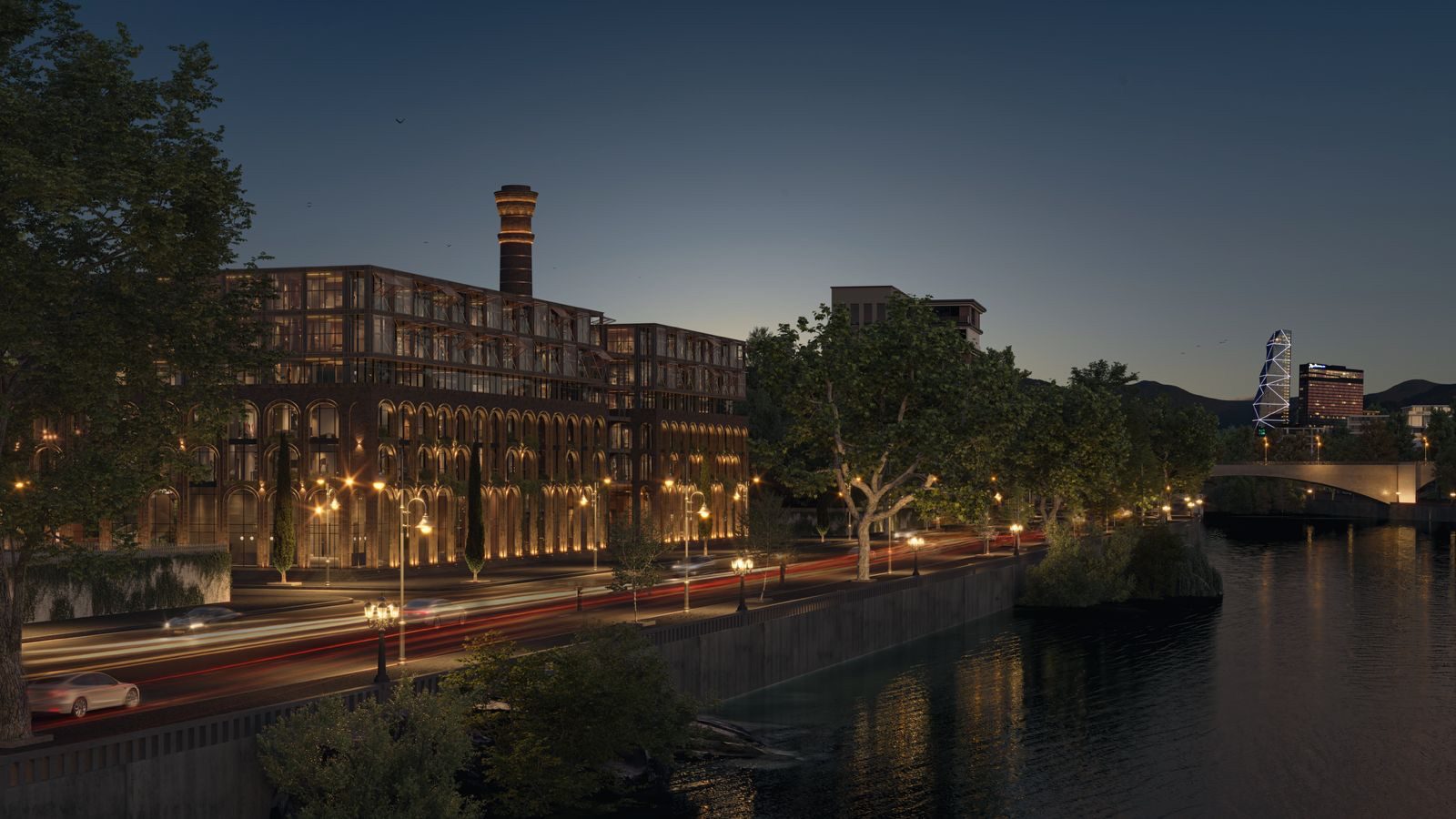
The developer’s location text is specific about the street and the river and silent about the district. It places the project directly overlooking the Mtkvari River on Dimitri Uznadze Street, on the historic left bank, steps from David Aghmashenebeli Avenue, and tags it “Mtkvari Riverbank, Central Tbilisi”.
The page prints no street number and no coordinates, and the source code of the page carries no map embed. Tbilisi City Hall lists ten district administrations, and Geostat reports prices by those ten districts, so a buyer who wants to compare the project with district statistics should ask which district the plot is registered in.
The city hall’s geography page describes the setting that the developer’s wording relies on. Tbilisi lies on the Mtkvari (Kura) River at 380 to 600 metres above sea level, spread over 720 square kilometres, and the river divides it into a left and a right embankment.
On the left embankment stands Makhata Mountain, whose summit stands at 630 metres. The riverbed falls from 425 metres at Digomi to 370 metres at Ortachala. The developer does not give the height of the site.
The city’s climate page gives an average annual temperature of 12.7 °C, 0.9 °C in January and 24.4 °C in July, an absolute minimum of -23 °C and maximum of 40 °C, about 560 mm of precipitation a year and snow on 15 to 25 days. Those are city-wide figures; the developer publishes none for the site.
Geostat’s population release for 1 January 2026 counts 3,941.1 thousand people in Georgia, 1,369.4 thousand of them in the city of Tbilisi, with 1,309 thousand living in urban settlements. That is about 34.7% of the national population (calculated). The Geostat population release bases its figures on the 2024 census and the 2025 population movement; for 2025 it reports 131,501 immigrants and 114,374 emigrants nationally.
On visitors, the Geostat inbound tourism release counts 7.8 million arrivals of international non-resident travellers in Georgia in 2025, 5.9% more than in 2024, and 6.9 million visits by international visitors. Tbilisi was the most visited region with 3.8 million visits, ahead of Adjara with 2.7 million, and the average stay was 5.6 nights. Those figures describe visitors to the capital as a whole and say nothing about any one address.
The developer’s distances are walking and driving times. It states 15 minutes on foot to the nearest metro station without naming the station, 25 minutes to Rustaveli Avenue and 30 minutes to the Old Town, with no mode of travel printed for those two, and 30 minutes by car to the airport. It prints no kilometres.
The Tbilisi Transport Company, which the city hall wholly owns, says on its About page that the metro has run since 1966, when the first line opened between Didube and Rustaveli, and that the company also operates municipal buses and the Rike-Narikala ropeway.
| Nearby places and distances for NEU Tbilisi | What it is | Distance as the developer prints it | Mode as printed | Source |
|---|---|---|---|---|
| Nearest metro station | Metro; station not named | 15 minutes | Walking | Developer page |
| David Aghmashenebeli Avenue | Avenue in central Tbilisi | “Steps”; no figure | Not stated | Developer page |
| Rustaveli Avenue | Central avenue | 25 minutes | Not stated | Developer page |
| Old Town | Historic centre | 30 minutes | Not stated | Developer page |
| Airport | Tbilisi airport | 30 minutes | Driving | Developer page |
| Wetzel Hotel and Wetzel Residence | Historic buildings named as landmarks | “A short walk”; no figure | Not stated | Developer page |
| Theatres, galleries, cafes | Cultural venues, none named | “A short walk”; no figure | Not stated | Developer page |
The site’s history is told in two versions. The developer’s page names the Wetzel Brewery of 1867. A Georgia Today report of 24 April 2026 on the acquisition of the former Kazbegi brewery site by NEXT dates the founding of Friedrich Wetzel’s brewery to the 1870s, on what is now Uznadze Street, mentions a gold medal at a Caucasus-wide exhibition in 1901 and says that further details of the redevelopment will be released in stages.
This guide uses the developer’s year for the project concept and records the report’s date as a separate published figure.
One landmark the developer names has its own public record. A Commersant report of 11 April 2024 describes the Wetzel Hotel building on Aghmashenebeli Avenue as a cultural heritage monument, built at the end of the 19th century by a descendant of the German colonist Friedrich Wetzel and then enclosed by a construction fence. The developer’s page names the hotel only as a neighbouring landmark.
For price context, Geostat’s quarterly index for new-build residential property in Tbilisi stood 5.9% above the third quarter of 2025 in the release of 23 October 2026, with flats up 5.6%, measured in lari from advertised prices.
The same Geostat release reports separate median offer prices by finish (black, white and green frame) and by district. The Tbilisi price guide on this site tabulates those district medians next to a second series, and section 7 sets the project’s calculated rate beside them.
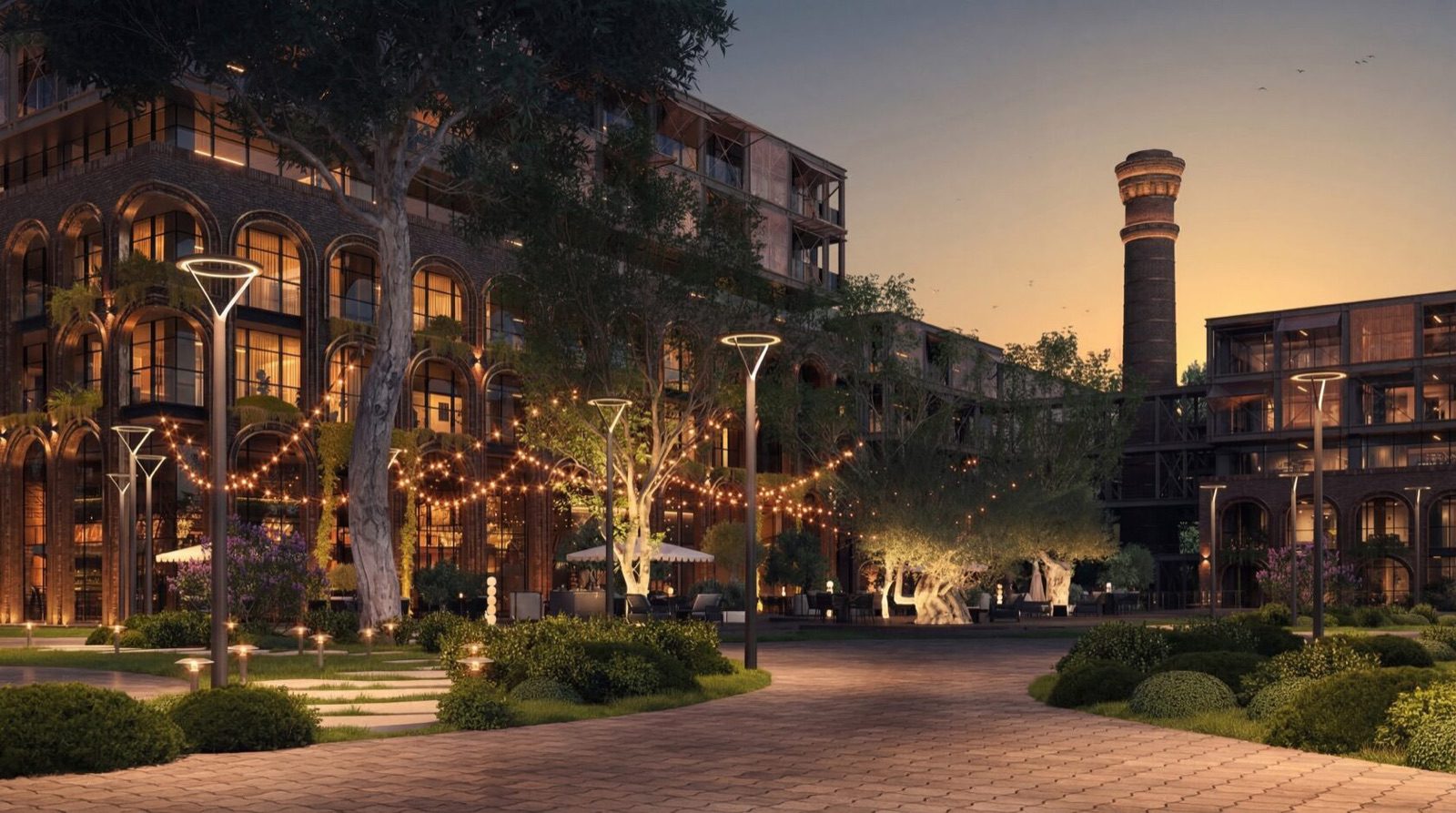
The word that organises the project page is “collection”. The developer calls it a collection-type low-rise project whose facades and structure are inspired by the original appearance of the brewery. Two buildings share a central courtyard that the page describes as a pedestrian space for relaxation, gatherings, events and outdoor dining, with commercial and gastronomy functions alongside the residences and co-working among the facilities.
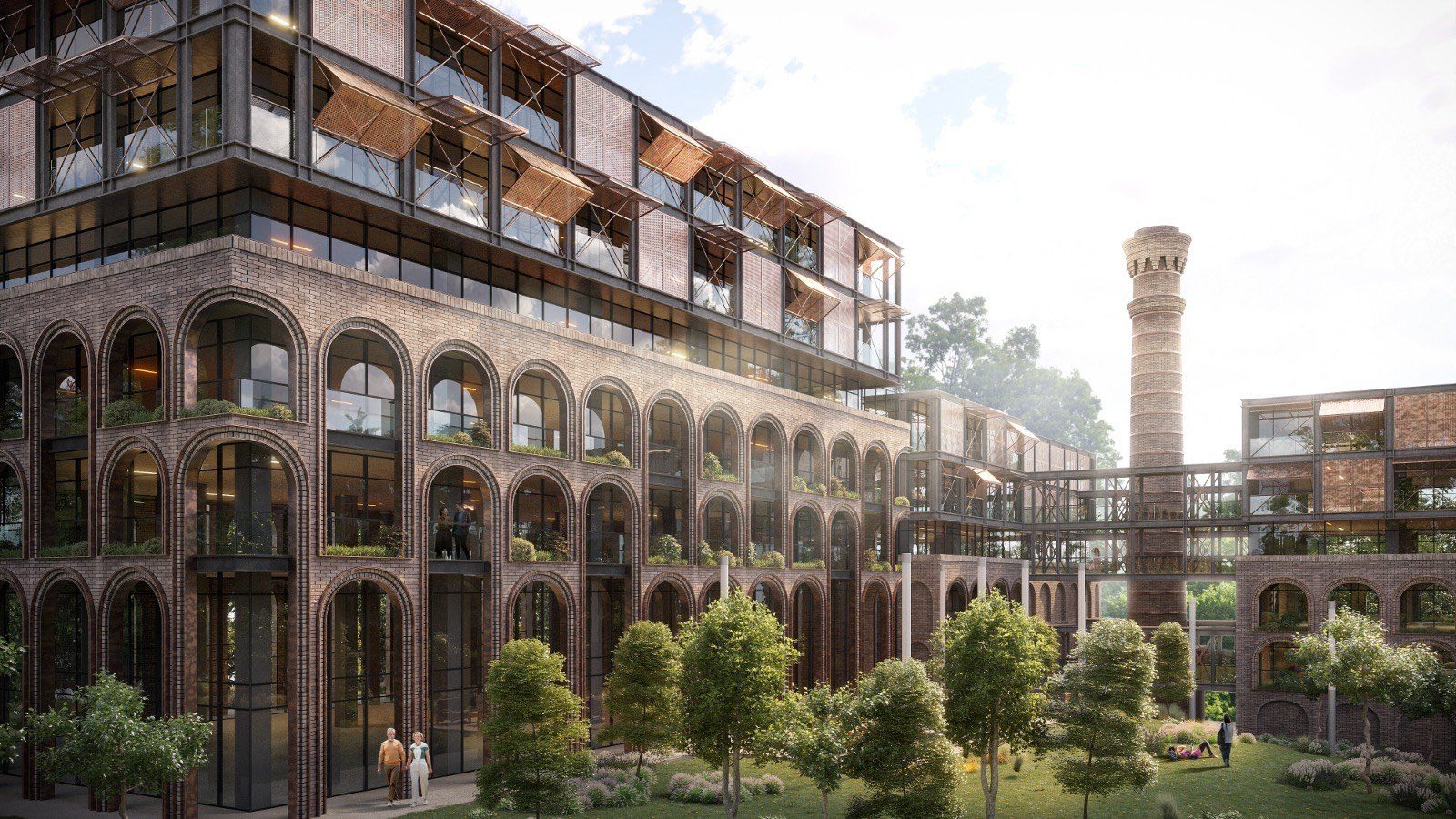
The mix is therefore residential above and public-facing uses below, in a scheme the developer sizes at 199 residences.
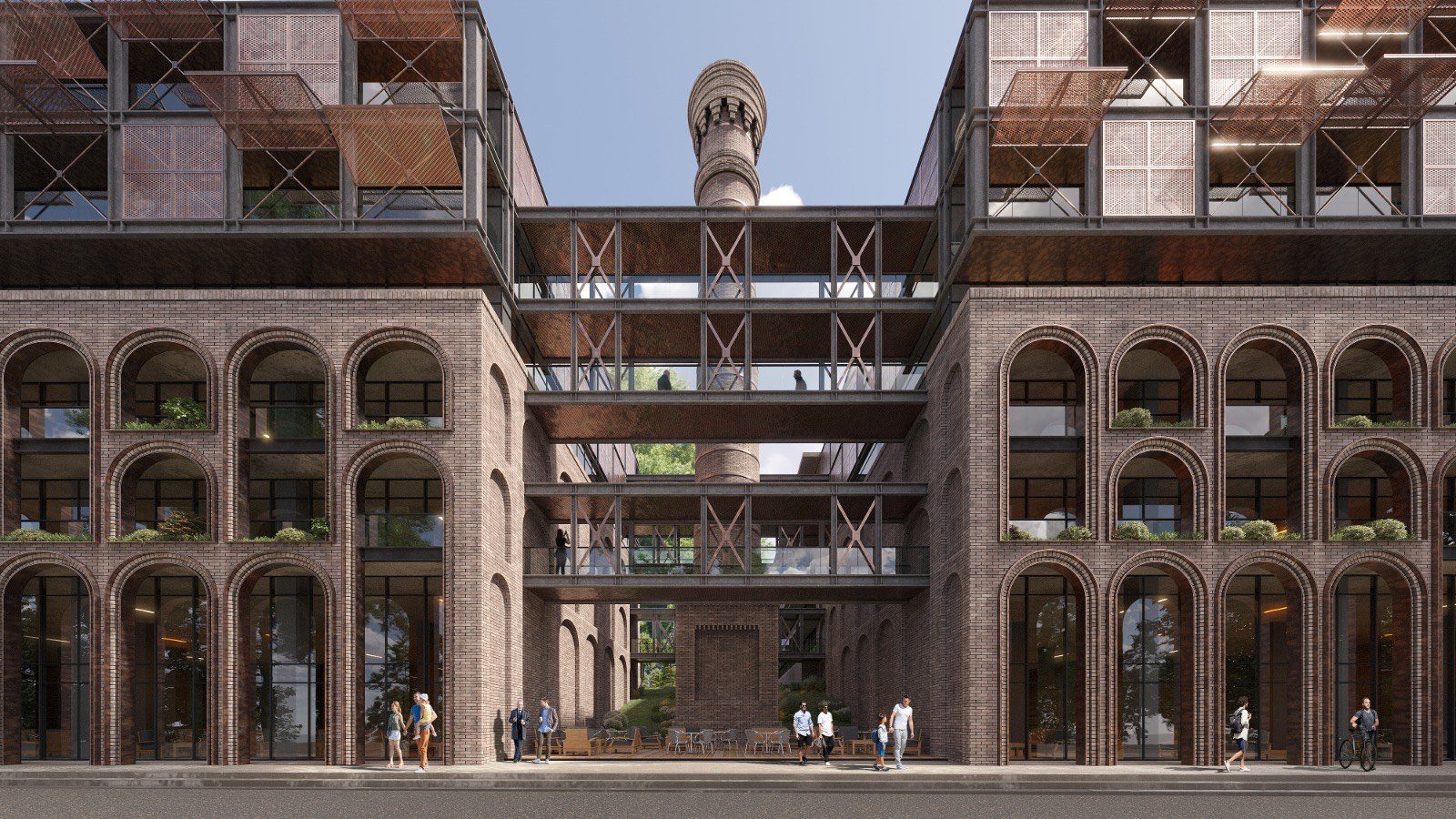
The architectural elements named on the page are the preserved brewery arches, the historic industrial chimney, arched windows with contemporary glazing and an item listed as “floor to ceiling”. The text adds that brick arches and the chimney are combined with glass, copper-toned facade details and natural materials, and that interiors use natural textures with “subtle references” to the building’s German heritage.
The renderings show a bridge between two arched wings and a courtyard with the chimney in view; they are illustrations, not as-built photographs.
The building-systems list is generic NEXT text that appears on its other project pages: high-speed elevators, central heating, low-emissivity glass, ventilation channels integrated in the window profile, Daikin VRF air conditioning and Geberit plumbing, with Schüco aluminium doors and windows mentioned in the facade text.
The page names these as components; it does not state that the supplier or any third party endorses the project, and it does not say which items are in the units and which are in the common areas.
The developer’s page for NEXT Cinema City Tbilisi is the closest comparison, because both projects carry the Heritage Series label, both are marked PRESALE and both state December 2029. The table sets the two pages side by side exactly as printed; the Cinema City page is next-property.com/next-cinema-city-tbilisi.
| Item, as printed on each page | This project | Cinema City |
|---|---|---|
| Site | 1867 Wetzel Brewery site, Dimitri Uznadze Street, Mtkvari left bank | David Aghmashenebeli Avenue, beside the preserved 1930 shooting pavilion of the first Georgian film studio |
| Heritage element | Brewery arches and chimney kept as architectural features | Pavilion described on the page as an officially protected monument, to be rehabilitated |
| Building form | 2 low-rise buildings around a courtyard | One building of 16 floors |
| Residences | 199 | 200 |
| Unit types | Studio, 1 BD, 2 BD, 3 BD | Petite Studio, Maison One, Maison Two, Grand Maison |
| Sizes printed | Yes, for all four types (31.9-176.6 m²) | No sizes printed |
| Starting price, with renovation | USD 153,120 (studio) | USD 206,000 (Petite Studio) |
| Payment plan | 10% first payment, 42 months at 0% | 10% first payment, 42 months at 0% |
| Handover | December 2029; turnkey May 2030 in another block | December 2029 |
| Named facilities | Courtyard, security, parking, commercial space, co-working, lobby and lounge | Lobby and lounge, valet parking, commercial space, kids’ zone, gym, library, dining galleries, co-working and offices, cinematography museum |
Three differences follow from the table. The first is the building form: one tall building beside a restored monument against two low buildings that reuse the outline of an industrial site. The second is the information on size. NEU Tbilisi prints a size range for every type, so a rate per square metre can be calculated for it, while Cinema City prints none. The third is the facility list, which is longer on the Cinema City page.
The shared elements are the 42-month plan, the 10% first payment and the handover month, and the monthly figure on the Cinema City page (USD 4,414 from a USD 206,000 starting price) follows the same 90% over 42 arithmetic. The Cinema City starting price is USD 52,880 above the studio price here (34.5%), but the two cards describe types of different, partly unpublished size.
The phrase “with renovation” appears on the hero price card, in the line “All prices include renovation” and in the unit table. The page does not say what the renovation contains. The developer’s home page publishes two renovation packages, one from USD 650 per m² covering finishes, plumbing and electrical works and a turnkey package from USD 900 per m² with furnishing, appliances and decor, and the project page does not say whether either is the one in these prices.
For scale, the two starting rates applied to the 31.9 m² studio would be USD 20,735 and USD 28,710 (calculated). Those figures show what the home-page rates amount to on one size and are not a split of the studio price.
The project’s regulatory chain is a separate matter from the design. The page does not state a construction permit, a building class or a heritage status for any element of the site. The checklist below names the records that exist in Georgian law and where each is kept; the developer’s sale documents are the place to see which ones apply.
The latest consolidated version of the heritage law listed on matsne.gov.ge is dated 10 June 2026. The checklist is a map of public records and not a statement that any of them is missing; it is the order in which a buyer’s lawyer would normally ask for them.
Three registrations matter for a unit that is not yet built, and the order in which they happen is set by two laws. The first is the contract. Article 183 of the Civil Code requires a written transaction and the registration of the acquirer’s ownership right in the Public Registry, and Article 311¹ allows the parties to sign before an authorised person at the registration authority so that no separate authentication is needed.
The second is the registration of the future right. The Law on the Public Registry lets a right be pre-registered on the basis of an agreement of the parties (Article 12) and, in Article 15⁶(10), lets an obligation to transfer a unit in a building under construction be registered on the land parcel once the conditions for using the plot for construction have been issued.
The developer calls this “register your future ownership” and does not say which mechanism it uses.
The third is the registration of the finished unit, which follows the commissioning of the building as the checklist in section 4 explains. The National Agency of Public Registry, NAPR, publishes the fees and terms for the steps that it performs, and the table gives them next to the developer’s own stages.
| Step | Who | Typical time or fee | Source |
|---|---|---|---|
| Receive floor plans and choose the unit type and floor | Buyer, developer | Not stated | Developer page |
| Pay the reservation deposit of USD 1,000-3,000 | Buyer | Holds the unit for 1 week up to 1 month, per the developer | Developer page |
| Sign the preliminary purchase agreement | Buyer, developer | Not stated; written form required for a transaction in immovable property | Developer page; Civil Code art. 183 |
| Request an extract of the Public Registry for the plot | Buyer, NAPR | 1 working day, GEL 20 (GEL 13 online); GEL 26 extra for an English extract | NAPR fees for informational services |
| Register the future right or the obligation to transfer | NAPR | 4 working days GEL 150; 1 working day GEL 270; same day GEL 350 | NAPR registration fees; Law on the Public Registry arts. 12 and 15⁶(10) |
| Pay 42 monthly instalments | Buyer | 42 months at 0% per the developer | Developer page |
| Commission the building | Developer, municipality | Not stated | Construction Code art. 139 |
| Register ownership of the unit | Buyer, developer, NAPR | Within 1 business day after completion and full payment, per the developer | Developer page; Law on the Public Registry art. 15⁶(1) |
| Apply for a residence permit, if wanted | Buyer, Public Service Development Agency | Decision in 30, 20 or 10 calendar days for GEL 300, 450 or 600 | sda.gov.ge |
NAPR’s fee page lists the registration of a right at GEL 150, 270 or 350, which is about USD 58, USD 104 and USD 135 at GEL 2.5949 per USD. A buyer who signs abroad usually needs foreign documents to be recognised in Georgia, and Georgia is party to the Apostille Convention, which entered into force for it on 14 May 2007 according to the HCCH status table.
Notary or lawyer fees are separate and the developer does not publish them. The step-by-step guide and the guide to buying from abroad describe the sequence for a non-resident.
Ownership first. The Organic Law on Agricultural Land Ownership limits who may own agricultural land (Article 4), and a flat in a residential building is not agricultural land, so the limit does not apply to a unit here. The guide on whether foreigners can buy property in Georgia on this site gives the wider picture for foreign buyers.
Residence is the question that the developer’s page raises directly, with a line that dates a USD 150,000 minimum to 1 March 2026. The Public Service Development Agency (SDA) states the rule as a short-term residence permit for an alien who holds title to immovable property other than agricultural land with a market value exceeding USD 150,000 equivalent in GEL, set by a certified assessor of an accredited body.
The Law on the Legal Status of Aliens says the permit can be extended each time for one year and ends if the ownership ends. The residence-permit guide dates the increase from USD 100,000 to 1 March 2026.
Set against the printed prices, the studio starting price of USD 153,120 is above USD 150,000 by USD 3,120 (2.1%), and the one-bedroom and two-bedroom starting prices are above it by USD 94,320 and USD 217,500. The two-bedroom starting price, USD 367,500, is also above USD 300,000, the figure for the investment residence permit.
The test is the assessor’s market value, not the contract price, and how the agency treats a unit that is not yet registered is a question for the agency. Nothing here promises that any unit qualifies.
Taxes on an individual owner come from the Tax Code on matsne.gov.ge. Property tax on the real estate of a natural person, including unfinished construction (Article 201), is set at not less than 0.8% and not more than 1% of the market value at the end of the previous year (Article 202(5)).
Article 206(1)(a) exempts a person whose family income in the previous year did not exceed GEL 100,000, about USD 38,537 at GEL 2.5949. The Revenue Service property-tax page says the individual’s annual return is due by 1 November and the payment by 15 November, and the property tax guide works through examples.
Rent and sale have their own rules. Article 81 taxes residential rent received by an individual who makes no deductions at 5% and otherwise applies the general 20% rate, and it taxes the surplus from selling a residential apartment at 5%, while Article 82(1)(f.a) exempts the surplus on an apartment owned for more than two years. When an instalment buyer counts as the owner for these purposes depends on the contract and on the registry record.
On financing, the project page publishes no bank arrangement; the plan is the developer’s own. The National Bank of Georgia sets loan-to-value limits of 90% for lari loans and 70% for foreign-currency loans and payment-to-income limits that depend on net monthly income and loan currency, on its PTI and LTV page. Whether a bank lends to a non-resident against a unit in a building under construction is each bank’s decision, and the mortgage guide covers practice.
| Item | Rule | Source |
|---|---|---|
| Short-term residence permit | Title to immovable property other than agricultural land with a market value exceeding USD 150,000 equivalent in GEL (GEL 389,235 at GEL 2.5949 per USD), set by a certified assessor; GEL 300, 450 or 600 for a decision in 30, 20 or 10 calendar days | sda.gov.ge |
| Investment residence permit | Title to such property with a market value exceeding USD 300,000 equivalent in GEL (GEL 778,470), or a USD 300,000 investment | sda.gov.ge |
| Property tax, individual | 0.8% to 1% of market value; exempt if the previous year’s family income did not exceed GEL 100,000 | Tax Code arts. 201, 202(5), 206(1)(a): matsne.gov.ge |
| Residential rent, individual | 5% of rent if no deductions are made; otherwise the general 20% rate | Tax Code art. 81(1)-(2) |
| Sale of a residential apartment, individual | Surplus taxed at 5%; surplus exempt if the apartment was owned for more than two years | Tax Code arts. 81(3) and 82(1)(f.a) |
| Loan-to-value limit | 90% for lari loans, 70% for foreign-currency loans | nbg.gov.ge |
| Agricultural land | Limited for foreign owners; not relevant to an apartment | Organic Law on Agricultural Land Ownership art. 4: matsne.gov.ge |
This site lists thirteen NEXT projects: seven in the Batumi area including Gonio, four in Tbilisi, one in Kobuleti and one in Dubai. The table gives each project’s place, the status or handover as its own page states it, its unit types and the starting price it publishes.
The bases differ: some prices are for a plain studio, some for a furnished one, some include renovation, and each page names its own finish. The first row is this page and carries no link.
| Project | City or area | Status or handover as published | Unit types | Published starting price |
|---|---|---|---|---|
| NEU Tbilisi (this page) | Tbilisi, Dimitri Uznadze Street | Presale; December 2029 | Studio, 1 BD, 2 BD, 3 BD | USD 153,120, studio with renovation |
| NEXT Cinema City Tbilisi | Tbilisi, David Aghmashenebeli Avenue | Presale; December 2029 | Petite Studio, Maison One, Maison Two, Grand Maison | USD 206,000, Petite Studio with renovation |
| NEXT Oriental Tbilisi | Tbilisi, Ortachala | December 2028 | Studio, 1+1, 2+1 | USD 95,160, studio (first price set shown) |
| Tbilisi DownTown | Tbilisi, Avlabari | September 2027 | 1+1, 2+1, 3+1 priced; studio listed without a price | USD 157,680, one bedroom |
| NEXT Address Batumi | Batumi, Alley of Heroes | December 2028 | Studio, 1+1, 2+1 | USD 68,000, studio without renovation |
| NEXT Gardens Kvariati | Batumi area, Kvariati | December 2027 | Studio, 1+1, 2+1, penthouses | USD 65,000, studio |
| NEXT Magnolia Batumi | Batumi, near the New Boulevard | December 2028 | Studio, 1+1, 2+1 | USD 49,000, studio without renovation |
| NEXT Collection Batumi | Batumi, Green Cape | No handover month; a June 2028 milestone | Studio, 1+1, 2+1, 3+1 | USD 80,000, studio without renovation |
| NEXT DownTown Batumi | Batumi, Old Batumi | June 2026 on the page; white box finish | Studio, 1+1, 2+1 | USD 161,460, studio, white box |
| Radisson Blu Apartments Gonio | Batumi, Gonio | May 2027 | Furnished studio, 1+1, 2+1 | USD 149,500, furnished studio |
| Wyndham Residence Gonio | Batumi, Gonio | December 2026 | Furnished studio, 1+1, duplex | USD 151,200, furnished studio |
| Kobuleti Beach Resort | Kobuleti | Presale; December 2031 | Studio, 1+1, 2+1 | USD 75,500, studio |
| NEXT Coral Dubai Islands | Dubai, Dubai Islands | December 2027 | 1+1, 2+1, 3+1 | USD 573,449, one bedroom of 80 m² |
Read across the table, NEU Tbilisi is one of four Tbilisi projects from NEXT. Within that group the starting prices run from USD 95,160 to USD 206,000, the handover months from September 2027 to December 2029, and only the two Heritage Series projects carry the PRESALE mark.
The instalment length is set project by project, and several pages carry two dates, a handover and a later completion, so each page should be read for its own schedule. The figures do not put the projects in an order.
Among the other Georgian listings, Mira Verde Tbilisi is the Tbilisi project of another developer, with a studio from 38 m² at approximately USD 197,198, a figure converted from dirhams at the 3.6725 peg and delivered furnished. At a calculated USD 5,189 per m² on that smallest studio it is a different basis from the rate of USD 4,800 here, which includes renovation.
Two Batumi listings give entry-price context: Delux Horizon lists USD 65,000 and Mardi Hills lists USD 45,276, each on the basis its own page states. The Tbilisi city page covers the capital’s districts, and the Georgia country page covers the whole country.
One more comparison belongs here because the rate in section 2 invites it. The Tbilisi price guide on this site tabulates Geostat’s third-quarter 2026 median offer price for new-build flats at GEL 7,004 per m² in Mtatsminda, the dearest of the ten districts, which is about USD 2,699 at GEL 2.5949. The calculated NEU Tbilisi rate of USD 4,800 per m² is 1.78 times that figure.
The bases are not the same: the district figure is a median of advertised prices across all finish levels, and the project’s rate is a developer’s starting price for the smallest unit of a type with renovation. A like-for-like comparison needs the district in which the plot is registered and a finish-adjusted figure.
The developer’s pages are the only source used here for the company. The About page describes NEXT as an international developer from Georgia, founded in Batumi by Kakha Devadze, with NEXT Orange as the first project.
Its history timeline starts in 2018 with NEXT Apartments, NEXT Green and NEXT White and reaches Tbilisi in 2024, where it lists Tbilisi Oriental on the banks of the Mtkvari. The Heritage Series label used for this project and for Cinema City does not appear in that timeline.
The home page states about eight years in real estate development. The contact blocks of the project pages list offices in Batumi, Tbilisi, Dubai and Warsaw and a further office in Kenya at Tatu City. The site menu sorts projects into those under construction in Georgia, international projects and completed projects, and it links a mobile application, NEXT Property, which the developer describes as a tool for booking management, finances and payments.
The developer’s pages name several international awards without categories or years for most of them, so none is repeated in this guide. The pages also publish no count of delivered homes. The developer’s telephone numbers and e-mail addresses are left out.
It is a low-rise residential project of two buildings and 199 residences that NEXT is developing on the site of the historic Wetzel Brewery on Dimitri Uznadze Street, on the left bank of the Mtkvari River. The developer’s page places it steps from David Aghmashenebeli Avenue and prints no street number, map pin or district name. A buyer can ask for the plot’s registry extract to see the exact parcel and the district.
The developer’s page prints three starting prices, all including renovation: USD 153,120 for a studio, USD 244,320 for a one-bedroom apartment and USD 367,500 for a two-bedroom apartment. No price is printed for the three-bedroom type. At the smallest published size the studio and one-bedroom prices both work out at USD 4,800 per m² (calculated). The page shows starting prices and does not publish an availability list.
The hero block and the price panel state December 2029 and the project is marked PRESALE. A different block on the same page, the one with the developer’s return projections, says the project will be completed turnkey in May 2030. The page does not explain how the two months relate. The handover month, the completion month and the consequence of a delay belong in the preliminary purchase agreement.
The developer prints it on the price card and in the line “All prices include renovation” but does not itemise the work. Its home page publishes two renovation packages, from USD 650 per m² and a turnkey one from USD 900 per m², and the project page does not say which one applies. A buyer should ask for the specification list of the finish and for the status of kitchens, bathrooms and fittings in writing.
The page prints a first payment of 10%, shown as USD 15.3k for the studio, and 42 months of instalments at 0%, shown as USD 3,281 a month. That monthly figure equals 90% of the studio price divided by 42. The page does not state a start month or a payment at handover. With a booking in November 2026 the 42nd instalment would fall in May 2030, after the stated handover.
The official rule is on the Public Service Development Agency page: a short-term residence permit for title to property, other than agricultural land, with a market value exceeding USD 150,000 equivalent in GEL, set by a certified assessor. The starting prices of all three priced types are above that figure, but the test is the assessor’s value and the permit rests on title. Nothing in this guide promises that a unit qualifies.
The Organic Law on Agricultural Land Ownership restricts agricultural land to certain owners, and an apartment in a residential building is not agricultural land. The Civil Code requires a written transaction and registration of the acquirer’s ownership in the Public Registry. The guides on this site on whether foreigners can buy and on buying from abroad explain the steps for a non-resident, including apostilled documents.
Under the Tax Code, property tax on a natural person’s real estate is 0.8% to 1% of the market value at the end of the previous year, with an exemption when the family’s income in the previous year did not exceed GEL 100,000. Residential rent without deductions is taxed at 5%, and the surplus from selling an apartment is taxed at 5% unless it was owned for more than two years. The property tax guide on this site has worked examples.
Both are marked PRESALE, state December 2029 and offer a 10% first payment with 42 months at 0%. This project is two low-rise buildings around a courtyard on a former brewery site with 199 residences and prints sizes for four types; Cinema City is one 16-floor building beside a restored film-studio pavilion with 200 residences and prints no sizes. Starting prices are USD 153,120 and USD 206,000, both with renovation.
The normal set is the reservation terms, the preliminary agreement with the handover date, the payment schedule, the Public Registry extract for the plot, the construction permit and building class, any cultural-property status of the old brewery structures, the payment-account or escrow details, the service-charge schedule and the full legal name of the contracting entity. Section 4 and section 6 list where each record is kept.
Last checked: 8 November 2026. Sources:
The lari equivalents use the National Bank of Georgia official rate of GEL 2.5949 per USD for 8 November 2026. Figures marked as calculated are arithmetic on the developer’s published numbers.
This is not legal, tax or financial advice.

"*" indicates required fields