


























Most conversations about Oman real estate start and end with Muscat and Salalah, and for good reason — they are the country’s two largest, most liquid property markets. But tucked away at the northern tip of the Arabian Peninsula, separated from the rest of Oman by a strip of UAE territory, sits a governorate that barely registers in most investors’ searches: Musandam. Known to sailors and geographers as the “Norway of Arabia” for its dramatic fjords, Musandam has spent decades as a tourism secret. That is starting to change, and for investors willing to look past the obvious choices, it is worth understanding why.
Where Musandam Sits, and Why That Geography Matters
Understanding Musandam starts with understanding what it is not. It is not an extension of Muscat’s freehold sprawl, and it is not a Salalah-style beach resort market riding a seasonal tourism wave. It is a small, geographically isolated governorate whose entire investment case rests on a combination of scenery, strategic location and early-stage government infrastructure spending — a genuinely different animal from anywhere else covered in our Oman coverage, including our guide to the best areas to invest in Oman.
Musandam is an exclave — a piece of Oman physically cut off from the rest of the country by the United Arab Emirates, reachable by a roughly two-hour drive from Dubai or Ras Al Khaimah, or by a longer domestic flight or coastal route from Muscat. Its capital, Khasab, sits on the Strait of Hormuz, one of the most strategically important shipping corridors on earth, with Oman’s coastline here carved into steep limestone cliffs and narrow sea inlets that look more like the coast of Norway than anywhere else in the Gulf.
That geography is precisely what makes Musandam different from every other Omani real estate market. It is not trying to be another Muscat or Salalah. Its appeal is scarcity-driven: dramatic natural scenery, genuine seclusion, and proximity to Dubai’s tourism and expatriate population, without competing directly against Dubai’s own coastline on price or density.
Bukha Waterfront: The Project Putting Musandam on the Map
The clearest signal that Musandam is moving from “hidden gem” to “active investment destination” is the Bukha Waterfront development, a project covering roughly 26,000 square metres in the town of Bukha, reported by Oman Observer to be approaching full completion. The project is designed as a comprehensive tourist destination — a waterfront promenade combining retail outlets for small and medium-sized businesses, public leisure space, and infrastructure intended to support both tourism and everyday economic activity in the town.
Bukha Waterfront matters to investors for a reason that goes beyond the project itself: government-backed waterfront infrastructure investment is historically one of the strongest leading indicators of a district’s future property demand. It signals that Musandam’s tourism strategy has moved from marketing brochures to poured concrete, and it gives the governorate a genuine, photographable anchor point — something every emerging coastal market needs before private developers commit serious capital.
Khasab and Palm Hills: Where the Freehold Opportunity Actually Sits
For a foreign buyer, the practical entry point into Musandam today is Khasab, the governorate’s capital and main urban centre, prized for its fjord views, dhow cruise and diving tourism, and relatively low price base — current levels sit in the range of roughly OMR 300 to 700 per square metre, a fraction of pricing in Muscat’s established freehold districts.
The most concrete freehold opportunity in the area is the Palm Hills project in Khasab, a 650-unit development that reserves 25% of its inventory specifically for non-Omani buyers under freehold title — a structure that mirrors the Integrated Tourism Complex (ITC) model used across the rest of Oman’s freehold market, adapted to Musandam’s smaller scale. For investors who have already read our guide to freehold ITCs in Oman, Palm Hills Khasab is worth evaluating using exactly the same framework: confirm the title structure, confirm the specific unit is within the designated foreign-ownership allocation, and confirm the developer’s delivery track record before committing.
Who Musandam Actually Suits
Musandam is not a market for investors chasing the fastest possible resale or the deepest rental pool — Muscat and Salalah both offer more liquidity today, and we cover both in detail in our guide to Muscat vs Salalah. Musandam instead suits three specific buyer profiles: investors seeking genuine portfolio diversification away from Oman’s two main markets at a meaningfully lower entry price; second-home buyers drawn to the fjord scenery and diving/tourism lifestyle who want a property within driving distance of Dubai rather than a long-haul flight; and early-stage investors comfortable underwriting a longer growth curve in exchange for today’s lower price base, similar in spirit to how we frame growth-stage districts elsewhere in the region.
It is a weaker fit for investors who need immediate, deep rental demand or fast exit liquidity, since Musandam’s tourism and resale markets are simply younger and thinner than Muscat’s or Salalah’s established freehold zones.
Access and Connectivity
Musandam’s exclave geography cuts both ways. On one hand, it means the governorate is not physically connected to the rest of Oman by land without passing through the UAE, which can complicate logistics and gives it a genuinely different character from mainland Oman. On the other hand, that same geography puts it within a roughly two-hour drive of Dubai and Ras Al Khaimah — meaning Musandam effectively sits inside the catchment area of one of the wealthiest, most tourism-saturated cities in the world, without carrying Dubai’s price tag. For an investor already active in the UAE market, Musandam represents a way to diversify into Oman’s freehold system without adding meaningful travel time to their existing regional footprint.
The Tourism Case: Fjords, Diving and Dhow Cruises
Musandam’s tourism economy is built almost entirely around its landscape. Dhow cruises through the fjords — locally called khors — are the region’s signature activity, alongside diving and snorkelling in some of the clearest waters in the Gulf, mountain trekking through the Musandam peninsula’s dramatic terrain, and a slower, quieter pace of life than Dubai or even Muscat can offer. That positioning matters for real estate because it defines exactly who Musandam’s rental and resale demand will come from over the next decade: nature and adventure tourists, diving enthusiasts, and second-home buyers seeking an escape rather than an urban base — a narrower but potentially more resilient demand base than a generalist city market.
Infrastructure Beyond Bukha Waterfront
Regional population and infrastructure data from the National Centre for Statistics and Information shows Musandam remains Oman’s smallest governorate by population, a factor that keeps land supply tight around the peninsula’s limited developable coastline.
Bukha Waterfront is the most visible current project, but it sits within a broader, if still modest, pattern of infrastructure investment across Musandam. Road connections linking Khasab to smaller coastal and mountain villages have gradually improved over recent years, supporting both tourism access and local development. Port and marina facilities in and around Khasab continue to be upgraded to support the dhow cruise and diving industry that anchors the region’s tourism economy. None of this rivals the scale of investment seen in Muscat or even Salalah, and that is precisely the point — Musandam’s infrastructure story is still being written, which is exactly the stage at which patient, diversification-focused investors have historically found the best entry points in comparable emerging coastal markets elsewhere in the world.
Legal Framework and Foreign Ownership
Foreign freehold eligibility inside Musandam’s designated zones is administered by Oman’s Ministry of Housing and Urban Planning, which confirms zoning status for any specific plot or unit before a purchase is finalized.
Freehold ownership for foreign nationals in Musandam follows the same underlying legal structure that applies across Oman’s Integrated Tourism Complexes: designated developments can sell units to non-Omani buyers under full freehold title, registered with the relevant Omani land authorities, subject to the specific project’s foreign-ownership allocation. As we explain in our broader guide to buying property in Oman as a foreigner, the details — exact ownership percentage caps, registration process, and residency eligibility tied to purchase value — should always be confirmed on a per-project basis rather than assumed to be identical across every development, and Musandam’s smaller, newer project pipeline makes that verification step even more important than in an established market like Muscat.
What to Watch Before Investing
Musandam is genuinely early-stage as an investment destination, and that comes with real considerations a buyer should weigh honestly. The rental and resale market is thin compared to Muscat or Salalah, meaning exit timelines should be planned conservatively. Infrastructure — while improving, as Bukha Waterfront demonstrates — is still less developed than in Oman’s established freehold zones. And because the region depends heavily on tourism demand from a narrower visitor base than a major city, its performance will track regional tourism trends more closely than a diversified urban market would. None of these points make Musandam a poor investment; they simply mean it should be approached as what it is — an early-stage, scarcity-driven market, not a substitute for the liquidity of Muscat’s established districts.
Musandam in the Context of Oman’s Wider Market
Oman’s real estate story over the past several years has been one of steady geographic expansion: from Muscat’s original freehold zones outward to Salalah, and now into smaller, more specialised markets across the interior and coastline. Musandam fits that pattern as one of the more distinctive additions — a market defined by natural scarcity rather than urban scale. For investors who have already built a position in Muscat or Salalah and are looking for genuine diversification within Oman rather than simply a second unit in the same district, Musandam is one of a small number of markets in the country that offers something structurally different rather than more of the same.
Strategic Geography: The Strait of Hormuz Factor
Beyond tourism, Musandam carries a geopolitical significance that most Gulf investment destinations simply do not have. Khasab sits directly on the Strait of Hormuz, the narrow shipping channel through which a substantial share of the world’s seaborne oil exports pass daily. That position has historically made the region strategically important to Oman’s own coastal security and to the wider Gulf shipping industry, and it is part of why Musandam has long hosted naval and coastguard infrastructure alongside its tourism economy. For real estate investors this is largely a background factor rather than a direct driver of residential demand, but it does mean the governorate benefits from a level of government attention and infrastructure investment — roads, port facilities, coastal development — that a purely tourism-dependent region of similar size might not receive on its own merits. Bukha Waterfront itself sits within this broader pattern of state-backed coastal investment in a strategically significant governorate, which is one reason it has moved from concept to near-completion on a realistic timeline.
Climate and Seasonality
Musandam’s climate follows the broader Gulf pattern — hot summers and considerably milder winters — but its mountainous terrain and fjord geography moderate temperatures somewhat compared to the flat coastal plains around Muscat, particularly in the higher elevations of the interior. The peak tourism season runs broadly from October through April, when temperatures are most comfortable for diving, trekking and dhow cruising, mirroring the pattern seen across most of the Gulf’s outdoor tourism economy. Unlike Salalah, Musandam does not have a distinct monsoon “Khareef” season that transforms the landscape and drives a concentrated summer tourism spike; instead, its demand is spread more evenly across the cooler months, which can make for steadier, if lower-peak, visitor patterns for any investor considering a short-let or tourism-oriented property.
Musandam vs. Muscat vs. Salalah: A Straight Comparison
| Factor | Musandam | Muscat | Salalah |
|---|---|---|---|
| Market maturity | Earliest stage | Most mature | Mid-stage, seasonal |
| Entry price | Lowest | Highest | Mid-range |
| Liquidity | Thin | Deepest | Moderate |
| Primary demand driver | Fjord tourism, diving | Residency, business | Khareef monsoon tourism |
It helps to see the three markets side by side, since each serves a genuinely different investor profile rather than competing head-to-head for the same buyer.
| Factor | Musandam | Muscat | Salalah |
|---|---|---|---|
| Entry price | Lowest of the three | Highest, most established | Mid-range, tourism-driven |
| Rental/resale liquidity | Thin, early-stage | Deepest in Oman | Moderate, seasonal |
| Demand driver | Fjord/diving tourism, Dubai proximity | Business, government, expatriate population | Khareef season tourism, beach lifestyle |
| Best suited to | Diversification, second-home lifestyle buyers | Investors wanting liquidity and scale | Seasonal rental yield investors |
Musandam’s Diving and Adventure Tourism Economy in Detail
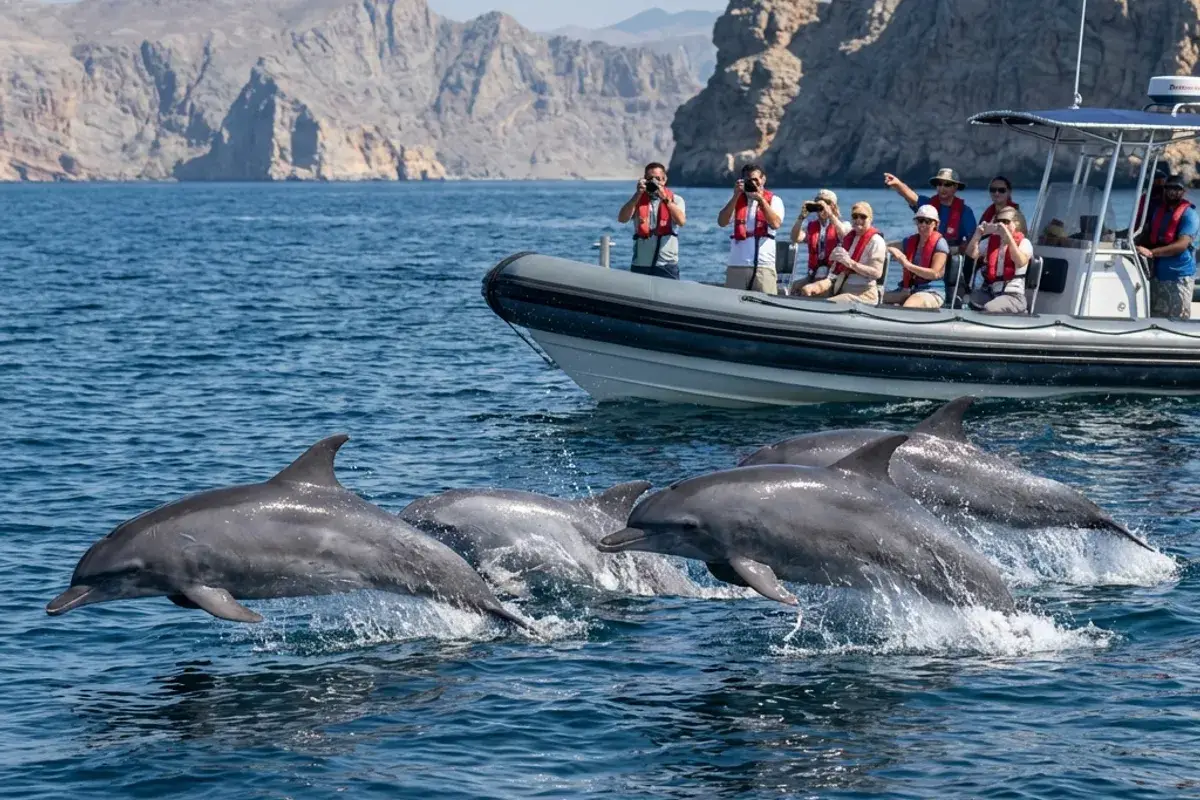
It is worth understanding exactly what drives visitor numbers to Musandam, since that demand is what will eventually support rental income and resale values around projects like Palm Hills and Bukha Waterfront. The Musandam fjords — often marketed internationally as the “Norway of Arabia” — offer a coastline unlike anywhere else in the Gulf: steep limestone cliffs dropping directly into the sea, narrow inlets navigable only by boat, and a marine environment supporting healthy coral reefs, dolphins and a wide range of dive sites suited to both beginners and experienced divers. Dhow cruises remain the single most popular way to experience the region, typically departing from Khasab for half-day or full-day trips through the khors, often combined with dolphin watching and snorkelling stops. Beyond the water, Musandam’s mountainous interior offers trekking and off-road routes through dramatic, largely undeveloped terrain — a genuine adventure-tourism draw that neither Muscat nor Salalah can replicate at the same scale.
This tourism base is smaller than Salalah’s Khareef-season crowds or Muscat’s year-round business and leisure travel, but it is also less seasonal in a different way — diving and dhow cruising are viable across most of the year, and the region’s appeal to Emirati and expatriate weekend visitors from Dubai and Ras Al Khaimah provides a steadier, more regional demand base than a single tourism season would.
Practical Considerations for Foreign Buyers
Buyers seeking financing for a Musandam purchase should confirm current mortgage terms with banks operating under rules set by the Central Bank of Oman, since lending appetite for a smaller, less liquid regional market can differ from Muscat-area terms.
Buyers approaching Musandam for the first time should treat it with the same diligence as any other Integrated Tourism Complex purchase in Oman, with a few region-specific points worth flagging. First, confirm the exact freehold allocation on any given project — as with Palm Hills Khasab’s 25% foreign-buyer allocation, not every unit in a Musandam development is necessarily available to non-Omani purchasers, so this should be verified unit by unit rather than assumed from the project’s general marketing. Second, factor in the exclave geography when planning site visits or future personal use — reaching Musandam typically means routing through the UAE, which is straightforward but worth planning around rather than assuming a direct domestic Omani route. Third, given the market’s early stage, favour developers and projects with visible, verifiable construction progress — like Bukha Waterfront’s reported near-completion — over pure pre-launch concepts with no groundwork yet underway.
Why Now: The Timing Argument for Musandam
The strongest argument for looking at Musandam today rather than waiting is straightforward: infrastructure investment tends to re-rate a district’s pricing once it visibly lands, and Musandam is at the point where that infrastructure is arriving rather than merely being promised. Bukha Waterfront’s near-completion status is a concrete, inspectable signal rather than a rendering, and it sits alongside a freehold project — Palm Hills Khasab — that is already selling units to foreign buyers. Investors who wait until Musandam’s tourism numbers and resale data are as established as Salalah’s today will likely be buying at a meaningfully higher price point than those willing to act on the region’s current, earlier-stage signals.
Frequently Asked Questions
Can foreigners buy freehold property in Musandam?
Yes, within designated projects such as Palm Hills Khasab, which reserves a portion of its units — currently around 25% — for non-Omani buyers under freehold title, following the same Integrated Tourism Complex framework used elsewhere in Oman.
How do I get to Musandam?
Most visitors and investors reach Musandam via a roughly two-hour drive from Dubai or Ras Al Khaimah, since the region is a physical exclave separated from mainland Oman by UAE territory. Domestic flights and coastal routes from Muscat are also available.
What is driving property demand in Musandam?
Primarily tourism tied to the region’s fjords, diving and dhow cruise industry, supported by new infrastructure such as the Bukha Waterfront development and proximity to Dubai’s much larger visitor and expatriate population.
Is Musandam a good fit for rental income?
It can be, particularly for tourism-oriented short-let properties near Khasab, but the rental market is considerably thinner and less established than Muscat or Salalah, and should be approached with realistic expectations around liquidity and occupancy.
How does Musandam compare on price to Muscat?
Substantially lower — current levels in Khasab sit in the range of roughly OMR 300 to 700 per square metre, well below pricing in Muscat’s established freehold districts.
Does buying property in Musandam qualify for Omani residency?
Property-linked residency eligibility in Oman is generally tied to purchase value thresholds under the same national framework covered in our Oman residency guide, and should be confirmed for the specific project and unit value before purchase, since not every price point or project structure automatically qualifies.
Comparing Musandam to Similar Fjord and Peninsula Markets Globally
Investors familiar with international real estate sometimes draw a comparison between Musandam and other dramatic, scarcity-driven coastal markets around the world — Norway’s own fjord regions, parts of coastal Croatia, or New Zealand’s Marlborough Sounds. The pattern in each of these markets tends to follow a similar arc: initial interest driven almost entirely by natural scenery and a small tourism base, followed by gradual infrastructure investment, followed eventually by broader recognition and a corresponding re-rating of property values as the market matures from a niche destination into an established one. Musandam is arguably at the earliest of these stages today — closer to where those other fjord markets sat one or two decades ago than to where they sit now. That comparison is not a guarantee of future performance, but it does illustrate the kind of trajectory scarcity-driven coastal markets have historically followed elsewhere, and why patient, diversification-minded investors are often the ones best positioned to benefit from that kind of long-run re-rating.
A Final Word on Patience
Every emerging market carries the same underlying trade-off: the earlier an investor is willing to act, the lower the entry price, but also the longer the wait before the market’s liquidity and infrastructure catch up to an established destination like Muscat. Musandam asks investors to be honest with themselves about which side of that trade-off they are actually comfortable on before committing capital, rather than treating it as a like-for-like substitute for a more liquid market.
Get in Touch
Musandam is not the right starting point for every Oman investor, but for the right buyer — someone drawn to scarcity, natural scenery, and a genuine second-home lifestyle within reach of Dubai — it is one of the more interesting emerging corners of the Omani market today. Contact UInvest to discuss current availability in Musandam, or explore our full Oman property portfolio to see how it compares against Muscat and Salalah.