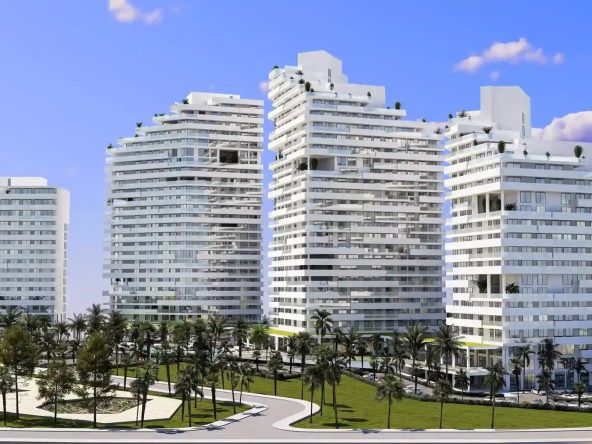










Reduced VAT on Primary Residence in Cyprus: 2026 Rules
As of 8 November 2026, reduced VAT on primary residence in Cyprus means a 5% rate, in place of the standard 19%, on the first sale or construction of a dwelling that the buyer will use as a main and permanent residence in the Republic of Cyprus. The rate is written into Table C of the Fifth Annex to the VAT Law 95(I)/2000 and has applied in its present form since amending Law 42(I)/2023 appeared in the Official Gazette on 16 June 2023. Two further instruments touched the subject in 2026: Law 109(I)/2026, published on 24 April 2026, extended the Tax Commissioner’s examination period for transitional applications to 31 December 2026, and two Council of Ministers decrees, KDP 102/2026 and KDP 103/2026, bring new definitions of “first installation” and “first use” into force from 1 September 2026.
This guide sets out, with dated sources, the legal basis, the timeline of changes, the area and value thresholds and how the 5% and 19% parts are split, the application route through the Tax Department’s Tax For All portal, the repayment rules that run for ten years, the VAT position of land and resales, and worked arithmetic for a €300,000 apartment and a €500,000 house. Every figure comes from the statute text, a Tax Department page or circular, or a dated news report, and is stated as of 8 November 2026. The site’s Cyprus real estate overview covers property taxes briefly; this page is the detailed treatment of VAT.
Reduced VAT on primary residence in Cyprus: what the law provides
Cyprus charges VAT at a standard rate of 19%, according to the Tax Department’s VAT rates page. The first delivery of a newly built dwelling is a taxable supply, so a buyer purchasing from a developer normally meets VAT in the price. Table C of the Fifth Annex to the VAT Law lowers the rate to 5% for three kinds of transaction when the building is to be used as the buyer’s main and permanent place of residence in the Republic: the delivery of a building (including the plot bought with it), the transfer of possession of a building under a sale contract or an agreement to transfer it later, or a lease with an option to buy, and the construction of a building on building land when it is specially designed for that purpose. In each case the transaction has to take place before the first installation in the building, a term defined further below.
The reduced rate is a mechanism of the Fifth Annex, and the statute adds conditions for it: the person claiming it has to be a natural person who meets the “beneficiary” definition, the building has to fit the area and value limits, and a signed declaration with supporting documents has to reach the Tax Commissioner. The Tax Department grants the rate through an approval certificate, issued after an online request, and the seller or contractor then applies the rate shown on the certificate. The European Commission described the earlier version of the rule in July 2021 as a measure that went beyond a social-policy purpose, and that history shaped the 2023 text, as the timeline section shows.
The rate does not exist in isolation from the purchase route. Resale properties follow a different regime, since the sale of a building after its first installation is not a VAT-taxable supply under the Eighth Annex; the buyer pays Land Registry transfer fees instead. Plots of building land bought in the course of an economic activity are taxable. Renovation work on older private dwellings has its own 5% rate under Table B. These neighbouring rules are covered in the sections that follow so that the boundary of the Table C rate is clear.
Legal sources and official documents
The basic text is the VAT Law of 2000, Law 95(I)/2000, as consolidated on CyLaw, the Cyprus legal database. The relevant provisions sit in a handful of places, listed in the table. Tax Department pages and circulars then explain how the Commissioner applies them. The Official Gazette is the formal publication channel for laws and decrees; CyLaw reproduces the Gazette supplements as PDF files, and the figures below were read from those files.
| Instrument | Published or dated | What it contains |
|---|---|---|
| VAT Law 95(I)/2000, Fifth Annex, Table C | Consolidated text on CyLaw | The 5% rate for delivery or construction of a main and permanent residence; beneficiary definition; area and value limits; declaration and documents; the ten-year repayment rule |
| VAT Law 95(I)/2000, Eighth Annex | Consolidated text on CyLaw | Exempt supplies of immovable property, excluding sales of buildings before first installation, which stay taxable |
| Law 42(I)/2023, Official Gazette Supplement I(I) No. 4949 | 16 June 2023 | Introduced the 130 m²/€350,000 rule, the 190 m²/€475,000 limits, the disability and large-family provisions, new Article 63 transitional rules and the revised repayment rules |
| Circular 11/2023 | 28 November 2023 | Tax Commissioner’s interpretation with worked examples |
| Law 109(I)/2026, Official Gazette No. 5089 | 24 April 2026 | Adds a proviso to Article 63 allowing examination of applications until 31 December 2026 where planning-authority delay prevented timely completion |
| KDP 102/2026 and KDP 103/2026, Official Gazette No. 6000 | 27 February 2026; in force 1 September 2026 | Amend Tables B and C of the Fifth Annex and the Eighth Annex: definitions of “first installation” and “first use” |
| Tax Department announcement | 4 May 2026 | States which transitional requests the Commissioner accepts after 15 June 2026, per the Tax Department’s property page |
Secondary summaries exist from KPMG Cyprus and PwC’s Worldwide Tax Summaries, and the tables below use them only as support for dates and thresholds that the statute and the circular already state. Where a summary and the statute differ in wording, the statute text governs.
Timeline of rule changes
The present rule is the result of an infringement procedure at EU level and a new law passed within days of the Commission’s second formal step. The table lays out the sequence from the first Commission step in 2021 to the scheduled end of the transitional examination window on 31 December 2026.
| Date | Event | Source type |
|---|---|---|
| 15 July 2021 | The European Commission sends Cyprus a letter of formal notice: a 5% rate on the first 200 m² of a main residence, without other limitations, goes beyond a social-policy purpose | Commission Representation in Cyprus |
| 1 June 2023 | The Commission sends a reasoned opinion and gives Cyprus two months to address the shortcomings | Cyprus Mail report |
| 8 June 2023 | Parliament passes the new law; 42 members vote in favour and one abstains | Cyprus Mail report |
| 16 June 2023 | Law 42(I)/2023 published in the Official Gazette; 130 m², €350,000, 190 m² and €475,000 limits apply to new planning applications | Official Gazette via CyLaw |
| 31 October 2023 | Cut-off for planning permits issued or planning applications filed that remain under the pre-2023 rule | Law 42(I)/2023, Article 63 |
| 28 November 2023 | Tax Commissioner issues Circular 11/2023 with calculation examples | Tax Department |
| 22 January 2024 | The finance minister states that the Commission’s competition directorate accepted the scheme as passed by Parliament | Cyprus Mail report of a ministerial statement |
| 23 July 2024 | Tax For All user guide for requesting a reduced-rate certificate is posted | Tax For All, gov.cy |
| 6 June 2025 | Tax For All posts a VAT 5% calculation tool for purchase or construction | Tax For All, gov.cy |
| 27 February 2026 | KDP 102/2026 and KDP 103/2026 published (definitions of first installation and first use) | Official Gazette via CyLaw |
| 24 April 2026 | Law 109(I)/2026 published; examination of transitional applications may continue to 31 December 2026 | Official Gazette via CyLaw |
| 4 May 2026 | Tax Department announcement on which transitional requests it accepts | Tax Department |
| 15 June 2026 | Three-year window under Article 63 for the pre-2023 rule closes for buildings whose building permit was issued by 31 December 2024 | Law 42(I)/2023; Tax Department |
| 1 September 2026 | KDP 102/2026 and KDP 103/2026 take effect | Official Gazette via CyLaw |
| 31 December 2026 | End of the Commissioner’s extended examination period under Law 109(I)/2026 | Law 109(I)/2026 |
The statute does not provide for any examination period after 31 December 2026. A law-firm commentary published on 28 April 2026 by Michael Kyprianou Law Firm reads this as leaving only the 2023 regime in place from 1 January 2027; that reading is the firm’s own and is presented here as commentary, since the statute simply sets the date.
Current conditions for reduced VAT on primary residence in Cyprus
The text of Table C, as amended by Law 42(I)/2023, states the thresholds in a single sentence: the provisions apply to the first 130 square metres of buildable area of dwellings, as determined by the building coefficient according to the architectural plans submitted to the competent authority for the planning permit (or, where no planning permit is required under a general or special order, for the building permit), up to a value of €350,000, provided that the total transaction value does not exceed €475,000 and the total buildable area does not exceed 190 square metres. The Tax Department’s property page repeats the same figures. The table shows how the limits differ for the three categories the law recognizes.
| Element | Standard beneficiary | Person with a disability | Large family (four or more children) |
|---|---|---|---|
| Area charged at 5% | First 130 m² of buildable area | First 190 m², whatever the total area | 130 m² plus 15 m² for each child beyond three |
| Value charged at 5% | Up to €350,000 | Up to €475,000 (Tax Department property page; Circular 11/2023, examples 10 and 11) | Up to €350,000; the value limits do not change |
| Total area above which the 5% rate is not available | 190 m² | No area ceiling, since the 190 m² applies whatever the total | 190 m² plus 15 m² per child beyond three |
| Total transaction value above which the 5% rate is not available | €475,000 | €475,000 | €475,000 |
| Consequence of exceeding the ceiling | Standard rate on the whole amount | Standard rate on the whole amount | Standard rate on the whole amount |
Three details of the wording matter. First, the area is “buildable area” as fixed by the building coefficient in the plans lodged for the planning permit, which is a planning measure and not the sales-brochure figure for internal or covered area. Second, the €350,000 and €475,000 figures can be revised: Table C says the transaction value may be revised by a notice of the Tax Commissioner after a decision of the Council of Ministers. Third, the Commissioner’s circular states the consequence of crossing a ceiling in plain words: for dwellings above 190 m² or above €475,000 the standard rate applies to the whole purchase amount or construction value.
The statute defines a “child” for the large-family rule as an unmarried legitimate child under 18, a recognized child born outside marriage, a legally adopted child or unmarried stepchild under 18, and a child permanently unable to support themselves who lives with the beneficiary. A large family is one with at least four such children. The circular adds that where a person qualifies both as a person with a disability and as a large family, the criterion producing the lower VAT burden is applied and the two are not combined (example 12).
Who qualifies: beneficiary, EU and non-EU buyers, residence
For reduced VAT on primary residence in Cyprus, Table C defines a “beneficiary” as any natural person who has completed the 18th year of age on the date of the application, who acquires a dwelling for use as a main and permanent place of residence in the Republic, who holds no other dwelling in the Republic acquired with the reduced rate, and who, if they received a grant under the Special Grant (Purchase or Construction of Dwelling) Law, has returned it as that law required. A company is not a natural person, so companies fall outside the definition.
The definition contains no nationality criterion. The Tax Department’s frequently asked questions describe a beneficiary as any natural person who is a citizen of the Republic of Cyprus or of any state and who declares that they are acquiring a dwelling for use as a main and permanent residence in the Republic. EU and non-EU citizens therefore sit under the same wording. The VAT rule is separate from property-acquisition permissions: the Department of Lands and Surveys lists a permit from the competent authority among the transfer documents where the buyer is a “foreign person” as defined in the Immovable Property Acquisition (Aliens) Law, Cap. 109, and the VAT certificate is not a substitute for it. Residency immigration status is a third, separate question and neither Table C nor the Tax Department FAQ sets a residence-permit condition for the VAT rate.
A married person may apply for a reduced rate on one dwelling only, and when a married applicant files the declaration, the spouse files a declaration that they own no other dwelling in the Republic used as a main and permanent residence. The Tax Department publishes supplementary forms for a co-applicant, a spouse, the contractor and the architect. To submit a request through the portal, the applicant, co-applicant and spouse need a tax identification code and a Tax For All account linked to it; the FAQ also lists as a condition that no other request is pending or saved as a draft.
The residence requirement is framed in the statute as a use condition and as a repayment trigger. The dwelling must be acquired “for use” as the main and permanent place of residence, and if the beneficiary stops using it as a place of residence before ten years have passed, the repayment rule in the section on repayment applies. The law does not set a minimum stay as a precondition for receiving the certificate; it attaches a consequence to ceasing occupation. Evidence of use is requested in the form of utility records, which the documents section lists.
The statute also uses the term “owner-occupation”, meaning residing in an owned dwelling, and it defines “dwelling” as a specially designed and arranged roofed building used or intended to be used by the beneficiary as the main and permanent place of residence. A building that is not designed as a dwelling is outside Table C, and a second home or a property bought for letting does not match the “main and permanent” wording.
How the 5% and 19% parts are split
When a dwelling is within the 190 m² and €475,000 ceilings but above 130 m², the rate is neither 5% on everything nor 5% on exactly 130 m² of the price. Circular 11/2023 explains a proportional method. The part of the value charged at 5% equals the area limit divided by the actual buildable area, multiplied by the value, with the value capped at €350,000 for this purpose. The remaining part of the transaction value is charged at the standard 19%. In symbols, for a standard beneficiary: 5% base = (130 ÷ actual area, capped at 1) × (value, capped at €350,000); 19% base = value minus 5% base.
The circular’s second bullet in paragraph 7.1 states that where the value lies between €350,001 and €475,000, the reduced rate applies to the value up to €350,000, apportioned by area where the area is between 130 and 190 m². The cap on the value therefore works as a cap on the base that can attract 5%, not as a switch-off, until the €475,000 total is crossed. The Tax Department’s Tax For All portal publishes a calculation tool for the purchase or construction of a dwelling, posted on 6 June 2025, that works from the buildable area.
The table reproduces the circular’s non-disability examples with the arithmetic re-derived from the circular’s own inputs. The VAT column adds 5% of the first base and 19% of the second.
| Buildable area | Transaction value | Base at 5% | Base at 19% | Total VAT |
|---|---|---|---|---|
| 130 m² | €350,000 | €350,000.00 | €0.00 | €17,500.00 |
| 150 m² | €350,000 | €303,333.33 | €46,666.67 | €24,033.33 |
| 120 m² | €370,000 | €350,000.00 | €20,000.00 | €21,300.00 |
| 160 m² | €330,000 | €268,125.00 | €61,875.00 | €25,162.50 |
| 160 m² | €370,000 | €284,375.00 | €85,625.00 | €30,487.50 |
| 191 m² | €479,000 | €0.00 | €479,000.00 | €91,010.00 |
The last row shows the effect of the ceilings. At 191 m² and €479,000 both limits are exceeded, so the standard rate applies to the whole €479,000. The same outcome occurs if only one limit is exceeded. For large families the circular gives two more examples. With five children (two beyond three), a 190 m² home worth €475,000 has a numerator of 130 + 15 + 15 = 160 m²; the denominator stays at the actual 190 m², giving a 5% base of €294,736.84 and total VAT of €48,986.84. The circular notes that widening the denominator by 30 m² would produce a heavier VAT burden, so it is not applied. A 220 m² home of the same value for the same family has a 5% base of €254,545.45 and VAT of €54,613.64.
For a person with a disability, the area limit is 190 m² and the value limit €475,000. A 230 m² dwelling worth €475,000 has a 5% base of 190 ÷ 230 × €475,000 = €392,391.30, a 19% base of €82,608.70, and VAT of €19,619.57 plus €15,695.65, which is €35,315.22 in the circular’s example 10. A 170 m² dwelling worth €460,000 is entirely within the limits (example 11) and carries €23,000 of VAT, which is 5% of the full value.
Worked examples: a €300,000 apartment and a €500,000 house
The examples below apply the circular’s method to hypothetical figures. The buildable areas are assumptions chosen to show how the thresholds work; each example is one case, and a real transaction depends on the buildable area in the approved plans and the contract value. All amounts are VAT in euros, with the value treated as the net transaction value, which is how the circular’s examples apply the rates. Figures are rates and rules as of 8 November 2026.
| Case | Steps | VAT |
|---|---|---|
| A. €300,000 apartment, 100 m² buildable area | Area is within 130 m², value within €350,000: 5% × €300,000 | €15,000 (5.00% of value) |
| B. €300,000 apartment, 150 m² buildable area | Ratio 130 ÷ 150 = 0.8667; 5% base = 0.8667 × €300,000 = €260,000; 19% base = €40,000; 5% × €260,000 = €13,000; 19% × €40,000 = €7,600 | €20,600 (6.87%) |
| C. €300,000 apartment, 190 m² buildable area | Ratio 130 ÷ 190 = 0.6842; 5% base = €205,263.16; 19% base = €94,736.84; €10,263.16 + €18,000.00 | €28,263.16 (9.42%) |
| D. €470,000 house, 185 m² buildable area | Within both ceilings. 5% base = (130 ÷ 185) × €350,000 = €245,945.95; 19% base = €470,000 − €245,945.95 = €224,054.05; €12,297.30 + €42,570.27 | €54,867.57 (11.67%) |
| E. €475,000 house, 185 m² buildable area | At the ceiling. 5% base = €245,945.95; 19% base = €229,054.05; €12,297.30 + €43,520.27 | €55,817.57 (11.75%) |
| F. €500,000 house, 180 m² buildable area | Value above €475,000, so the standard rate applies to the whole value: 19% × €500,000 | €95,000 (19.00%) |
Case A shows the unrestricted benefit: the difference between 19% and 5% on €300,000 is €57,000 minus €15,000, which is €42,000. Case B shows how a 20 m² excess over 130 m² raises the VAT by €5,600 over Case A even though the price is the same. Case C sits at the largest area allowed, where the effective rate has risen to about 9.4%.
The €500,000 house in Case F crosses the €475,000 ceiling, so the reduced rate disappears entirely: the VAT is €95,000, not a reduced amount plus a higher charge on the excess. The step between Cases E and F is abrupt. Compare a 185 m² house priced at €475,000 (VAT €55,817.57) with one priced at €475,001: the second has VAT of 19% × €475,001 = €90,250.19, which is €34,432.62 higher for a €1 difference in the transaction value. This follows from the statute’s wording, which makes the €475,000 total a condition for the reduced rate on any part of the price.
Statistics on new-build prices help place these figures in context. Price and transaction data are in the site’s Cyprus real estate market statistics post and in the post on Cyprus apartment prices by district and per square meter. Comparing a price with the €350,000 and €475,000 ceilings requires the net transaction value from the contract, which can differ from a listing price.
Transitional rules and the 2026 changes
The Article 63 transitional rule
Law 42(I)/2023 inserted Article 63 into the VAT Law. It says the 2023 amending law does not apply to buildings for which a planning permit was obtained, or an application for a planning permit was submitted, by 31 October 2023, and for which a duly completed declaration is submitted within three years of the law’s entry into force. The Tax Department’s property page states the consequence: for these buildings the reduced rate applies to the first 200 m² of buildable area of dwellings. Because the 2023 law is switched off for them, the 190 m² and €475,000 ceilings of the new text do not apply either. Circular 11/2023 adds that a planning application counts as submitted if it received its five-digit identification number in the town-planning system by 31 October 2023, and that an application found incomplete after the check is refused and has to be lodged again, possibly after the cut-off. It also notes that a valid planning notification can be used by a later buyer of the plot, who then files the declaration.
Law 109(I)/2026 and the 4 May 2026 announcement
The three-year window ended on 15 June 2026. Law 109(I)/2026, published on 24 April 2026, added a proviso to Article 63: the Tax Commissioner may examine applications submitted under the article until 31 December 2026 if the examination was not completed in time because of delays by the town-planning authorities. The Tax Department’s property page, citing its announcement of 4 May 2026, states that the Commissioner accepts requests for a certificate where a planning application was submitted or a planning permit issued by 31 October 2023 and the building permit was issued after 1 January 2025 or will not have been issued by 31 December 2026. Commentary by KPMG Cyprus and by law firms describes the other branch: where the building permit was issued by 31 December 2024, the 15 June 2026 deadline stayed.
| Planning position | Building permit | Rule applied to the 5% rate | Filing deadline |
|---|---|---|---|
| Planning application filed or permit issued after 31 October 2023 | Any | 2023 rule: 130 m² and €350,000, ceilings of 190 m² and €475,000 | No transitional deadline; request at any stage before possession |
| Planning application filed or permit issued by 31 October 2023 | Issued by 31 December 2024 | Pre-2023 rule: first 200 m² | 15 June 2026 (closed) |
| Planning application filed or permit issued by 31 October 2023 | Issued after 1 January 2025, or not issued by 31 December 2026 | Pre-2023 rule: first 200 m², where the delay is attributed to planning authorities | Commissioner examines until 31 December 2026 |
The law text of 109(I)/2026 is short. It adds one sentence and does not change the thresholds, the beneficiary definition or the repayment rule. The Philippou Law Firm summary adds that, where the building permit has not been issued, the VAT declaration is filed together with the building permit application so the Commissioner can assess the delay; the Tax Department’s own page states the acceptance rule but not that procedural detail.
KDP 102/2026 and KDP 103/2026: first installation and first use
KDP 102/2026 amends Tables B and C of the Fifth Annex, and KDP 103/2026 amends the Eighth Annex. Both were published in Official Gazette No. 6000 on 27 February 2026 and take effect on 1 September 2026. They fix two definitions. “First installation” is the first use of the building after its delivery or construction, including owner-occupation, own use, letting or any other use that continues on a systematic basis. “First use” is use or exploitation of the building after delivery or construction that takes place systematically for a period of at least 18 months. The Tax Department’s property page applies these definitions from 1 September 2026 to the VAT position of sales: transfers of buildings and the plot with them, or transfers of possession under a sale contract, are taxable at the standard 19% rate if made before first installation.
The same decree package changes the renovation definition in Table B, the 5% rate for work on older private dwellings: a dwelling counts as old when at least three years have passed since first installation, and the 18-month first-use period runs concurrently with the three years. Renovation is a separate service-based rate and is outside the Table C purchase rate described here.
For the Table C rate, the practical meaning follows from the definitions. A building whose first installation has not occurred is within the delivery scope of the reduced rate. On the decree wording, letting a unit on a systematic basis counts as first installation, so a later sale of that unit is no longer a sale before first installation. Planning and permit volumes that feed this pipeline are tracked in the post on Cyprus building permits and construction trends.
Applying for reduced VAT on primary residence in Cyprus: steps and documents
The Tax Department’s property page states that the request for a reduced-rate certificate is submitted only electronically, through the Tax For All (TFA) taxpayer portal, at any stage during construction or, for a delivery, before the dwelling comes into the beneficiary’s possession. The law adds that the Commissioner may allow the declaration to be filed within 12 months after the beneficiary takes possession, if the delay is due to the beneficiary’s absence from the Republic, illness or another event the Commissioner accepts, on submission of complete supporting evidence. The Tax Department publishes separate user guides for “purchase” and “construction” requests.
- The applicant, and any co-applicant or spouse, obtain a tax identification code and link it to a TFA account.
- The applicant checks that no earlier request is pending or saved as a draft and, if a certificate exists from an earlier purchase, that the ten-year position is dealt with, as the repayment section describes.
- The applicant submits the online request, with the declaration and the supporting documents in the table below.
- The Tax Department reviews the file and may ask for further documents.
- The decision and the approval certificate arrive by notification in the portal and by e-mail to the address registered in the tax registry.
- The beneficiary gives the seller or contractor a certified copy of the application or the certificate, and the seller or contractor charges the reduced rate shown on it.
The statute states that the seller of the dwelling, or the contractor in a construction case, is obliged to charge the reduced rate once handed the certified copy. The FAQ adds the other side: before the approval certificate is received, the contractor or seller must charge the standard rate on any payment. If the certificate lists two rates, 5% and 19%, both appear on every invoice or receipt issued.
| Document | Purpose |
|---|---|
| Signed declaration in the Tax Commissioner’s form | States that the applicant holds no other dwelling acquired with the reduced rate and will use this one as the main and permanent residence |
| Sale contract (purchase) or construction contract (build) | Fixes the transaction value used for the calculation |
| Architectural plans of the dwelling: elevations, plan, 1:100 site plan, area calculation | Establish the buildable area |
| Copy of the planning-permit application stamped as received, and the planning permit; or the building-permit equivalents where no planning permit is required | Treated by the circular as basic documents; a declaration lacking them is not examined |
| Contractor’s statement that the contractor holds an annual licence of the right class and category | Required in the statute’s list |
| Co-applicant, spouse, contractor and architect forms | Supplementary forms published by the Tax Department |
| Evidence of residence: telephone, water, electricity or municipal or community tax bills, or other evidence | Submitted within 12 months of possession; the FAQ asks for a detailed electricity statement |
An applicant who disagrees with the Commissioner’s decision can, per the FAQ, ask for clarification through the portal and file a recourse before the Administrative Court under Article 146 of the Constitution within 75 days of the decision being communicated. Extra works that raise the value of the original contract require a separate enquiry message through the portal, with a stamped contract for the extra works and a letter stating whether the buildable area changes and the expected move-in date.
Repayment rules for reduced VAT on primary residence in Cyprus
Table C, as amended in 2023, says that if a beneficiary stops using the dwelling as a place of residence before ten years have passed, they must notify the Tax Commissioner within 30 days from the date they stopped, and pay the difference between the VAT resulting from the reduced rate and from the standard rate, as both stood at delivery or construction, in proportion to the period in which the dwelling was not used as the owner’s residence. Circular 11/2023 states that the period is counted in calendar months. Before 2023 the text required payment of the whole amount of tax resulting from the reduced and standard rates; Law 42(I)/2023 replaced that wording with the proportional amount, and KPMG’s June 2023 summary describes the same change.
The statute carves out two cases from the repayment: the death of the beneficiary, and a transfer by the beneficiary to an adult child, provided the child is a beneficiary at the time of the transfer. The circular adds detail. If the child has not benefited from the reduced rate in the last ten years, no repayment arises for the parent. If the child already used the reduced rate for another dwelling and does not intend to live in the transferred home, the parent owes the proportional difference; if the child stops using the home they benefited from and moves into the transferred one, the child owes the proportional difference for that period. On the death of the beneficiary, no VAT is returned and the heir of the dwelling has no obligation to return VAT, whether or not the heir benefited from the reduced rate for another dwelling in the last ten years.
| Scenario (apartment of €300,000, 100 m², VAT paid at 5%) | Rule | Amount |
|---|---|---|
| VAT difference at stake | 19% × €300,000 = €57,000 less 5% × €300,000 = €15,000 | €42,000 |
| Residence ends after 48 months (4 years) | 72 of 120 months not used: 72 ÷ 120 × €42,000 | €25,200 |
| Residence ends after 84 months (7 years) | 36 of 120 months not used: 36 ÷ 120 × €42,000 | €12,600 |
| Residence continues for 120 months | No repayment arises under the ten-year rule | €0 |
| Dwelling passes to an eligible adult child who uses it | Exempt from repayment under Table C | €0 |
The figures in the table illustrate the stated formula. The statute’s wording is that the repayment “corresponds to” the period of non-use, and the circular says the period is measured in calendar months; the actual assessment is the Commissioner’s. The trigger is ceasing to use the home as a residence. The statute does not list sale or letting as separate events, but a sale to anyone other than an eligible adult child, or a letting of the whole dwelling, ends the owner’s residence in it, and so engages the rule on the statute’s own terms. A buyer who is later found not to be a beneficiary owes the full amount of the VAT, according to the proviso in the ninth sub-paragraph of Table C.
Using the right again within ten years
Since 16 June 2023 a person who used the reduced rate can use it again for another dwelling before ten years pass, provided they comply with the repayment rule for the first one. Law 42(I)/2023 deleted the earlier proviso that barred this. Circular 11/2023 sets the start of the non-use period for the first home at the date the new declaration is submitted plus up to 24 months, treated as sufficient time to take possession of the new home, and says the non-use period is counted in calendar months. The Tax Department’s request checklist, for its part, lists as a condition that the ten-year period has elapsed where an earlier certificate exists, which is the portal wording for the case in which no repayment is involved.
Land, self-build and plot purchases
Table C covers construction on building land as well as delivery of finished buildings. Its third limb, the erection of a building specially designed as a main and permanent residence on building land, applies when the work is done before first installation. The Tax Department also publishes a declaration for the refund of VAT that was charged on the purchase of a plot on which a home subject to the reduced rate was built. For that refund the FAQ lists the approval certificate, the construction contract or planning permit showing the plot, the first electricity bill or statement (with a second bill if the first shows no consumption), the stamped plot purchase contract or form N270, the plot purchase invoices and the title. Payment details are supplied on paper at the start of the examination.
Under the Eighth Annex, the transfer of undeveloped building land intended for erecting one or more permanent structures, made in the course of an economic activity, is not an exempt supply, which is how VAT can arise on a plot sold by a business. The provision is worded for transfers made in the course of an economic activity. The Tax Department’s page on VAT and immovable property also explains that in a land-for-construction (antiparochi) contract, two transactions arise for VAT: the land delivery to the developer and either a delivery of a property back to the landowner or a supply of building services.
A plot bought together with a building is part of the same transaction. Table C refers to the building “including the plot purchased with it”, or an undivided share of it, so the plot bought with a new unit falls inside the delivery that the reduced rate covers, subject to the limits in the thresholds table. The circular’s examples apply the area and value limits to the total transaction value.
Resale properties: no VAT, transfer fees instead
A resale is the sale of a building after its first installation, so the reduced VAT on primary residence in Cyprus has no resale equivalent. Under the Eighth Annex the supply of immovable property is exempt except for transfers before first installation, so a resale carries no VAT and the 5% rate has nothing to apply to. The buyer pays Land Registry transfer fees, which the Department of Lands and Surveys sets out. Fees are levied on the sale price or the market value, whichever applies: 3% from €0.01 to €85,000, 5% from €85,001 to €170,000 and 8% above €170,000. A 50% discount applies to the fee where fees are charged under Chapter 17 of the schedule, with an exception the Department lists for properties acquired by the seller in certain forced-sale procedures. Where VAT is charged on the same transaction, no transfer fee is charged, on presentation of a certificate from the VAT service.
| Value | New build: VAT on the value | Resale: transfer fees before discount | Resale: transfer fees after 50% discount |
|---|---|---|---|
| €200,000 | VAT: €10,000 if within 130 m² | 3% × 85,000 + 5% × 85,000 + 8% × 30,000 = €9,200 | €4,600 |
| €300,000 | VAT: €15,000 if within 130 m² | 2,550 + 4,250 + 10,400 = €17,200 | €8,600 |
| €500,000 | VAT: €95,000 at 19% (above the €475,000 ceiling) | 2,550 + 4,250 + 26,400 = €33,200 | €16,600 |
The comparison is arithmetic on stated rates and does not rank the two routes: a new build and a resale differ in age, specification and price, and the VAT is calculated on the new-build contract value while transfer fees fall on the sale price or market value. The comparison omits stamp duty, legal fees and other costs, which are outside this page. The Department of Lands and Surveys also lists the tax clearance certificate (form N313) and form N314A1 among the documents for any sale transfer. The site’s analysis of Cyprus housing prices against 2010 and the rental price data by city give price context for both routes.
Common errors, stated as facts
- The 130 m² figure is not a cap on the dwelling. A 150 m² home within the other limits qualifies, with the 5% base scaled by 130 ÷ 150 as in the circular’s examples.
- The 190 m² and €475,000 figures are not caps on the discounted part. They are conditions: above either, the standard rate applies to the whole amount, per paragraph 6 of Circular 11/2023.
- “Buildable area” is the planning measure fixed by the building coefficient in the plans, not the title deed area or the area quoted in a brochure.
- The 200 m² rule is not the general rule. It is the pre-2023 rule that survives only under Article 63 for buildings with a planning position on or before 31 October 2023, and the Commissioner’s examination window for the delayed cases closes on 31 December 2026.
- A contract date is not the test for the transitional rule. The test is the date of the planning application or planning permit, and the building permit date for the two filing deadlines.
- Payments made before the approval certificate is received are invoiced at the standard rate, per the Tax Department’s FAQ.
- A resale does not carry VAT at 5% or at 19%; the Eighth Annex exempts it, and transfer fees apply.
- The beneficiary has to be a natural person. A company purchase does not fit the definition.
- A married person can apply for one dwelling, and the spouse files a separate declaration.
- The request goes through the Tax For All portal. The Tax Department’s property page states that submission is electronic only.
- The ten-year rule is a repayment rule, not a ban on a second use of the rate. The 2023 law allows a second use with a proportional repayment on the first home.
- Ceilings can be revised. Table C allows the transaction value to be revised by Tax Commissioner notice after a Council of Ministers decision, so the €350,000 and €475,000 figures are stated here as of 8 November 2026.
Overviews such as the KPMG Cyprus and PwC pages give the rate in a few lines, while the Circular 11/2023 examples set out the full method. The rules on this page are those of the Republic of Cyprus; the site’s comparison of North Cyprus and South Cyprus property rules, costs and titles covers how the two markets differ. Listings for new homes in the area administered by the Republic are on the Southern Cyprus country page, with city views for Paphos and Limassol.
Frequently Asked Questions
What is reduced VAT on primary residence in Cyprus?
It is a 5% VAT rate, instead of 19%, on the first sale or construction of a dwelling that a natural person will use as a main and permanent residence in the Republic of Cyprus. It is set in Table C of the Fifth Annex to Law 95(I)/2000, as amended by Law 42(I)/2023, and it is granted through a Tax Department approval certificate. As of 8 November 2026 the 5% applies to the first 130 m² of buildable area up to €350,000, within ceilings of 190 m² and €475,000.
Does the 5% rate apply to the whole price of a 150 m² apartment?
No. For a dwelling above 130 m² and within 190 m², Circular 11/2023 scales the 5% base by 130 divided by the actual area. For a €300,000 apartment of 150 m², the 5% base is €260,000 and the 19% base €40,000, giving VAT of €13,000 plus €7,600, which is €20,600.
What happens above €475,000 or 190 m²?
The reduced VAT on primary residence in Cyprus does not apply to any part of the price. The standard rate applies to the whole purchase amount or construction value, per paragraph 6 of Circular 11/2023. A €500,000 house therefore carries 19% × €500,000 = €95,000 of VAT. Persons with a disability have a different area rule, with a 190 m² limit whatever the total area, and the €475,000 ceiling still applies.
Can non-EU citizens use the reduced rate?
The statute’s beneficiary definition has no nationality criterion, and the Tax Department’s FAQ describes a beneficiary as a natural person who is a citizen of the Republic of Cyprus or of any state. Acquisition permissions for foreign persons under Cap. 109 and residence permits are separate matters handled by other authorities. The buyer must be at least 18 on the application date and acquire the home as a main and permanent residence in the Republic.
Is VAT charged on a resale?
No. Under the Eighth Annex, the sale of a building after its first installation is exempt, so reduced VAT on primary residence in Cyprus does not arise on resales. The buyer pays transfer fees of 3% up to €85,000, 5% from €85,001 to €170,000 and 8% above €170,000, with a 50% discount, according to the Department of Lands and Surveys. On €300,000 the fees are €17,200 before the discount and €8,600 after it.
What happens if the home is sold, let or left unoccupied within ten years?
Under Table C, a beneficiary who stops using the dwelling as a place of residence before ten years have passed must notify the Tax Commissioner within 30 days and pay the VAT difference in proportion to the months of non-use. On a €300,000 apartment with a €42,000 difference, ending residence after 48 months implies a repayment of 72 ÷ 120 × €42,000 = €25,200. Death of the beneficiary and transfer to an eligible adult child are excepted.
How does the seller apply the reduced rate, and who applies for the certificate?
The buyer applies. The request is made online through Tax For All, with the declaration and documents. After approval the buyer gives the seller or contractor a certified copy, and the seller or contractor charges the rate shown on it. Before approval, the standard rate is invoiced on any payment, per the Tax Department’s FAQ. Where reduced VAT on primary residence in Cyprus covers only part of the price, both rates appear on each invoice.
Is the pre-2023 rule for the first 200 m² still available?
Only for buildings whose planning application or permit dates from 31 October 2023 or earlier and which fall under Article 63. The three-year filing window closed on 15 June 2026 where the building permit was issued by 31 December 2024. For delayed cases, Law 109(I)/2026 lets the Commissioner examine applications until 31 December 2026. The statute sets no later date.
Can the reduced rate be used more than once?
Yes, with conditions. Since 16 June 2023 a person who used the rate can use it again before ten years pass, if they comply with the proportional repayment rule for the first dwelling. Circular 11/2023 states how the non-use period for the first home is counted from the new declaration date. A married person can apply for one dwelling, and the spouse files a separate declaration.
Which instruments changed the rules in 2026?
Law 109(I)/2026, published on 24 April 2026, extends the examination period for Article 63 applications to 31 December 2026 in planning-delay cases. KDP 102/2026 and KDP 103/2026, published on 27 February 2026, define “first installation” and “first use” from 1 September 2026, with first use meaning systematic use for at least 18 months. The 130 m², €350,000, 190 m² and €475,000 limits for reduced VAT on primary residence in Cyprus were not changed by these instruments.
Last checked: 8 November 2026. Sources: VAT Law 95(I)/2000, consolidated (CyLaw); Law 42(I)/2023 (Official Gazette via CyLaw); Law 109(I)/2026 (Official Gazette via CyLaw); KDP 102/2026; KDP 103/2026; Tax Department Circular 11/2023 (Greek); Tax Department: VAT and immovable property (Greek); Tax Department FAQ on the 5% rate (Greek); Tax Department: 5% Reduced VAT Rate; Tax Department: VAT rates (Greek); Tax For All: VAT 5% calculation tool; Tax For All: user guide for requesting the 5% rate; Department of Lands and Surveys: sale and transfer fees; European Commission Representation in Cyprus, 15 July 2021; Cyprus Mail, 1 June 2023; Cyprus Mail, 8 June 2023; Cyprus Mail, 22 January 2024; KPMG Cyprus, June 2023; KPMG Cyprus tax alert on transitional rules; PwC Worldwide Tax Summaries, Cyprus: other taxes; Michael Kyprianou Law Firm, 28 April 2026; Philippou Law Firm summary.