

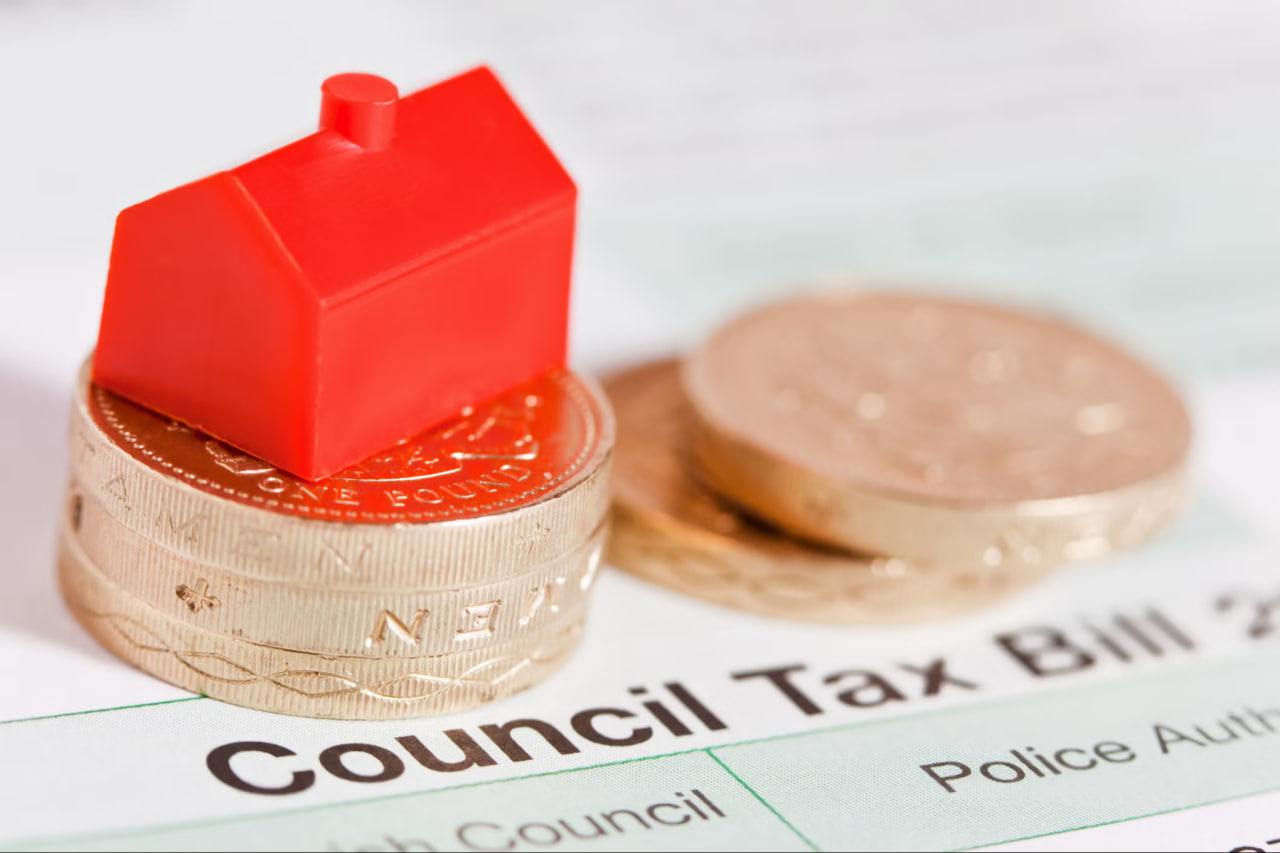
The tax on the increase in value from a property sale is one of the least understood costs for foreign investors: buying property in Turkey is, in most respects, a straightforward process — but the tax obligations that come with ownership are often the part buyers understand least before signing, and the part that causes the most confusion afterward. From the one-time title deed transfer tax due at purchase to the annual property tax every owner pays, and the capital gains tax that applies if you sell within a certain window, Turkeys real estate tax system has enough moving parts that a clear map matters. This guide walks through every tax a foreign buyer of Turkish property needs to understand, from the moment of purchase through ongoing ownership and eventual resale.
Tax at the Point of Purchase: Title Deed Transfer Tax
Every property transaction in Turkey triggers a title deed transfer tax (tapu harci), calculated as a percentage of the declared property value and paid at the Land Registry Office (Tapu Mudurlugu) when ownership is formally transferred. This tax is conventionally split between buyer and seller, with each party typically responsible for half, though this split can be negotiated as part of the sale agreement. The tax is due before the title deed is issued, meaning it is effectively unavoidable as part of completing any purchase — it is not a tax buyers can defer or structure around, unlike some of the ongoing obligations covered below.
Buyers should confirm the declared value used for this calculation with their lawyer or agent before finalizing a purchase, since underdeclaring a propertys value to reduce this tax — a practice that has historically been common in some Turkish real estate transactions — carries real legal and financial risk and has become considerably riskier as Turkish authorities have tightened valuation scrutiny in recent years.
Annual Property Tax (Emlak Vergisi)
Every property owner in Turkey, foreign or domestic, pays an annual property tax to the local municipality where the property is located, calculated as a percentage of the propertys assessed municipal value — which is often lower than its actual market value, meaning the annual tax bill is typically modest relative to the propertys real worth. This tax is generally paid in two installments per year, and rates vary depending on the municipality and whether the property is classified as residential or commercial, with property in metropolitan municipalities like Istanbul typically assessed at different rates than smaller towns.
Owners should register with the relevant municipality shortly after purchase to ensure the annual tax bill is correctly issued in their name — this is usually handled by the same lawyer or agent who manages the title transfer, but it is worth confirming explicitly rather than assuming it happens automatically.
Capital Gains Tax on Resale (Deger Artis Kazanci)
This is the tax that generates the most questions from foreign investors, and it is the subject of a specific and valuable exemption that shapes how many buyers plan their holding period. If you sell a property in Turkey within five years of purchase, the gain — the difference between your original purchase price and your sale price, adjusted for inflation using official indices — is subject to capital gains tax at rates set by Turkish tax law, applied on a progressive scale depending on the size of the gain.
If you hold the property for more than five years before selling, the gain is entirely exempt from this tax. This five-year threshold is the single most important planning consideration for foreign investors treating Turkish property as a mid-to-long-term investment rather than a short-term flip, and it is worth building explicitly into your exit strategy from the point of purchase rather than discovering the exemption only when you are ready to sell.
How the Inflation Adjustment Works
Turkeys capital gains calculation adjusts the original purchase price using an official inflation index published by Turkish tax authorities before comparing it to the sale price, which matters enormously in an economy that has experienced significant inflation in recent years. This adjustment can substantially reduce the taxable gain compared to a simple nominal purchase-price-to-sale-price comparison, and buyers should ensure whoever prepares their tax filing applies this index correctly rather than calculating the gain on unadjusted figures.
Rental Income Tax
Foreign owners who rent out their Turkish property — a common strategy for both Istanbul apartments targeting long-term tenants and coastal properties targeting holiday renters — are subject to Turkish income tax on that rental income, filed annually. Turkey offers a standard expense deduction option that lets landlords deduct a fixed percentage of gross rental income without needing to itemize actual expenses, which many foreign owners find simpler than tracking individual maintenance and management costs, particularly for owners who are not resident in Turkey and manage the property remotely through a local agent.
VAT Exemption for Foreign Buyers
Turkey offers a notable VAT exemption for qualifying foreign buyers purchasing residential or commercial property with foreign currency, provided the buyer meets specific conditions, including holding the property for a minimum period before resale to retain the exemption. This exemption can represent a meaningful saving on new-build property purchases specifically, since VAT would otherwise apply to new construction sales in a way it typically does not to resale of older properties. Buyers should confirm eligibility for this exemption directly with their lawyer before purchase, since the qualifying conditions are specific and not every foreign buyer or every property automatically qualifies.
Inheritance and Gift Tax
Property in Turkey passed by inheritance or gift is subject to Turkish inheritance and gift tax, calculated on a progressive scale based on the value transferred and the relationship between the parties, with closer family relationships generally taxed at lower rates than transfers between unrelated parties. Foreign owners with Turkish property should factor this into estate planning, particularly if the property is intended to pass to heirs who are not Turkish residents, since the tax and administrative process for a foreign-held Turkish asset can differ from the equivalent process in the owners home country.
A Worked Example: Calculating Capital Gains Tax
Numbers make the five-year exemption easier to plan around. Consider an investor who buys an apartment for the equivalent of $150,000 and sells it three years later for $220,000, well before the five-year exemption threshold. Turkish tax authorities do not simply tax the $70,000 nominal gain; they first adjust the original $150,000 purchase price using the official inflation index published for the relevant period, which in a high-inflation environment can substantially increase the adjusted cost basis. If, for example, the inflation adjustment brings the effective purchase price up to $190,000, the taxable gain shrinks to $30,000 rather than the full $70,000 nominal difference — and it is this adjusted figure, not the raw nominal profit, that Turkish capital gains tax rates apply to. Now compare the same investor holding the same property for six years instead of three: the entire gain, however large, is exempt from capital gains tax altogether. This is why the five-year threshold is treated as a genuine planning lever by experienced investors rather than a minor technicality — the difference between selling in year three and year six can be the difference between paying tax on a meaningful gain and paying nothing at all.
Property Tax Obligations vs. Tax Residency: Two Separate Questions
A common point of confusion for foreign property owners is conflating owning Turkish property with becoming a Turkish tax resident. These are entirely separate questions under Turkish law. Owning property in Turkey, on its own, does not make you a Turkish tax resident — tax residency is generally triggered by spending more than 183 days in Turkey within a calendar year, or by establishing your habitual place of residence there. A foreign owner who visits their Turkish property for a few weeks each year, without meeting the residency threshold, remains liable only for the property-specific taxes covered in this guide — annual property tax, capital gains on sale, and tax on any rental income sourced from the property — without becoming subject to Turkish tax on their broader worldwide income the way a tax resident would be.
This distinction matters enormously for structuring how much time to spend in Turkey each year if minimizing tax complexity is a priority, and it is worth discussing explicitly with a tax advisor if you are also pursuing a Turkish residence permit tied to your property, since residency permit status and tax residency status are determined by different criteria and do not automatically align.
Double Taxation Treaties: Avoiding Being Taxed Twice
Turkey maintains double taxation avoidance agreements with a large number of countries, designed to prevent the same income or gain from being taxed both in Turkey and in the investor home country. These treaties typically work either by exempting certain income from tax in one of the two countries, or by allowing a tax credit in your home country for tax already paid in Turkey. Whether and how a specific treaty applies depends heavily on the investors country of tax residency and the specific type of income involved — rental income, capital gains, and inheritance are often treated differently even under the same treaty. Investors should check whether their home country has an active double taxation treaty with Turkey and, if so, request specific guidance from a tax advisor familiar with both jurisdictions before assuming any particular tax treatment applies automatically.
Filing Deadlines and the Practical Process
- Title deed transfer tax: Paid at the time of transfer, directly as part of completing the purchase at the Land Registry Office — there is no separate later filing.
- Annual property tax: Typically due in two installments per year, commonly in specific windows set by the municipality; late payment generally incurs interest penalties, so setting a calendar reminder or arranging payment through a local property manager is worthwhile for owners who are not resident in Turkey.
- Capital gains tax on sale: Filed as part of an annual tax return covering the period in which the sale occurred, generally due in the months following the end of the relevant tax year.
- Rental income tax: Also filed annually, covering rental income received during the prior tax year, with the standard expense deduction or itemized deduction choice made as part of that filing.
Non-resident foreign owners generally need a Turkish tax identification number to handle any of these filings, which is typically obtained early in the property purchase process — most lawyers and agents handling a foreign purchase arrange this automatically as one of the first steps, since it is also required to open a Turkish bank account and complete the purchase itself.
How Turkish Property Tax Compares to Other Popular Markets
- Turkey: Modest annual property tax based on municipal assessed value; five-year capital gains exemption is a genuine, well-defined planning tool; VAT exemption available for qualifying foreign currency purchases.
- UAE: No annual property tax and no capital gains tax on individual real estate sales, generally more tax-favorable on an ongoing basis, though transaction fees at purchase are structured differently.
- Cyprus: EU member state with its own property tax and capital gains regime, generally more complex than Turkeys system but offering EU-specific benefits Turkey does not.
- Oman: No annual property tax and no capital gains tax on individual property sales, similar to the UAE model, within its designated freehold zones.
For investors comparing across the region, Turkey sits in a middle position — not as tax-light as the Gulfs no-property-tax, no-capital-gains model, but with a clear, plannable five-year exemption path that rewards exactly the kind of medium-to-long-term holding strategy most real estate investors already favor.
Working with a Tax Advisor: What to Ask
- Confirm your specific propertys municipal assessed value and how it compares to market value, since this drives your ongoing annual tax bill.
- Ask explicitly about the five-year capital gains exemption timeline relative to your planned holding period, and whether any prior related-party transfers could affect your qualifying purchase date.
- Confirm whether your specific purchase qualifies for the foreign-currency VAT exemption, and what conditions you must maintain to keep that exemption valid.
- If you plan to rent the property, ask about the standard expense deduction option versus itemized deductions, and which is more favorable for your specific situation.
- If estate planning is a consideration, ask how Turkish inheritance tax on the property would interact with your home countrys own inheritance tax rules, since double-taxation treaties vary by country.
Common Mistakes Foreign Buyers Make on Turkish Property Tax
- Assuming property ownership alone triggers Turkish tax residency. As covered above, these are separate questions — owning property does not by itself make you a Turkish tax resident.
- Underdeclaring the purchase value to save on transfer tax. This carries real legal risk, complicates the cost-basis calculation for capital gains later, and has become considerably riskier as Turkish valuation scrutiny has tightened.
- Forgetting the inflation adjustment when estimating capital gains liability. Investors who calculate a rough nominal gain without applying the official inflation index often significantly overestimate their actual tax exposure, sometimes leading to unnecessary rushed decisions around the five-year threshold.
- Not registering promptly for the annual property tax. Delays here can result in the tax bill being calculated incorrectly or sent to the wrong address, creating penalty complications that are easily avoided with prompt registration after purchase.
- Overlooking the foreign-currency VAT exemption eligibility conditions. Buyers sometimes assume the exemption applies automatically to any foreign buyer, when in practice specific conditions — including a minimum holding period to retain the exemption — must be met and maintained.
Special Considerations for Rental Property Owners
Owners renting out a Turkish property, whether long-term to tenants in Istanbul or short-term to holidaymakers on the coast, should be aware that Turkish tax authorities have increased scrutiny of short-term rental income in recent years, including registration requirements for platforms facilitating short-term lets. Owners operating a short-term rental should confirm their property and rental activity comply with current local licensing requirements, which vary by municipality, separately from the income tax obligations covered above — a property can be fully tax-compliant on income reporting while still being non-compliant on short-term rental licensing if that separate registration step is skipped.
Frequently Asked Questions
How long do I need to hold a property in Turkey to avoid capital gains tax?
Five years from the date of purchase. Selling before this threshold makes the gain, adjusted for inflation, subject to capital gains tax; selling after fully exempts the gain.
Is there an annual property tax in Turkey?
Yes, paid to the local municipality based on the propertys assessed value, typically in two annual installments. Rates and assessed values vary by municipality.
Do foreign owners pay the same taxes as Turkish citizens?
Broadly yes, with the notable exception of the VAT exemption available specifically to qualifying foreign-currency buyers, which does not apply to Turkish citizens purchasing in Turkish lira.
What happens if I sell before the five-year mark?
The gain, calculated as the inflation-adjusted difference between purchase and sale price, becomes subject to Turkeys progressive capital gains tax rates.
Is rental income from a Turkish property taxed even if I do not live in Turkey?
Yes — rental income sourced from Turkish property is subject to Turkish income tax regardless of the owners residency status, filed annually.
Does the five-year capital gains exemption apply to commercial as well as residential property?
The exemption framework applies to real estate broadly, though commercial property transactions can involve additional considerations depending on how the property is held and used. Confirming the specific treatment for a commercial purchase with a tax advisor is worthwhile given the additional complexity involved.
Can I offset property purchase costs, like agent fees or renovation, against capital gains tax later?
Certain documented costs directly tied to acquiring or improving the property can generally be added to the cost basis used in the capital gains calculation, which is another reason keeping thorough records and receipts from the point of purchase onward matters for anyone planning an eventual sale.
What happens if I inherit a property in Turkey from a relative rather than purchasing it myself?
The property becomes subject to Turkish inheritance tax at the point of transfer, calculated based on its value and your relationship to the deceased, and your own five-year capital gains holding period for a future sale would then generally be assessed from the date of inheritance rather than the original owner purchase date — a detail worth confirming directly with a tax advisor given how much it affects planning.
Key Takeaways
- Title deed transfer tax is due once, at purchase, and is typically split between buyer and seller.
- Annual property tax is modest and based on assessed municipal value, not market value.
- Holding a property for more than five years exempts the entire capital gain from tax on resale.
- Capital gains before the five-year mark are calculated on an inflation-adjusted basis, not the raw nominal profit.
- Owning property does not automatically make you a Turkish tax resident — that is a separate 183-day test.
- A qualifying foreign-currency VAT exemption exists for certain purchases but requires meeting specific conditions.
The Bottom Line
Turkeys property tax system is not especially complicated once mapped out, but its rules — particularly the five-year capital gains exemption and the inflation-adjustment mechanism — reward buyers who plan their holding period deliberately from the outset rather than treating tax as an afterthought at resale. For anyone evaluating property investment in Turkey, working through this tax map with a qualified local advisor before purchase, rather than after, is what turns these rules from a source of surprise into a genuine planning advantage.


