

























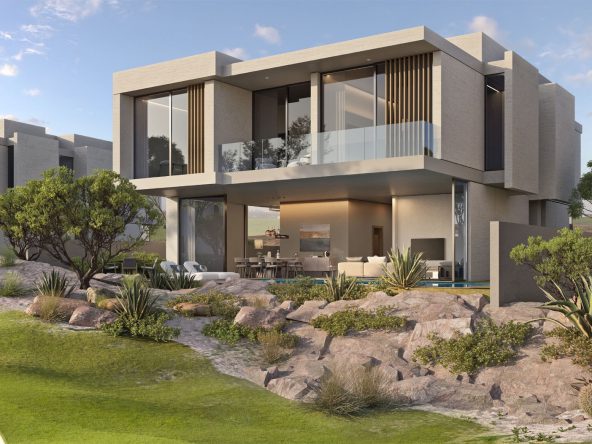
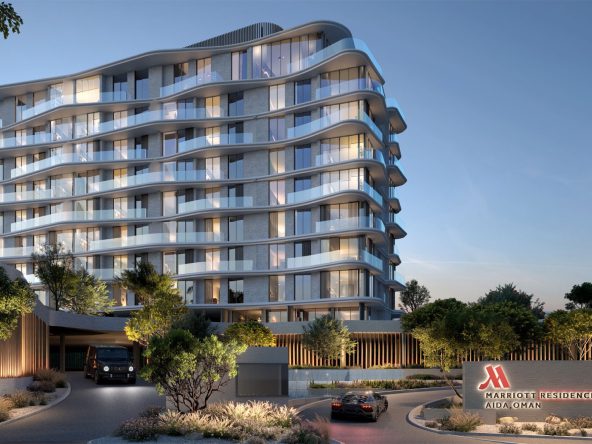
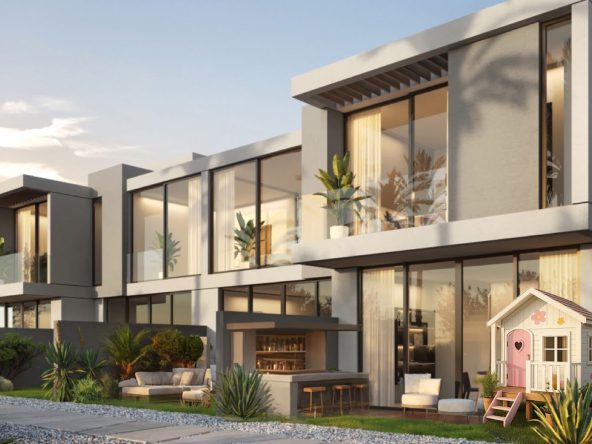
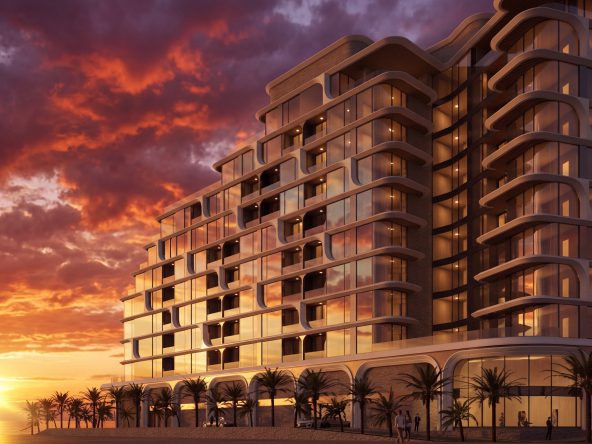
The short answer, before anything else
Muscat holds the widest spread of property we sell anywhere in Oman. Entry is $106,900; the top end runs past $8 million. But the number that actually matters is the one almost nobody publishes: across the governorate, price per square foot runs from about $118 to about $387 — a 3.3× spread inside a single city.
That spread is not random, and it does not track the headline price. The cheapest thing per square foot in Muscat is a 4,216 sq ft villa at $499,100. The most expensive per square foot is a small apartment. If your instinct is that bigger homes cost more per foot, Muscat inverts it.
And there is a second thing worth knowing before you compare prices at all. The cheapest way into Muscat is also the one where the title is least certain. Uptown Muscat at Knowledge Oasis is $106,900 and sits outside the Integrated Tourism Complex framework. Alef Qurum Residence, inside a licensed ITC, is $111,800. That $4,900 gap — about 4.6% — is the difference between a freehold that is marketed and a freehold that is documented. This page is mostly about that distinction, and about which district you should actually be looking at.
Muscat at a glance
| Muscat | |
|---|---|
| What it is | Oman’s capital and largest urban area, on the Gulf of Oman below the Hajar Mountains |
| Governorate population | 1,532,234 at end-2025, up 2.2% on the year — about 28.6% of Oman’s 5.36 million |
| Density | 383.1 people per km² — Oman’s most densely populated governorate |
| Wilayats | Six: Muscat, Muttrah, Bowshar, As Seeb, Al Amerat and Quriyat |
| Where the expats are | Bowshar — roughly 347,500 non-Omanis, about 78.1% of that wilayat |
| Where the Omanis are | As Seeb — about 284,300, the largest Omani population of any wilayat |
| Airport | Muscat International — 13.2 million passengers in 2025 (11.8m international) |
| Our projects | 9, from $106,900 to over $8 million |
| Foreign freehold | Available — but only inside designated ITCs |
One comparison puts the scale in perspective. Muscat runs at 383 people per square kilometre; Al Wusta, the governorate containing Duqm, runs at 0.63. Muscat is roughly six hundred times more densely populated than the region Oman is building its industrial future in. Whatever else is true about the capital, the demand is already here rather than projected.
Muscat is not one market
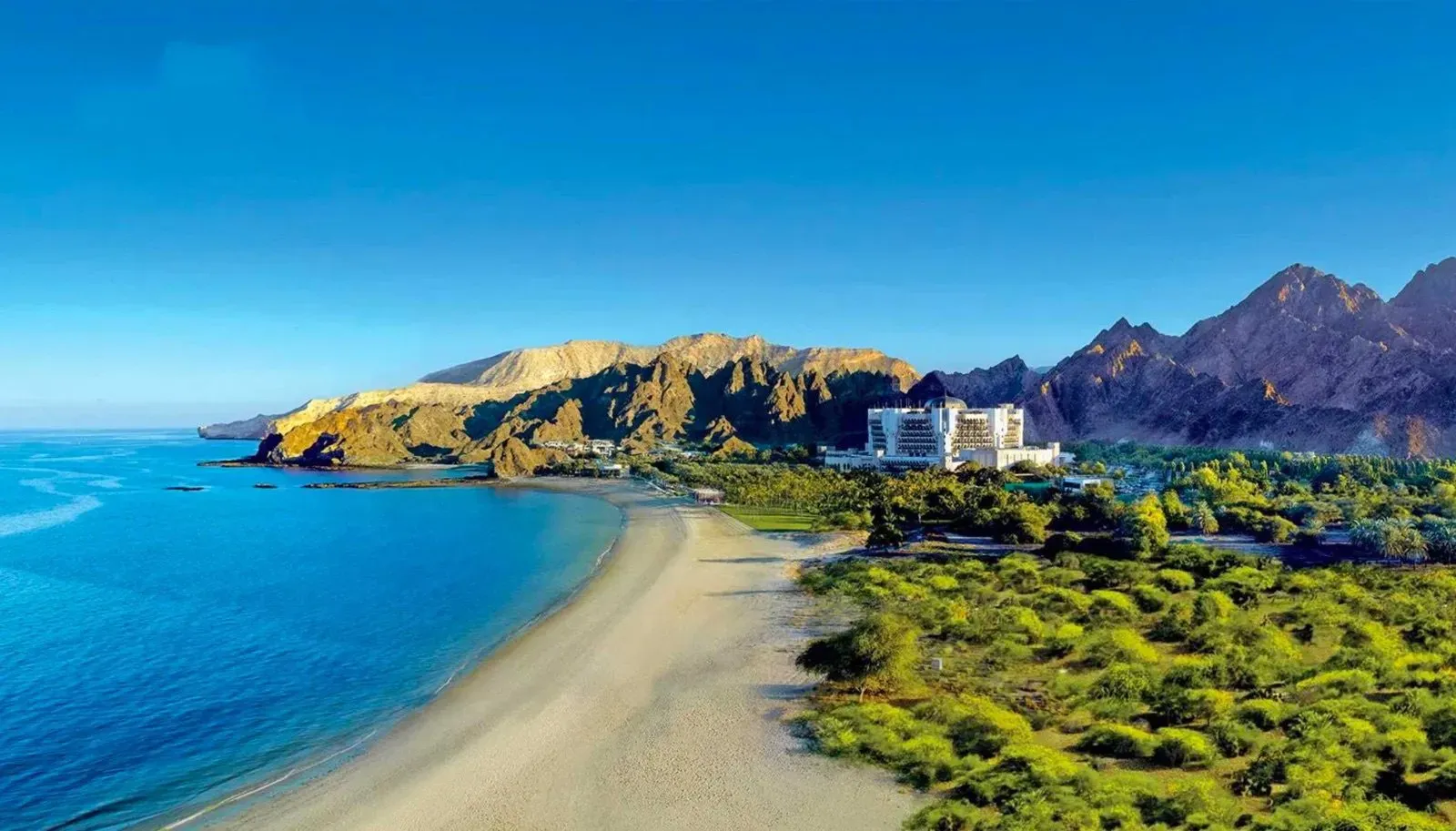
The single most useful thing to understand about buying here is that “Muscat” is an administrative label covering districts with almost nothing in common. A marina apartment at Barr Al Jissah and a villa in the new planned city share a governorate and essentially nothing else — not price, not buyer, not the reason anyone lives there.
| District | What it actually is | Entry |
|---|---|---|
| Al Mouj | The mature coastal ITC — marina, golf, the deepest resale market in Oman | $221,000 |
| Sultan Haitham City | The new planned city west of the capital — scale, villas, best value per foot | $82,160 |
| Muscat Bay | Barr Al Jissah — cliffs, coves, the most expensive per foot in the city | $234,100 |
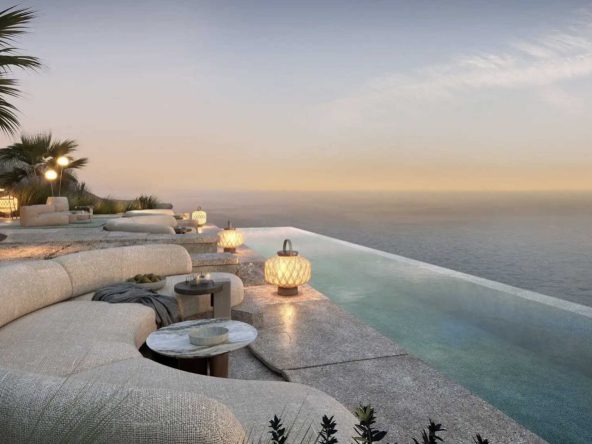
| Yiti | AIDA and the sustainable city — clifftop golf, the big-ticket end | $195,000 |
| Telal Al Qurm | Central Muscat’s own ITC, licence announced July 2024 — city living with clean title | $111,800 |
| Knowledge Oasis | Inland tech park at Rusayl — cheapest entry, most ambiguous title | $106,900 |
| Muscat Hills | Established golf ITC close to the airport | — |
| Shatti Al Qurum | The old prestige beach address, embassies and villas | — |
| Al Seeb | The coastal corridor west — Yamal and the airport side | — |
Getting this wrong is expensive in a way that is hard to reverse. Someone who buys a clifftop apartment because it was the cheapest thing at Muscat Bay, when what they wanted was space and a school run, has bought the right city and the wrong district. Start with where, not with what.
Nine projects that map the whole price range
| Project | District | From | Size from | Handover |
|---|---|---|---|---|
| Uptown Muscat | Knowledge Oasis | $106,900 | 409 sq ft | 2027 |
| Alef Qurum Residence | Telal Al Qurm ITC | $111,800 | 674 sq ft | 2029 |
| The Great Escape, AIDA | Yiti | $195,000 | 600 sq ft | 2029 |
| Telal Al Qurm | Telal Al Qurm ITC | $200,100 | 958 sq ft | 2027–28 |
| Jood | Sultan Haitham City | $204,000 | 1,141 sq ft | 2030 |
| Luma Residence | Muscat Bay | $300,500 | 1,211 sq ft | 2029 |
| AIDA by DarGlobal | Yiti | $416,000 | 1,345 sq ft | 2027 |
| Al Mina, Barr Al Jissah | Muscat Bay | $479,200 | 1,238 sq ft | 2027 |
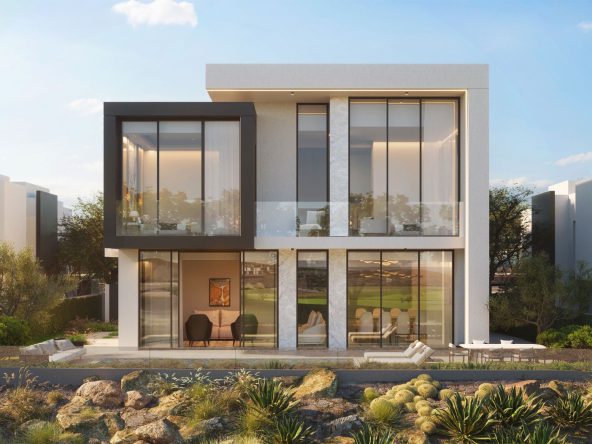
| Al Ahlam District | Sultan Haitham City | $499,100 | 4,216 sq ft | 2027 |
There is also Central 7 at Knowledge Oasis, a Tier I business centre rather than a home, and The Sustainable City, priced on request.
The number that reorders everything
Sort those same projects by price per square foot instead of by price, and the list rearranges completely.
| Project | Price | Size | Per sq ft |
|---|---|---|---|
| Al Ahlam District, Sultan Haitham City | $499,100 | 4,216 sq ft | ~$118 |
| Alef Qurum Residence, Telal Al Qurm | $111,800 | 674 sq ft | ~$166 |
| Jood, Sultan Haitham City | $204,000 | 1,141 sq ft | ~$179 |
| Telal Al Qurm | $200,100 | 958 sq ft | ~$209 |
| Luma Residence, Muscat Bay | $300,500 | 1,211 sq ft | ~$248 |
| Uptown Muscat, Knowledge Oasis | $106,900 | 409 sq ft | ~$261 |
| AIDA by DarGlobal, Yiti | $416,000 | 1,345 sq ft | ~$309 |
| The Great Escape, AIDA | $195,000 | 600 sq ft | ~$325 |
| Al Mina, Barr Al Jissah | $479,200 | 1,238 sq ft | ~$387 |
Two things fall out of that column, and both are counterintuitive.
First, the biggest home on the list is the cheapest per square foot. A 4,216 sq ft villa at Al Ahlam works out at about $118 per foot; the 409 sq ft studio at Uptown works out at about $261. The villa costs almost five times as much in total and less than half as much per foot. Space in Muscat is cheap in the planned city and expensive on the coast — you are paying for location and amenity, not for square footage.
Second, the coastal ITCs cluster at the top. Muscat Bay and Yiti run $248 to $387 per foot. That is the same resort premium we set out on the Jebel Sifah page, where the range is $242 to $332, and it is the honest reason those districts feel expensive even when a headline price looks approachable. If cost per foot is your metric, the coast is the wrong place to shop and Sultan Haitham City is the right one.
The $4,900 question
This is the most useful single comparison on the page, and it takes two projects that sit within $5,000 of each other and could hardly be more different.
| Uptown Muscat | Alef Qurum Residence | |
|---|---|---|
| Price from | $106,900 | $111,800 |
| Location | Knowledge Oasis, Rusayl — inland tech park | Telal Al Qurm — central Muscat |
| ITC status | Outside the ITC framework | Inside a licensed ITC (announced 15 July 2024) |
| Freehold basis | Marketed as freehold by the developer and multiple brokerages | Freehold under the ITC designation, registered in your own name |
| Per sq ft | ~$261 | ~$166 |
| Handover | 2027 | 2029 |
Our own Uptown Muscat listing states the position plainly rather than glossing it: the site sits outside the ITC framework, which is the mechanism through which foreign buyers have historically obtained freehold title in Oman, and the decree that widened foreign freehold does not obviously reach it — while the developer and multiple brokerages market the project as freehold with a residency visa attached.
That is not an accusation, and it is not a reason to refuse the project. It may well be resolved, and the developer may be entirely correct. It is a reason to get the title basis in writing, from the developer, verified by an independent Omani lawyer, before you pay anything — and to understand that at Alef Qurum, 4.6% more money buys a question you do not have to ask.
Put the per-square-foot column alongside it and the comparison gets sharper still: Uptown is $261 per foot with an ambiguous title; Alef Qurum is $166 per foot with a licensed one. On both measures that actually matter, the more expensive headline is the better buy. The only thing Uptown wins on is the number in the advertisement.
Where freehold is certain in Muscat
Foreign freehold in Oman runs through designated Integrated Tourism Complexes. Inside one, a non-Omani takes full freehold title in their own name, inheritable and sellable, with a residency pathway attached. Outside one, the traditional position is that foreign individuals cannot hold freehold land, and the available structures are usufruct rights, long leases, or ownership through an Omani-registered company.
| Setting | Foreign freehold? |
|---|---|
| Al Mouj | Yes — established ITC |
| Muscat Bay / Barr Al Jissah | Yes — established ITC |
| Muscat Hills | Yes — established ITC |
| Telal Al Qurm | Yes — ITC licence announced 15 July 2024 |
| AIDA, Yiti | Yes — within the Yiti masterplan |
| Jebel Sifah (just outside the governorate) | Yes — established ITC |
| Knowledge Oasis, Rusayl | Unconfirmed — outside the ITC framework; marketed as freehold. Verify in writing |
| Ordinary Muscat land | No — usufruct route only, for buildings of four-plus floors |
Telal Al Qurm is worth dwelling on, because it changes what is possible in the capital. It is a 164,900 m² mixed-use district by Alargan Towell taking shape between Wattayah and Qurum, and its ITC licence — from the Ministry of Housing and the Ministry of Heritage and Tourism — put freehold title in the middle of the working city rather than in a resort forty minutes away. For a buyer who wants to actually live in Muscat, near schools, supermarkets and an office, that is a genuinely new option.
Residency: which Muscat projects clear the threshold
The property route to Golden Residency has two tests, and being in Muscat satisfies neither by itself. The property must sit inside a designated ITC, and the investment must reach OMR 200,000 — about $520,160.
| Project | Range | Clears $520,160? |
|---|---|---|
| Al Mina, Barr Al Jissah | $479,200 – $4,183,000 | Yes, above entry level |
| AIDA by DarGlobal | $416,000 – $8,100,000 | Yes, above entry level |
| Luma Residence | $300,500 – $650,200 | Yes, at the upper end |
| Al Ahlam District | $499,100 | Just short at entry |
| Telal Al Qurm, Jood, The Great Escape | $195,000 – $204,000 | No |
| Uptown Muscat, Alef Qurum | $106,900 – $111,800 | No |
So residency in Muscat is a half-million-dollar decision, not a hundred-thousand-dollar one. Most of what sells here is bought to live in or to let, not to qualify. If residency is the actual objective, say so at the outset and shop the top of the range deliberately — the routes are set out in Golden Residency versus the Owner Visa. Confirm the current threshold in writing before committing.
What it costs to transact
| On a $200,000 purchase | Muscat ITC | Duqm SEZ |
|---|---|---|
| VAT on first sale | 5% — $10,000 | 0% — nil |
| Registration / transfer | 3% — $6,000 | 0.5% — $1,000 |
| Total acquisition cost | $216,000 | $201,000 |
Roughly 8% on top of the price, and it is the main fiscal event of the purchase: Oman levies no annual property tax and no personal income tax on rental income. Budget the 8%, not the headline.
Living in Muscat
Muscat is a real city rather than a resort with a postcode, and that is the substantive difference between buying here and buying at Jebel Sifah or Duqm. International schools, hospitals, embassies, a functioning retail economy and 13.2 million air passengers a year all exist because 1.5 million people live here, not because a masterplan promised them.
| Muscat | |
|---|---|
| Shape | A long coastal ribbon between mountains and sea — journeys run east-west |
| Expat core | Bowshar, at about 78% non-Omani |
| Airport | 13.2m passengers in 2025; direct links across the Gulf, Asia and Europe |
| Summer | Hot and humid on the coast — June to September is endured, not enjoyed |
| Winter | The reason people come — warm, dry, and the mountains and wadis are open |
| Getting around | A car is effectively required; the city is too linear to walk between districts |
The linear geography matters more than newcomers expect. Muscat stretches for tens of kilometres along the coast, so a district that looks close on a map can be a forty-minute drive in traffic. Test the specific commute you will actually make — to your office, your school, the airport — before you choose between Al Qurm and Sultan Haitham City. The map will not tell you.
Resale and liquidity
Al Mouj has the deepest secondary market in Oman by a clear margin: it is inside the city, it has been delivering for over a decade, and it has a resident expatriate population that rents and buys year-round. Jebel Sifah comes second on delivered stock. Everywhere else in Muscat, including the newest and most attractive schemes, you are largely relying on selling into continued primary demand rather than into an established resale market.
That argues for two things. Favour districts with delivered phases you can physically inspect over pure off-plan where you can. And plan a longer holding period than the payment plan implies — the exit is the part of an Omani purchase that most often takes longer than expected.
Who actually rents in Muscat
Rental demand here is structurally different from the resort districts, and it is the reason Muscat is the one Omani market where a buy-to-let case does not depend on tourism.
The tenant base is a working expatriate population, concentrated in Bowshar — roughly 347,500 non-Omanis, about 78% of that wilayat. These are people on employment contracts: oil and gas, government and quasi-government, banking, healthcare, education, and the professional services around them. They rent for years rather than weeks, they renew, and their demand does not vanish in August the way a holiday-let market does.
That has three practical consequences. Occupancy is steadier than on the coast, because a corporate tenant on a two-year posting is not a seasonal booking. Yields are lower but more predictable, since you are competing on a long-let market rather than capturing peak nightly rates. And location preferences follow employers and schools, not views — which is precisely why the inland districts hold their rents better than the per-square-foot table would suggest.
The corollary matters if you are buying at the coastal end. A clifftop apartment at Muscat Bay or Yiti is competing for a much smaller pool of tenants, at a much higher price per foot, in a market where short-let regulation and management costs are real. It can work — but underwrite it as a second home that sometimes lets, not as a yield instrument. We set out the national picture in rental yields in Oman.
If this is your first purchase in Oman
Muscat is the sensible place to make a first Omani purchase, and there are four things worth doing in order.
- Decide whether you are buying to use, to let, or to qualify for residency. These three point at different districts and different price points, and trying to satisfy all three usually produces a compromise that serves none of them.
- Shortlist by district before you look at a single floor plan. The 3.3× per-foot spread means district choice sets your budget efficiency before any negotiation does.
- Establish the title basis in writing — ITC or not — and have an independent Omani lawyer confirm it. This is the step most often skipped and the one that costs most when it goes wrong.
- Visit in summer if you can. Muscat in January sells itself. Muscat in August is the honest test of whether you want to own here, and it is the month that determines whether a holiday-let sits empty.
One more piece of practical advice specific to this market. Oman is a small market with a long transaction cycle, and the volume of comparable sales that a buyer in Dubai or Istanbul would use to sanity-check a price simply does not exist here. That makes the per-square-foot comparison in this page more than an analytical nicety — with thin comparable data, cost per foot across districts is one of the few objective benchmarks available to you. Use it.
How to read any Muscat listing
Three questions settle almost every ownership question in Oman, and Muscat is where all three actually come into play.
| Ask | What the answer tells you |
|---|---|
| 1. Is it inside a designated ITC? | Yes → full freehold, and the Golden Residency route opens if the value test is met. |
| 2. If not, is it in a special economic or free zone? | Freehold became legally possible there under RD 38/2025 — but ask what title this project sells today. Often leasehold, as in Duqm. |
| 3. Neither? | Ordinary land. Foreign purchase runs through the usufruct route — buildings of four-plus floors, buyer 23+, two years’ residency — or is unavailable, as in Bidbid. |
Knowledge Oasis is the instructive case, because it answers “no” to the first question and does not obviously fall under the second, yet is marketed as freehold. “Freehold” describing a sales position is not the same as “freehold” describing a registered deed, and in Muscat that gap sits between two projects $4,900 apart. Ask which one is meant, and ask for it in writing.
Seven checks before you buy in Muscat
- Pick the district first. The 3.3× per-foot spread is a district decision, not a unit decision.
- Divide price by square footage on every shortlisted unit and compare across districts.
- Confirm ITC status in writing — especially anywhere outside the established complexes.
- If residency is the goal, check the OMR 200,000 threshold against your specific unit before you fall in love with a cheaper one.
- Budget the full ~8% in VAT and transfer costs.
- Drive your actual commute at the time of day you will make it. Muscat is longer than it looks.
- Have an independent Omani lawyer review the contract. Do not rely on any agent’s listing, including ours.
Frequently asked questions
Can foreigners buy property in Muscat?
Yes, inside designated Integrated Tourism Complexes such as Al Mouj, Muscat Bay, Muscat Hills, Telal Al Qurm and AIDA at Yiti, where non-Omanis take full freehold title in their own name. Outside an ITC the position is more restricted, and any project marketed as freehold from a non-ITC site should be verified in writing.
How much does property in Muscat cost?
From $106,900 for a studio at Uptown Muscat to more than $8 million at AIDA by DarGlobal. Per square foot the range runs roughly $118 to $387 depending on district.
Which part of Muscat is best value?
Sultan Haitham City, on a per-square-foot basis — villas at Al Ahlam work out at about $118 per foot, the lowest in the governorate. The coastal ITCs at Muscat Bay and Yiti are the most expensive per foot, at $248 to $387.
Does buying in Muscat give Omani residency?
Only above the threshold. Golden Residency requires a property inside a designated ITC and an investment of OMR 200,000, about $520,160. Most Muscat stock sells below that, so entry-level purchases do not qualify.
What is the cheapest property in Muscat?
Uptown Muscat at Knowledge Oasis, from $106,900. Note that this site sits outside the ITC framework and its freehold basis should be confirmed in writing — Alef Qurum Residence, inside a licensed ITC, starts $4,900 higher.
How big is Muscat?
The governorate had 1,532,234 residents at the end of 2025, about 28.6% of Oman’s population, across six wilayats — Muscat, Muttrah, Bowshar, As Seeb, Al Amerat and Quriyat — at 383 people per square kilometre.
What are the buying costs in Muscat?
About 8% — 5% VAT on the first sale of a new home plus a 3% transfer fee for foreign buyers. There is no annual property tax in Oman and no personal income tax on rent.
Is Muscat better than Dubai for property investment?
Different propositions. Muscat is a smaller, less liquid market with lower entry prices and far lower transaction volumes; Dubai offers depth and exit liquidity Oman cannot match. We compare them directly in our Oman versus Dubai analysis.
Which Muscat district has the best resale market?
Al Mouj, by a clear margin — it is inside the city, has delivered for over a decade and has a year-round resident population. Elsewhere you are largely selling into continued primary demand.
Related on this site
Districts: Al Mouj, Muscat Bay, Muscat Hills, Sultan Haitham City, Yiti, Shatti Al Qurum, Al Seeb, Jebel Sifah. Elsewhere in Oman: Salalah, Duqm, Sur, Sohar, Bidbid. Rules and process: buying as a foreigner, freehold property in Oman, comparing the ITCs, property tax, all Oman property.
The verdict
Muscat is the only place in Oman where you can buy a home without also buying a thesis. The population is here, the schools and hospitals are here, the airport moved 13.2 million people last year, and Al Mouj proves that an Omani community can develop a functioning resale market. Everywhere else in the country asks you to believe in something that is still being built. Muscat mostly does not.
What it asks instead is that you choose carefully within it, because the internal spread is enormous. A 3.3× difference in price per square foot inside one governorate means the district decision dominates every other decision you will make — and the per-foot ranking is close to the inverse of the headline-price ranking, so the cheapest advertisement is rarely the best value.
If you want space, go to Sultan Haitham City. If you want the coast and can pay for it, Muscat Bay and Yiti. If you want to live in the actual city with title you never have to explain, Telal Al Qurm is the option that did not exist three years ago. And if the $106,900 headline is what brought you here, spend the extra $4,900 and buy the licensed one.
Ask us for the price per square foot and the ITC status of any Muscat unit before you ask about the payment plan. Those two numbers decide almost everything else.
Ask for the per-square-foot and title status on any Muscat unit
Further reading: the Muscat Municipality covers the governorate’s wilayats and civic services; the Ministry of Heritage and Tourism oversees ITC licensing, the route foreign buyers use; Invest Oman is the government’s official investment platform.
