









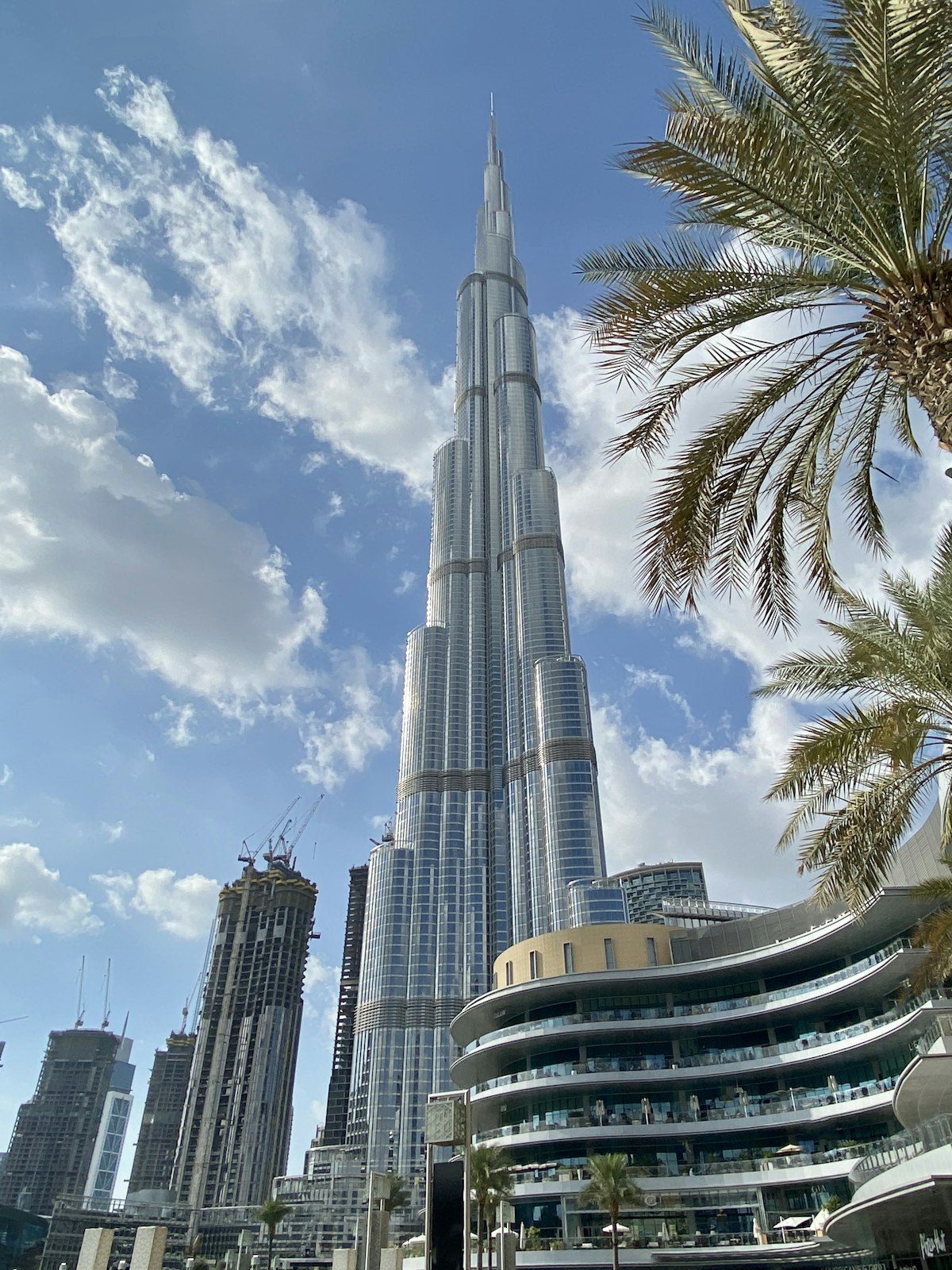
Dubai’s real estate market remains one of the most closely watched in the world heading into 2026, and understandably so given how much capital has flowed through it in recent years. Amid talk of slowing global growth elsewhere, many prospective buyers are left wondering: is purchasing an apartment in Dubai still a smart investment right now? To answer that properly, this guide looks at the actual current data — transaction volumes, price growth, rental yields, and the structural factors behind them — rather than relying on headline sentiment either way.
At Univest Group, we offer a carefully curated portfolio of high-potential properties across Dubai. Each listing is thoroughly vetted for construction quality, location advantage, and long-term investment value. Explore our Property Listings to discover the latest opportunities.
The Current Data: Is the Market Actually Growing?
The short answer is yes, and by a meaningful margin. The Dubai Land Department confirmed AED 252 billion in Q1 2026 real estate transactions, up 31% year-on-year — one of the strongest opening quarters on record for the emirate, with January 2026 alone setting an all-time monthly transaction-value record. Knight Frank’s Q1 2026 review put average apartment prices up 12.5% year-on-year citywide. This is not a market cooling off; both transaction volume and price growth accelerated into 2026, which is the direct driver behind the price increases seen across almost every district. For a full area-by-area breakdown, see our Dubai apartment price per square metre guide.
Why Dubai Remains a Valuable Place to Invest in Apartments
Dubai has become one of the world’s most attractive cities for real estate investment. Despite periodic concern about global economic conditions, it continues to offer strong opportunities for buyers looking to invest in apartments. Several structural reasons explain why.
1. Economic Diversification and Stability
Dubai has significantly reduced its dependence on oil revenues. Today its economy is diversified across tourism, technology, finance, logistics, and trade. This diversity provides resilience and stability, making it a comparatively safer place to invest than economies reliant on a single sector.
2. Strong Economic Growth and Rising Employment
A growing economy and increasing employment rates drive higher demand for housing. As more people relocate to Dubai for work and business, the need for apartments rises, which supports both rental demand and price growth.
3. Continued Infrastructure Development
Ongoing government investment in infrastructure — metro expansions, road networks, and landmark projects — keeps making more areas attractive for residents and investors, positively affecting property values in both established and emerging districts.
4. Record Transaction Activity
The AED 252 billion in Q1 2026 transactions, up 31% year-on-year, reflects genuine absorption of new and resale stock by real buyers and tenants, not speculative churn. Sustained transaction growth at this scale is difficult to manufacture artificially and points to underlying demand strength.
How Government Policy Supports Apartment Prices
Dubai’s government has introduced clear policies that make investing in apartments safer and help keep the market stable and growing:
- No property taxes: there are no taxes on buying, selling, or profiting from property in Dubai, and no capital gains tax on personal property investment. This means you keep more of your investment returns than in most competing global markets.
- Golden Visa residency: a real estate investment of AED 2,000,000 or more still qualifies for the UAE’s 10-year renewable Golden Residency, combinable across multiple properties, which continues to pull international capital into higher-value apartments. Full details are in our Dubai Golden Visa guide.
- Strong regulations: the Real Estate Regulatory Agency (RERA) and the Dubai Land Department enforce transparent rules that protect buyers’ rights, reduce fraud risk, and help stabilize the market against speculative bubbles.
These measures create a secure environment where apartment prices in Dubai are generally supported by real demand rather than pure speculation, which is a meaningful part of why the market has kept growing through multiple global economic cycles.
What Actually Drives Apartment Prices in Dubai
Now that we understand why Dubai’s market is structurally attractive, it’s worth looking closer at what determines pricing for a specific apartment:
- Location: areas like Downtown Dubai and Palm Jumeirah carry the highest prices because of views, amenities, and prestige, currently averaging roughly AED 32,400 and AED 40,500 per square metre respectively. Newer or fast-growing neighborhoods like JVC (roughly AED 14,500–16,700 per square metre) offer lower entry prices and stronger percentage growth potential.
- Type and quality of the apartment: luxury units with smart-home features and beachfront access command a premium. Older or smaller apartments are cheaper but often carry steady rental demand from residents.
- Developer reputation: apartments from well-established, trusted developers tend to hold or increase their value more reliably over time, and clear escrow and delivery track records reduce off-plan risk.
- Supply and demand by district: Business Bay has recently overtaken Marina in price per square metre after leading Dubai’s apartment price growth into 2026, according to Khaleej Times, illustrating how quickly relative positioning between districts can shift when demand concentrates in one area.
Rental Yields: The Income Side of the Investment Case
Price growth is only half the picture. Current gross rental yields vary meaningfully by district: JVC leads established areas at roughly 7–9%, Dubai Marina runs 5.5–7.2%, and Business Bay runs 5.5–7%. Downtown and Palm Jumeirah typically sit at the lower end of the yield range given their premium capital values, trading income for prestige and long-term appreciation. These yields compare favourably with many mature global real estate markets, particularly once Dubai’s zero income tax on rental earnings is factored in.
Is Dubai’s Real Estate Market at Risk of Declining?
A common concern is whether Dubai’s real estate market could be heading for a correction after such a strong run. The current data suggests otherwise, though it does not eliminate risk entirely:
- Apartment prices remain on a steady upward trend in every major district, with none of the five headline areas expected to see a price decrease through the rest of 2026.
- Government oversight through RERA and the DLD helps prevent the kind of unchecked speculative building that caused Dubai’s 2008-09 correction.
- International investor confidence remains high, reflected directly in the 31% year-on-year jump in Q1 2026 transaction value.
- That said, several market commentators have flagged the possibility of localized price softening in oversupplied micro-markets, particularly in districts where a large volume of off-plan stock is scheduled to hand over in the same period. This is a reason to scrutinise a specific building and district, not a reason to avoid the market altogether.
So while fluctuations at the building or micro-market level are always possible, Dubai’s property market as a whole is far from collapsing, and current prices continue to be supported by real transaction demand and strong underlying fundamentals rather than speculation alone.
Financing an Apartment Purchase in Dubai
Non-resident buyers financing a Dubai apartment through a UAE bank are typically limited to a maximum 65% loan-to-value ratio, meaning a minimum 35% down payment, while UAE residents can generally access higher loan-to-value ratios on qualifying properties. Off-plan and under-construction property financing is capped more conservatively than financing for ready units. Buyers should also budget roughly 6–8% above the purchase price for the DLD’s 4% transfer fee, typical 2% agency commission, and administration costs.
Off-Plan vs Ready: Which Fits a Cautious Investment Case Better?
Off-plan apartments are typically priced below comparable ready units in the same district, with extended developer payment plans lowering the immediate cash outlay. The trade-off is construction and delivery-timeline risk, so always verify a developer’s escrow account status and delivery track record through the DLD before committing — our off-plan buyer’s guide covers exactly how to do this. Ready units cost more upfront but generate immediate rental income and carry no delivery risk, which some investors weighing “is this still a wise investment” will find the more conservative choice.
A Worked Example: What a AED 1.5 Million Investment Looks Like Today
To make the investment case concrete, consider a AED 1.5 million budget across three different districts. In JVC, that budget buys a spacious two-bedroom apartment at roughly AED 14,500–16,700 per square metre, generating an estimated gross rental yield of 7–9%, or roughly AED 105,000–135,000 per year before costs. In Business Bay, the same budget buys a smaller one-bedroom at around AED 27,400 per square metre, with a gross yield of 5.5–7% (AED 82,500–105,000 per year) but currently the fastest price appreciation of any established district. In Downtown, AED 1.5 million buys a compact studio or small one-bedroom at around AED 32,400 per square metre, with the lowest yield of the three but the strongest track record of long-term capital preservation. None of these is objectively “better” — the right answer depends entirely on whether the investor is prioritising cash flow, price appreciation, or capital stability.
Comparing Dubai to Other Global Investment Markets
Investors weighing Dubai against other international property markets typically find three factors stand out. First, the combined absence of income tax, capital gains tax, and annual property tax leaves a materially larger share of gross rental income and capital appreciation in the investor’s hands than in most Western European or North American markets. Second, Dubai’s rental yields of 5.5–9% compare favourably with the 2–4% gross yields typical of many established Western capital cities, where property is priced more for capital appreciation than income. Third, the AED 2,000,000 Golden Visa threshold gives Dubai a genuine residency-by-investment pathway at a lower entry point than several competing programmes, while still sitting within a AAA-adjacent, dollar-pegged currency environment that removes exchange-rate risk for USD-based investors.
Risks Worth Weighing Before You Commit
No investment case is complete without acknowledging the downside scenarios. Dubai’s development pipeline continues to add substantial new supply, and buildings in districts with a large volume of simultaneous off-plan handovers can see softer rental demand and slower price growth in the short term, even while the district-level average continues rising. Off-plan purchases specifically carry developer and delivery risk that ready units do not. And because Dubai’s market is heavily influenced by international capital flows, it can be more sensitive to shifts in global investor sentiment than a market driven purely by domestic demand. None of these risks are unique to Dubai, but they are the specific factors worth screening for at the building and district level before committing capital, rather than relying on citywide averages alone.
How Uinvest Group Helps You Decide
If you want to learn more about the best apartments and get expert advice tailored to the current market, Univest Group is here to help you make an informed investment decision in Dubai’s real estate market. Our team can verify current per-square-metre pricing for a specific building against DLD records, model expected rental yield for a target unit size and district, confirm a developer’s escrow and delivery status for off-plan purchases, and structure a purchase to clear the Golden Visa threshold where that is a buyer’s goal.
Who Is This Investment Right For?
Given the current data, different buyer profiles get different answers to “is this still a wise investment.” Income-focused investors with a moderate budget are best served by JVC, where the combination of the lowest entry price and the strongest rental yields of any established district produces the highest cash-on-cash return of the areas covered in this guide. Capital-preservation-focused buyers with a larger budget are better matched to Downtown or Palm Jumeirah, where supply constraints have kept prices resilient through multiple market cycles even if near-term yield is lower. Investors specifically chasing price momentum should look closely at Business Bay, which has overtaken Marina on price per square metre after leading Dubai’s apartment price growth into 2026. Buyers pursuing the AED 2,000,000 Golden Visa threshold should model which district and unit combination clears that bar most efficiently for their specific budget, since a single premium Downtown or Palm Jumeirah unit may qualify alone, while reaching the threshold in JVC may require combining two or more units.
Historical Context: How Dubai’s Market Has Evolved
Dubai’s real estate market is not new territory, and its history is part of why the current data deserves to be taken seriously rather than dismissed as another speculative spike. The market experienced a sharp correction in 2008-09 driven by overleveraged speculative buying and unchecked off-plan supply, and a further, more moderate softening in 2014-16 as oil prices fell. Both episodes prompted structural reforms: RERA was strengthened, escrow requirements for off-plan sales were tightened, and the DLD’s transaction registry became far more transparent. The current growth cycle, running through 2025 and accelerating into 2026, has been driven by record transaction volume, genuine population and employment growth, and Golden Visa-linked capital inflows — a materially different demand profile from the speculative pre-2008 run-up, even if no market is ever entirely immune to a correction.
What a First-Time Buyer Should Do Before Committing
Before making an offer on any Dubai apartment, verify the specific listing’s asking price against the Dubai Land Department’s own transaction registry rather than relying solely on a developer’s or agent’s marketing figures. Confirm the building’s service charge and whether it is in line with comparable towers in the same district, since a high service charge can materially erode net rental yield even in a district with strong headline numbers. For off-plan purchases, confirm the developer’s escrow account status and delivery track record directly through the DLD’s project registry before paying a reservation deposit. And always work with a RERA-certified agent to ensure the transaction complies with Dubai’s real estate regulations from reservation through to title registration.
Frequently Asked Questions
Is buying an apartment in Dubai still a good investment right now?
Yes, based on current data: Q1 2026 transactions reached AED 252 billion, up 31% year-on-year, and average apartment prices rose 12.5% year-on-year citywide. Rental yields of 5.5–9% depending on district, combined with zero income and capital gains tax, continue to support the investment case.
Is the Dubai property market at risk of a crash?
Current fundamentals do not point to a broad crash: prices are rising across every major district, transaction volume is at a record high, and regulatory oversight through RERA and the DLD limits unchecked speculative building. Localized softening in specific oversupplied micro-markets is possible and worth screening for at the building level.
What is the average rental yield on a Dubai apartment?
Roughly 5.5–9% gross depending on district: JVC leads at 7–9%, Marina runs 5.5–7.2%, and Business Bay runs 5.5–7%. Downtown and Palm Jumeirah typically sit lower, trading yield for prestige and capital appreciation.
Do I need to be a UAE resident to buy an apartment?
No. Foreigners of any residency status can buy freehold apartments in Dubai’s designated freehold zones with full ownership rights, and non-residents can generally finance up to 65% loan-to-value through a UAE bank.
What taxes apply to Dubai apartment investment?
None on income or capital gains from personal property investment. Buyers pay a one-time DLD transfer fee of around 4% plus typical 2% agency commission at purchase; there is no ongoing property tax.
Which area offers the best balance of price growth and rental income?
JVC currently offers the strongest combination of lower entry price and highest rental yield (7–9%), while Business Bay currently offers the strongest price momentum. Downtown and Palm Jumeirah suit buyers prioritising long-term capital preservation over yield.
How much did Dubai real estate transactions total in Q1 2026?
AED 252 billion, up 31% year-on-year, according to the Dubai Land Department — one of the strongest opening quarters on record, with January 2026 alone setting an all-time monthly transaction-value record.
Is off-plan or ready property the safer investment right now?
Ready property carries no delivery risk and generates immediate rental income, making it the more conservative choice for cautious investors. Off-plan offers a lower entry price and flexible payment plans but depends on the developer’s escrow status and delivery track record, which should always be verified through the DLD before committing.
Can I get a mortgage as a non-resident to buy in Dubai?
Yes. Non-resident buyers can typically borrow up to 65% of the property value from a UAE bank, with UAE residents generally eligible for higher loan-to-value ratios, subject to Central Bank mortgage regulations. Off-plan financing is capped more conservatively than ready-property financing.
How does the AED currency peg affect the investment case?
The UAE Dirham has been pegged to the US Dollar at a fixed rate since 1997, which removes currency risk for buyers converting from USD or other Dollar-pegged currencies over the life of a purchase or payment plan, adding a layer of predictability that many emerging real estate markets cannot offer.
Bottom Line
Judged against the actual current data rather than headline sentiment, buying an apartment in Dubai remains a sound investment for most of the buyer profiles this guide has covered — provided the specific building, district, and developer are properly vetted rather than assumed. Record Q1 2026 transaction volume, sustained double-digit price growth, rental yields that compare favourably with most mature global markets, and a tax and residency framework that continues to actively favour foreign investment all point in the same direction. The honest caveat is that “Dubai” is not one market but dozens of micro-markets moving at different speeds, so the wise-investment case applies most strongly to buyers who do the district-level and building-level diligence this guide has outlined, rather than to any single citywide average.
Ready to Invest in Your Dream Apartment in Dubai?
Don’t navigate the Dubai property market alone. Get expert guidance tailored to your needs with Uinvest Group — your trusted partner for reliable, up-to-date advice on apartment prices, legal procedures, and exclusive listings. Contact Uinvest Group today for a free personalized consultation and start your property investment journey in Dubai.


