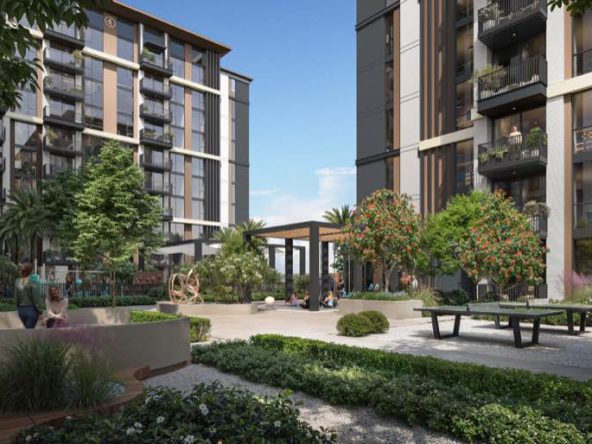











Dubai Property Handover: Completion, Snagging and Title Deed
Dubai property handover is the stretch between the day a developer reports a project as complete and the day the buyer holds the keys and a title deed. In Dubai that stretch involves four separate things that are often confused: a completion certificate issued to the project by the competent authorities, the final payment due under the sale and purchase agreement, the move of the unit from the interim (Oqood) register to the Property Register with a title deed issued by the Dubai Land Department (DLD), and the physical inspection of the unit, known as snagging. This guide sets out what the Dubai Legislation Portal and the DLD say about each of them as of 26 October 2026.
Readers following a Dubai property handover will also find the defects periods in Law No. 6 of 2019, the escrow retention in Law No. 8 of 2007, the DLD fees listed for title deed issuance, a snagging table, a move-in checklist, and the routes the law gives a buyer when completion is late. Four worked examples use round, illustrative numbers rather than any listing, and each step of the arithmetic is shown. The English texts on the portal are translations, and the legislation itself notes that the Arabic text prevails; the sale agreement of each unit also sets terms that no general guide can replace, so rules differ from one buyer and contract to another.
Dubai Property Handover: Key Facts at a Glance
| Question | Position on 26 October 2026 | Basis |
|---|---|---|
| What must exist before a unit is registered to the buyer? | The project is complete and has its completion certificate from the competent entities | Executive Council Resolution 6/2010, art. 7; Law 13/2008, art. 8 |
| Can a developer refuse handover or registration? | Not once the buyer has met the contractual obligations, even where the buyer owes other money to the developer | Resolution 6/2010, art. 7(1) |
| If the developer will not register the unit? | The DLD may register the unit in the buyer’s name on request or on its own initiative | Resolution 6/2010, art. 7(3) |
| Defects in installations | Developer liable for 1 year from handover of the unit to the owner | Law 6/2019, art. 40(b) |
| Structural defects | Developer liable for 10 years from the date of the completion certificate | Law 6/2019, art. 40(a) |
| Escrow retention | 5% of the total value of the project escrow account is retained after completion | Law 8/2007, art. 14 |
| Area shortfall | Compensation due where the actual area is more than 5% below the net area sold | Resolution 6/2010, art. 13 |
| Title deed request | Filed by the developer through the Oqood portal; the DLD lists a service time of 6 business days | DLD e-service page |
What Dubai Property Handover Means in Law and in Practice
The word handover is used loosely in sales material, so it helps to separate its parts. Completion is a fact about the project: construction is finished and the competent entities have issued the completion certificate. Handover is a fact about the unit: the developer gives the buyer possession, normally against a signed acceptance form, and releases the keys. Registration is a fact about ownership: the unit is recorded in the buyer’s name in the Property Register and an electronic title deed is issued. A buyer can be through one of these without being through the others, and the sale agreement decides in what order they occur.
An off-plan unit starts life in the interim register. Law No. 13 of 2008 regulating the Interim Property Register requires any disposition of an off-plan unit to be recorded in that register, and states that a sale or other transfer is void unless it is entered there. The buyer’s record in this system is what Dubai calls Oqood. It is not a title deed: it evidences the contract while the building is still being built. Resolution 6/2010, the implementing bylaw, adds that a development entry placed on the land folio is removed once the project is complete and its units are registered in the purchasers’ names (art. 5). The off-plan guide on this site, Off-Plan Property in Dubai: Complete Buyer’s Guide, covers the purchase side of this register; the present article starts where the construction stage ends.
A completed, ready unit follows a shorter path, because it is transferred from a seller who is already on the Property Register. The rest of this article concerns the first transfer from a developer, which is the case the Resolution addresses. Buyers of completed resale units will find the transfer sequence, the no-objection certificate and the manager’s cheque steps in How to Sell Property in Dubai, a sibling article in the same series.
Step by Step: From Completion Notice to Keys
The sequence below follows the instruments cited in this guide and applies to a first-time Dubai property handover from a developer. The exact order of snagging, final payment and key release is set by the sale agreement, so the table shows the legal anchors and leaves the contractual details to the document each buyer signed.
| Step | What happens | Who acts | Source |
|---|---|---|---|
| 1 | Project is completed and the completion certificate is obtained from the competent entities | Developer | Resolution 6/2010, art. 7(1) |
| 2 | Developer asks the DLD, through an approved survey company, to change the project status to 100% completed and pays the approval fees | Developer and survey company | DLD FAQ; DLD project-data e-service |
| 3 | Developer sends the handover or completion notice under the sale agreement | Developer | Sale agreement |
| 4 | Buyer inspects the unit and lists defects in writing | Buyer | Law 6/2019, art. 40 (periods); sale agreement (procedure) |
| 5 | Buyer pays the balance due on handover | Buyer | Sale agreement; Resolution 6/2010, art. 7(1) |
| 6 | Developer files the title deed request on the Oqood portal | Developer | DLD e-service page |
| 7 | E-title deed and map are sent by email to the beneficiary | DLD | DLD e-service page |
| 8 | Keys are released, utilities are opened in the owner’s name, and service charge invoices begin under the approved budget | Developer, owner, utility providers, management entity | Law 6/2019, arts. 25 and 27 |
Two points deserve attention. First, the DLD describes the developer-side registration as the stage that follows 100% completion: the FAQ lists a sequence in which the developer assigns a DLD-approved survey company, submits planning-approved engineering drawings, asks through the developer portal for the project status to change to 100% completed, uploads the data prepared to the survey company’s standards, pays the approval fees, and pays the final fees after the buildings and joint areas section approves. A buyer does not perform any of these steps, but they explain why a title deed does not appear on the day the building is declared finished.
Second, the interval between steps varies. The DLD publishes a service time of 4 business days for the project-data service and 6 business days for the title deed request, but those figures cover the DLD processing only, not the developer’s preparation, the buyer’s inspection, or any period that the sale agreement allows between the completion notice and the final payment.
The Completion Certificate and How to Check a Project’s Status
Resolution 6/2010 ties handover to the completion certificate. Article 7(1) says that once a project is complete and has obtained its completion certificate from the competent entities, the developer may not refuse to hand over a unit or register it in the purchaser’s name, provided the purchaser fulfils all contractual obligations. The same sentence adds that this applies even where the purchaser owes the developer money that is unrelated to the sale agreement for that unit. In plain terms, the developer cannot hold a unit back to settle a different debt.
Before the certificate exists, the DLD’s tools show how far a project has progressed. The Project Status enquiry (called Mashrooi in the DUBAI REST app) lists, for each project, its number, size, location, registered, started and completion dates, the developer and management company contacts, the escrow account bank details, and links to a fact sheet and inspection details. The page can be searched by project name or number and filtered by status, rooms and unit size, and the same feature sits in the app.
The DLD FAQ adds the mechanics of how completion is measured. A project’s completion percentage is proven by a technical report, with the fee paid through the Oqood system, and a report expires three months after its date, after which the developer must pay for a fresh one. An investor may request a completion report from the technical auditor of the Real Estate Regulatory Agency (RERA) for an audit fee of AED 15,000 ($4,084) per unit or villa. The FAQ also states that an investor may ask for a letter from a DLD-approved project consultant confirming the completion percentage before paying a construction-linked instalment, and is not obliged to pay unless the agreed payment stage has been reached. The FAQ also states that partial completion is allowed for large projects.
Once a title deed exists, the DLD offers a verification service. The Verify Title Deed e-service lets a customer check whether a Certificate of Title issued by the DLD is valid, through the DLD website or the DUBAI REST app, with an immediate service time. A buyer who has received a deed file by email can run this check before relying on it.
The Final Payment and the Sale Agreement Balance
The balance due at handover is a contractual figure. The DLD does not set it; the payment schedule in the sale and purchase agreement does. Plans with a large final instalment and plans that spread the remainder over several years after handover both exist in the market, and the off-plan guide on this site describes the common structures. What the Resolution adds is a protection on the other side of the table: if the buyer has paid what the agreement requires, the unit must be handed over and registered.
The first worked example shows how a final instalment is calculated under a 90/10 plan of the kind the Alana at The Valley listing page describes, in which 10% is paid on booking, 80% during construction and 10% on handover. The unit price below is an illustration, not a listing.
- Assumed unit price: AED 1,500,000 ($408,441).
- Final instalment at 10%: 1,500,000 × 0.10 = AED 150,000 ($40,844).
- Paid before handover at 90%: 1,500,000 × 0.90 = AED 1,350,000 ($367,597).
- Check: 150,000 + 1,350,000 = AED 1,500,000.
The figures exclude registration fees, service charges and any utility deposits, which are separate costs. They are covered in Buying Property in Dubai: Fees and Costs. Article 9 of the Resolution says that, unless otherwise agreed, the developer and the purchaser each pay their share of the prescribed registration fees, and article 8 says a developer may not charge purchasers amounts, other than those approved by the DLD, in return for any legal disposition of their units. A buyer reading a handover statement can compare each line against those two provisions.
Buyers who finance the final payment through a bank follow the lender’s own conditions as well, which are described in Mortgage in Dubai for Foreigners. The DLD FAQ notes that a mortgage on a project must be paid into the project escrow account and that transferring a mortgage requires a bank no-objection certificate.
From Oqood to Title Deed: What the DLD Lists
The title deed for a first buyer is requested by the developer. The DLD’s e-service called Request to Complete the Initial Procedures Data is described as allowing parties who are compliant with their contractual obligations to obtain a Certificate of Title. It runs through the Oqood portal (the Real Estate Developers Portal), is paid through the Noqodi wallet, and has a listed service time of 6 business days. The output is an e-Certificate of Title and an e-map, both delivered by email to the beneficiary. The page applies where the registration fee has already been collected.
A second DLD service, Registration/Amendment of Real Estate Project Details, sits one step earlier. It is the developer’s route to register or amend unit data for a project, and for a completed project its output is the e-Certificate of Title. It lists a service time of 4 business days and asks for the architectural plan approved by the planning authorities.
| Item listed by the DLD | Amount (AED) | USD at 3.6725 | Service |
|---|---|---|---|
| Title deed (apartment, villa or land) | 250 | $68 | Complete the initial procedures |
| Map, real estate unit or villa | 250 | $68 | Complete the initial procedures |
| Knowledge fee | 10 | $3 | Complete the initial procedures |
| Innovation fee | 10 | $3 | Complete the initial procedures |
| Approval, completed project, per property | 120 | $33 | Register or amend project details |
| Title deed issuance, completed project, per property | 250 | $68 | Register or amend project details |
The second worked example adds the first four rows. For the initial-procedures service, 250 + 250 + 10 + 10 = AED 520 ($142), if each listed item is charged once. The DLD’s related pages describe the knowledge and innovation fees per drawing, so the total on an actual invoice depends on how many drawings the DLD issues. Who bears these amounts is a matter for the sale agreement and article 9 of the Resolution. The numbers are listed here as the DLD’s published schedule on 26 October 2026, and the DLD can change its schedule.
The Resolution also covers parking and storage. Under article 7(2), the developer must register the unit and all facilities allocated to it, such as car parks, in the purchaser’s name. A buyer who was allocated a parking space in the sale agreement should check that the allocation appears on the registration. Where a developer refuses to register for any reason despite the buyer’s compliance, article 7(3) allows the DLD to register the unit in the buyer’s name, on the buyer’s request or on its own initiative.
The title deed matters for other processes. The AED 2,000,000 condition for the UAE Golden Visa through property is explained in Dubai Golden Visa: AED 2M Property Rules and Costs, which also describes how the evidence differs between an Oqood registration and a title deed depending on the service the applicant uses. Buyers who may later rent the unit out, or sell it, will find the registration steps in Renting Out Property in Dubai and in the selling guide linked above.
Snagging a New Unit: What to Inspect and How to Document It
Snagging is the inspection of a new unit for defects and unfinished work before the buyer accepts it. Dubai legislation does not set out a checklist; it sets out periods during which the developer must repair particular classes of defect. Law No. 6 of 2019 names, for the one-year period, defective installations in the jointly owned property such as mechanical and electrical works and sanitary and sewerage installations. A useful inspection therefore groups its findings by the class that the law uses, so the later claim can be matched to the right period.
| Area | What to look at | How to record it | Class under Law 6/2019, art. 40 |
|---|---|---|---|
| Electrical | Every socket and switch, the distribution board, lighting, intercom and any smart-home panel | A numbered list with a photo of each fault | Installations (1 year) |
| Plumbing and drainage | Water pressure and temperature, taps, drains, toilets, leaks under sinks, water heater | Short video of each outlet running | Installations (1 year) |
| Air conditioning | Each unit or the chilled-water connection, thermostat response, condensate drains, noise | Photo of the controller and a note of the room tested | Installations (1 year) |
| Walls, ceilings and paint | Cracks, uneven plaster, stains that may mark a leak, paint finish | Wide and close photos with a tape measure in frame | Finishes; structural if cracks are significant (10 years) |
| Floors and tiles | Hollow-sounding tiles, chips, uneven grout, level at thresholds | Mark each tile on a floor plan | Finishes |
| Doors, windows and balcony | Closing and locking, seals, glass damage, balcony drainage and rail fixings | Photo with date; video of operation | Finishes; structural for fixings (10 years) |
| Kitchen and bathrooms | Cabinets, worktops, fitted appliances named in the agreement, silicone seals | Check against the specification attached to the agreement | Finishes and installations |
| Common areas | Lifts, corridors, parking, fire alarm panels, gym and pool where promised | Note anything unfinished, with date | Common parts; report to management entity |
Documentation is the part that carries over into any later dispute. A few habits keep a record usable. A dated photo or video of every item, with a short written description that gives the room and the fault, establishes what existed at handover. A numbered defect list sent in writing to the address the sale agreement names creates a dated notice. A copy of the signed handover form, any key log, and the developer’s replies complete the file. Where a developer sends a repair visit, a dated note of what was done closes each item.
The sale agreement may also set the way a defect report is made, the time allowed for the developer to respond, and whether the buyer may withhold part of a payment until items are repaired. Those terms differ between developers and between projects. The agreement should be read for them before the inspection, not after.
Some owners appoint an independent inspector or engineer for the snagging visit. Nothing in the instruments cited in this guide requires it, and the choice does not change the statutory periods. The unit’s specification, floor plan and any approved variations remain the yardstick against which the finished unit is compared.
Defects Liability: One Year, Ten Years and the Escrow Retention
Dubai property handover starts several clocks at once. The central provision is article 40 of Law No. 6 of 2019 Concerning Ownership of Jointly Owned Real Property in the Emirate of Dubai. It sets two periods, and a third, separate mechanism sits in the escrow law.
| Mechanism | Period | Starts | Source |
|---|---|---|---|
| Structural parts of the jointly owned property | 10 years | Date the developer obtains the completion certificate for the project | Law 6/2019, art. 40(a) |
| Installations (mechanical, electrical, sanitary and sewerage) | 1 year | Date the unit is handed over to the owner; if the owner declines possession, the date of the completion certificate | Law 6/2019, art. 40(b) |
| Rights under other legislation | Not limited by the periods above | As that legislation provides | Law 6/2019, art. 40(c) |
| Agreements that contradict art. 40, made after the law took effect | Null and void | Not applicable | Law 6/2019, art. 40(d) |
| Escrow retention | 5% of the total value of the escrow account | Held once the developer has the completion certificate; released to the developer one year from registration of the units | Law 8/2007, art. 14 |
| Contractor and engineer liability for collapse or defects threatening soundness | 10 years | Delivery of the works | Civil code art. 880 (1985 law); arts. 821-824 (Decree-Law 25/2025), per Legal 500 |
The one-year and ten-year periods
The one-year period answers the question that buyers most often ask about snagging: how long does the developer have to repair what fails after move-in? For defective installations the answer in article 40(b) is one year from the date of handover of the unit to the owner. The ten-year period in article 40(a) covers the structural parts, and it runs from the completion certificate, not from the handover of any particular unit. Article 40(a) is written subject to the contractor-agreement rules of Federal Law No. 5 of 1985, which links Dubai’s rule to the federal civil code.
The federal civil code
The federal civil transactions law has been replaced. According to Legal 500, Federal Decree-Law No. 25 of 2025, which issued a new Civil Transactions Law, took effect on 1 June 2026. Legal 500’s comparison places the ten-year decennial regime for contractors and engineers in articles 821 to 824 of the new law: ten years from delivery for collapse and defects that threaten the soundness or structural integrity of the works (art. 821), agreements excluding or limiting that liability are void (art. 823), and a three-year limitation period running from the collapse or discovery of the defect (art. 824). In the 1985 code the same ten-year rule sat in article 880. The practical point for an owner is that the federal rule protects against collapse and serious structural defects, while the one-year rule in Law 6/2019 covers the installations that most snagging lists concentrate on.
The escrow retention
Article 14 of Law No. 8 of 2007 on escrow accounts for real estate development requires the escrow agent to retain 5% of the total value of each escrow account once the developer obtains the completion certificate, and the retained amount is released to the developer one year from the registration of the units. The DLD FAQ describes the same retention as protection for defects that are visible at completion or that appear within one year after handover. The third worked example shows the scale: for an illustrative escrow account with a total value of AED 100,000,000 ($27,229,408), the retention is 100,000,000 × 0.05 = AED 5,000,000 ($1,361,470).
Checking the Unit’s Area at Handover
Handover is the moment to compare the finished unit with the sold unit, because the Resolution gives the buyer a defined remedy for a shortfall. Article 13 states that the net area of a unit is the basis for registration, that the developer may not claim payment for any area beyond the net area sold, and that the developer must compensate the purchaser if the actual area is below the net area by more than 5%. Where the shortfall exceeds that percentage, the compensation is calculated on the price of the unit agreed in the sale agreement, and the net area shown in the sale agreement and plan is the basis for measuring any excess or shortage.
The fourth worked example shows where the 5% line falls. Assume a sale agreement and plan that state a net area of 100 square metres.
- Tolerance: 100 × 0.05 = 5 square metres.
- Threshold: 100 − 5 = 95 square metres.
- A measured area of 96 square metres is a 4% shortfall, which is within the 5% line in article 13(3).
- A measured area of 93 square metres is a 7% shortfall, which is above it, so the compensation provision applies.
The Resolution says the area is calculated as the DLD determines, so a buyer who measures a unit with a tape should treat that as a first check only. The DLD issues a map with the title deed, and the map’s area is the registered figure to compare with the sale agreement.
Service Charges, Utilities and Cooling at Dubai Property Handover
Service charges and utility accounts begin around the time of handover, and each has its own rules. For service charges, Law No. 6 of 2019 provides that the developer pays its share of the annual service charges for unsold units, and also for sold units where the sale or reservation agreement obliges the developer to pay on the purchaser’s behalf (art. 25(a)). A management entity cannot collect amounts without RERA’s prior approval (art. 27(a)), RERA does not approve a service charge budget unless a RERA-recognised certified audit firm has audited it (art. 27(b)), and a temporary budget may be used under the Director General’s rules until the audited budget is approved (art. 27(c)). Article 28 prevents owners from withholding approved charges. The date from which an owner is invoiced is therefore a product of the sale agreement and the approved budget year; a full explanation sits in Dubai Service Charges Explained.
The DLD publishes a Service Charge Index. It calculates a property’s service charge from either a title deed number, with the certificate number, year, property type and budget year, or from a project, usage and year for residential property. The results list the project, usage, year, start and end dates and the managing party, and they exclude arrears. A new owner can use the index to compare an invoice with the figure for the building.
Two further provisions in Law 6/2019 matter in the first months. The owners committee is constituted once at least 10% of the units in the jointly owned property are registered in owners’ names (art. 22(b)), and it must hold its first meeting within 30 days of being constituted (art. 23(a)). Until RERA appoints a management company, the developer manages the property (art. 30(d)). The same law requires a cash reserve for emergency expenses or the replacement of common-part equipment, held in an account separate from the service charge account (art. 30(e)(8)).
On utilities, DEWA’s move-in service for electricity and water lists the title deed or the sale and purchase agreement as the document an owner submits, together with identification. Where a building is served by district cooling, the cooling provider registers customers separately from DEWA, and the building documents or the sale agreement indicate which arrangement applies. Utility deposits and connection charges are set by the providers and change over time, so they are not listed here; the providers’ own pages and apps show the current schedule.
The Dubai Property Handover Move-In and Key Release Checklist
| Item | What to hold or confirm | Why it matters |
|---|---|---|
| Completion evidence | The project shows as completed in the DLD Project Status enquiry or the DUBAI REST app | Handover is tied to the completion certificate (Resolution 6/2010, art. 7) |
| Handover notice | The written notice from the developer, with the dates in it | Starts the periods in the sale agreement |
| Statement of account | Final balance, each line explained, receipts for earlier payments | Compare against arts. 8 and 9 of the Resolution |
| Signed handover form | A copy with the defect list attached | Dated record of the unit’s condition |
| Keys, access cards, parking permits | A written list of what was received, including remotes and tags | Proof of what was released |
| Appliance and system manuals, warranties | Guides for fitted appliances and the air-conditioning system | Needed for repair claims |
| Title deed | E-title deed and map received by email, checked with the DLD verification service | Proof of registration (DLD e-service pages) |
| Parking and storage | Allocation appears on the registration | Resolution 6/2010, art. 7(2) |
| Utilities | DEWA account in the owner’s name; cooling account where the building has district cooling | Move-in requires an owner account |
| Service charge | Approved rate checked in the Service Charge Index; invoice received through the management entity | Law 6/2019, arts. 27 and 28 |
| Management contact | Name of the management entity and how to report common-part faults | The owners committee notifies the management entity or RERA of structural defects or urgent common-part damage (Law 6/2019, art. 24(6)) |
If Completion Is Late: Delays, Termination and Refunds
A project can complete after the date in the sale agreement. What counts as late, how long a grace period lasts and what compensation follows are matters for the agreement of each unit. The legislation cited here supplies the routes available to a buyer, and it distinguishes between a buyer asking a court to end the contract and RERA cancelling a project.
| Situation | What the instrument provides | Source |
|---|---|---|
| Buyer wants to end the contract | A purchaser may go to the competent court for termination on listed grounds: no valid reason to deliver the final sale agreement, refusal to link payments to RERA’s construction milestones, material deviation from the agreed specifications, material construction defects making the unit unfit for use after handover, or other circumstances requiring termination under the general rules | Resolution 6/2010, art. 20 |
| Dispute between buyer and developer | The DLD may undertake conciliation, and a settlement approved by the DLD becomes binding on both parties | Resolution 6/2010, art. 14 |
| DLD role in termination | The DLD cannot terminate the contract at the investor’s request; the investor goes to the competent real estate court and the DLD’s role is mediation | DLD FAQ |
| RERA cancels the project | Grounds include failing to start work after obtaining approvals, bankruptcy and gross negligence; RERA appoints an auditor at the developer’s cost and asks the escrow agent to refund purchasers within 14 days of cancellation | Resolution 6/2010, arts. 23 and 25 |
| Escrow funds do not cover the refunds | The developer must refund the balance within 60 days of the cancellation decision unless RERA extends the period | Resolution 6/2010, art. 26 |
| Unfinished or cancelled project | The Special Tribunal for Unfinished and Cancelled Real Property Projects hears claims by developers, investors and purchasers, with RERA referrals | Decree No. 33 of 2020, arts. 4, 6 and 9 |
Court termination under article 20
Article 20 is the provision usually cited when a buyer wants out. Its five grounds include an open category, circumstances that require termination under the general legal rules, so a late handover can be raised under that heading together with the facts of the case. The article gives the purchaser access to a court; it does not itself set a refund formula for a delay. The sale agreement and the court’s assessment of the facts decide that.
Cancellation by RERA and refunds
Article 23 lists the grounds on which RERA may cancel a project on a reasoned technical report, and article 25 sets the procedure: a technical report, written notice to the developer, an auditor appointed at the developer’s cost to check the escrow account and the amounts spent, and a request to the escrow agent to refund the deposited amounts within 14 days. Article 26 sets the 60-day period for any shortfall, and article 27 requires RERA to take steps to protect purchasers, including referral to the judicial authorities, if the developer misses it. The DLD FAQ adds that a project in liquidation is handled in turn and that the timing depends on whether documents, amounts and eligible persons are available. For projects with less than 5% completion, it says RERA contacts the developer to correct the status and starts cancellation procedures if there is no valid justification.
The special tribunal
Decree No. 33 of 2020 defines an unfinished project as one where construction started and was suspended, and a cancelled project as one cancelled under Dubai legislation. Article 4 covers projects proven unfinished or subject to a cancellation decision under Law 13/2008 and its bylaw, and excludes projects inside the DIFC. Article 10 bars courts, including the DIFC Courts, from hearing matters within the tribunal’s jurisdiction filed after the decree took effect. Its decisions are not subject to ordinary appeal procedures (art. 11).
A buyer can also open a complaint with the DLD. The DLD complaint page lists a complaint against a real estate company, an inquiry on contractual disputes and a tracking service for complaints against real estate companies and brokers. A complaint is a record of the matter, and the court and tribunal routes above remain the ones that can end a contract.
For wider context on buyer protections, the guide to buyer protection in Dubai explains the escrow, registration and regulatory layers, and the guide on possible Dubai market downturns looks at the market data on completions and prices.
Documents to Keep After a Dubai Property Handover
A completed handover leaves a paper trail that supports the one-year and ten-year periods, a later sale and any dispute. The list below is the set that the instruments cited in this guide point to.
- The sale and purchase agreement with every annex, including the specification, floor plan and payment schedule.
- The Oqood registration record and the e-Certificate of Title with its map.
- Payment receipts for every instalment and the final statement of account.
- The developer’s handover notice, the signed handover form and the dated snagging list with photos.
- Written correspondence about defects and the developer’s replies and repair records.
- Utility account confirmations and the service charge invoices, with the approved rate from the Service Charge Index.
- For a resale or a letting later on, the same set is requested by the buyer’s or tenant’s side, which is why it is worth keeping together.
The developer profiles on this site show how project handover targets are stated. The Emaar Properties profile lists handover targets with their sources and notes that the date that binds is the one in the unit’s sale and purchase agreement, and the Alana at The Valley listing shows a handover target of Q3 2027 with a final 10% instalment on handover, per our listing page. Both are targets, and the sale agreement of each unit governs. The wider market context is on the Dubai city page, and the ownership rules by emirate are on the UAE country page.
Frequently Asked Questions
What is Dubai property handover?
Dubai property handover is the stage at which a developer gives the buyer possession of a completed unit and the unit is registered in the buyer’s name. It combines a completion certificate for the project, the final payment under the sale agreement, the title deed from the DLD and the buyer’s inspection of the unit.
Do I receive the title deed on the day of handover?
Not necessarily. In a Dubai property handover the title deed is a separate step from the keys. The developer files the title deed request through the Oqood portal, and the DLD lists a service time of 6 business days for it, with the e-title deed and map sent by email. The date depends on when the developer files and when the buyer has met the contractual obligations.
Can the developer refuse to hand over my unit?
Resolution 6/2010 says that once the project is complete and has its completion certificate, the developer may not refuse to hand over or register a unit if the purchaser has fulfilled the contractual obligations, even where the purchaser owes other money to the developer. If the developer will not register, the DLD may do so on request or on its own initiative.
How long is the developer liable for defects?
After a Dubai property handover, under Law 6/2019, article 40, the developer is liable for 1 year from the handover of the unit for defective installations, and for 10 years from the completion certificate for structural defects. If an owner declines possession, the one-year period runs from the completion certificate instead.
Does signing the handover form end my rights?
Article 40(c) of Law 6/2019 says the law does not limit rights or warranties that owners have against developers under other legislation, and article 40(d) says agreements made after the law took effect that contradict article 40 are null and void. A handover form is read against those provisions, and its exact wording matters.
How do I check whether a project is complete before Dubai property handover?
The DLD Project Status enquiry, also available in the DUBAI REST app, shows a project’s registered, started and completion dates, escrow account bank details and developer and management contacts. The completion percentage is proven by a technical report, which expires after three months, according to the DLD FAQ.
What can I do if completion is late?
If a Dubai property handover is delayed, first read the delay and grace terms in the sale agreement. The DLD can mediate, a purchaser can ask the competent court to terminate on the grounds in article 20 of Resolution 6/2010, and RERA can cancel a project on the grounds in article 23, which starts the refund process in articles 25 and 26. Claims on unfinished or cancelled projects go to the special tribunal under Decree 33/2020.
What fees does the DLD list for the title deed stage?
The DLD lists AED 250 ($68) for the title deed, AED 250 ($68) for the unit map, and AED 10 ($3) each for the knowledge and innovation fees on the initial-procedures service, a total of AED 520 ($142) if each is charged once. Registration fees are shared as the sale agreement and article 9 of the Resolution provide.
Is a title deed required for the Golden Visa?
The UAE Golden Visa through property needs property value of AED 2,000,000 ($544,588) or more. The Golden Visa guide on this site explains that the evidence accepted differs between the DLD, GDRFA and ICP, and between an Oqood registration and a title deed, so the requirements of the service used apply.
Who pays service charges before I take over the unit?
Law 6/2019, article 25(a), requires the developer to pay its share of annual service charges for unsold units, and for sold units where the sale or reservation agreement obliges the developer to pay on the purchaser’s behalf. The sale agreement therefore decides when a buyer’s own invoices begin.
Last checked: 26 October 2026. Sources: Law No. 13 of 2008, Executive Council Resolution No. 6 of 2010, Law No. 8 of 2007, Law No. 6 of 2019, Decree No. 33 of 2020, DLD initial procedures service, DLD project details service, DLD title transfer service, DLD FAQ, DLD Project Status, DLD Service Charge Index, DLD Verify Title Deed, DLD complaints, DEWA move-in service, Legal 500 on the new Civil Code, Legal 500 key highlights, and the listing pages cited in the text.