



Offices For Sale In Oman

Central 7, Knowledge Oasis Muscat — Business Centre in Oman
- 309 sq ft
- Office


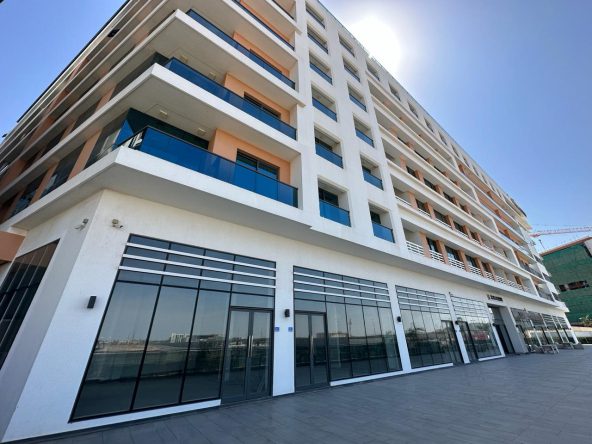
The Pearl Muscat Hills — Freehold Retail Shops in Oman
- Office
Why Buy an Office in Oman
A freehold office is the commercial counterpart to Oman’s residential freehold market — a business or investment unit held with full, permanent ownership inside a licensed Integrated Tourism Complex (ITC), rather than the leasehold arrangements that govern most commercial space elsewhere in the Gulf. For business owners establishing a genuine presence in Oman, freehold office ownership removes the recurring cost and uncertainty of commercial leases. For investors, an office unit offers exposure to commercial rental income as a diversification away from residential property, typically with longer lease terms and more stable, contractually predictable tenants than residential rentals.
Oman pairs this with a currency pegged to the US dollar, no annual property tax, no capital gains tax on individually owned freehold real estate, and a stable, business-friendly regulatory environment that has actively courted foreign investment in recent years. Commercial freehold office stock remains a relatively small, specialised segment of Oman’s ITC-zoned developments, concentrated in mixed-use communities that combine residential, retail and office space.
This guide covers freehold office units specifically, as distinct from Oman’s much larger residential freehold segment. For the broader picture, see our complete freehold property guide.
Freehold Ownership: What Buying an Office Really Means in Oman
Foreign freehold ownership of commercial units in Oman follows the same legal foundation as residential ownership: it only applies inside government-licensed ITCs, and outside these zones non-Omanis cannot hold freehold title to commercial space any more than they can to residential property. Office units are found within Oman’s larger mixed-use ITC developments, where ground-floor and lower-level commercial space is sold alongside residential apartments and villas. Buying inside an ITC gives you full ownership rights over that specific commercial unit: you can sell it, lease it to a business tenant, will it to your heirs, or use it as loan collateral. Always confirm ITC status and the specific commercial-use permissions attached to a unit before reserving. For the full legal picture, see our freehold property guide.
Best Areas to Buy an Office in Oman
Freehold office stock is concentrated in Oman’s larger mixed-use ITC communities, where a critical mass of residents and visitors supports ground-floor and commercial-tier office and retail space.
- Al Mouj, Muscat — Oman’s most established freehold community, with a marina-front retail and commercial district supporting office space aimed at businesses serving the surrounding residential and tourist population. See our Al Mouj investment guide.
- Muscat Hills — a mixed-use golf-course community with commercial space integrated into its residential masterplan.
- Sultan Haitham City — Oman’s newest planned capital district, designed from the outset with integrated commercial and office space alongside residential districts; see our Sultan Haitham City guide.
- Duqm — commercial and office space tied to the Special Economic Zone’s industrial and logistics growth, aimed at businesses serving that sector specifically rather than general retail.
For a full comparison of Oman’s freehold communities generally, see our best areas to invest in Oman guide.
How Much Does a Freehold Office Cost in Oman
Freehold office and commercial units in Oman’s mixed-use developments typically start from around $90,000-$150,000 for smaller units in newer communities like Sultan Haitham City or Duqm. Larger or better-positioned commercial units in established communities like Al Mouj can range from $150,000 up to $400,000 or more, depending on size, ground-floor versus upper-level positioning, and footfall. As with residential freehold, the advertised “starting from” price on a project can hide a wide range depending on exact unit size and location within the development — always request the specific unit’s price schedule and confirm what commercial activities are permitted.
Who Buys a Freehold Office in Oman
Freehold office buyers in Oman generally fall into two distinct groups. The first is business owners — consultants, professional services firms, regional trading companies — who want a permanent, owned base rather than a recurring lease commitment, particularly if they plan to operate in Oman for the long term and want to avoid rent escalation and lease-renewal uncertainty. The second is pure investors, who buy commercial units specifically for rental income, drawn by longer typical lease terms and more contractually stable tenants than residential rental usually offers.
Both groups need to think carefully about liquidity: Oman’s freehold office segment is considerably smaller and thinner than its residential market, which means fewer comparable sales, less pricing transparency, and potentially longer timelines to both buy and later resell. This isn’t a reason to avoid the segment, but it does mean commercial buyers should go in with a longer expected holding period than a typical residential buyer.
Off-Plan vs. Ready Offices: Which Should You Choose?
As with residential freehold, office buyers in Oman choose between off-plan units reserved before construction and ready units they can inspect immediately. Off-plan commercial units are typically priced below an equivalent finished unit, with payment spread across a construction-linked schedule. The trade-off is construction risk, plus the added uncertainty of not being able to fully assess footfall and surrounding commercial activity until the wider development is complete and occupied.
Ready offices remove that uncertainty — you can assess actual footfall, verify the surrounding tenant mix, and in many cases inspect existing lease agreements if buying a tenanted unit. Given how much a commercial unit’s value depends on its actual trading environment rather than just its physical specification, many commercial buyers prefer ready units specifically to avoid this uncertainty, even at a higher entry price than off-plan.
The Buying Process, Step by Step
- Define your purpose clearly. Owner-occupier and pure-investment buyers should approach the search differently — the first prioritises location and layout for their own business, the second prioritises tenant demand and lease terms.
- Shortlist ITC-licensed mixed-use developments. Confirm freehold eligibility and specifically confirm commercial-use permissions for the unit you’re considering.
- Assess the surrounding commercial environment. Footfall, neighbouring businesses, and the residential population the unit will serve all matter more for commercial space than for residential.
- Reserve with a deposit. Typically 5-10% of the purchase price to hold the unit while contracts are prepared.
- Sign the sale and purchase agreement (SPA). For a tenanted unit, review the existing lease terms carefully as part of this step.
- Complete payments per the schedule. Off-plan units are usually paid in construction-linked instalments; ready units are typically paid in full at transfer.
- Register title at the Ministry of Housing and Urban Planning. This converts your purchase into recorded freehold ownership in your name.
- Apply for your residency permit once title is registered, if you’re using the purchase to qualify.
UInvest Group manages every step of this process for our clients — see our full legal support service for how we handle the paperwork on your behalf.
Costs, Fees & Ongoing Charges
Beyond the purchase price, budget for a property registration fee (around 3% of the purchase price, paid at title transfer), agency and legal fees, and an annual service charge covering shared building amenities — common areas, security, and building maintenance. Commercial service charges can differ meaningfully from residential ones depending on the building’s specific commercial infrastructure, such as dedicated parking or loading access. Our Oman property tax and fees guide breaks down every cost category in detail.
Legal Due Diligence: What to Check Before You Buy
Commercial freehold due diligence covers everything residential due diligence does, plus additional commercial-specific checks. Confirm ITC licensing and clear title as you would for any freehold purchase. Additionally, confirm the specific commercial-use permissions attached to the unit — not all commercial freehold units are licensed for every type of business activity, and this needs to be verified against your intended use before purchase. If buying a tenanted unit, review the existing lease agreement in full: term length, rent escalation clauses, and the tenant’s payment history. Fourth, confirm any outstanding service charges or utility bills on a resale unit are settled or accounted for in the sale price.
UInvest Group runs this due diligence on every property we shortlist for clients, and our legal support service handles title verification, contract and lease review, and Ministry registration directly.
Financing an Office Purchase
Financing for commercial freehold units in Oman is generally less standardised than residential mortgage lending, and terms can vary more significantly between banks. Some Omani banks offer commercial property financing to non-resident buyers, though typically at more conservative loan-to-value ratios than residential lending, and often with additional requirements around the buyer’s business registration or income documentation. Many commercial buyers — particularly owner-occupiers establishing a business presence — choose to pay cash or use business financing rather than a traditional mortgage structure, given the added complexity of commercial lending criteria. It’s worth engaging with several banks early to compare terms before shortlisting specific units.
Residency Through Property Ownership
A freehold office purchase in Oman qualifying under the residency-by-investment rules can contribute toward a renewable residency permit for the buyer, on the same basis as residential freehold property. At higher investment thresholds — currently OMR 200,000 across property and other qualifying assets — buyers can secure the 10-year Golden Residency. Commercial property is often combined with other qualifying investments to reach this threshold. This is a genuinely different mechanism from the newer sponsor-free Owner Visa route introduced under Decision 87/2026. Our Golden Residency vs Owner Visa comparison explains the differences in full, and our residency permits guide covers the application process end to end.
Renting Out Your Office
Commercial rental income in Oman’s freehold office segment generally works differently from residential rental: leases tend to run longer (often multi-year rather than annual), tenants are typically businesses rather than individuals, and rent is usually structured with periodic escalation clauses built into the contract. Gross yields on commercial office units can be competitive with or exceed residential yields, particularly in well-positioned mixed-use developments with strong footfall, though the segment overall carries less liquidity and a longer typical vacancy period between tenants than residential property. UInvest Group’s after-sales services can assist with tenant sourcing and lease management once you’ve closed.
Common Mistakes to Avoid
- Assuming any commercial-looking unit in Oman can be bought freehold by a foreigner — only ITC-licensed projects qualify, and this must be verified before reservation.
- Not confirming the specific commercial-use permissions attached to a unit before purchase, which can restrict what type of business can legally operate there.
- Underestimating how much thinner liquidity is in the commercial segment compared with residential freehold, both for buying and later reselling.
- Buying a tenanted unit without fully reviewing the existing lease terms and the tenant’s payment history.
- Treating commercial and residential financing as interchangeable — commercial lending criteria and terms are typically more conservative and less standardised.
- Skipping a proper cost breakdown before committing, and being surprised by registration fees, agency fees, or service charges at handover.
How Oman's Commercial Freehold Compares to Dubai and Cyprus
Dubai’s commercial freehold market is far larger and more mature than Oman’s, with dedicated business districts, free zones, and a long-established track record of foreign commercial ownership — but that maturity comes with substantially higher entry prices and a more competitive, saturated commercial leasing market in many areas. Oman’s commercial freehold segment is younger and smaller, concentrated in mixed-use residential developments rather than dedicated business districts, which means a genuinely different investment profile: lower entry prices and less competition, but also less established demand and thinner liquidity.
Cyprus offers a further point of comparison, with an EU-adjacent legal and regulatory framework that appeals to a different buyer profile than the Gulf-focused structure Oman and Dubai share. On ongoing costs, Oman’s lack of any annual property tax gives it a structural advantage over Cyprus, which applies municipal property tax in most areas. For business owners specifically looking to establish an owned, permanent commercial presence in the Gulf at a lower entry cost than Dubai, Oman is an increasingly credible option — with the clear caveat that the market is still developing and less liquid than either alternative.
Featured Office Units Currently for Sale in Oman
Live commercial inventory changes regularly and is a smaller, more specialised segment than residential listings. For the full, constantly updated list of freehold office and commercial units currently on the market across Oman’s mixed-use freehold communities, browse our live office listings for Oman, or contact our team directly — commercial inventory often moves through direct enquiry before it’s widely listed, so reaching out is often the fastest way to see what’s currently available.
Frequently Asked Questions
Can a foreigner really own a commercial office outright in Oman?
Yes, within ITC-licensed freehold communities. Ownership is full and permanent, recorded in your name at the Ministry of Housing and Urban Planning, with no leasehold time limit.
Where is freehold office space available in Oman?
Primarily within larger mixed-use ITC developments such as Al Mouj, Muscat Hills, Sultan Haitham City, and commercial space tied to Duqm’s Special Economic Zone.
Do I need to be an Oman resident to buy an office here?
No. You can purchase freehold commercial property as a non-resident, then use that purchase to apply for a residency permit afterward if you wish.
Is financing available to foreign buyers for a commercial purchase?
Some Omani banks offer commercial property financing to non-residents, though typically at more conservative terms than residential mortgages. Many buyers use cash or business financing instead.
What ongoing costs should I budget for after buying?
Annual service charges, property maintenance, and — if leasing the unit out — property and tenant management costs. See our property tax and fees guide for the complete breakdown.
How liquid is Oman’s commercial freehold market?
Considerably thinner than the residential segment — fewer comparable sales and typically longer timelines to both buy and resell. Buyers should plan for a longer holding period than in residential freehold.
Can I use a freehold office purchase to qualify for Oman’s Golden Residency?
Potentially, if the investment (alone or combined with other qualifying assets) reaches the OMR 200,000 threshold. See our Golden Residency vs Owner Visa comparison for the full detail.
What happens if I want to sell my office in Oman later?
You can sell a freehold commercial unit to any other foreign or Omani buyer at any time, subject to settling any outstanding service charges and completing the title transfer at the Ministry of Housing and Urban Planning — though resale can take longer than in the residential market.
Interested in a freehold office or commercial unit in Oman? Contact our team for current availability matched to your business needs or investment goals, or visit our Royal Oman Police and National Centre for Statistics and Information for official visa and economic data on Oman.
Types of Commercial Units You'll Find
Oman’s freehold commercial segment covers a narrower range of formats than its residential market, but genuine variety exists within it. Ground-floor retail and F&B units in mixed-use developments are the most visible category, aimed at businesses serving the surrounding residential population directly. Upper-level or standalone office suites, typically found in dedicated commercial blocks within larger developments, suit professional services firms, consultancies and regional trading companies that don’t need street-level footfall. In Duqm specifically, commercial and light-industrial units tied to the Special Economic Zone serve businesses connected to the port and logistics sector rather than general commercial activity.
Each category has a genuinely different tenant and buyer profile, and it’s worth being clear about which one you’re evaluating before comparing prices, since a ground-floor retail unit and an upper-level office suite in the same building can carry very different valuations despite similar square footage.
Assessing Commercial Viability Before You Buy
Unlike residential property, where value is driven primarily by location, size and finish, a commercial unit’s value depends heavily on factors specific to its trading environment. Footfall — how many people pass the unit on a typical day — matters enormously for retail-facing space, and is worth observing in person at different times of day and week rather than taking a developer’s projections at face value. The surrounding tenant mix matters too: a unit near complementary businesses (a pharmacy near a medical clinic, a cafe near an office block) generally performs better than one in isolation. For office-format units without street-level footfall requirements, proximity to parking, ease of access, and the surrounding building’s overall occupancy rate are the more relevant factors.
UInvest Group can help assess these commercial-specific factors for any unit you’re considering, since they matter as much to a smart commercial purchase as legal due diligence does.
Owner-Occupier vs Investor: Two Different Buying Strategies
An owner-occupier buying a freehold office to run their own business should prioritise factors very different from an investor buying purely for rental income. For the owner-occupier, layout suitability, proximity to clients or partners, parking for staff and visitors, and long-term flexibility to expand within the same building all matter more than headline yield. For the pure investor, the calculus flips: tenant demand in that specific location, typical lease terms achievable, and the building’s overall occupancy and reputation matter far more than whether the layout would suit any particular business.
It’s worth being explicit about which strategy you’re pursuing before you start shortlisting units, since the two approaches can lead to genuinely different conclusions about which building and unit represents the best purchase, even at an identical price point. UInvest Group can help clarify this early in the process, since it shapes the entire search from that point forward.
Working With a Local Team on Commercial Purchases
Commercial freehold transactions in Oman benefit even more than residential ones from local, on-the-ground support, simply because the market is smaller, less standardised, and less documented online than the residential segment. Verifying footfall claims, checking a building’s actual occupancy rate, and reviewing existing lease agreements all typically require someone physically present and familiar with the specific development — information that’s much harder to gather remotely for a commercial unit than for a standard residential listing. UInvest Group’s on-the-ground presence in Oman means we can verify these commercial-specific details directly, rather than relying solely on developer or seller-provided information.
