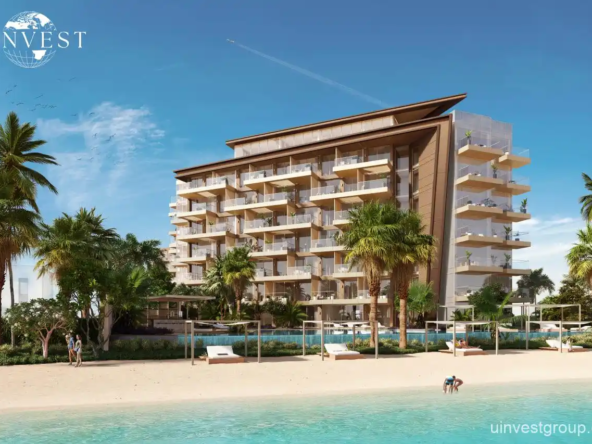









Can Indians Buy Property in Dubai? Rules, Rupee Costs, Tax
Can Indians buy property in Dubai? Yes: Indian citizens may buy freehold property in Dubai’s designated areas, with or without UAE residency. As of 7 November 2026, an Indian resident remits under the Reserve Bank of India (RBI) limit of USD 250,000 per financial year, and the bank collects 20% tax at source above ₹10 lakh.
This guide explains how the Dubai rules and the Indian rules fit together for anyone asking whether Indians can buy property in Dubai. It covers what the Dubai Land Department (DLD) requires, what the RBI’s Liberalised Remittance Scheme (LRS) permits, how tax collected at source (TCS) works with worked sums, the difference between a resident Indian and an NRI, prices and fees converted to rupees at a dated RBI reference rate, mortgage ratios, the Golden Visa condition, tax reporting in both countries and a step-by-step checklist. Dirham amounts carry US dollars and rupees converted at the rates stated below.
Can Indians Buy Property in Dubai? Key Facts at a Glance
| Question | Position on 7 November 2026 | Source |
|---|---|---|
| Can Indians buy property in Dubai? | Yes, in freehold areas designated by the Ruler of Dubai; the DLD sale-registration page lists residency status “All” and states no nationality requirement | DLD; Regulation No. 3 of 2006 |
| Is UAE residency needed? | No; a valid passport is listed for non-resident foreigners | DLD sale-registration page, updated 3 November 2026 |
| How much can an Indian resident remit per year? | Up to USD 250,000 (AED 918,125; ₹23,535,050 at the 6 November 2026 rate) per person per financial year (April to March) | RBI Master Direction on LRS |
| TCS on a property remittance | 20% of the aggregate LRS remittances above ₹10 lakh in the financial year | Finance Bill 2026 memorandum; effective 1 April 2026 |
| Does an NRI use LRS? | No; LRS is for resident individuals | RBI Master Direction on LRS |
| Dubai registration fee | 4% of the sale value, shown as 2% seller and 2% buyer | DLD sale-registration page |
| Golden Visa property condition | Property value of AED 2,000,000 ($544,588) or more at purchase, wholly owned by the applicant | DLD Golden Visa (Investor) page |
| Maximum mortgage on an ordinary expatriate first home up to AED 5 million | 80% of the value | Central Bank of the UAE, Financial Stability Report 2025 |
| Reference rate used here | ₹94.1402 per US dollar, so ₹25.6338 per dirham | RBI/FBIL, 6 November 2026, 1.00 pm |
What Dubai’s Law Says: Can Indians Buy Property in Dubai?
The answer to the question can Indians buy property in Dubai starts with Dubai law, not Indian law. Regulation No. 3 of 2006, issued by the Ruler of Dubai on 7 June 2006 under Law No. 7 of 2006 on real property registration, is the instrument that opens ownership to people who are not UAE nationals. Article 3 says non-UAE nationals may acquire freehold ownership without time restriction, usufruct rights, or leasehold rights for up to 99 years in the land plots listed for each named area. The regulation does not mention any nationality by name, so an Indian passport holder stands in the same legal position as any other non-UAE national. The English text of the regulation on the Dubai Legislation portal carries a note that the Arabic text prevails in a conflict.
The DLD’s frequently asked questions page describes the same split in plain terms: Emirati and GCC citizens may own property in all regions, and foreigners may own property in freehold areas. The DLD’s property sale-registration page, which showed the footer “last updated on 03 November 2026”, lists residency status as “All” and names no nationality requirement. For individuals it asks for the Emirates ID of the seller and buyer, or a valid passport for non-resident foreigners. It also says that in freehold areas an individual needs a developer’s e-NOC (no-objection certificate), obtained through the Dubai REST app. In practical terms, an Indian citizen living in Mumbai, Kochi or Delhi can sign as a buyer using a passport, subject to the Indian-side rules set out below.
Two points narrow the question. First, “freehold” is a feature of the land plot, so a building’s marketing name does not prove that foreigners may own in it. Second, ownership is not the same as a visa: buying a unit does not by itself give the owner residence. Our guide for foreign apartment buyers in Dubai and the sibling article on Dubai real estate laws for foreigners go through the legal framework in more depth, and the UAE ownership overview shows how the other emirates differ.
Which Areas Can Indian Buyers Choose?
The original 2006 regulation listed 23 areas, from Dubai Marina and Palm Jumeirah to Umm Hurair 2 and Warsan 1, each with specific plot numbers. Article 4 separately allowed usufruct or leasehold rights of up to 99 years on one plot in Nad al-Sheba. Designations are made plot by plot, so a buyer should confirm the plot of the specific building against DLD records instead of relying on a regulation from 2006 or on a brochure. The regulation text is useful for one reason: it shows that the freehold right is defined plot by plot.
For orientation, two listings on our site show how widely prices differ. Per our listing page, Oxford Terraces in Jumeirah Village Circle, developed by Iman Developers, is described as completed and fully sold, with resale asking prices cited from Property Finder of AED 755,000 ($205,582) for a studio in March 2026, AED 1,050,000 ($285,909) for a one-bedroom in December 2025 and AED 1,620,000 ($441,117) for a two-bedroom in November 2025. Per our listing page, Valia at Dubai Creek Harbour, an off-plan Emaar tower with a target handover of Q4 2030, shows a one-bedroom from price of AED 1.96 million ($533,696). The Emaar profile and the Dubai city page list further projects. These are price points from listing pages, not forecasts or recommendations, and they can change.
The sibling article on the cheapest property in Dubai covers entry prices in detail. The DLD page sets no minimum purchase price; its trustee-fee tiers start below AED 500,000, which shows that sales below that value are registered.
Indian Rules for Residents: The RBI Liberalised Remittance Scheme
For a resident Indian, the practical question after “can Indians buy property in Dubai” is how the money leaves India legally. The RBI’s Master Direction on the Liberalised Remittance Scheme (originally 1 January 2016; the page shows its latest update as 6 September 2024) allows resident individuals to remit up to USD 250,000 per financial year, April to March, for permitted current or capital account transactions. Remittances above that figure need prior RBI permission. The scheme is not available to corporates, partnership firms, Hindu undivided families or trusts.
The Master Direction lists “acquisition of immovable property abroad” among the permitted capital account transactions, under the 2022 Overseas Investment framework, and says such remittances fall within the same overall annual limit. Footnotes record that earlier co-owner and “property” clubbing restrictions were deleted from 22 August 2022. The RBI’s own FAQ on property, updated as of 6 April 2023, says a resident individual can send remittances under the LRS for purchasing immovable property outside India and that remittances may be consolidated in respect of relatives, subject to the scheme’s terms.
What the scheme requires from the remitter
- A Permanent Account Number (PAN) is mandatory to make remittances under the scheme.
- Form A2 must be submitted to buy foreign exchange under the scheme; for a minor, the natural guardian countersigns it.
- The limit counts all LRS remittances in the financial year, not only the property payment. Travel, gifts and investment remittances use the same USD 250,000.
- Banks may not extend credit facilities to individuals to fund capital account remittances under the scheme, so an Indian home loan or personal loan is not a route to pay a Dubai developer.
- Remittances for margin calls to overseas exchanges are not allowed, and capital account remittances to countries identified by the Financial Action Task Force as non-cooperative are not permitted.
Why the annual limit shapes the purchase plan
The limit is set per person per financial year. At the fixed rate of 3.6725 dirhams per dollar, USD 250,000 equals AED 918,125. A single person therefore cannot send the full price of a property above that figure in one financial year without RBI permission. A purchase of AED 1,500,000 ($408,441) is above the limit for one person; the RBI FAQ allows the remittances of eligible relatives to be consolidated, and an off-plan payment plan spreads instalments across several financial years, each of which has its own limit. Dubai fees, the broker’s commission and the TCS are additional cash needs, and the fees paid to Dubai also count as remittances if they are sent from India.
TCS on Remitting Money to Dubai: Rates and Worked Sums
Section 394(1) of the Income-tax Act, 2025, which took effect on 1 April 2026, sets the rates of tax collected at source on remittances under the LRS. The explanatory memorandum to the Finance Bill 2026 lays out the table. Under Sl. No. 7 of that section, a remittance of an amount, or the aggregate of amounts, exceeding ten lakh rupees attracted 5% for education or medical treatment and 20% for purposes other than education or medical treatment. The memorandum proposed lowering the first rate to 2% from 1 April 2026 and leaving the second at 20%. A property purchase is neither education nor medical treatment, so it sits in the 20% row. The Budget 2026 “Tax Reforms” summary on indiabudget.gov.in lists the cuts for overseas tour packages and for education and medical remittances. A Standard Chartered India notice on the amendment, effective 1 April 2026, shows the same structure to customers: nil up to ₹10 lakh and 20% above it for other LRS purposes.
| LRS purpose | TCS before 1 April 2026 | TCS from 1 April 2026 |
|---|---|---|
| Education or medical treatment (amount over ₹10 lakh) | 5% | 2% |
| Purposes other than education or medical treatment, including a property purchase (amount over ₹10 lakh) | 20% | 20% |
| Overseas tour programme package | 5% up to ₹10 lakh; 20% above | 2%, with no threshold |
Source for the table: Finance Bill 2026 memorandum, Sl. No. 7 and 8 of section 394(1), amendment to take effect from 1 April 2026.
How the ₹10 lakh threshold works
The memorandum words the threshold as “an amount or aggregate of the amounts exceeding ten lakh rupees”, so earlier remittances in the same financial year, for any LRS purpose, count towards it. The tax applies to the part above the threshold. In arithmetic: TCS = 20% × (total LRS remittances in the year − ₹10,00,000). The bank collects the TCS in addition to the remitted amount, and the Standard Chartered notice says the account must hold the remittance, the TCS, the charges and the taxes together, with GST applying to the currency conversion and service charges but not to the TCS itself.
Worked examples at ₹94.1402 per US dollar
These sums assume the person has made no other LRS remittance in the financial year and use the RBI reference rate of 6 November 2026. Real remittances use the bank’s rate on the day, so the figures are illustrations of the method.
| Scenario | Dollar amount | Rupees remitted | TCS at 20% above ₹10 lakh | Rupees needed in total |
|---|---|---|---|---|
| AED 500,000 by one person | $136,147 | ₹12,816,909 | ₹2,363,382 | ₹15,180,291 |
| AED 750,000 by one person | $204,221 | ₹19,225,364 | ₹3,645,073 | ₹22,870,437 |
| One person at the full limit, USD 250,000 (AED 918,125) | $250,000 | ₹23,535,050 | ₹4,507,010 | ₹28,042,060 |
| AED 1,500,000 split equally between two eligible relatives (each) | $204,221 | ₹19,225,364 | ₹3,645,073 | ₹22,870,437 |
The first row shows the steps: AED 500,000 ÷ 3.6725 = USD 136,147; × 94.1402 = ₹12,816,909; minus ₹1,000,000 = ₹11,816,909; × 20% = ₹2,363,382. In the last row the two relatives together remit AED 1,500,000 and the combined TCS is ₹7,290,146, because each person has a separate ₹10 lakh threshold. The scheme’s terms for consolidating relatives’ remittances, including who counts as a relative, are on the RBI FAQ page.
Can Indians Buy Property in Dubai as NRIs or as Residents?
The answer to can Indians buy property in Dubai is the same for a resident Indian and for a non-resident Indian under Dubai law. The Indian rules differ, and the RBI’s wording shows where.
- Resident individual. Uses the LRS for the purchase, within USD 250,000 per financial year, with PAN, Form A2 and TCS as above.
- Non-resident. The LRS Master Direction is written for resident individuals. The RBI FAQ also says a resident may keep property acquired while a non-resident, or inherited from a non-resident, which matters for an NRI who later returns to India.
The Income Tax Department’s guide to filing foreign-asset schedules draws the same line for reporting: Schedule FA need not be completed if the taxpayer is classified as “not ordinarily resident” or a “non-resident”, while residents must disclose foreign assets in which they are beneficial owners, beneficiaries or legal owners. Residential status therefore decides both which remittance scheme applies and what has to be reported in India. Residential status is a legal test on days spent in India, and the Income Tax Department’s return guidance is the place to confirm it for a given year. The sibling article on buying property in Dubai from the USA shows the same pattern for another country, and our guide to whether Indians can buy property in Oman covers a neighbouring market.
Dubai Property Prices in Rupees
The RBI’s home page shows the reference rate “INR / 1 USD : 94.1402” as at 1.00 pm on 6 November 2026, with FBIL, the Financial Benchmarks India benchmark administrator, as the source. The RBI does not publish a dirham reference rate, so the rupee value of a dirham is derived: ₹94.1402 ÷ 3.6725 = ₹25.6338 per AED 1. The table converts six common price points.
| Price in AED | US dollars (÷ 3.6725) | Rupees (× 25.6338) | In crore |
|---|---|---|---|
| AED 500,000 | $136,147 | ₹12,816,909 | ₹1.28 crore |
| AED 750,000 | $204,221 | ₹19,225,364 | ₹1.92 crore |
| AED 1,000,000 | $272,294 | ₹25,633,819 | ₹2.56 crore |
| AED 1,500,000 | $408,441 | ₹38,450,728 | ₹3.85 crore |
| AED 2,000,000 | $544,588 | ₹51,267,638 | ₹5.13 crore |
| AED 3,000,000 | $816,882 | ₹76,901,457 | ₹7.69 crore |
Rates as of 6 November 2026; one crore equals ten million rupees. Because the dirham is fixed to the dollar, the rupee price of a Dubai property moves with the dollar-rupee rate, and the table will differ on any other day. The conversion also shows how the annual limit relates to price: a property of AED 918,125 or less could in principle be paid by one person within one financial year, and anything above needs more than one person’s limit or more than one financial year, subject to the RBI’s terms.
Buying Costs on a Dubai Property, in Dirhams and Rupees
The DLD sale-registration page lists a registration fee of 2% for the seller and 2% for the buyer, which is 4% of the sale value in total, and the parties may agree a different split. It also lists a title deed issuance fee of AED 250, a map fee of AED 250 for a villa or apartment, knowledge and innovation fees of AED 10 each, and a service-partner (registered trustee) fee of AED 4,000 plus VAT for a sale value of AED 500,000 or more, or AED 2,000 plus VAT below that. The UAE government portal u.ae gives the VAT rate as 5%. Our guide to buying property in Dubai fees explains each line and the off-plan variant.
The sums below use a ready property at AED 1,000,000 and show the buyer’s DLD and trustee costs only. A broker’s commission and any bank charges are separate and are not set by the DLD.
| Line (property at AED 1,000,000) | Dirhams | US dollars | Rupees |
|---|---|---|---|
| Registration fee, buyer’s 2% share | AED 20,000 | $5,446 | ₹512,676 |
| Fixed DLD fees (250 + 250 + 10 + 10) | AED 520 | $142 | ₹13,330 |
| Trustee fee AED 4,000 plus 5% VAT (AED 200) | AED 4,200 | $1,144 | ₹107,662 |
| Total if the buyer pays a 2% share | AED 24,720 | $6,731 | ₹633,668 |
| Total if the buyer pays the full 4% by agreement | AED 44,720 | $12,177 | ₹1,146,344 |
For the full 4% case the registration fee is AED 40,000 ($10,892; ₹1,025,353), and AED 40,000 + 520 + 4,200 = AED 44,720. If these costs are paid from India, they are additional LRS remittances and count towards the USD 250,000 limit and the ₹10 lakh TCS threshold. The sale price plus the buyer’s 2% share of these fees on AED 1,000,000 is AED 1,024,720, which is USD 279,022, above one person’s annual limit.
Can Indians Buy Property in Dubai With a Mortgage?
The Central Bank of the UAE sets ceilings on mortgage lending, which matters to anyone asking whether Indians can buy property in Dubai on a loan. Table 4 of its Financial Stability Report 2025 splits the loan-to-value (LTV) limits between UAE nationals and expatriates, and has no separate row for non-residents. The expatriate rows are below.
| Expatriate borrower | Maximum loan-to-value | Minimum cash share on AED 1,500,000 ($408,441) |
|---|---|---|
| First home, value up to AED 5 million | 80% | 20% = AED 300,000 ($81,688) |
| First home, value above AED 5 million | 70% | Not applicable at this price |
| Subsequent property | 60% | 40% = AED 600,000 ($163,376) |
| Off-plan scheme | 50% | 50% = AED 750,000 ($204,221) |
The same table lists a maximum debt-burden ratio of 50% of gross monthly income, a financing cap of up to 7 years of annual income for expatriates, and a maximum tenor of 25 years. The ratios are stated as maximums, so a loan can be smaller than the ceiling. The cash-share column shows the minimum implied by each ceiling: 20% of AED 1,500,000 is AED 300,000, which is ₹7,690,146 at ₹25.6338 per dirham, before fees.
The deposit and fees are the part that has to be remitted from India. A loan from an Indian bank cannot fund that remittance, because the Master Direction bars banks from extending credit to individuals to fund capital account remittances under the scheme. The sibling article on a Dubai mortgage calculator works the monthly figures, and our guide to mortgages in Dubai for foreigners covers the application steps.
Golden Visa: What the AED 2,000,000 Condition Says
Buying property does not by itself give an Indian buyer a visa, and a residence permit needs a separate application. The DLD’s Golden Visa (Investor) service page states the property condition: the purchase value must be equal to or more than AED 2 million, and the property must be wholly owned by the applicant, either as one property or several under the applicant’s name. The page says mortgaged properties are accepted if the applicant submits a no-objection letter from the bank stating the paid amount and the outstanding balance. The applicant must be inside the UAE and attend in person. Listed documents include the passport, the e-certificate of title or title deed and a personal photograph. The page’s fee table for the investor permit totals AED 9,884.75 ($2,692; ₹253,384), made up of the medical examination AED 700, Emirates ID AED 1,153, residency permit confirmation AED 2,856.75, DLD fees AED 4,020 and administrative fees AED 1,155. The u.ae portal page on the Golden Visa, updated 28 July 2026, lists a minimum capital of AED 2 million for investors.
The condition is arithmetic on the price. A property of AED 2,000,000 equals $544,588 or ₹51,267,638 at the rates above. The Valia one-bedroom from price of AED 1.96 million, per our listing page, is AED 40,000 ($10,892) below the condition, so a unit priced under AED 2,000,000 does not meet it on price alone. Our guides to the Dubai Golden Visa and to immigration to Dubai describe the other routes and the permit terms.
How many Indian buyers are there?
Many readers asking can Indians buy property in Dubai also want to know how many already do. Two press reports give indicative shares, each from a named source. Khaleej Times reported on 9 July 2026, citing Harbor Real Estate and data from DXBinteract, that Indian buyers made up an estimated 20.6% of Dubai property purchasing activity in early 2026, ahead of British buyers at 13.3% and Egyptian buyers at 12.6%. On 8 March 2026 Khaleej Times cited the consultancy Anarock as estimating Indian purchases of residential property at AED 35 billion to 40 billion per year in recent years, about 20% to 22% of foreign purchases. The first report does not say whether its share is by value or by number of deals.
Tax on a Dubai Property for Indian Owners
Dubai side
The u.ae portal states that the UAE does not levy income tax on individuals. The Federal Tax Authority’s guide “Real Estate Investment for Natural Persons” (October 2024) explains the corporate tax position: under Cabinet Decision No. 49 of 2023, income of a natural person from selling, leasing or sub-leasing land or real estate in the UAE is disregarded for corporate tax regardless of the amount, as long as the activity is not conducted, or required to be conducted, through a licence. The guide adds that a natural person is subject to corporate tax only if turnover from business activities in the UAE exceeds AED 1 million in a calendar year, and that earnings from services such as property management are not real estate investment. VAT at 5% applies to the trustee fee, as the sums above show. Our guides on property tax in Dubai and tax on Dubai property for foreign owners cover the annual-charge questions, and Dubai levies no annual tax on owning a home.
Indian side
For a resident, India’s reporting does not stop at the border. The Income Tax Department’s guide says Schedule FSI applies to taxpayers who are residents of India, who must report all income arising from sources outside India, which must also be reported in the head-wise computation of total income, with relief details for foreign tax in the same schedule. Rent from a Dubai flat is income from a source outside India. Dubai levies no personal income tax on it, so the UAE side of any double-tax relief claim is nil on the figures above, and the Indian computation applies to the resident owner. The UAE Ministry of Finance’s list of double taxation agreements records an India agreement signed on 29 April 1992, with protocols signed on 27 March 2007 and 16 April 2012.
Schedule FA is the disclosure of the asset itself. The guide states that:
- ITR-1 and ITR-4 do not contain Schedule FA, so a taxpayer with a foreign asset files a form that does, such as ITR-2; the ITR-2 guidance bars ITR-1 for anyone holding an asset located outside India.
- Table C covers immovable property outside India: the investment value at cost, the nature and amount of income derived and the portion chargeable to tax in India.
- Assets are reported as held at any time during the calendar year ending 31 December; for assessment year 2025-26 that is 1 January 2024 to 31 December 2024.
- Amounts are converted at the State Bank of India telegraphic transfer buying rate on the relevant date.
- Foreign assets reported in Schedule FA must also be reported in Schedule AL where that schedule applies.
The Finance Bill 2026 memorandum adds two items. It proposed that the prosecution provisions of the Black Money Act should not apply to foreign assets other than immovable property whose aggregate value does not exceed twenty lakh rupees, effective from 1 October 2024; a foreign flat is immovable property and is outside that relief. It also described a time-bound disclosure scheme for foreign assets of small taxpayers, named FAST-DS 2026, to take effect on a date notified by the Central Government. Rules differ by person, and the return instructions for the year in question are the reference.
Dubai Rent in Rupees
Readers asking can Indians buy property in Dubai often ask next what a flat rents for, in rupees. The only rent data used here is dubizzle’s H1 2026 Dubai Property Rental Market Report, which gives average annual rents by area from its data dashboard and notes that the figures may not reflect regulated real estate transactions. The table converts selected one-bedroom figures at ₹25.6338 per dirham; the monthly figure is the annual figure divided by 12. They are asking rents from listings, not a guarantee of what a tenant pays or a landlord receives, and no yield is implied. The sibling article on average rent in Dubai covers the wider rent data.
| Area (one-bedroom, H1 2026 dubizzle) | Annual rent | Per month | Per month in rupees | Per year in rupees |
|---|---|---|---|---|
| International City | AED 60,000 ($16,338) | AED 5,000 | ₹128,169 | ₹1,538,029 |
| Jumeirah Village Circle | AED 77,000 ($20,967) | AED 6,417 | ₹164,484 | ₹1,973,804 |
| Dubai Marina | AED 102,000 ($27,774) | AED 8,500 | ₹217,887 | ₹2,614,650 |
| Business Bay | AED 104,000 ($28,319) | AED 8,667 | ₹222,160 | ₹2,665,917 |
| Downtown Dubai | AED 133,000 ($36,215) | AED 11,083 | ₹284,108 | ₹3,409,298 |
As a worked example, Jumeirah Village Circle: AED 77,000 ÷ 12 = AED 6,417 a month; × 25.6338 = ₹164,484 a month. Rent is a different matter from purchase price. An annual rent as a share of price depends on the unit, the year and the service charges, which are explained in our guide to Dubai service charges. Increases on an existing tenancy follow the rules covered in the sibling article on the Dubai rent increase law and RERA calculator.
Step-by-Step Checklist for an Indian Resident Buyer
- Confirm the plot is freehold. Ask for the plot or title details and check them against DLD records; Regulation No. 3 of 2006 shows that the right is defined by plot.
- Fix the budget in dirhams. Add the 4% registration fee (or the buyer’s share), the AED 520 of fixed fees, the trustee fee with VAT and any commission.
- Check the annual limit. Compare the dollar total with USD 250,000 per person per financial year and with any LRS remittances already made that year.
- Work out TCS. Apply 20% to the aggregate LRS remittances above ₹10 lakh and keep the cash for it with the remittance.
- Prepare the bank paperwork. PAN, Form A2 and the property documents requested by the bank handling the remittance.
- Obtain the developer’s e-NOC. In freehold areas the DLD page asks for it through the Dubai REST app.
- Register the sale. The DLD sale-registration page lists the seller and buyer identification, with a passport for non-resident foreigners, and the fees.
- If a mortgage is used, read the ratios. The Central Bank’s ceilings apply; the deposit is the part to remit.
- Keep the records. Remittance advices, the title deed or Oqood record and rent receipts support Schedule FA and Schedule FSI.
- Disclose in the return. File ITR-2 or another form that carries Schedule FA, reporting the asset by calendar year.
The sibling articles on whether buying property in Dubai is a good investment and on an off-plan project delayed or cancelled in Dubai cover decision and risk questions that sit outside this checklist, and the guide on buyer protection in Dubai describes the escrow and registration mechanisms.
Frequently Asked Questions
Can Indians buy property in Dubai without living there?
Yes. Can Indians buy property in Dubai without a UAE visa? The DLD sale-registration page lists residency status “All” and a valid passport for non-resident foreigners. The Indian side still applies: a resident Indian uses the LRS and a non-resident follows the rules for the account the money comes from.
Can NRIs buy property in Dubai?
Yes. Dubai law makes no distinction between a resident Indian and an NRI as buyers of freehold property. The LRS Master Direction is written for resident individuals, so an NRI does not use it; Schedule FA need not be completed by a non-resident or a not ordinarily resident taxpayer, according to the Income Tax Department guide.
How much money can an Indian resident send to buy property in Dubai?
Up to USD 250,000 per person per financial year under the LRS, which is AED 918,125 or ₹23,535,050 at the 6 November 2026 reference rate. The same limit covers all LRS purposes in the year, and amounts above it need RBI permission.
What is the TCS when an Indian buys property in Dubai?
The Finance Bill 2026 memorandum gives 20% on the aggregate of LRS remittances above ₹10 lakh in a financial year for purposes other than education or medical treatment, effective from 1 April 2026. On a remittance of ₹19,225,364 (AED 750,000) it is ₹3,645,073.
Is there a minimum investment for Indians buying in Dubai?
The DLD page sets no minimum price. The AED 2,000,000 figure is the Golden Visa property condition, not a purchase minimum. The fees page shows a lower trustee-fee tier for sales below AED 500,000.
Can Indians buy property in Dubai with an Indian home loan?
The Master Direction says banks may not extend credit facilities to individuals to fund capital account remittances under the LRS, so an Indian loan cannot be used to remit the purchase money. A UAE mortgage is a separate matter, subject to the Central Bank’s ceilings such as 80% for an expatriate first home up to AED 5 million.
Does buying property give an Indian buyer a Golden Visa?
No. A separate application is needed. The DLD condition is a property value of AED 2,000,000 or more at purchase, wholly owned by the applicant, with a bank letter if the property is mortgaged. Our Golden Visa guide gives the full conditions.
Do Indians pay property tax in Dubai?
Dubai has no annual property tax, the UAE levies no personal income tax, and the Federal Tax Authority guide says a natural person’s income from real estate investment is outside corporate tax if no licence is involved. One-off costs such as the registration fee and VAT on the trustee fee still apply.
Must a Dubai property be declared in an Indian tax return?
For a resident taxpayer, yes: the Income Tax Department’s guide requires residents to disclose foreign assets in Schedule FA, immovable property in Table C, and to report foreign-source income in Schedule FSI. Non-residents and not ordinarily resident taxpayers are excused from Schedule FA.
How much is AED 1,000,000 in rupees?
₹25,633,819, or ₹2.56 crore, at the RBI reference rate of ₹94.1402 per dollar on 6 November 2026 and the fixed 3.6725 dirhams per dollar. The figure changes daily with the dollar-rupee rate.
Last checked: 7 November 2026. Sources: RBI Master Direction on LRS; RBI FAQ on immovable property; RBI LRS FAQ; RBI reference rate (FBIL); Finance Bill 2026 memorandum; Budget 2026 tax reforms; Standard Chartered India TCS notice; Income Tax Department Schedule FA and FSI guide; Income Tax Department ITR-2 guidance; DLD property sale registration; DLD Golden Visa (Investor); DLD frequently asked questions; Dubai Regulation No. 3 of 2006; u.ae Golden visa; u.ae taxation; Federal Tax Authority real estate guide; Central Bank of the UAE Financial Stability Report 2025; UAE Ministry of Finance double taxation agreements list; Khaleej Times, 9 July 2026; Khaleej Times, 8 March 2026; dubizzle H1 2026 rental report.