










Renting Out Property in Dubai: Landlord Guide 2026
Renting out property in Dubai is regulated by a short list of instruments: Law No. 26 of 2007 as amended by Law No. 33 of 2008 (the landlord and tenant law), Decree No. 43 of 2013 (the rent-increase bands), the Ejari registration system run by the Dubai Land Department (DLD), and, for holiday lets, the permit system of the Dubai Department of Economy and Tourism (DET). This guide sets out what each of them requires of a landlord, with the fee figures, notice periods and worked arithmetic, as of 26 October 2026.
Anyone renting out property in Dubai will find here the registration steps and costs, how the DLD rental index and the rent-increase calculator work, the notice and eviction rules, the landlord cost list, the permit that short-term letting needs, and how the tax rules apply to rental income. Prices are in dirhams with US dollars in brackets at the fixed peg of 3.6725 dirhams per dollar. Where a figure is a calculation rather than a published number, the text says so. Rules differ by person and by contract, and the Arabic text of each law prevails over its English translation.
Renting Out Property in Dubai: Key Facts at a Glance
| Question | Position on 26 October 2026 | Basis |
|---|---|---|
| Must a tenancy contract be registered? | Yes. Every tenancy contract, and any amendment, is registered with the Real Estate Regulatory Agency (RERA), in practice through Ejari | Law 26/2007 art. 4(2) as replaced by Law 33/2008; DLD Tenancy Guide |
| What does Ejari cost? | AED 177.75 ($48.40) through the Dubai REST app or the DLD website; AED 220 ($59.90) through a trustee centre | DLD service page “Register / Renew Tenancy Contract” |
| How much can rent rise at renewal? | 0% to 20%, depending on how far the current rent sits below the index average for similar units | Decree 43 of 2013, art. 1 |
| Notice to change rent or terms | At least 90 days before the contract expires, unless the parties agree otherwise | Law 26/2007 art. 14 as replaced by Law 33/2008 |
| Notice to recover the unit for sale, personal use or redevelopment | 12 months, served through a notary public or by registered post | Law 26/2007 art. 25(2) as replaced by Law 33/2008 |
| Security deposit | The landlord may take one; it is refundable at the end of the lease | Law 26/2007 art. 20 |
| Short-term (holiday) letting | Needs a DET holiday home permit for each unit before listing | DET Holiday Homes system, as described by Gulf News (updated 14 October 2025) |
| Tax on rent | No Dubai personal income tax; residential rent is generally VAT-exempt; corporate tax applies to a natural person only in the cases the FTA guide describes | Federal Tax Authority (FTA) guidance |
The Legal Framework for Landlords
The base text is Law No. 26 of 2007 Regulating the Relationship between Landlords and Tenants in the Emirate of Dubai, issued on 26 November 2007. Law No. 33 of 2008, issued on 1 December 2008, replaced eleven of its articles (articles 2, 3, 4, 9, 13, 14, 15, 25, 26, 29 and 36), including the eviction grounds and the registration duty. Where the two differ, the amended text applies, so this guide quotes article 25 and article 26 in their 2008 form and the remaining articles in the 2007 form. The DLD publishes both texts in its Tenancy Guide, and the Dubai Legislation portal publishes the 2008 amendment.
Three other instruments complete the picture. Decree No. 43 of 2013, issued on 18 December 2013, sets the maximum rent increase at renewal. It applies to private and public landlords across Dubai, including special development zones and free zones such as the Dubai International Financial Centre. Decree No. 26 of 2013 created the Rental Disputes Centre (RDC), the body that hears landlord and tenant claims. And the DLD runs Ejari, the online system that records tenancy contracts, and launched the Smart Rental Index in January 2025.
The law uses a broad definition of “Landlord”: the person entitled by law or agreement to dispose of the property, which includes a new owner who acquires a let property, an agent or legal representative of the owner, and a tenant who is permitted to sub-let. A “Notice” must be in writing and can go through a notary public, by registered post, by hand or by another electronic means approved by law, although the eviction articles narrow this to a notary public or registered post.
Before You Let: Ownership, Management Route and Documents
A landlord needs title to the unit. For a freehold unit that is the title deed issued by the DLD; for an off-plan unit the position is different, because the buyer does not hold a completed unit that can be let until handover. Our guides on freehold and leasehold in Dubai and on handover and snagging describe the title and completion stages that come before the first lease.
The DLD Tenancy Guide describes three ways of running a let unit. The first is the owner-manager route, where an individual who manages only property he or she personally owns registers as an Ejari user with a passport copy and a copy of a title deed; no trade licence is needed. The second is a property management company licensed by the Department of Economic Development, which acts under a management contract signed with the owner. The third is a representative of the owner acting under a power of attorney, for instance for co-owners or heirs.
A management contract is itself registered on Ejari. According to the DLD service page, the registration is free of charge, takes about 10 minutes online, requires a copy of the signed contract between the owner and the company, and can be filed only by a company licensed for a real estate activity related to property tenancy. The Tenancy Guide says the contract should identify the parties, the property, the obligations of each side, the management fees and the contract period. The fee itself is a commercial term between owner and manager; the law sets no figure for it.
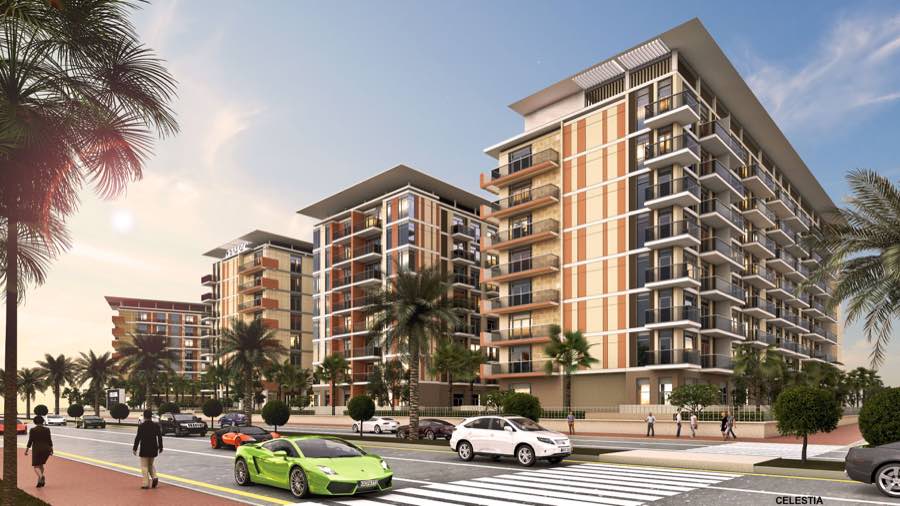
Our own listings include completed, furnished units of the kind that are let soon after title transfer. As one example, the Celestia listing in Dubai South describes completed studio to two-bedroom apartments of 539 to 733 sq ft, delivered in 2019, with prices from AED 695,000 ($189,244) per our listing page; the developer’s profile is on our DAMAC Properties page. A unit like this can be let without a separate fit-out stage, but the same registration steps apply to it as to any other unit.
Tenant types and what to collect
The tenant can be an individual or a company. For an individual, the DLD guide lists the passport, the residence permit and their expiry dates; for a company, the trade licence with its number and expiry date. The DLD service page also states that the Ejari application needs the applicant’s Emirates ID when it is made through a trustee centre, and a copy of the unified tenancy contract when it is made through the app. The unified contract has Arabic terms and conditions that are mandatory; extra terms can be added up to 4,000 characters, according to the DLD FAQ.
Ejari Registration for Renting Out Property in Dubai: Steps and Cost
Ejari is the electronic register of tenancy contracts, developed by RERA. The DLD Tenancy Guide calls registration through Ejari mandatory. DEWA, the electricity and water authority, links activation to the registration: according to the u.ae government portal, DEWA sends its welcome email, with the account number and security deposit details, after Ejari is issued.
The DLD describes two routes. Through a Real Estate Service Trustee Centre (or the property management company, if one manages the unit), the applicant visits the centre, submits the original unified tenancy contract and the Emirates ID, an employee reviews and approves the request, the fees are paid and the e-Contract Registration Certificate is issued. The DLD gives the service time at a trustee centre as 25 minutes, excluding waiting. Through the Ejari system or the Dubai REST app, the applicant logs in, selects the service, enters the data and uploads the contract, pays, waits for approval and receives the certificate by email.
| Fee line | Dubai REST app or DLD website | Trustee centre |
|---|---|---|
| Tenancy contract registration | AED 100 ($27.23) | AED 100 ($27.23) |
| Knowledge fee | AED 10 ($2.72) | AED 10 ($2.72) |
| Innovation fee | AED 10 ($2.72) | AED 10 ($2.72) |
| Service partner fee | AED 55 ($14.98) plus AED 2.75 VAT ($0.75) | AED 95 ($25.87) plus VAT |
| Total stated by the DLD | AED 177.75 ($48.40) | AED 220 ($59.90) |
The app total checks out arithmetically: 100 + 10 + 10 + 55 + 2.75 = 177.75. The trustee-centre lines add up to AED 215 before VAT; the DLD states the total as AED 220 and does not show the VAT amount separately. Cancellation is free through the app or the online system and costs a AED 40 ($10.89) service partner fee plus VAT at a trustee centre, per the DLD service page for cancelling a tenancy contract, which applies to an expired contract on a vacated property.
The law places the registration duty on the landlord, and the DLD FAQ notes that previous years’ contracts must be registered before a current-year contract can be registered. Because the system is tied to the unit, a landlord who renews each year registers each renewal, and a tenant who leaves needs the old contract cancelled before a new tenant’s contract can be recorded. The Tenancy Guide lists, among the landlord’s undertakings, that he will not issue more than one contract for the same unit and that payments are made in the name of the owner (or the licensed leasing company), not a third person.
Rent, Payment Method and the Security Deposit
Article 4 of the law, as replaced in 2008, requires the contract to describe the property, the purpose of the tenancy, its term, the rent and the payment method, and the owner’s name if the landlord is not the owner. Article 9 requires the rent to be specified; if it is not, the tribunal sets it by reference to similar property, using the RERA increase criteria and the average rent in the area. Article 12 provides that the tenant pays on the dates the parties agree. The number of cheques or bank transfers a landlord asks for is therefore a contract term, not a statutory figure, and the law does not set one.
Under article 11, unless agreed otherwise, the rent covers use of amenities such as swimming pools, gyms and car parks. Under article 22, unless the contract says otherwise, the tenant pays the fees and taxes that government bodies charge for use of the property. The DLD FAQ states that tenants pay a municipality fee of 5% of the annual rent, shown separately on the DEWA bill and distinct from VAT, so an annual rent of AED 60,000 ($16,338) carries a 5% municipality fee of AED 3,000 ($817), a calculation from the FAQ’s rate.
The security deposit
Article 20 allows the landlord, when entering into the contract, to obtain a security deposit “to ensure maintenance of the Real Property” at expiry, on condition that he refunds the deposit or the remainder at the end of the lease. The article sets no percentage; the amount is a term of the contract. At the end of the lease the tenant returns the unit in the condition in which it was received, except for ordinary wear and tear or damage outside the tenant’s control (article 21), and a disagreement goes to the tribunal. The DLD FAQ adds that comprehensive cleaning and painting of interior walls at move-out is typically the owner’s responsibility. When a unit changes hands, the same FAQ says the new owner becomes the landlord, honours the lease terms and cannot increase the security deposit.
Renewal fees
In a statement published on 26 February 2020, the RDC said that landlords and their representatives may not claim fees when a lease is renewed, and that a clause creating such fees is not permitted. The statement did not cite a provision of the law and described the prohibition as one to be clarified in a new rental law; the DLD carries the statement in its news archive.
The RERA Rental Index and the Rent-Increase Calculator
Decree 43 of 2013 caps what a landlord can add to the rent at renewal. The cap is measured against the average rental value of similar units, which article 3 of the decree takes from the Rent Index of the Emirate of Dubai approved by RERA. The gap between the current rent and that average sets the band: the lower the rent sits relative to the average, the larger the permitted increase, and a rent within 10% of the average allows none.
| Current rent compared with index average | Maximum increase at renewal | Example on an index average of AED 100,000 ($27,229) |
|---|---|---|
| Up to 10% below | 0% | Rent AED 95,000 ($25,868): no increase, stays AED 95,000 |
| 11% to 20% below | 5% | Rent AED 85,000 ($23,145): +AED 4,250 ($1,157) = AED 89,250 ($24,302) |
| 21% to 30% below | 10% | Rent AED 75,000 ($20,422): +AED 7,500 ($2,042) = AED 82,500 ($22,464) |
| 31% to 40% below | 15% | Rent AED 65,000 ($17,699): +AED 9,750 ($2,655) = AED 74,750 ($20,354) |
| More than 40% below | 20% | Rent AED 55,000 ($14,976): +AED 11,000 ($2,995) = AED 66,000 ($17,971) |
The bands come from article 1 of the decree; the examples in the third column are calculations built on an assumed index average of AED 100,000, not index data for any building. The decree speaks of the maximum percentage “of the rent of the real property unit”, so the increase applies to the current rent, not to the index average.
How to work the calculation
The method has three steps. First find the index average for the unit. Second compute the gap as (index average minus current rent) divided by the index average. Third read the band from the table and multiply the current rent by the band’s percentage. The DLD Tenancy Guide shows one worked case: an index average of AED 80,000 ($21,784) and a current rent of AED 60,000 ($16,338) gives a gap of (80,000 – 60,000) / 80,000 = 25%. That falls in the 21% to 30% band, so the increase is 10% of 60,000, which is AED 6,000 ($1,634), and the rent after the increase is AED 66,000 ($17,971).
A second case shows the zero band. With an index average of AED 100,000 and a current rent of AED 90,000 ($24,506), the gap is 10%, which is within “up to 10% less”, so no increase is permitted at renewal. These are maximums: a landlord may charge less, and the parties can also agree a decrease, since article 13 lets them review the rent “whether increasing or decreasing it”.
The calculator and the Smart Rental Index
The DLD offers the calculation as an e-service. For a residential unit the form asks for the contract end date, the property type, a way of identifying the unit (the DEWA premises number, the Ejari contract number, or the area and building), the number of bedrooms and the current annual rent. The DLD page says the result is immediate and the service can be used through the DLD website, the Dubai REST app and the DubaiNow app. The Tenancy Guide notes that the index is updated regularly, and the DLD FAQ describes the rental index as indicative, relevant above all when the parties disagree on an increase at renewal, with increase rates that range from 0% to 20%.
On 2 January 2025 the DLD launched the Smart Rental Index 2025. According to the DLD announcement, it combines artificial intelligence with a building classification system that scores each building on technical and structural features, quality of finishes and upkeep, location, and services and facilities such as maintenance, cleanliness and parking management. It covers all residential areas in Dubai, including key districts, special development zones and free zones, and the DLD said commercial and industrial indexes would follow. At the same event the DLD reported that registered rental contracts exceeded 900,000 in 2024, up 8% on the previous year.
A landlord who needs a formal valuation, for instance to support a dispute, can apply for a rental valuation certificate. The DLD service page lists a fee of AED 2,000 ($545) per unit, capped at AED 10,000 ($2,723), plus the AED 10 knowledge and AED 10 innovation fees, a processing time of seven working days, and a requirement to attach a judgment or judicial order for the valuation. Our guide to Dubai rental yield by area covers how asking and registered rents are used in return calculations; this page does not repeat them.
Renewal, Notice and Ending a Tenancy
If a lease expires and the tenant stays without objection from the landlord, article 6 provides that the contract renews for the same term or for one year, whichever is shorter, on the same terms. A valid lease cannot be ended by one party alone during its term; it ends by mutual consent or on the grounds the law lists (article 7). The DLD FAQ states the same rule for residential contracts, and adds that commercial contracts can be cancelled before expiry only in specific cases such as expiry, trade licence cancellation, relocation, licence freezing or an RDC order.
To change terms or the rent at renewal, either side must give notice at least 90 days before the contract expires, unless the parties agreed another period (article 14 as replaced in 2008). If they cannot agree, article 13 lets the tribunal set a fair rent by the criteria of article 9. The DLD FAQ summarises this as three months’ notice for an increase, with a committee setting the rent when there is no agreement. A landlord who wants to raise the rent therefore checks the calculator, works out the maximum, and serves the notice before the 90-day point; our guide to buying property in Dubai: fees and costs lists the acquisition costs that come before this stage.
A lease does not end on the death of the landlord or the tenant; article 27 continues it with the heirs, although the tenant’s heirs may end it on 30 days’ notice or at expiry, whichever comes first. Article 28 provides that a transfer of ownership does not affect a tenant’s right to stay under a fixed-term lease signed with the previous owner. For the position of heirs of a foreign owner, see our guide to inheritance for foreign property owners in Dubai.
Eviction Grounds and the 12-Month Notice
Article 25 of the law, as replaced in 2008, lists the only cases in which a landlord may seek eviction. They fall in two groups: grounds that apply during the term, and grounds that apply only when the contract expires. The landlord serves the notice through a notary public or by registered post.
| When | Ground (article 25) | Notice or condition |
|---|---|---|
| During the term | Rent unpaid | Not paid within 30 days after a notice to pay, unless the parties agreed otherwise |
| During the term | Sub-letting without written approval | Eviction covers tenant and sub-tenant |
| During the term | Illegal use, or use against public order or morals | Notice by notary public or registered post |
| During the term | Commercial unit left empty without valid reason | 30 consecutive days or 90 non-consecutive days in a year, unless agreed otherwise |
| During the term | Unsafe change or wilful or grossly negligent damage | As above |
| During the term | Different purpose of use, or breach of planning and land-use rules | As above |
| During the term | Condemned property | Technical report issued or attested by Dubai Municipality |
| During the term | Breach of the law or the contract | Not remedied within 30 days after a notice to perform |
| During the term | Government-required demolition or reconstruction | Competent government entity requires it |
| At expiry | Demolition and rebuilding, or new construction that blocks use | Permits obtained; 12 months’ notice |
| At expiry | Restoration or major maintenance impossible with the tenant in place | Dubai Municipality report; 12 months’ notice |
| At expiry | Owner or a first-degree relative will use the unit | Owner proves he has no other suitable property; 12 months’ notice |
| At expiry | Owner wishes to sell | 12 months’ notice |
Article 26 attaches a consequence to the personal-use ground. If the tribunal awards possession for the owner’s or a first-degree relative’s own use, the owner may not let the unit to a third party for at least two years from taking possession for residential property (three years for non-residential), unless the tribunal sets a shorter period; otherwise the tenant may ask the tribunal for fair compensation. Article 29 gives a tenant a right of first refusal to return after a demolition and reconstruction or a renovation, with the rent set under article 9; the tenant must exercise it within 30 days of the landlord’s notice.
Two further provisions protect the occupant while a case is pending. Article 31 provides that a claim for eviction does not relieve the tenant of paying rent during the case. Article 34 provides that the landlord may not disconnect services from the property or disturb the tenant’s use of it, and the tenant can go to the police or claim damages from the tribunal. The DLD FAQ adds that the owner is not entitled to disconnect electricity, water or other facilities.
If a tenant refuses to accept rent, the DLD FAQ describes the tenant’s route: notify the landlord of the payment, then deposit the rent through a deposit file at the RDC, after which the landlord must wait 30 days before filing an eviction suit. This is one reason landlords keep payment records tied to the registered contract.
Landlord Obligations and the Cost List
The landlord’s duties are set out in articles 15 to 18. He must hand the unit over in good condition so the tenant can use it as the contract states (article 15). Unless the parties agree otherwise, he is responsible for maintenance and for repairing defects or damage that affect the tenant’s intended use (article 16), and he is liable for defects or wear not caused by the tenant (article 17). He must give the tenant the approvals needed by official entities for decoration works that do not affect the structure (article 18). The tenant, for his part, may not change the unit or carry out maintenance or restoration without the landlord’s permission and the required licences (article 19), may not remove leasehold improvements at the end unless otherwise agreed (article 23), and may not assign or sub-let without written consent (article 24).
The cost side depends on the contract. The table below lists the items a landlord meets, with the figure given by the named source and who bears it by default. Items without an official fee are shown as contract terms, with no amount.
| Item | Amount | Who bears it | Source |
|---|---|---|---|
| Ejari registration | AED 177.75 ($48.40) app; AED 220 ($59.90) trustee centre | Landlord’s registration duty; the contract can allocate the cost | DLD service page |
| Management contract registration | Free | Management company files it | DLD service page |
| Property manager’s fee | Agreed in the management contract | Owner | DLD Tenancy Guide |
| Building service charge | Set by the RERA-approved budget; see our service charges guide | The DLD FAQ says the landlord pays property service fees | DLD FAQ |
| Maintenance and repairs | Depends on the work | Landlord, unless agreed otherwise | Law art. 16 |
| Municipality fee | 5% of annual rent | Tenant, through the DEWA bill | DLD FAQ |
| DEWA utilities | Metered use; security deposit details sent after Ejari | Tenant’s account | u.ae portal |
| Air conditioning | Depends on the contract where units are not individually metered | Agreed between owner and tenant | DLD FAQ |
| Rental valuation certificate | AED 2,000 ($545) per unit, capped at AED 10,000 ($2,723) | Applicant, in a dispute | DLD service page |
On air conditioning, the DLD FAQ states that tenants may pay air conditioning contributions where units are not individually metered, and that the bill for the units and their maintenance depends on the agreement between owner and tenant. This is the position for central or district cooling (“chiller”) charges: the contract should say who pays the cooling charge and who pays the connection or maintenance element. A tenant’s DEWA account is opened after Ejari is issued, which is why the order of steps matters: the Ejari certificate comes first, the utility account follows.
The cost of owning the unit before it is let, including registration fees and agent commission at purchase, is covered in our guide to buying property in Dubai: fees and costs, and the general ownership position in our Dubai property tax guide.
Property Managers, Leasing Offices and Representatives
A landlord who lives abroad can let through a property manager. The DLD Tenancy Guide describes the licensed activities: property lease and management on behalf of third parties (renting from owners and releasing to tenants), lease and management of private property (the owner’s own property and relatives’ only), and property administrative supervision, where the manager acts under a management contract in which the owner sets the powers granted. It says that for the supervision activity payments go in the name of the property’s owner only, while a company that leases on its own account can take payments in its own name.
Before signing, an owner can read the management contract against the DLD’s own description of what it should cover: responsibilities and obligations of each party, services to tenants, issuing and registering lease contracts, legal follow-up, rent collection, maintenance and other duties. The DLD describes the registration of the contract as what lets the company see the registered property and carry out the authorised operations, including registering tenants, renewals and eviction during the contract period. The company must be licensed and have a fixed office address, according to the Tenancy Guide.
Where an agent acts under a power of attorney, the DLD service page requires the power of attorney to be referenced by number if it was issued in Dubai and attached if it was issued in another emirate. An owner who lives abroad and signs the unified contract through a representative should therefore keep the number of the power of attorney with the Ejari records.
Holiday Home Lets When Renting Out Property in Dubai: DET Permit and Fees
Letting a unit by the night or week is a different regime from a 12-month lease. In Dubai, short-term lets of apartments and villas are run through the DET Holiday Homes system, and each unit needs its own permit before it is listed. This section relies on the Gulf News guide to the permit (page last updated 14 October 2025) and a Khaleej Times explainer dated 9 November 2024, each attributed below.
According to Gulf News, companies or establishments and individual owners can apply, but permits are not issued for hotel rooms or hotel apartments, or for properties whose sale and purchase agreement prohibits short-term rentals. An apartment must be classified “Residential” on its title deed, while a villa or house in a gated community can be “Residential” or “Commercial”. The documents listed include the title deed or an approved DLD sale and purchase agreement, a developer no-objection certificate where applicable, the landlord’s passport or Emirates ID, a trade licence for a company, a property management letter and the latest DEWA bill. Khaleej Times adds that a tenant who sub-lets as a holiday home needs a lease with a sub-letting clause and the landlord’s no-objection certificate.
| Permit fee line (Gulf News, updated 14 October 2025) | Amount |
|---|---|
| Per bedroom | AED 300 ($81.69) |
| Holiday Home classification certificate | AED 50 ($13.61) |
| Knowledge fee | AED 10 ($2.72) |
| Innovation fee | AED 10 ($2.72) |
| Studio or one-bedroom unit (300 + 50 + 10 + 10) | AED 370 ($100.75) |
| Two-bedroom unit (600 + 70), calculation | AED 670 ($182.44) |
| Three-bedroom unit (900 + 70), calculation | AED 970 ($264.13) |
| Annual maximum per holiday home, as reported | AED 1,200 ($326.75) |
Gulf News reports that the permit lasts from three to twelve months, that the fees are the same whatever the duration, that fees are paid online through the Holiday Homes portal, that the owner needs comprehensive insurance from a Dubai-licensed insurer covering damage or injury to guests, and that the unit must be vacant for the inspection. Khaleej Times states that the whole unit must be rented, not a single room, and that owners pay a Tourism Dirham of AED 15 ($4.08) per room per night for a Deluxe holiday home and AED 10 ($2.72) for a Standard one, regardless of the number of guests. As a calculation, a Standard one-bedroom let for 20 nights carries a Tourism Dirham of 20 x AED 10 = AED 200 ($54).
On 21 May 2026 the Dubai Media Office announced a second incentives package that includes an exemption from permit and licence fees for holiday homes for establishments registered with DET. The announcement says the package’s initiatives run for three to 12 months, with each entity announcing its own timeline, so the fee schedule above is the standard one.
Long-term lease and holiday let compared
| Point | 12-month lease | Holiday let |
|---|---|---|
| Registration | Ejari, with a unified tenancy contract | DET Holiday Homes permit per unit |
| Governing rules | Law 26/2007 as amended, Decree 43/2013 | DET holiday home rules and permit conditions |
| Rent changes | Capped at renewal by the index bands | Nightly rate set by the owner |
| Ending the arrangement | Only on the grounds in article 25, with notice | Guest checks out; no eviction process |
| Government fees | Ejari AED 177.75 to AED 220 | Permit from AED 370, plus Tourism Dirham per bedroom per night |
| Who is on site | One tenant household for the term | Rotating guests; the owner or operator provides guest services and staffed 24/7 contact numbers |
| Tax position | Residential rent generally VAT-exempt; income excluded from corporate tax for a natural person without a licence | A DET permit counts as a licence in the FTA guide; VAT depends on the accommodation type |
The last row compares the tax positions, which the next section explains. Renting out property in Dubai on a short-term basis also raises a title question: a holiday home permit is tied to the unit and its classification, so a buyer who intends this route reads the sale and purchase agreement and the title classification before purchase. Our guide to the Dubai real estate market describes the two lettings models side by side.
Tax Points for Landlords Renting Out Property in Dubai
Dubai has no annual property tax and no personal income tax, which is also our position in the guide on property tax in Dubai. Two federal taxes can still touch rental income, and the Federal Tax Authority (FTA) describes both.
VAT. According to the FTA FAQ on real estate, supplies of residential property are generally exempt from VAT, commercial property leases are taxed at the standard 5% rate, and the first supply of a residential property, by sale or lease, within three years of completion is zero-rated. A subsequent lease is exempt. The FTA’s Real Estate VAT guide defines a residential building as one that is not used as a hotel, motel or bed and breakfast establishment, or a serviced apartment where services beyond accommodation are provided; it also describes the provision, lease and rental of sleeping accommodation in a hotel or similar establishment as a supply of services. Whether a given holiday-home operation falls on one side of that line is a question of its facts.
Corporate tax. The FTA’s October 2024 guide on real estate investment for natural persons explains that a natural person is subject to corporate tax on business turnover only above AED 1 million in a calendar year, and that income from real estate investment is excluded from that business income when it is not conducted, or required to be conducted, through a licence. The guide states that a DET permit allowing a person to lease holiday homes is a relevant licence, so holiday-home income falls outside the exclusion, while Ejari registration is an administrative record rather than a licence. Its worked examples treat an owner who lets some apartments as holiday homes under permits and others to tenants under registered tenancy contracts as having taxable business income from the first group and excluded real estate investment income from the second. The sibling article on tax on Dubai property for foreign owners covers the foreign-owner view in more depth.
Because the position depends on whether a licence is involved and on turnover, an owner of several units checks each unit separately. The tax rules are separate from the Golden Visa condition, which, as in our guide to the Dubai Golden Visa, concerns owning one or more properties worth at least AED 2,000,000 and is a separate matter from the tenancy rules in this guide.
Rental Disputes and the Rental Disputes Centre
Disputes between landlords and tenants over eviction, renewal, rent or termination go to the Rental Disputes Centre. The DLD FAQ lists several fee items that can arise in a case: an RDC bailiff’s property inspection costs 2.5% of the annual rent, a sequestration costs AED 20 upfront and then, after the judge’s approval, 2.5% of the lease value up to a maximum of AED 3,000 ($817), and a request for reconsideration costs AED 500 ($136). Fees can be paid electronically by card, Noqodi or Al Ansari Exchange.
According to Gulf News on 28 January 2026, describing the RDC’s conciliation and amicable settlement service, the case fee is 3.5% of the annual rent or lease value for eviction, renewal, rent, termination or return-of-premises claims, with a minimum of AED 500 ($136) and a maximum of AED 20,000 ($5,446); monetary claims carry 3.5% of the amount claimed, between AED 500 and AED 15,000 ($4,084). It lists AED 25 ($6.81) for power of attorney registration, AED 100 ($27.23) for process service, the AED 10 knowledge fee and AED 10 innovation fee, and AED 130 ($35.40) plus VAT if the claim is filed through a trustee centre. Half of the court fee is refunded if the case settles through conciliation. As a calculation, an annual rent of AED 60,000 gives 3.5% = AED 2,100 ($572) in case fees; an annual rent of AED 600,000 ($163,376) would give AED 21,000, which the AED 20,000 cap reduces.
Documents for an eviction claim include the latest Ejari lease, an Emirates ID or trade licence, a bank letter with the claimant’s IBAN, and a notarised notice with proof of delivery. Gulf News adds that documents must be in Arabic or legally translated and that hard copies are not accepted. The need for a notarised notice is why the notice rules in the eviction table matter in practice: a notice served in the wrong form can be a reason for a claim to fail.
A Landlord’s Sequence, Step by Step
- Confirm title and, for a villa or apartment, the unit classification on the title deed. For a holiday let, also read the sale and purchase agreement for any ban on short-term rental.
- Decide who manages: the owner personally, a licensed management company under a registered management contract, or a representative under a power of attorney.
- Agree the contract terms: term, rent, number of payments and payment method, security deposit, who pays cooling and service items, and the Arabic terms of the unified contract.
- Register the contract on Ejari (AED 177.75 or AED 220) and keep the certificate; the tenant’s DEWA account follows from it.
- Note the expiry date and diarise 90 days before it, the last day for a notice to change rent or terms.
- Before renewal, run the DLD rent-increase calculator with the Ejari contract number and read the band; apply the maximum to the current rent.
- If the unit is to be recovered for sale or personal use, serve the 12-month notice through a notary public or by registered post.
- At move-out, compare the unit with its condition at handover, return the deposit or the remainder, and cancel the contract on Ejari (free through the app).
Frequently Asked Questions
Is registration compulsory when renting out property in Dubai?
Yes. Article 4 of Law 26/2007, as replaced by Law 33/2008, requires every tenancy contract and every amendment to be registered with RERA, and the DLD Tenancy Guide describes registration through Ejari as mandatory. DEWA activation for the tenant follows Ejari.
How much does Ejari cost for a landlord renting out property in Dubai?
According to the DLD service page read on 26 October 2026, registration through the Dubai REST app or the DLD website totals AED 177.75 ($48.40): AED 100 for registration, AED 10 knowledge fee, AED 10 innovation fee, and a AED 55 service partner fee plus AED 2.75 VAT. Through a trustee centre the DLD states AED 220 ($59.90). Cancelling an expired contract on a vacated unit is free online and AED 40 plus VAT at a trustee centre.
How much can a landlord increase the rent?
For renting out property in Dubai on a long-term lease, Decree 43 of 2013 sets the maximum at renewal by the gap between the current rent and the index average for similar units: 0% where the rent is up to 10% below the average, then 5%, 10%, 15% and 20% for gaps of 11 to 20%, 21 to 30%, 31 to 40% and over 40%. On an average of AED 100,000 and a rent of AED 75,000, for instance, the gap is 25% and the maximum is 10%, or AED 7,500.
What notice does a landlord give to raise the rent?
Under article 14, as replaced in 2008, a party who wishes to amend the terms of the contract, including the rent, must notify the other at least 90 days before the contract expires, unless the parties agreed otherwise. If they cannot agree, article 13 allows the tribunal to set a fair rent. The DLD FAQ states the same notice as three months.
Can a landlord ask a tenant to leave to sell the unit or move in?
When renting out property in Dubai, a landlord may do so at the expiry of the contract and only with 12 months’ notice served through a notary public or by registered post (article 25(2)). For personal use, the owner or a first-degree relative must be the user and the owner must prove he owns no other suitable property. If the tribunal awards possession on that ground, the unit cannot be let to a third party for at least two years in the case of residential property, subject to the tribunal’s discretion.
Is a security deposit required, and how much?
For renting out property in Dubai, article 20 allows the landlord to obtain a deposit when the lease is signed, to cover the property’s condition at expiry, and requires him to refund it or the remainder. The law sets no percentage, so the amount is a contract term. The DLD FAQ says the tenant can reclaim it if the unit comes back in the condition in which it was received, and that a new owner of a let unit cannot increase the deposit.
Does renting out property in Dubai by the night need a permit?
Yes. Each unit needs a DET Holiday Homes permit before listing. Gulf News (updated 14 October 2025) reports a minimum fee of AED 370 ($100.75), made up of AED 300 per bedroom, AED 50 for the classification certificate and the AED 10 knowledge and AED 10 innovation fees, with a reported annual maximum of AED 1,200 per home. A Tourism Dirham of AED 10 or AED 15 per room per night applies, according to Khaleej Times.
Is rental income taxed for an individual landlord?
Dubai levies no personal income tax. The FTA guidance says residential leases are generally VAT-exempt, and that corporate tax applies to a natural person only on business turnover above AED 1 million in a calendar year, with real estate investment income excluded unless it is conducted through a licence. A DET holiday-home permit counts as a licence in the FTA’s own example. Rules differ by person, so each owner applies them to his own facts.
Who pays for maintenance and the municipality fee?
In renting out property in Dubai, under article 16, the landlord handles maintenance and repairs that affect the tenant’s intended use, unless the parties agree otherwise. The DLD FAQ states that tenants pay the municipality fee of 5% of annual rent through the DEWA bill, and that the landlord pays property service fees. Article 22 adds that, unless the contract says otherwise, the tenant pays government fees and taxes charged for use of the property.
What happens to the lease if the landlord sells the unit?
Article 28 provides that a transfer of ownership does not affect the tenant’s right to stay under a fixed-term lease signed with the previous owner. The DLD FAQ adds that the new owner becomes the landlord and honours the original terms, and may ask the tenant to leave only on the grounds the law allows. Our guide on how to sell property in Dubai covers the sale side of that situation.
Readers weighing how renting out property in Dubai compares across markets can start from our UAE country page and the Dubai city page, which list the projects and the ownership rules by emirate.
Last checked: 26 October 2026. Sources: DLD: Register / Renew Tenancy Contract; DLD: Frequently Asked Questions; DLD: Tenancy Guide; Dubai Legislation Portal: Decree No. 43 of 2013; Dubai Legislation Portal: Law No. 33 of 2008; DLD: Rental Index; DLD: Smart Rental Index announcement; DLD: Rental Valuation; DLD: Cancel Tenancy Contract; DLD: Register Property Management Contract; DLD: Landlord is prohibited from claiming lease renewal fee; u.ae: Public utilities; Dubai Media Office: incentives package, 21 May 2026; Gulf News: holiday home permit; Khaleej Times: holiday homes; Gulf News: rental dispute settlement service; FTA: real estate FAQ; FTA: Real Estate VAT Guide; FTA: Real Estate Investment for Natural Persons.