






















The short answer, before anything else
Duqm has the cheapest property in Oman that a foreigner can buy. A studio at Maysan, the residential collection inside Maysan Square, starts at around OMR 29,500 — roughly $76,700. Nothing in Muscat’s freehold districts comes close, and the tax and fee treatment inside the Special Economic Zone is materially better than anywhere else in the country.
And it is not sold on freehold title. Maysan is currently sold on a 99-year leasehold, with the developer and the zone authority stating an expectation of future conversion to full freehold. That expectation now has a legal basis — Royal Decree 38/2025 permits developers in Oman’s special economic zones to sell units to non-Omanis as freehold — but the conversion of this specific project is a stated intention, not a dated, completed event.
That single distinction explains most of the price gap, and almost every listing you will read about Duqm buries it. Below is the version that leads with it: what Duqm actually is, what the 99-year title does and does not give you, where the cost advantage is real, and who this market is genuinely for.
Duqm at a glance
| Duqm | |
|---|---|
| Where | Wilayat in Al Wusta Governorate, Oman’s central coast on the Arabian Sea |
| Distance to Muscat | ~550 km by road (about 7 hours); 459 km direct by air |
| Air link | Duqm International (DQM) — roughly 5–6 SalamAir flights a week to Muscat |
| What it is | A purpose-built port, refining and logistics city, not a resort community |
| Governorate population | 52,344 across all of Al Wusta (2020 census) |
| Governorate area | 82,471 km² — just short of Austria, at 0.63 people per km² |
| Masterplan target | 250,000 residents by 2040 |
| SEZ committed investment | RO 6.394 billion (2025) |
| Our projects | 1 — Maysan, at Maysan Square |
| Title offered | 99-year leasehold, freehold conversion stated but undated |
What Duqm actually is
Duqm is not a smaller, cheaper version of Al Mouj or Jebel Sifah. It is a different category of thing altogether, and buying it as though it were a discounted resort community is the single most common mistake made here.
It is a working industrial city built from nothing on an empty stretch of the Arabian Sea coast, 550 kilometres south of the capital. The anchor is a deep-water commercial port. Around it sit the OQ8 refinery, Asyad’s ship-repair dry dock, a petrochemical complex under construction, and the Chinese-backed industrial park. The residential market exists because those facilities need people, and those people need somewhere to live.
That has one enormous implication for an investor, and it runs in both directions. Duqm’s rental demand is industrial payroll, not tourism. It does not care what the Muscat lifestyle market is doing, it is not seasonal, and it does not depend on visitor numbers. It depends instead on whether the port, the refinery and the industrial park keep hiring — a narrower base than a diversified capital city, and one that concentrates your risk in a handful of very large employers.
The one project: Maysan
| Maysan, Maysan Square | |
|---|---|
| Developer | Maysan Properties, in partnership with the zone authority (SEZAD) |
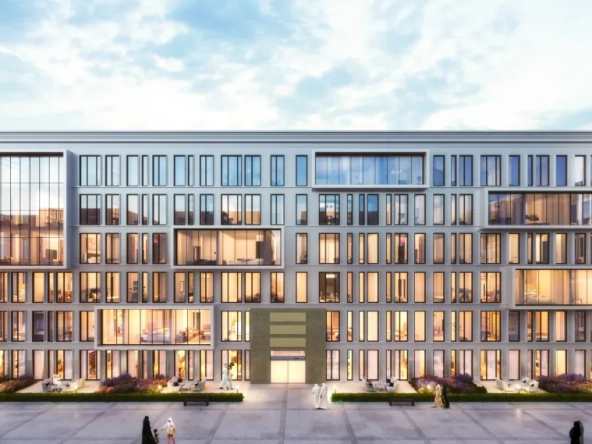
| Masterplan | ~122,000 m², around 20 buildings, five phases from 2021 |
| Masterplan value | ~RO 43 million business park |
| Mix | Apartments plus commercial, shops, restaurants, a business hotel and offices |
| Delivered | Residence One — handed over and already generating rental income |
| Studio | From OMR 29,500 (~$76,700) |
| One-bedroom | From OMR 33,250 (~$86,500) |
| Two-bedroom | From OMR 44,500 (~$115,700) |
| VAT | 0% |
| Registration fee | 0.5% |
| Residence visa | Stated as included for buyer and family — confirm terms in writing |
| Title | 99-year leasehold |
Full specification, phases and current pricing on the Maysan, Duqm project page.
One detail deserves more weight than the marketing gives it. Residence One is finished, handed over, and letting. In a market where almost everything sold in Oman is off-plan, an existing phase with real occupancy and real rent is the closest thing to evidence you will get. If you are considering a later phase, ask what Residence One actually achieves in rent before you underwrite what yours will.
The title question, properly explained
This is the section that decides whether Duqm belongs in your portfolio, so it comes before the growth story rather than after it.
| Muscat ITC (Al Mouj, Muscat Bay, Sultan Haitham City) | Duqm SEZ (Maysan today) | |
|---|---|---|
| Title | Full freehold under Royal Decree 12/2006 | 99-year leasehold |
| Duration | Perpetual, absolute ownership | 99 years, transferable and inheritable |
| Can you sell it? | Yes, on the open market | Yes — the lease is assignable |
| Can you pass it on? | Yes | Yes, within the remaining term |
| Freehold legally possible? | Already freehold | Yes — RD 38/2025, Article 42, subject to regulation |
| Conversion date | n/a | None published |
Be clear about what a 99-year leasehold is and is not. It is not a rental. It is a long-term, transferable, inheritable property right, it is the standard instrument for most of what has been built in the Gulf’s economic zones, and on a 99-year horizon almost no individual buyer will ever reach the end of it. If you are buying to hold for fifteen years and sell, the term length is not your problem.
What it is not is the same asset as an ITC freehold. The practical differences show up at resale, in lending, and in residency. A buyer twenty years from now is purchasing a 79-year remainder, not a perpetual title. Banks price leasehold differently from freehold. And Oman’s national residency programmes are written around freehold property in designated complexes — which is why Duqm has its own separate visa arrangement rather than qualifying under the usual route.
Royal Decree 38/2025 is the genuinely new fact here, and it is why “freehold-track” is a defensible description rather than a sales euphemism. Promulgated on 7 April 2025 and effective from 14 April, its Article 42 provides that a real estate developer may sell units in these projects to non-Omanis, whether natural or legal persons, as freehold, in the manner specified by the regulation. Before it, freehold for foreigners was confined to Integrated Tourism Complexes designated by the Ministry of Heritage and Tourism. So the door is open in law.
The qualifier is the last clause. “In the manner specified by the regulation” means the mechanism runs through executive regulations, and conversion of any individual project is an administrative act that has to actually happen. Nobody has published a date for Maysan. Underwrite the deal on the 99-year leasehold you are buying today; treat freehold conversion as upside you have not paid for. If you would only buy at this price on the assumption that conversion is imminent, you are buying the wrong asset.
Where the cost advantage is real
The leasehold caveat is genuine, and so is the money it saves you. Duqm’s transaction costs are not marginally better than the rest of Oman — they are in a different bracket, and this is the part of the Duqm case that stands up best to scrutiny.
| On a $100,000 apartment | Muscat ITC, new build | Duqm SEZ |
|---|---|---|
| VAT on first sale | 5% — $5,000 | 0% — nil |
| Registration / transfer fee | 3% — $3,000 | 0.5% — $500 |
| Total acquisition cost | $108,000 | $100,500 |
| Difference | $7,500 — 7.5% of the purchase price, saved at the door | |
Seven and a half percent is not a rounding error. On a buy-to-let held five years it is roughly a year of gross rent handed back to you on day one, and it is the clearest quantifiable advantage Duqm has over anywhere else in the country. It exists because the zone authority’s mandate is to attract residents and capital to Duqm specifically, and it is prepared to give up transaction revenue to do it.
Set that against the entry prices elsewhere in our Oman portfolio and the position becomes clear.
| Location | Entry price | Title |
|---|---|---|
| Duqm — Maysan | $76,700 | 99-year leasehold |
| Sultan Haitham City | $82,160 | Freehold |
| Alef Qurum Residence, Telal Al Qurm | $111,800 | Freehold, ITC |
| Jebel Sifah | $130,040 | Freehold, ITC |
| Hay Al Wafa | $170,600 | Freehold |
| Al Mouj | $221,000 | Freehold, ITC |
Duqm is the cheapest, but note how close Sultan Haitham City sits — about $5,500 above it, with full freehold title and a location inside Muscat Governorate. For a buyer whose priority is the lowest possible price with a clean title, that gap is small enough that Duqm has to win on something other than price. It wins on transaction cost, on the industrial thesis, and on the included visa. It does not win on title.
The industrial base you are actually underwriting
| Asset | Status |
|---|---|
| OQ8 refinery | Designed at 230,000 bpd, now running around 255,000 bpd after debottlenecking; a reformer unit is in front-end design |
| Deep-water port | Commercial port, the anchor asset of the zone |
| Asyad dry dock | Ship repair, expanded with a third dock able to take very large crude carriers |
| Petrochemical complex | Downstream build under way, first phase targeted for 2027 |
| Sino-Oman Industrial City | Chinese-backed park on a 50-year lease; headline commitment of about $10.7 billion |
| Cement offtake | Refinery coke contracted to a Duqm cement plant from 2028 |
| Zone-wide | RO 6.394 billion in committed investment as of 2025 |
Two honest notes on that table, because the numbers get quoted carelessly.
“Committed” is not “spent.” RO 6.394 billion is the value of investment agreements signed, which is a real and meaningful figure but not the same as capital in the ground. The same applies with more force to the Sino-Oman park’s $10.7 billion headline: that is a framework number attached to a 50-year lease signed in the mid-2010s, and what is operational today is a considerably smaller set of plants. The park is progressing, and it is not progressing at $10.7 billion.
The refinery, by contrast, is unambiguously real. It is built, it is running above nameplate, and it is shipping product. If you want one piece of evidence that Duqm is not a rendering, it is OQ8.
The population problem
Here is the honest counterweight to the growth story, and it is the reason to size a Duqm position carefully rather than enthusiastically.
All of Al Wusta Governorate — the entire administrative region containing Duqm — recorded 52,344 people in the 2020 census, spread across 82,471 square kilometres. That is an area just short of Austria’s, with roughly the population of a single mid-sized town, at 0.63 people per square kilometre. Duqm itself is one of four wilayats within it.
The masterplan targets 250,000 residents by 2040. That is not an unreasonable ambition for a zone with this much capital committed, but it is a projection, and the residential investment case rests on it arriving. You are not buying into existing demand; you are buying ahead of demand that is intended to exist.
There is a second wrinkle specific to industrial cities. A large share of a port-and-refinery workforce lives in company-provided accommodation — labour camps and staff housing built by the employer, not leased from the private market. Those workers raise the population count without ever appearing as tenants. The addressable rental market is the professional and managerial layer above them: engineers, port and logistics staff, contractors’ management, government and zone employees. That is a real market and it is growing, but it is a fraction of the headline population, and it is the number that matters for your yield.
The practical consequence: ask for actual occupancy and actual achieved rents at Residence One, which has been letting since handover, rather than accepting a projected yield. Duqm is the one place in Oman where a completed, tenanted phase already exists to check against, and it would be a waste not to use it.
Residency: a different route from the rest of Oman
Duqm sits outside the national property-residency framework, and this catches people out in both directions.
| Route | Requirement | Duqm |
|---|---|---|
| Golden Residency | OMR 200,000 investment; the property route applies to real estate inside designated Integrated Tourism Complexes | No — Maysan is neither the value nor inside an ITC |
| Owner Visa | Sponsor-free residence tied to qualifying property ownership | Confirm applicability in writing; Duqm is not an ITC |
| SEZ arrangement | Zone-specific, stated as included with purchase | Stated as included for buyer and family |
The included residence visa is presented by the developer as part of the transaction rather than a separate application. That is genuinely attractive — a smaller cheque than the OMR 200,000 Golden Residency threshold, with a simpler process. It is also a developer representation about an administrative programme, and zone-specific schemes can carry different renewal terms, minimum thresholds and family definitions from the national programmes. Get the terms in writing, confirm the renewal conditions, and have an independent Omani lawyer read them before you rely on the visa as part of your reason for buying. We compare the national routes in Golden Residency versus the Owner Visa.
What you give up
| Duqm | Muscat freehold districts | |
|---|---|---|
| Title | 99-year leasehold | Full freehold |
| Acquisition cost | 0.5% all-in | ~8% with VAT |
| Entry price | $76,700 | $82,160 – $221,000 |
| Demand driver | Industrial payroll | Tourism, corporate lets, lifestyle migration |
| Resale market | Thin and new | Established at Al Mouj; thin elsewhere |
| Access from Muscat | 7-hour drive or a short flight | Local |
| Schools, hospitals, retail | Building out with the zone | Mature in the capital |
| Residency route | Zone-specific arrangement | Golden Residency where value and ITC tests are met |
The resale line deserves emphasis. Al Mouj is the only Omani community with a genuinely functioning secondary market; almost everywhere else, including Duqm, you are relying on selling into continued primary demand. In a zone whose population is still being built, that is a real liquidity constraint, and it argues for a longer holding period than you might assume from the low entry price.
Who Duqm is for
It fits the investor who wants the lowest entry price in Oman and is genuinely comfortable holding a 99-year leasehold; who is underwriting an industrial economy rather than a lifestyle one; who values the 7.5% saving on acquisition costs and the included visa; and who is buying a completed, tenanted unit in Residence One or has satisfied themselves on a later phase’s contract.
It does not fit the buyer who needs freehold title, who wants Golden Residency from the purchase, who needs to exit quickly, who is buying a holiday home, or who is buying primarily on the expectation that leasehold will convert to freehold on a timetable nobody has published. If any of those describe you, Sultan Haitham City at $82,160 gives you freehold for about $5,500 more, and that is the comparison to run first.
How to read the title on any Omani listing
The most portable thing this page can give you is a test, because the ownership question in Oman resolves the same way every time and the answer is rarely printed in the headline.
| Ask | What the answer tells you |
|---|---|
| 1. Is it inside a designated ITC? | Yes → full freehold under RD 12/2006, and the Golden Residency property route is available if the value test is met. |
| 2. If not, is it inside a special economic or free zone? | Yes → freehold is legally possible under RD 38/2025, but ask what title this project is selling today. Often leasehold. |
| 3. Neither? | Ordinary Omani land. Foreign purchase is limited to the expat usufruct route (buildings of four-plus floors, buyer 23+, two years’ residency) — or not available at all. |
Run those three and you will read almost any Omani listing correctly. Al Mouj answers yes at question one. Maysan in Duqm answers no, then yes — legally possible, currently leasehold. Bidbid answers no at all three, which is why foreigners cannot buy there.
The trap to watch for is the listing that answers question two and then quietly reports the answer to question one. “Freehold” as a description of the legal framework is not the same as “freehold” as a description of the deed you will be handed, and in Oman’s economic zones right now that gap is where most of the confusion lives. Ask which one is being described, and ask for it in writing.
Seven checks before you buy in Duqm
- Get the current title status in writing — the exact instrument, the term remaining, and what is assignable.
- Ask for any documented conversion timeline to freehold, and treat its absence as the expected answer rather than a red flag.
- Ask for Residence One’s actual occupancy and achieved rents, not a projected yield. This data exists.
- Confirm the residence visa terms in writing — threshold, renewal, and who counts as family.
- Verify the 0% VAT and 0.5% fee apply to your specific unit and phase, and get the all-in figure.
- For off-plan phases, read the payment schedule, specification and handover date in the sale agreement rather than the brochure.
- Have an independent Omani lawyer review it. Do not rely on any agent’s listing, including ours.
Frequently asked questions
Can foreigners buy property in Duqm?
Yes. Non-Omanis can purchase residential units in the Duqm Special Economic Zone. The available project, Maysan, is currently sold on a 99-year leasehold title rather than full freehold, with conversion to freehold stated as an expectation and legally enabled by Royal Decree 38/2025 but not scheduled.
What is the cheapest property in Oman?
Studios at Maysan in Duqm, from around OMR 29,500 — roughly $76,700 — are the lowest entry point in our Oman portfolio, slightly below Sultan Haitham City at $82,160.
Is Duqm property freehold?
Not currently. Maysan is sold on a 99-year leasehold. Royal Decree 38/2025, effective 14 April 2025, allows developers in special economic zones to sell to non-Omanis as freehold in the manner specified by regulation, so conversion is legally possible — but no date has been published for this project, and buyers should underwrite the leasehold they are buying today.
What are the buying costs in Duqm?
0% VAT and a 0.5% registration fee, against 5% VAT on a first sale plus a 3% foreign-buyer transfer fee in Oman’s Integrated Tourism Complexes. On a $100,000 apartment that is a saving of about $7,500, or 7.5% of the purchase price.
Does buying in Duqm give Oman residency?
Not through the Golden Residency, which requires OMR 200,000 and a property inside a designated Integrated Tourism Complex. Duqm has a separate zone-specific arrangement, with the developer stating that a residence visa for the buyer and family is included in the purchase. Confirm the terms, thresholds and renewal conditions in writing.
How far is Duqm from Muscat?
About 550 kilometres by road, a drive of roughly seven hours. Duqm International Airport operates around five to six SalamAir flights a week to Muscat; the direct air distance is 459 kilometres.
What drives rental demand in Duqm?
Industrial employment — the deep-water port, the OQ8 refinery, Asyad’s dry dock, the petrochemical build and the Chinese-backed industrial park. This is a payroll-driven market rather than a tourism-driven one, and the addressable tenant base is the professional layer, since much of the industrial workforce lives in employer-provided accommodation.
Is Duqm a good investment?
It depends entirely on what you need from the title. As a low-cost, long-hold position on Oman’s industrial diversification, with the lowest transaction costs in the country and a completed phase already letting, the case is coherent. As a substitute for freehold ownership in Muscat, or as a route to Golden Residency, it is not — and Sultan Haitham City offers freehold for roughly $5,500 more.
Related on this site
Freehold alternatives: Sultan Haitham City, Al Mouj, Jebel Sifah, Muscat, Muscat Bay, Salalah, Al Seeb. Where foreigners cannot buy: Bidbid, Sur. Rules and process: buying as a foreigner, freehold property in Oman, comparing the ITCs, property tax, all Oman property.
The verdict
Duqm is the most intellectually honest investment case in Oman, provided you state it honestly. You are buying a 99-year leasehold in a purpose-built industrial city 550 kilometres from the capital, at the lowest entry price in the country, with transaction costs roughly 7.5% below the national norm, an included residence visa, and a completed phase already generating rent. The refinery is real, the port is real, and the capital committed to the zone is substantial.
You are also buying ahead of a population that does not exist yet, into a thin resale market, on a title that is not freehold and may not become freehold on any published schedule. None of that makes it a bad purchase. It makes it a specific one, and it should be sized and held accordingly — long horizon, modest allocation, eyes open.
If the leasehold is the sticking point, the honest recommendation is not to talk you round. It is Sultan Haitham City, where about $5,500 more buys freehold title inside Muscat Governorate. If the leasehold is acceptable and the industrial thesis is what attracted you, ask us for Residence One’s real numbers before you look at anything off-plan.
UInvest Group would rather you bought the right title than the cheapest headline. That is the whole reason this page reads the way it does.
Ask what you are actually buying in Duqm
Further reading: the Special Economic Zone at Duqm publishes the zone’s investment framework; OPAZ is the public authority for Oman’s special economic and free zones; Invest Oman is the government’s official investment platform.
