






























The short answer, before anything else
Salalah is not one property market. It is two, and they are separated by about forty kilometres of coast and by something far more consequential than distance: the title you get.
Hawana Salalah, the Muriya resort west of the city, is Dhofar’s designated Integrated Tourism Complex. Buy there and you take genuine freehold — the same footing as Al Mouj, Muscat Bay or Jebel Sifah. Taqah, the coastal town to the east, sits outside the ITC framework, and the projects there are sold on 99-year renewable leases. Our own listings say so plainly rather than blurring it.
Now the number that matters. The Taqah leasehold stock runs about $195 to $217 per square foot. The Hawana freehold stock runs about $325 to $359. That is a gap of roughly $110 to $160 per square foot — call it 50 to 80 percent — for what is, in lifestyle terms, a broadly similar beachfront apartment on the same coast.
You are not looking at a bargain and a rip-off. You are looking at the price of a freehold deed, quoted in dollars per square foot, more explicitly than almost anywhere else in Oman. Which side of that trade suits you is what the rest of this page is for.
Salalah at a glance
| Salalah | |
|---|---|
| Where | Capital of Dhofar, southern Oman, on the Arabian Sea about 1,000 km from Muscat |
| The khareef | Indian Ocean monsoon, roughly 21 June – 21 September, turning the mountains green |
| Khareef visitors | 1,027,255 to Dhofar in 2025, up 2.1% year on year |
| Visitor mix | 76.3% Omani — this is a domestic season first, an international one second |
| The ITC | Hawana Salalah — Muriya, ~7 km of white-sand beach west of the city |
| Outside the ITC | Taqah, ~40 km east — 99-year renewable leases, not freehold |
| Our projects | 6 — four at Hawana, two at Taqah |
| Entry price | $128,700 (leasehold) · $149,738 (freehold) |
| Per sq ft | $195 – $217 leasehold · $325 – $359 freehold |
The khareef, and why it inverts everything
For roughly three months a year the Indian Ocean monsoon reaches the Dhofar coast, drops temperatures into the low twenties, wraps the mountains in cloud and turns a desert region green. Oman calls it the khareef, and it is the single most important fact about Salalah’s economy.
The scale is real. Dhofar received 1,027,255 visitors during the 2025 khareef season, up 2.1% on the year before, and early figures for 2026 were running about 6.9% ahead. For a governorate this size, that is an enormous seasonal influx, and it supports a hotel, retail and short-let economy that would not otherwise exist.
Here is why it matters to a property investor, and it is the thing that makes Salalah genuinely different from everywhere else we sell in Oman. Salalah’s peak season is summer. Muscat Bay and Jebel Sifah earn from October to April and empty out in the heat; Salalah fills up precisely when the north is unbearable, because that is the reason people come. It is the only Omani market whose rental calendar runs counter-cyclically to the rest of the country — which, for an owner holding property in both, is a genuine diversification rather than a marketing line.
The honest qualifier is in the visitor mix. 76.3% of khareef visitors are Omani — this is overwhelmingly a domestic and GCC-regional season, not an international one. That has consequences for what tenants will pay, what standard they expect, and how a short-let should be positioned. A million visitors is a real number; it is not a million international tourists, and any yield model that assumes European nightly rates is modelling the wrong market.
Hawana Salalah: the freehold side
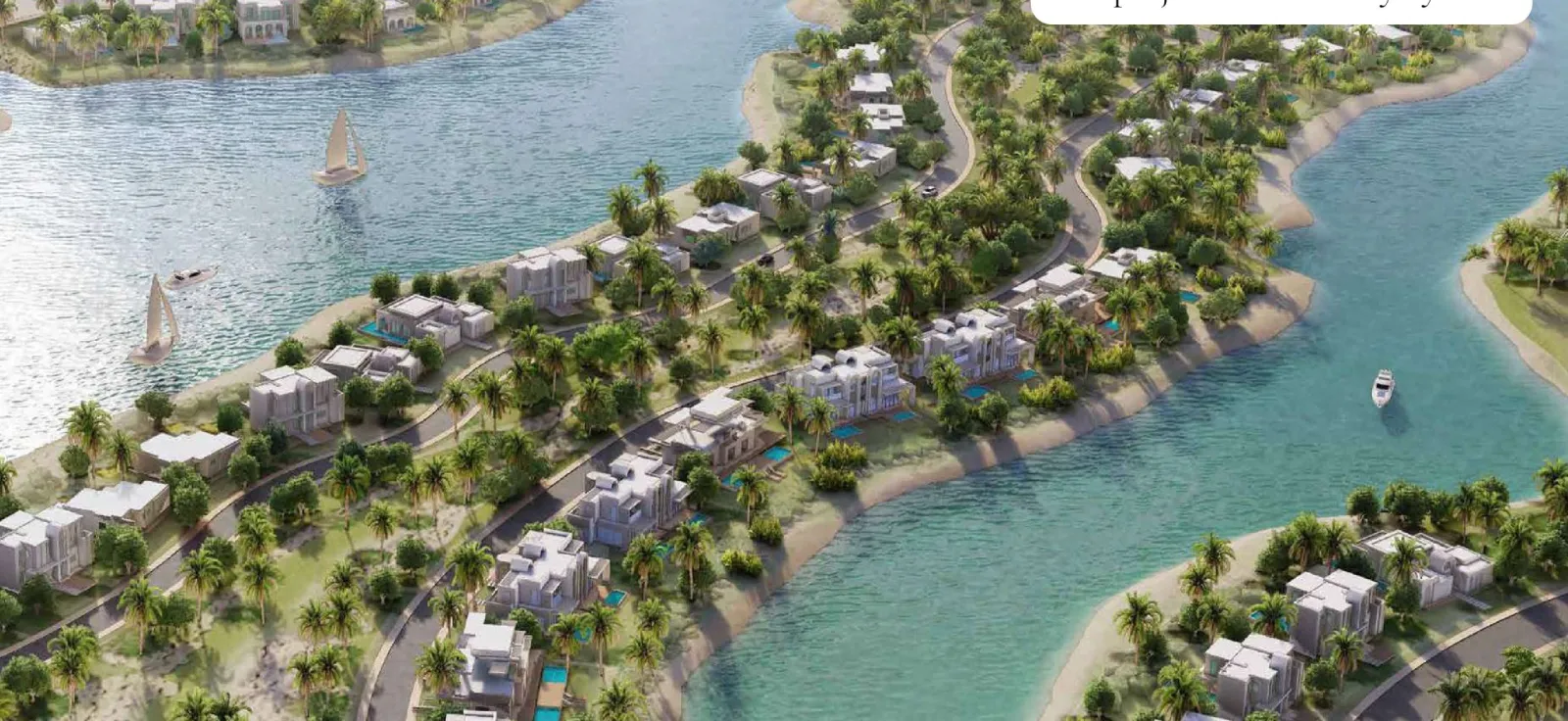
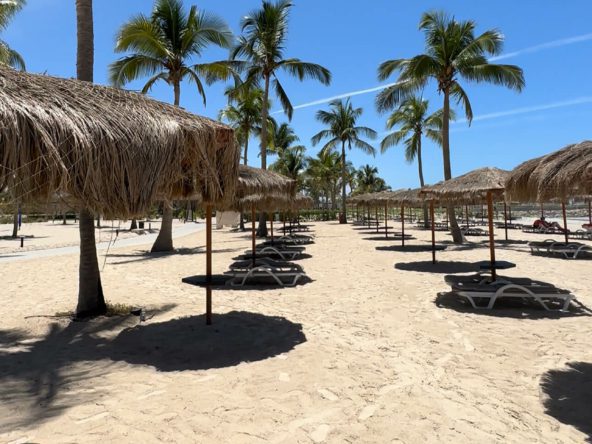
Hawana Salalah runs along roughly seven kilometres of white-sand beach west of Salalah city, with the Arabian Sea on one side and the Dhofar mountains behind. It is developed by Muriya — the joint venture of Oman’s OMRAN Group and Orascom Development that also built Jebel Sifah, and those two are Muriya’s only Omani ITCs.
Its status is the point. Hawana is a designated Integrated Tourism Complex, so a non-Omani buyer takes full freehold title, registered in their own name, inheritable and sellable, with no local partner or sponsor. It also has what a resort needs in order to function out of season: a marina, hotels, retail and an existing rental market rather than a masterplan promising one.
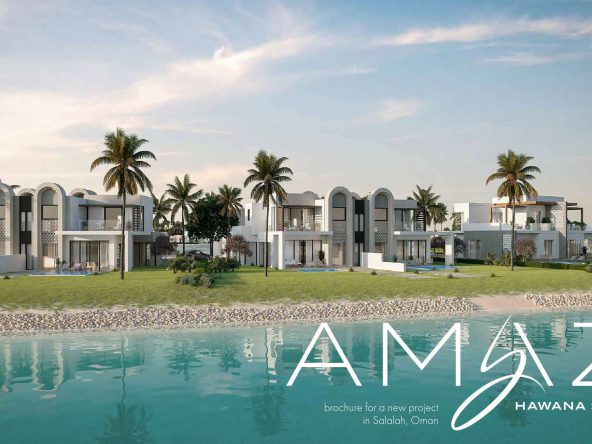
One practical note on the flagship. At Amazi, the standing villa inventory is effectively exhausted — what remains is resale stock from existing owners plus serviced plots on which Muriya will build to order. That is not a problem, but it changes the conversation: ask what is actually available before you fall for a floor plan, and be aware that a first purchase direct from Muriya carries a 5% completion payment that a resale from an existing owner normally would not.
Taqah: the leasehold side
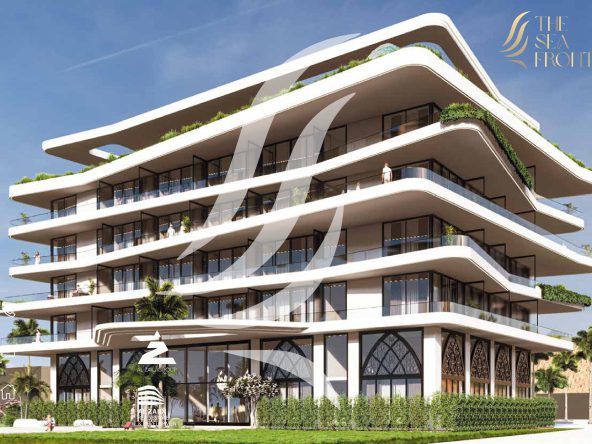
Taqah is a coastal town about forty kilometres east of Salalah, and the two projects we list there are materially cheaper per square foot than anything at Hawana. The reason is not construction quality or location — it is tenure.
Foreign freehold in Oman flows from Royal Decree 12/2006, which permits non-Omani ownership inside designated Integrated Tourism Complexes. Taqah is not one. The projects there are therefore sold on 99-year renewable leases — which, as our own listing puts it, is precisely the instrument used where freehold is not available. The developer’s wording fits the legal geography.
A 99-year renewable lease is a real and substantial property right, and we are not going to pretend otherwise — it is long, transferable and inheritable, and on that horizon almost no individual buyer reaches the end of it. But three consequences follow that you should price in before deciding.
| Hawana Salalah (ITC) | Taqah (outside) | |
|---|---|---|
| Title | Full freehold under RD 12/2006 | 99-year renewable lease |
| Residency route | Golden Residency available if the value test is met | Not automatic — the property route runs through ITCs |
| Lending | Standard freehold mortgage market | Materially harder to arrange against leasehold |
| Resale audience | The full international ITC buyer pool | Narrower — freehold-seeking buyers screen it out |
| Per sq ft | ~$325 – $359 | ~$195 – $217 |
That fourth row is the one most buyers underweight. The pool of people who will buy your leasehold apartment in ten years is smaller than the pool who would buy a freehold one, because most of the international audience Oman’s ITCs were built to attract will filter for freehold and never see your listing. You are buying at a discount and you will most likely sell at one too.
The six projects available here
| Project | Where | From | Size from | Handover | Title |
|---|---|---|---|---|---|
| The Sea Front Residences | Taqah | $128,700 | 592 sq ft | 2027 | 99-yr lease |
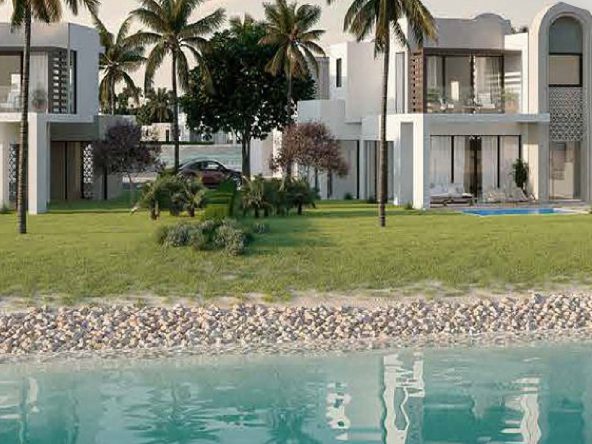
| Mira Ocean Estates | Hawana | $149,738 | Studio – 4 bed | 2028 | Freehold |
| Amazi | Hawana | $202,862 | 624 sq ft | 2026 | Freehold |
| Taqah Long Beach Boutique | Taqah | $224,700 | 1,152 sq ft | 2026 | 99-yr lease |
| Lubana Island, Amazi | Hawana | $258,800 | 721 sq ft | 2029 | Freehold |
| Salalah Land Plots, Muriya | Hawana | $1,950,000 – $2,600,000 | 1,000 m² plot | Build to order | Freehold |
The number that decides it
Sort the same projects by price per square foot and the two markets separate cleanly.
| Project | From | Size | Per sq ft | Title |
|---|---|---|---|---|
| Taqah Long Beach Boutique | $224,700 | 1,152 sq ft | ~$195 | Lease |
| The Sea Front Residences | $128,700 | 592 sq ft | ~$217 | Lease |
| Amazi, Hawana | $202,862 | 624 sq ft | ~$325 | Freehold |
| Lubana Island, Hawana | $258,800 | 721 sq ft | ~$359 | Freehold |
There is no overlap. Every leasehold project is cheaper per foot than every freehold project, and the cheapest freehold is 50% above the most expensive leasehold. Markets do not usually separate this cleanly, and when they do it is worth asking what the market is pricing. Here the answer is unambiguous: it is pricing the deed.
For context against the rest of the country, Hawana’s $325 to $359 is at the expensive end nationally — above Jebel Sifah‘s $242–$332 and close to Muscat Bay‘s $248–$387 — while Taqah’s $195 to $217 undercuts Muscat Hills, the cheapest established ITC in the capital. Salalah offers both the cheapest coastal square foot in our Omani portfolio and some of the most expensive, within forty kilometres of each other.
Residency: a narrow gate
The property route to Golden Residency has two tests: the property must sit inside a designated ITC, and the investment must reach OMR 200,000 — about $520,160. In Salalah that combination excludes almost everything.
| Project | Inside an ITC? | Reaches $520,160? |
|---|---|---|
| Salalah Land Plots | Yes | Yes — from $1,950,000 |
| Lubana Island | Yes | Not at entry ($258,800) |
| Amazi | Yes | Not at entry ($202,862) |
| Mira Ocean Estates | Yes | Not at entry ($149,738) |
| Taqah projects | No | Route not open regardless of price |
Two things to take from that. First, the Taqah projects are excluded structurally, not by price — spending more there does not help, because the route runs through ITC freehold and a lease is not that. Second, at Hawana the gate is open but the entry-level stock does not clear the threshold; you would need to buy up the range deliberately. The routes are compared in Golden Residency versus the Owner Visa, and you should confirm the current threshold in writing.
What it costs to transact
| On a $200,000 purchase | Hawana Salalah (ITC) | Duqm (SEZ) |
|---|---|---|
| VAT on first sale | 5% — $10,000 | 0% — nil |
| Registration / transfer | 3% — $6,000 | 0.5% — $1,000 |
| Total acquisition cost | $216,000 | $201,000 |
About 8% on top of the price inside the ITC, which is the standard Omani cost base. Two Salalah-specific notes. A first purchase direct from Muriya carries a 5% completion payment that a resale from an existing owner normally does not — worth establishing which kind of transaction you are in. And for the Taqah leasehold projects, ask specifically how registration and transfer are handled on a lease rather than a freehold, since the mechanics differ. Oman charges no annual property tax and no income tax on rent.
Getting there and living there
| Salalah | |
|---|---|
| Distance to Muscat | About 1,000 km — this is a flight, not a drive |
| Airport | Salalah International, with regional and seasonal international service |
| Setting | Arabian Sea beaches, coconut plantations, the Dhofar mountains behind |
| Khareef, Jun–Sep | Cloud, drizzle, green mountains, low twenties — the peak season |
| Winter | Warm, dry and clear — the quiet season, and the better beach weather |
| Character | A working Omani provincial capital, not a resort town with a city attached |
| Heritage | The frankincense coast — UNESCO-listed sites within reach |
The distance from Muscat is the constraint that shapes everything. A thousand kilometres means Salalah is a destination rather than a second address you drop into for a weekend, and it means the domestic visitor economy arrives by air or on a long drive during a specific window. If you own here and live in the north, budget for flights and accept that you will not be checking on the property casually.
The compensation is that Salalah is genuinely different from northern Oman rather than a variation on it. Coconut palms, banana plantations, a monsoon, a distinct dialect and cuisine, and an archaeological record going back to the frankincense trade. Buyers who fall for Salalah tend to do so decisively, and that is worth knowing in both directions: the demand is real, and it is also narrower than the Muscat market’s.
Letting a home in Salalah
The rental case here has a shape you will not find elsewhere in Oman, and it is worth modelling honestly rather than optimistically.
Demand concentrates violently into the khareef. Three months carry a disproportionate share of the annual take, and rates in that window are strong because supply is finite and a million people want to be there. The rest of the year is quiet — pleasant weather, empty beaches, and much thinner demand. Any projection that spreads khareef rates across twelve months is not a forecast, it is a fiction.
The tenant mix compounds this. With 76.3% of khareef visitors being Omani, and most of the remainder from the Gulf, you are serving a regional market with regional price expectations and a strong preference for family-sized units. A studio optimised for a European couple is not what this market is asking for.
Two practical consequences. Larger units let better here than they do in Muscat, because the demand is family groups rather than business travellers — which is part of why Taqah Long Beach Boutique’s 1,152 sq ft average is a more sensible product for the local market than a compact studio. And management matters more than usual: a three-month season with heavy turnover is an operational business, and it needs someone on the ground. Ask us for actual occupancy from a delivered building rather than accepting an annual yield percentage. The national picture is in rental yields in Oman.
Who Salalah is for
It fits the buyer who wants something genuinely distinct from Muscat’s coast and understands the khareef economy; who is happy to hold a seasonal asset; who wants counter-cyclical exposure alongside a northern property; and — if they are buying at Hawana — who values ITC freehold enough to pay $110–$160 more per square foot for it.
It does not fit the buyer who needs year-round rental income, who wants to drop in from Muscat regularly, who needs Golden Residency below half a million dollars, or who wants a deep resale market — Al Mouj remains the only Omani community with real secondary depth. And the Taqah projects specifically do not fit anyone who needs freehold, needs mortgage finance, or expects a wide resale audience.
What underpins Dhofar beyond the season
A three-month tourist season is a thin foundation for a property market, and it is fair to ask what else is holding Dhofar up. Three things, and they are worth weighing because they determine whether the other nine months of the year have any economic substance.
The port. Salalah has a major container and transhipment port on the Arabian Sea, positioned on the east–west shipping lane and outside the Strait of Hormuz — a piece of geography that matters more each year. It supports a permanent logistics workforce that has nothing to do with the khareef, and it is the main reason Salalah has a year-round professional population at all.
Heritage tourism. Dhofar is the frankincense coast, with UNESCO-listed archaeological sites, and that draws a smaller but genuinely international visitor stream in the winter months — precisely when the khareef crowd has gone. It will never rival the monsoon season in volume, but it is counter-seasonal within Salalah itself, which is useful for an owner trying to fill a calendar.
Agriculture. The coastal plain grows coconuts, bananas and papaya, which is why Salalah looks nothing like the rest of Oman. It is a modest economic contributor but a large part of why the place feels like a real region rather than a resort strip.
None of that turns Salalah into a year-round rental market, and this page is not going to claim it does. What it does mean is that Dhofar has a resident economy underneath the seasonal one, which is more than can be said for a pure resort enclave — and it is the reason long-let demand exists here at all, even if it is thinner and cheaper than the khareef peak.
How to price a title difference anywhere
Salalah offers the cleanest natural experiment in Oman: two comparable coastal products, one freehold and one leasehold, forty kilometres apart. The method transfers to any market where both tenures exist side by side.
| Ask | What it tells you |
|---|---|
| 1. What is the per-foot gap between the two tenures? | Here it is $110–$160, or 50–80%. That is the market’s own valuation of the deed. If a leasehold discount is much smaller, you are being underpaid for the risk. |
| 2. Who can buy it from me later? | Freehold sells to the whole international pool. Leasehold sells to a subset. Model the exit audience, not just the exit price. |
| 3. Can it be financed? | Lending against leasehold is materially harder in Oman. If your buyer needs a mortgage and cannot get one, your discount widens at exactly the wrong moment. |
Run those three and the leasehold discount stops looking like free money. A 50% saving per square foot is not automatically a bargain, and it is not automatically a trap either — it is a price, and the question is whether it compensates you for a narrower exit and harder finance over your actual holding period. For a long-hold owner-occupier it may well. For someone planning to sell in five years to an international buyer, it probably does not.
Seven checks before you buy in Salalah
- Establish the tenure in writing first — ITC freehold at Hawana, or a 99-year lease at Taqah. Everything else follows from this.
- If it is leasehold, ask about financing and about the renewal mechanism before you ask about the payment plan.
- Ask what is actually available at Amazi — standing villa stock is largely gone; it is resale or build-to-order plots.
- Establish whether you are buying from Muriya or from an owner, since the 5% completion payment applies to the former.
- Get real khareef occupancy figures from a delivered building, not an annualised yield.
- If residency is the goal, note that Taqah cannot deliver it at any price and Hawana needs roughly $520,160.
- Have an independent Omani lawyer review the contract. Do not rely on any agent’s listing, including ours.
Frequently asked questions
Can foreigners buy property in Salalah?
Yes, but the terms differ by location. At Hawana Salalah, a designated Integrated Tourism Complex, non-Omanis of any nationality take full freehold title. At Taqah, outside the ITC framework, projects are sold on 99-year renewable leases rather than freehold.
How much does property in Salalah cost?
From $128,700 for a leasehold apartment at The Sea Front Residences in Taqah, and from $149,738 for freehold at Mira Ocean Estates in Hawana. Land plots at Hawana run $1,950,000 to $2,600,000.
Why is Taqah cheaper than Hawana Salalah?
Tenure. Taqah projects are 99-year leases and run about $195–$217 per square foot; Hawana is ITC freehold at about $325–$359. The gap of roughly $110–$160 per square foot is the market pricing the difference between a lease and a deed.
What is the khareef?
The Indian Ocean monsoon that reaches Dhofar from roughly 21 June to 21 September, dropping temperatures into the low twenties and turning the mountains green. It brought 1,027,255 visitors to Dhofar in 2025, of whom 76.3% were Omani.
Does buying in Salalah give Omani residency?
Only from Hawana, and only above the threshold. Golden Residency requires ITC freehold plus an investment of OMR 200,000, about $520,160. Taqah’s leasehold projects cannot qualify at any price; at Hawana, only the land plots clear the threshold at entry level.
Is Salalah a good rental investment?
It is a seasonal one. Demand concentrates into the three-month khareef and is quiet the rest of the year, and 76.3% of visitors are Omani, so expect regional rather than international rates. Treat it as a seasonal hospitality business, not a passive year-round income.
How far is Salalah from Muscat?
About 1,000 kilometres. In practice that means flying — Salalah International handles regional and seasonal international services.
Who develops Hawana Salalah?
Muriya, the joint venture between Oman’s OMRAN Group and Orascom Development, which also developed Jebel Sifah. Those two are Muriya’s Omani integrated tourism complexes.
Is there still stock available at Amazi?
Standing villa inventory is largely exhausted. What remains is resale stock from existing owners plus serviced plots on which Muriya will build to order — worth confirming current availability before committing to a particular layout.
Related on this site
Northern coastal comparison: Muscat, Al Mouj, Muscat Bay, Jebel Sifah, Muscat Hills, Yiti. Other tenure models: Duqm (99-year leasehold), Bidbid (closed to foreigners). Elsewhere: Sultan Haitham City, Sur, Sohar, Al Seeb. Rules and process: buying as a foreigner, freehold property in Oman, comparing the ITCs, property tax, all Oman property.
The verdict
Salalah is the most interesting market in Oman and the one most often described lazily. The khareef is real, the visitor numbers are real, and the region is genuinely unlike anywhere else in the Gulf — a monsoon coast with coconut plantations and green mountains, three months a year. As a place to own something, it has a case that Muscat cannot make: a peak season that runs when the rest of the country is empty.
What it also has is the clearest tenure split we sell anywhere. Freehold at Hawana costs $325–$359 per square foot. Leasehold at Taqah costs $195–$217. There is no overlap between the two ranges, and that gap is not about the view — it is the market putting a number on the difference between owning and holding a long lease.
If you want the deed, buy at Amazi or Lubana Island and accept the rate. If the lease genuinely does not trouble you — you intend to hold, you are not borrowing, and you are relaxed about a narrower resale pool — Taqah is materially cheaper and there is nothing dishonest about choosing it. What you should not do is buy the leasehold believing it is freehold, which is the one outcome this page exists to prevent.
And whichever side you choose, model the income on three months, not twelve.
Ask which Salalah projects are freehold
Further reading: the Ministry of Heritage and Tourism oversees ITC licensing, the route foreign buyers use; Omran Group is Muriya’s Omani joint-venture partner; Invest Oman is the government’s official investment platform.
