



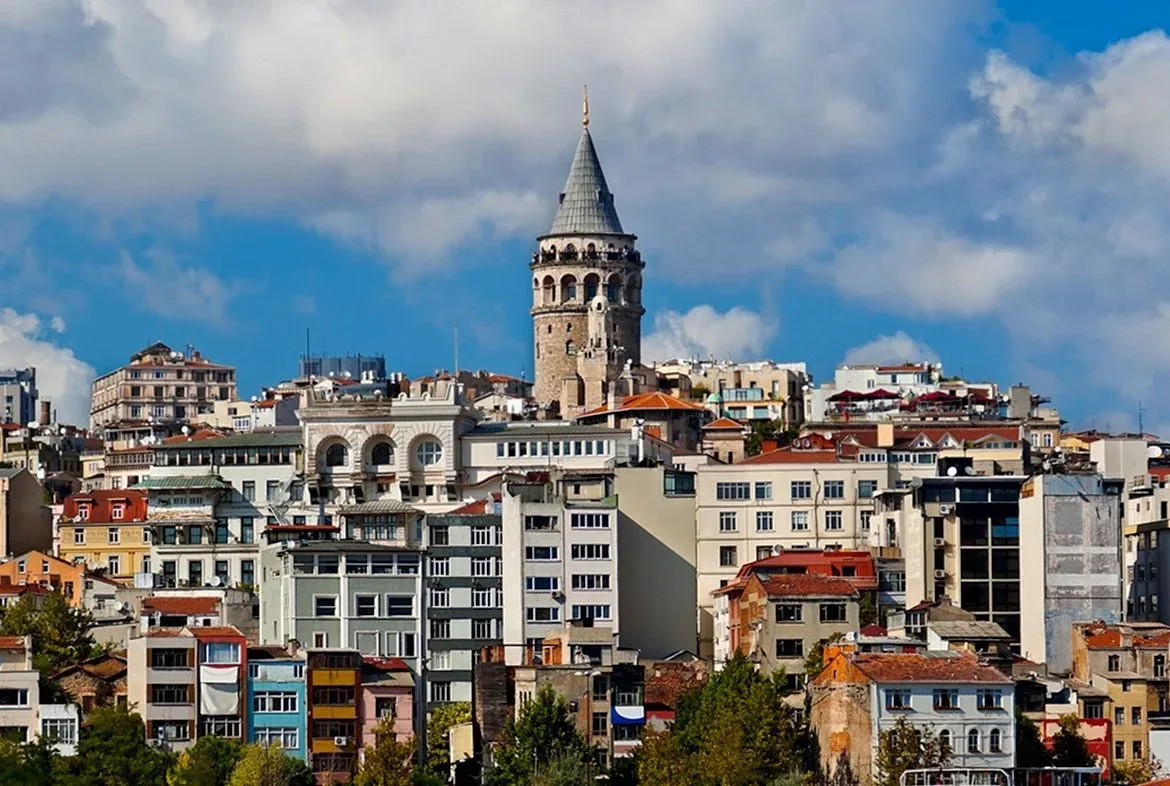
As of 11 November 2026 this site lists no villa for sale in Istanbul and no villa anywhere in Türkiye: its whole Türkiye inventory is 11 apartment projects, all in Istanbul. This page therefore does not offer villas. It explains what a villa for sale in Istanbul legally is, how the Bosphorus Law, earthquake rules, forest and water-basin limits shape what can be owned, what the official statistics say about foreign buyers, and how to check one parcel.
Each rule below names its law or its official body and is dated 11 November 2026. National purchase rules, title-deed types, taxes and the buying process are on the national page on buying a villa in Türkiye; this page stays with Istanbul geography, zoning and risk, and the city-wide price analysis for apartments is on the Istanbul property page.
This site lists no villas in Türkiye as of 11 November 2026. The 11 listings below are apartments in Istanbul; each listing page shows its own price and currency.


Contents
Key facts about a villa for sale in Istanbul
Istanbul is one province of 15,754,053 registered residents on 31 December 2025, according to TÜİK address-based results as reported in the press (Ekonomist). Detached housing in a city of that size is governed by zoning plans district by district, and a small number of special regimes sit on top of them. The table collects the facts that decide whether a villa for sale in Istanbul can exist on a given plot, with the source of each.
| Topic | Fact | Source and date |
|---|---|---|
| Villas on this site | None. The Türkiye inventory is 11 apartment projects in Istanbul, listed in the last table of this page | This site, 11 November 2026 |
| Bosphorus Law | Law 2960 of 1983 divides the Bosphorus Area into a shore strip, a foreground zone, a background zone and impact zones, drawn on plans approved on 22 July 1983 | Law 2960, Art. 2, read 11 November 2026 |
| Housing limit in the background and impact zones | Site coverage (TAKS) up to 15% and 4 floors (12.50 m) in the background zone; 15% and 5 floors (15.50 m) in the impact zone | Law 2960, Art. 10 |
| Shore strip | Only rest, promenade and tourism facilities that serve the public may be built | Law 2960, Art. 3(j) |
| Building registration certificate | The 2018 amnesty certificate cannot be used in the Bosphorus shore strip and foreground zone | Zoning Law 3194, provisional Art. 16 |
| Building inspection system | Detached buildings of up to two floors above the basement and 200 m² of total built area are outside the mandatory inspection system | Law 4708, Art. 1 |
| Earthquake insurance | Compulsory for residences built on titled private land; the insurer may refuse buildings built against the plan or the project | Law 6305, Arts. 10 and 11 |
| Foreign buyers, 2025 | 7,989 of 21,534 homes sold to foreigners were in Istanbul province, 37.1% | Daily Sabah citing TÜİK, 22 January 2026 |
| Foreign-buyer cap | 10% of a district’s privately owned area and 30 hectares per person nationwide | Law 2644, Art. 35 |
| Holiday letting of a detached house | Permit needed for lets of 100 days or fewer; detached houses are exempt from the unanimous-owner decision | Law 7464 and its Regulation, Art. 5(4) |
What counts as a villa for sale in Istanbul?
“Villa” is a market word. The laws read for this page describe the building form instead: a detached building on its own parcel, a house inside a managed complex, or a historic waterfront mansion. A villa for sale in Istanbul can therefore be any of three legal things, and the difference decides who owns the land, who pays for common services and which permits apply.
The Zoning Regulation on Planned Areas (Planlı Alanlar İmar Yönetmeliği) defines the building order. In an ayrık nizam (detached order) a building touches no neighbouring building on any side. In a bitişik nizam (attached order) it touches one or more neighbours, and in a blok nizam (block order) the plan fixes the length, depth and height of a mass; the Regulation counts twin and semi-detached pairs as block order. Site coverage (TAKS) is the ratio of the building footprint to the parcel, and the floor-area ratio is the ratio of all built floor area to the parcel.
Where the plan is silent, the Regulation (Art. 23) sets garden distances of at least 5.00 m at the front and beside public land, 3.00 m at the sides and 3.00 m at the rear. A detached house on a small parcel is therefore constrained by the plan notes and by these setbacks before any view or size is considered.
| Form | Legal frame | What the buyer receives | What to check |
|---|---|---|---|
| Detached house on its own parcel (müstakil ev) | Detached order under the parcel’s zoning plan; building permit and occupancy permit under Law 3194 | The land and the building on a single parcel number | Plan notes for the parcel, permit and occupancy permit, setbacks, any boundary or easement entries on the deed |
| House inside a gated complex (site içi villa) | A “toplu yapı” under Law 634, Arts. 66 to 69: several buildings on an approved layout plan with shared infrastructure, common facilities and one management | A unit in the complex whose deed refers to shared parcels and facilities | Management plan, annual budget, who owns roads, pool and green areas, whether the buyer owns a share of them |
| Waterfront mansion (yalı) or other registered historic house | Law 2863 on cultural and natural assets: houses and mansions from before the end of the 19th century, and buildings the Culture Ministry marks for protection, are protected immovables once registered by a regional conservation board | The building and land, with every intervention subject to board approval | Registration status, the board decision, approved restoration project; Bosphorus Law zone of the parcel |
Law 634, Art. 66 describes a toplu yapı as several buildings built or to be built on one or more adjoining parcels under an approved layout plan, linked by infrastructure, shared facilities, social amenities and management. Article 67 lets the deed of a parcel set aside for shared use be recorded as a common area of the units it serves. A buyer in such a complex owns a unit and a share of common areas; this is not the same as owning a detached parcel outright.
How does the Bosphorus Law limit a villa for sale in Istanbul on the strait?
Law 2960, the Bosphorus Law, was adopted on 18 November 1983 and published in the Official Gazette on 22 November 1983 (no. 18229). Article 1 states its purpose: to protect the cultural, historic and natural values of the Bosphorus Area in the public interest and to limit construction that would raise population density there. The text read on 11 November 2026 on the national legislation database carries amendments dated 1984, 1985, 1986 and 2018, so the 1983 structure is still in force.
The Bosphorus Area is made of four kinds of zone, each defined by reference to plans approved on 22 July 1983 (Art. 2). The shore strip lies between the shoreline and the line drawn on the 1:5,000 master plan. The foreground zone adjoins the shore strip and is shown on the 1:1,000 implementation plan. The background zone adjoins the foreground zone and is shown on the 1:5,000 master plan. The impact zones are the remaining areas on that plan that are affected by the first three.
| Zone (Law 2960, Art. 2) | What the law says about building | Article |
|---|---|---|
| Shore strip (sahil şeridi) | Only rest, promenade and tourism facilities that serve the public may be built, in line with the plans; shores may be used only in the public interest | Art. 3(h), 3(i), 3(j) |
| Foreground zone (öngörünüm bölgesi) | The numerical limits come from the 1983 implementation plan, not from the law text; plots in this zone and the shore strip that the 1983 plans zoned for housing but that were never built have green-area status; plan use decisions for parcels are recorded in the title register | Art. 2(c), Art. 3(n); provisional Art. 4 |
| Background zone (geri görünüm bölgesi) | Housing is allowed up to site coverage of 15% and 4 floors, height 12.50 m | Art. 10 |
| Impact zone (etkilenme bölgesi) | Housing is allowed up to site coverage of 15% and 5 floors, height 15.50 m | Art. 10 |
A worked example shows what the two numerical caps mean. On a gross parcel of 2,000 m² in the background zone, 15% coverage allows a footprint of at most 300 m². Four floors at that footprint give an arithmetical ceiling of 1,200 m² of floor area; in the impact zone, five floors give 1,500 m². These are ceilings, not entitlements: the parcel’s own plan can set a lower floor-area ratio, and Article 10 says the calculation is made on gross area, includes land already ceded to the municipality free of charge, and preserves rights acquired under decisions of the Supreme Council of Monuments taken after 1 January 1982 and under the 22 July 1983 plan.
Article 3 adds general rules. Structures built against the law or the plans are to be demolished (Art. 3(e)); coal and fuel depots, shipyards and industry may not be established (Art. 3(l)); and parcel use decisions in the plans are recorded in the title register (Art. 3(n)). That last rule is the practical hook for a buyer: the deed of a Bosphorus-area parcel can carry the use decision, so the title record and the zoning certificate (imar durumu) should be read together.
Enforcement is strict on paper. Article 11 has the inspectors reach a site from the day an excavation permit is issued and seal any building that departs from its permit. Article 13 provides that unlicensed structures and parts built against the permit are demolished on the decision of the Bosphorus Development Administration Board (chaired by the Governor of Istanbul) and the written order of the Bosphorus Development Director, with costs recovered from the owner at a 20% surcharge. Article 18 sets prison terms of one to six months plus heavy fines for owners, technical supervisors and contractors of unlicensed buildings. A buyer of an older waterfront house should therefore ask for the permit and occupancy documents of every floor and extension.
Provisional Article 8 shows how the law dealt with buildings that already existed in 1983: those that could be kept were allowed to stay on payment of a charge of five times the building construction fee, collected once. A house described as “legalised” under that route needs the paperwork that proves it. Article 17 exempts from property tax plots that the law gives no right to build on and that earn no commercial income, and plots that carry a cultural or natural asset.
Who approves plans and building permits in the Bosphorus Area?
Article 10 divides the work. Licences and occupancy permits are issued only by the district municipality, on the basis of preliminary and implementation projects, whatever the floor area or height. Plan revisions in the background and impact zones follow the procedure of Law 3030. Revisions in the shore strip and foreground zone are prepared by the Istanbul Metropolitan Municipality, approved by its council and mayor, and enter into force only after approval by the Bosphorus Development High Coordination Board; relevant public bodies and professional chambers may object during a one-month display, but objections do not suspend the plan.
The Bosphorus Development Directorate was created in 1983 as a public-law body attached to the Istanbul municipality (Art. 9). Article 9 gives it the tasks of preparing plans, running implementation, licence and permit procedures, controlling buildings and carrying out demolition decisions, while Article 10 leaves the formal licence and occupancy permit with the district municipality. A 2018 emergency decree (KHK 703) removed one paragraph of Article 10 and moved the directorate’s budget, staff and revenues to the Istanbul Metropolitan Municipality. An added Article 1 provides that references in other legislation to the High Coordination Board now mean the board or authority the President designates. Those are the only amendments in the text, so the planning chain for a Bosphorus plot is: district municipality for licences, metropolitan municipality for plans, a presidentially designated board for the strip and foreground plans.
Two exceptions matter. Article 19 disapplies the law in areas allocated to the Ministry of National Defence or that the General Staff plans to use for defence. And provisions of other laws that conflict with the Bosphorus Law do not apply in the Area (Art. 20). A practical reading is that a buyer should ask the municipality in writing whether a parcel lies in the Bosphorus Area, and in which zone, rather than infer it from the address.
Can a yalı be bought, and what does heritage registration change?
A yalı is a historic waterfront house on the strait. Law 2863 on the Protection of Cultural and Natural Assets lists historic palaces, pavilions, houses, yalıs and mansions among the protected immovables (Art. 6), and also protects buildings made up to the end of the 19th century and later buildings the Ministry of Culture and Tourism considers worth protecting. Registration is made by a decision of the regional conservation board (Art. 7), and the assets are identified in coordination with the Ministry and the institutions affected.
Once an asset is registered, Article 9 bars structural and physical intervention that conflicts with board decisions and with the principles of the High Conservation Council. The law counts major repair, construction, installations, drilling, partial or full demolition, burning, excavation and similar work as intervention, and it also bars changing the use of a registered asset without board approval. In practice, a buyer of a registered yalı buys a building that cannot be altered at will; the restoration project, its approval and the permitted use are part of the asset’s value and risk.
The two regimes overlap. A yalı on the shore strip sits in the zone where Law 2960 limits new building to public recreation and tourism uses, so a new private villa on the water is hard to reconcile with Article 3(j). That is the main reason new villas on the strait are rare: the law restricts new building, and the surviving waterfront houses are mostly old buildings whose alteration needs a board decision.
Two checks apply to any yalı offer. First, the registration status and the date and number of the board decision, which the municipality or the Ministry’s regional office can confirm. Second, the building registration certificate route is closed here: provisional Article 16 of Law 3194 states that the 2018 amnesty does not apply to the Bosphorus shore strip and foreground zone, so an unlicensed addition on such a plot cannot be regularised through it.
Where in Istanbul is detached-house stock found, and what do the official data show?
No TÜİK or Istanbul Metropolitan Municipality table read for this page counts detached houses district by district, so this page does not rank districts by villa numbers. What the official sources do show is the structure that determines where detached houses can exist: the zoning plan of each parcel, the Bosphorus Law caps described above, the forest and water-basin restrictions described below, and the building-inspection rule that treats small detached buildings separately.
The Ministry of Culture and Tourism’s register of homes let to tourists, as read for this site’s guide to the Airbnb law on 17 October 2026, gives one province-level number: Istanbul had 7,658 permitted homes, of which 4,015 were high-quality residences, 3,185 ordinary residences and 458 detached houses. That is a count of permitted holiday lets, not of the housing stock, but it shows detached houses as a small share of the permitted units (458 of 7,658, 6.0%).
The eleven projects this site lists give a different kind of evidence: they show where recent multi-unit construction sits. Seven are on the European side (Beşiktaş, Göktürk, Tarabya, Bomonti, Beylikdüzü, Maslak, Bahçelievler) and four on the Asian side (Pendik, Ataşehir, Ümraniye, Acıbadem), according to their listing pages. They are apartments, and they do not indicate where villas stand.
The Istanbul Metropolitan Municipality publishes a loss-estimate booklet for each of its 39 districts on its earthquake site (the Sultangazi booklet is dated June 2020), based on a magnitude 7.5 scenario. These booklets are the nearest official district-level source for building stock and expected damage, and anyone shortlisting a district should read that district’s booklet next to the parcel’s own documents.
How many foreign buyers purchase homes in Istanbul?
TÜİK publishes monthly housing sales by province and buyer nationality. It does not split the figures by dwelling type, so the numbers below cover all homes, apartments and houses together, and a villa for sale in Istanbul is a very small part of them. The latest month published before 11 November 2026 is September 2026, released on 16 October 2026.
| Period | Foreign buyers, Türkiye | Istanbul | Istanbul share | Source |
|---|---|---|---|---|
| Calendar year 2025 | 21,534 homes (down 9.4% on 2024; 1.3% of all sales) | 7,989 homes; Antalya 7,118; Mersin 1,800 | 37.1% (calculated) | Daily Sabah with Anadolu Agency, citing TÜİK, 22 January 2026 |
| September 2025 | 1,867 homes (down 7.7%; 1.2%) | 744 homes; Antalya 557; Mersin 124 | 39.9% (calculated) | CNN Türk, 16 October 2025 |
| September 2026 | 2,167 homes (up 9.9% on September 2025; 1.5% of 142,390 total sales) | 817 homes; Antalya 664 | 37.7% (calculated) | Homesoverseas reporting TÜİK; national figures also in Cumhuriyet, 16 October 2026 |
| January to September 2026 | 15,308 homes (down 4.3% on the same period of 2025) | Not given in the reports read | n/a | Alomaliye citing TÜİK, 16 October 2026 |
By nationality, TÜİK’s 2025 totals as reported by Daily Sabah were Russia 3,649, Iran 1,878, Ukraine 1,541, Germany 1,376 and Iraq 1,292. In September 2026 the largest groups were Russia with 388 homes, Iraq with 166 and Germany with 162. The statistics cover the whole province and do not identify villas, so they cannot show how many of the Istanbul sales were detached houses.
One consequence for a buyer: Istanbul is the largest single province for sales to foreigners, but its share in the periods above is 37 to 40%, so most foreign purchases happen elsewhere, mainly in Antalya, where the local plans and rules differ. Province-level price and population comparisons are in this site’s comparison of Turkish cities.
What do the earthquake rules mean for a villa for sale in Istanbul?
Istanbul’s hazard is a matter of public record. The national earthquake hazard map and the Turkish Building Earthquake Code were adopted together by Council of Ministers Decision 2018/11275, published in a supplementary issue of the Official Gazette (no. 30364) on 18 March 2018 (Official Gazette), and reports citing the disaster agency AFAD give 1 January 2019 as the date from which they apply. The map is queried by coordinates on AFAD’s portal (tdth.afad.gov.tr), which asks for an e-Devlet sign-in, so a buyer can read the hazard values for a parcel’s location directly.
Istanbul Metropolitan Municipality scenario work gives the city-scale picture. Its magnitude 7.5 scenario, as reported on 15 August 2021, estimated about 48,000 buildings with heavy or very heavy damage across the city (Diken). The scenario is a planning tool, not a prediction for any one building, and the damage depends on the code under which a building was designed and on the ground beneath it.
| Instrument | What it does | Why it matters for a house or villa | Source |
|---|---|---|---|
| Law 6306 on areas under disaster risk | A “risky building” is one that has completed its economic life or is shown by scientific and technical data to risk collapse or heavy damage; a finding is entered in the declarations column of the title register within 10 working days, notified through e-Devlet and posted at the building | A buyer can see a risk finding on the deed; owners have 15 days to object | Law 6306, Arts. 2 and 3 |
| Law 6306, Art. 6 | In a redevelopment of a risky building or area, the owners decide by an absolute majority of shares on demolition and rebuilding, and non-agreeing owners’ shares can be sold at auction at not less than appraised value | A shared-parcel or complex purchase carries a vote-based risk | Law 6306, Art. 6 |
| Turkish Building Earthquake Code and hazard map | Define design loads by location, in force from 2019 | The permit date shows which code the project was designed to; a structural project can be requested | Official Gazette, 18 March 2018 |
| Law 4708, building inspection | Independent inspection firms supervise projects and construction | Not applied to small detached buildings (see next section) | Law 4708, Art. 1 |
| Compulsory earthquake insurance (DASK) | Covers direct earthquake damage and the fire, explosion, tsunami and landslide that follow it | Compulsory for residences on titled private land; renewed yearly | Law 6305, Arts. 2, 10, 11 |
Law 7471 of 7 November 2023 changed Law 6306 to create the Urban Transformation Directorate and to move the technical finding of riskiness onto licensed institutions paid by the owners. A buyer of any building older than the 2019 code can ask whether the owners ever commissioned a risk finding: a finding of risk appears on the deed, but the absence of an entry does not show that the building was ever assessed.
Does the building-inspection system cover a detached villa?
Not necessarily. Article 1 of Law 4708 on Building Inspection excludes, among other things, detached buildings of at most two floors above the basement whose total built area does not exceed 200 m². The text adds that where a parcel carries several detached buildings, the law applies if their combined area exceeds 200 m². A separate exclusion covers residential buildings of up to two floors and 500 m² (not counting one basement floor) in village settlement areas, in areas outside municipal and adjoining-area limits, and in municipalities with fewer than 5,000 inhabitants. For excluded buildings, the technical responsibility for supervision falls to the architects and engineers who sign for the project, under Articles 26 and 28 of the Zoning Law.
The definition of “built area” in the law counts every floor that is built, including basement, mezzanine and attic spaces. Read together, a two-floor house with 90 m² on the ground floor and 90 m² on the first floor totals 180 m² and falls outside the system. Adding a 40 m² basement makes 220 m², which exceeds the threshold, so the same house would fall inside it. A buyer comparing two villas of similar size cannot assume that both were supervised by an inspection firm.
| Case | Floors above basement | Total built area | Under mandatory inspection (Law 4708, Art. 1)? |
|---|---|---|---|
| Detached house A | 2 | 90 + 90 = 180 m² | No: within both limits |
| Detached house B (same plan plus basement) | 2 | 90 + 90 + 40 = 220 m² | Yes: area above 200 m² |
| Two detached buildings on one parcel, 120 m² each | 2 each | 240 m² combined | Yes: combined area above 200 m² |
The same Zoning Law fixes other deadlines that can matter to a buyer of a house still under construction. A permit lapses if work has not started within two years of its date, or if the building is not finished within five years, counting the start period (Art. 29), and the occupancy permit (iskân) is required for full or partial use (Art. 30). A law of 7 May 2026 (no. 7579) amended the Zoning Law to add periodic fire-protection checks on buildings with a use document, on the owner’s application, and a duty on construction site chiefs to keep a register of licensed craftsmen.
What is a building registration certificate, and where does it not apply?
The building registration certificate (yapı kayıt belgesi) was created by provisional Article 16 of Zoning Law 3194, added by Law 7143 of 11 May 2018. It allowed buildings made before 31 December 2017 without a permit, or against their permit, to be recorded if the owner applied by 31 October 2018 and paid the registration fee by 31 December 2018. The fee was 3% for housing, calculated on the plot’s property-tax value plus the Ministry’s approximate construction cost.
The certificate is tied to use. It allowed temporary water, electricity and gas connections, cancelled existing demolition orders for the building, and remains valid until the building is rebuilt or redeveloped. It is not a permit and not an occupancy permit. If a building under the certificate is renewed, the zoning rules then in force apply. The Constitutional Court annulled one sentence of the article on 23 July 2024 (decision E.2023/74, K.2024/141).
Two Istanbul-specific limits matter for a villa. First, the article does not apply in the Bosphorus shore strip and foreground zone, nor in the area of the Historic Peninsula, and not in the Gallipoli Historic Site. Second, the application window closed in 2018, so an unlicensed building completed after 31 December 2017 had no route to the certificate. A buyer who is told that “the building has an amnesty paper” should ask for the certificate itself, the date of the building it covers and the zone of the parcel.
Insurance is affected as well. Under Article 10(4) of Law 6305, the earthquake insurer may decline buildings built against the legislation or the project and buildings whose load-bearing system has been weakened or altered; it sends the list of such buildings to the authority concerned. A villa with an unpermitted floor can therefore be a building the compulsory insurer will not cover.
Is earthquake insurance compulsory for a villa in Istanbul?
Yes for residences. Article 10 of Law 6305 on Disaster Insurances makes the compulsory earthquake policy apply to units under the Condominium Law, to residences built on titled private land and to the shops and offices inside such buildings. Owners or holders of usufruct must take the policy and renew it each year. Exempt are public housing, village buildings of village residents in village settlement areas, and buildings used entirely for purposes other than residence.
The cover is for the building, not its contents. The law defines the policy as covering physical damage directly caused by an earthquake, and the fire, explosion, tsunami and landslide that result from it (Art. 2(ğ)). Under Article 11 the insurance body identifies who is obliged to insure, and land registry offices may not carry out, on an owner’s request, registrations concerning units and buildings covered by the obligation unless a policy valid on the transaction date is shown. The pool’s own site is dask.gov.tr.
For a buyer this means a valid policy should be checked at the title office, and that an uninsurable building (see the previous section) is a reason to stop and ask questions before signing.
What forest, water-basin and green-belt limits apply to a plot in Istanbul?
Three separate regimes can sit on a plot outside the dense city. The first is the Forest Law 6831. Article 1 defines forest as naturally grown or planted tree stands, with listed exceptions (for example parks, reed beds, steppe, and certain private farmland trees), and Article 17 bans, in state forests, every kind of building, enclosure, ploughing and settlement apart from works connected with the forest’s own protection and use. Article 2 of the same law lets areas that have lost their forest character be taken out of forest status, and under Article 4 of the Bosphorus Law areas given state-forest status inside the Bosphorus Area cannot be released under Article 2 of the Forest Law, while privately owned parts are expropriated by the agriculture and forestry ministry.
The second is the drinking-water basin regime. Article 20 of the Istanbul Water and Sewerage Administration (İSKİ) Law 2560 requires the administration to issue a regulation on the measures needed to protect the basins from which the city’s drinking water is drawn, and provides that structures harmful to the basins are removed after notice, at the cost of the person concerned. A plot near a reservoir may be a titled and taxed parcel and still have severe limits on building. The regulation, zones and distances should be obtained from İSKİ for the specific parcel.
The third is the zoning plan itself. An “imar durumu” certificate from the district municipality states the parcel’s designated use, its building order, site coverage, floor-area ratio, height and setbacks, and the plan notes that apply. A parcel zoned as agricultural, forest, a protection belt or a public-service area does not become a building plot because a house stands on it. Where the plan allows detached housing, the Zoning Regulation’s definitions above show how the plan numbers translate into a footprint.
Foreign buyers also meet the cap in Article 35 of the Land Registry Law 2644: the total area of immovables and limited real rights held by a foreign individual may not exceed 10% of the privately owned surface of the district and 30 hectares nationwide per person. A foreigner who buys unbuilt land must submit a project to the relevant ministry within two years, and the approved project is noted on the deed. The President may raise the per-person limit up to double. Military zones, military security zones and strategic zones are mapped, and their coordinates are passed to the land registry authority.
How do you check one Istanbul parcel step by step?
The land registry authority (TKGM) runs a public parcel query at parselsorgu.tkgm.gov.tr, and the e-Devlet portal (turkiye.gov.tr) offers title-record services to signed-in users. The table sets out the checks in the order they are usually done; the national page covers the sale contract and the transfer procedure.
| Step | Document or record | Where to get it | What to look for |
|---|---|---|---|
| 1 | Title record (tapu) and its declarations, restrictions and mortgage columns | Land registry office, or e-Devlet for the owner; TKGM parcel query for location | Owner, share, mortgage, seizure, easement, a risky-building declaration under Law 6306, any use decision recorded under the Bosphorus Law |
| 2 | Zoning certificate (imar durumu) and plan notes | The district municipality’s zoning department | Building order (detached or attached), site coverage, floor-area ratio, height, setbacks, protection zones, whether the parcel is in the Bosphorus Area and in which zone |
| 3 | Building permit and occupancy permit (iskân) | District municipality | Permit dates, permitted area, whether every floor and extension is covered, whether the permit has lapsed (Law 3194, Art. 29) |
| 4 | Registration certificate, if the building relies on one | Owner’s copy; Ministry of Environment, Urbanisation and Climate Change (Building Registration System) | Date, scope, and that the parcel is outside the Bosphorus shore strip and foreground zone |
| 5 | Heritage status | Regional conservation board, Ministry of Culture and Tourism | Registration, board decisions, approved restoration project |
| 6 | Forest, basin and green-belt status | Ministry of Agriculture and Forestry, İSKİ, district municipality | State forest, forest cadastre, drinking-water basin zone, plan designations |
| 7 | Earthquake insurance and hazard values | DASK, AFAD hazard map portal | Valid policy, hazard values for the location, whether the insurer has refused the building |
| 8 | Municipal debts and common-service accounts | Municipality, water and electricity providers, site management | Unpaid property tax, utility arrears, unpaid service charges that would pass to the buyer |
| 9 | Valuation report | A licensed valuation firm | Required by banks for a mortgage and useful as an independent view of area and condition |
| 10 | Military and security-zone check | Land registry office as part of the foreign-buyer procedure | Whether the parcel lies in a restricted zone (Law 2644, Art. 35) |
The first two steps carry most of the information. The title record tells who owns what and what is registered against it; the zoning certificate tells what may stand on the plot. A buyer should compare the area on the deed, the area in the permit and the area actually built, because three different numbers are common.
Which costs of a villa in Istanbul differ from the national picture?
The national purchase costs, taxes and the process are on the national page and in this site’s property tax guide; they are not repeated here. Three cost points depend on the type and place of the property.
First, the valuable-home tax. Articles 44 to 45 of Property Tax Law 1319 tax residences whose building tax value exceeds a threshold that is revalued every year: 0.3% on the part above the first threshold, then 0.6% and 1.0% in higher bands. The consolidated text read on 11 November 2026 shows the bands in brackets as TRY 17,711,000, TRY 26,567,000 and TRY 35,425,000. A villa in a high-value district is more likely to reach these bands than an apartment.
| Building tax value | Calculation | Tax |
|---|---|---|
| TRY 20,000,000 | (20,000,000 − 17,711,000) × 0.3% = 2,289,000 × 0.003 | TRY 6,867 |
| TRY 30,000,000 | 26,568 (first band) + (30,000,000 − 26,567,000) × 0.6% = 26,568 + 3,433,000 × 0.006 | TRY 47,166 |
The amounts are worked examples from the text of the law, not tax advice; the tax value is the one the municipality assesses, which is not the market price.
Second, service charges in a gated complex. They are set by the complex’s management plan and annual budget under the Condominium Law 634, not by statute, and no Istanbul-wide figure exists. A buyer should ask for the last annual budget and the arrears list. Third, municipal fees for plan notes, permits and occupancy documents are set by each municipality and are not quoted here.
Can a villa for sale in Istanbul be let to holiday guests?
Law 7464 on tourism lettings of homes was adopted on 25 October 2023 and published on 2 November 2023 (Official Gazette no. 32357). It covers lets of 100 days or fewer and requires a Ministry of Culture and Tourism permit before the contract is made, with a plaque at the entrance (Art. 3(1)). Lettings of more than 100 days in one go are outside it (Art. 1(3)). A home means a unit registered as housing in the title register or a unit with a housing floor-ownership or floor-easement (Art. 2).
For a unit in a building, the permit application must include a unanimous decision of all unit owners of the building (Art. 3(3)); in a complex of several buildings, only the building of the let unit needs the decision, and the permit is sent to the complex’s management. In a building of more than three units, one landlord can get permits for at most 25% of the units (Art. 3(4)). The Regulation of 28 December 2023 (Art. 5(4)) exempts detached houses, high-quality residences and title-deed timeshare units from the unanimous decision and the 25% rule, as the Ministry’s guidance reads.
| Type of home | Owner consent rule | 25% cap | Source |
|---|---|---|---|
| Flat in a building of more than three units | Unanimous decision of all unit owners of the building | Applies | Law 7464, Art. 3(3) and 3(4) |
| Unit in a complex of several buildings | Unanimous decision of the owners of that building only; permit copy to site management | Applies in buildings of more than three units | Law 7464, Art. 3(3) |
| Detached house (müstakil konut) | No unanimous decision | Does not apply | Regulation, Art. 5(4), as published 28 December 2023 |
| High-quality residence or title-deed timeshare | No unanimous decision | Does not apply | Regulation, Art. 5(4) |
The fines in Article 4 are large against a small rental: the Law text sets a first fine of TRY 100,000 per home let without a permit, TRY 500,000 if the activity continues after the 15-day period, and TRY 1,000,000 where it still continues. The Ministry register, as read for this site’s Airbnb-law guide on 17 October 2026, held 3,177 permit records for Istanbul covering 7,658 homes. Whether a particular villa may be let also depends on its management plan or the complex rules, and on the tax rules for rental income described in that guide.
What does this site list in Istanbul?
As of 11 November 2026 the site lists eleven apartment projects in Istanbul and no villa in Türkiye. The table gives each project, the district on its listing page, the price range shown on the listing card and the size range. Card prices are broker feed ranges as shown on each listing page on 11 November 2026, not developer price lists; Hayat Vision is priced in Turkish lira, the others in US dollars. For the price per square metre by district, see the Istanbul page, and for other listings the Türkiye page.
| Project (listing page) | District per the listing page | Price range on the card | Size range |
|---|---|---|---|
| Referans Beşiktaş | Beşiktaş (Abbasağa) | USD 600,000 to 2,863,000 | 65 to 565 m² |
| Referans Göktürk | Göktürk (Eyüpsultan) | USD 495,000 to 1,190,000 | 112 to 536 m² |
| JW Marriott Residences Tarabya | Tarabya (Sarıyer) | USD 355,000 to 3,898,000 | 38 to 398 m² |
| City Residences Bomonti | Bomonti (Şişli) | USD 684,000 to 3,700,000 | 68 to 242 m² |
| Hayat Vision | Pendik (Kurtköy) | TRY 5,920,000 to 23,370,000 | 79 to 256 m² |
| Modasehir Residences | Ataşehir | USD 590,000 to 8,283,000 | 88 to 1,108 m² |
| Marina Residences | Beylikdüzü | USD 260,000 to 496,000 | 125 to 225 m² |
| Evler Residences | Ümraniye (Yamanevler) | USD 370,000 to 2,200,000 | 74 to 460 m² |
| Maslak Vision | Maslak (Sarıyer) | USD 394,000 to 706,000 | 75 to 119 m² |
| Benlexa | Acıbadem (Üsküdar) | USD 447,000 to 2,600,000 | 62 to 297 m² |
| Beneglow | Bahçelievler | USD 313,000 to 1,079,000 | 64 to 234 m² |
Two of these sit in the areas this page has discussed. The Tarabya project lies in Sarıyer on the Bosphorus; its listing page notes that the developer does not say whether the parcel is in the Bosphorus Area, which only the zoning certificate can show. The Göktürk project is in Göktürk, which its listing page places in the Eyüpsultan district. The listing pages also describe the status checks for each project, so a buyer reading about a specific building should use them alongside this guide. For apartments across the country, see the Türkiye apartment page and the Istanbul apartment page.
A detached house is a different product from these apartments. It carries its own land, its own plan constraints and, in the cases above, its own legal regimes. The residence and citizenship routes that some buyers consider are explained on the citizenship and immigration page, in the residence permit guide and in the guide to staying in Türkiye as a foreigner; their conditions depend on the property type and value and are not repeated here.
What is the due-diligence checklist for a villa in Istanbul?
- Read the current title record and every declaration on it, including any risky-building notice under Law 6306.
- Obtain the zoning certificate and plan notes for the exact parcel, and ask in writing whether the parcel lies in the Bosphorus Area and which zone applies.
- Compare the area on the deed, the area in the building permit and the area actually built, floor by floor, including basement and attic.
- Ask for the building permit and the occupancy permit, and check whether the permit lapsed under Law 3194, Art. 29.
- If the building relies on a registration certificate, read it and check its date and scope; confirm the parcel is outside the zones excluded by provisional Art. 16.
- Ask whether the project was under the inspection system of Law 4708; if it was not, ask which architect and engineer signed for the supervision.
- Check forest, water-basin and protection-zone status with the competent authority, not only the municipality.
- For a registered historic house, obtain the board decision and the approved restoration project.
- Check that a compulsory earthquake policy is in force and that the insurer has not refused the building.
- In a gated complex, read the management plan, the last annual budget and the arrears list, and find out who owns the roads, pool and green areas.
- If holiday letting is intended, check the permit rules for that housing type before relying on any income figure.
- Have the sale contract, the transfer procedure and the tax bill reviewed against the national page and by a Turkish lawyer.
What are the common mistakes when looking at a villa for sale in Istanbul?
- Treating “Bosphorus view” as the same thing as a Bosphorus-area parcel. Only the zoning certificate and the title record show which regime applies.
- Assuming that a house built before an amnesty is regularised. The registration certificate had a closing date in 2018 and does not apply in the Bosphorus shore strip and foreground zone.
- Assuming every villa was supervised by an inspection firm. Small detached buildings are outside Law 4708, so the permit and the signing engineers matter more.
- Relying on area figures from an advertisement instead of the deed and the permit.
- Reading national foreign-buyer statistics as villa statistics. TÜİK counts homes, not dwelling types.
- Treating forest-edge or reservoir-edge plots as ordinary building land without checking forest and basin status.
- Counting on holiday-let income without checking the permit rule for the housing type and the management plan.
- Skipping the earthquake file: the permit date, the structural project, the insurance status and any risk finding.
Frequently Asked Questions
Does this site sell a villa for sale in Istanbul?
No. As of 11 November 2026 the site lists 11 apartment projects in Istanbul and no villa anywhere in Türkiye, so no villa for sale in Istanbul is offered through it. The page is an information guide to the legal and zoning questions that apply to such a purchase.
Can foreigners buy a villa in Istanbul?
Yes, within the limits of Article 35 of Land Registry Law 2644: the total area held by a foreign individual may not exceed 10% of a district’s privately owned area or 30 hectares nationwide, and military or security zones are excluded. Any villa for sale in Istanbul must also clear the checks in the parcel table above. National rules are on the buying guide.
What is the Bosphorus Law and does it apply to a villa for sale in Istanbul?
Law 2960 of 1983 protects the Bosphorus Area and sets building limits by zone. It applies only to parcels inside the Area, which is drawn on plans approved on 22 July 1983. In the background zone the law allows housing up to 15% coverage and four floors (12.50 m), and in the impact zone 15% and five floors (15.50 m). Ask the municipality in writing whether a parcel is inside.
Why are new villas on the Bosphorus rare?
The shore strip may carry only public recreation and tourism facilities (Law 2960, Art. 3(j)), unbuilt plots zoned for housing in 1983 have green-area status (provisional Art. 4), and unlicensed structures are subject to demolition. Old waterfront houses are often registered heritage, where alteration needs a conservation board decision.
Is a yalı a villa for sale in Istanbul in the legal sense?
A yalı is a historic waterfront house. Law 2863 lists yalıs among protected immovables, and once a regional conservation board registers one, structural work, repair and changes of use need board approval. It is a building with heritage obligations rather than an ordinary villa for sale in Istanbul.
Does a detached villa have to be inspected by a building-inspection firm?
Not always. Law 4708 excludes detached buildings of up to two floors above the basement and 200 m² of total built area, and applies when several detached buildings on one parcel exceed 200 m² combined. Basement, mezzanine and attic area count in the 200 m². Where the law does not apply, the signing architect and engineer carry the supervision of the works.
What is a building registration certificate?
It is a document created in 2018 for buildings made before 31 December 2017 without a permit or against their permit. It allowed temporary utility connections and cancelled demolition orders but is not a permit or occupancy permit. It does not apply in the Bosphorus shore strip and foreground zone, so check it before buying a villa for sale in Istanbul on the strait.
Is earthquake insurance compulsory for a house in Istanbul?
Yes for residences on titled private land. Law 6305 requires the compulsory earthquake policy to be taken and renewed each year, and land registry offices may not carry out registrations for covered buildings, on an owner’s request, without a policy valid on the transaction date. The insurer may refuse buildings built against the plan or project.
How many homes did foreigners buy in Istanbul?
TÜİK data reported by Daily Sabah show 7,989 homes sold to foreigners in Istanbul province in 2025, out of 21,534 nationwide (37.1%). In September 2026, 2,167 homes were sold to foreigners nationwide and 817 of them in Istanbul according to a report of the TÜİK bulletin. These are all homes, not villas.
Can I let a villa in Istanbul to holiday guests?
Lets of 100 days or fewer need a Ministry of Culture and Tourism permit under Law 7464. The Regulation exempts detached houses from the unanimous-owner decision and the 25% rule, but the permit is still required and the complex rules or management plan may restrict lets. A villa for sale in Istanbul should be checked for both before any income is assumed.
Where can the zoning of a parcel be checked?
The district municipality issues the zoning certificate (imar durumu) with plan notes, and the TKGM parcel query at parselsorgu.tkgm.gov.tr locates the parcel. The title record shows declarations and, in the Bosphorus Area, recorded use decisions. For a villa for sale in Istanbul near the strait, ask for the zone in writing.
Where do the national rules for buying a villa in Türkiye appear?
On the national page linked in the first paragraph (title-deed types, taxes, process). This page covers only Istanbul geography, zoning and risk, and apartment prices by district are on the Istanbul property page.
Sources and last check
Last checked: 11 November 2026. Sources:
- Law 2960, Bosphorus Law (consolidated text, mevzuat.gov.tr)
- Zoning Law 3194, including Arts. 29, 30 and provisional Art. 16 (text with amendments to Law 7579 of 7 May 2026)
- Regulation on Planned Areas (Planlı Alanlar İmar Yönetmeliği)
- Law 4708 on Building Inspection
- Law 6306 on Transformation of Areas under Disaster Risk
- Law 6305 on Disaster Insurances (compulsory earthquake insurance)
- Law 2863 on the Protection of Cultural and Natural Assets
- Condominium Law 634 (Arts. 66 to 69 on “toplu yapı”)
- Forest Law 6831
- İSKİ Law 2560 (Art. 20, drinking-water basins)
- Land Registry Law 2644 (Art. 35, foreign buyers)
- Property Tax Law 1319 (valuable-home tax)
- Law 7464 on tourism lettings of homes
- Regulation on tourism lettings of homes, Official Gazette 28 December 2023 (Alomaliye reproduction)
- Official Gazette, 18 March 2018, supplementary issue 30364: hazard map and Building Earthquake Code
- AFAD earthquake hazard map portal
- DASK, Natural Catastrophe Insurance Institution
- TKGM parcel query
- e-Devlet portal
- Daily Sabah with Anadolu Agency: 2025 sales to foreigners (TÜİK), 22 January 2026
- CNN Türk: September 2025 TÜİK housing sales, 16 October 2025
- Cumhuriyet: September 2026 TÜİK foreign sales, 16 October 2026
- Alomaliye: September 2026 housing sales, 16 October 2026
- Homesoverseas: September 2026 statistics by province (reporting TÜİK)
- Ekonomist: TÜİK 2025 population results
- Diken, 15 August 2021: Istanbul Metropolitan Municipality magnitude 7.5 scenario
- Istanbul Metropolitan Municipality earthquake and ground site (district loss-estimate booklets)
This is not legal, tax or financial advice.
