
























Jebel Akhdar — the “Green Mountain” — rises to roughly 2,000 meters above sea level in Oman’s Al Hajar range, and it has quietly become one of the most distinctive property and tourism stories in the Sultanate. Where most of Oman’s investment narrative centers on coastal Muscat and the beaches of Salalah, Jebel Akhdar offers something genuinely different: a high-altitude climate, terraced rose and pomegranate farms dating back centuries, and a small but growing footprint of luxury resort and residential development that has turned this once-remote plateau into a serious destination for both tourism operators and property investors.
Jebel Akhdar: Oman’s Premier Omani Mountain Destination
The Wikipedia entry on Jabal Akhdar provides geographic and historical background on this omani mountain destination discussed throughout this guide.
A Brief History of Settlement on the Plateau
Human settlement on Jebel Akhdar predates modern Oman by many centuries, with the terraced farming system that defines the plateau’s landscape today believed to have developed gradually as communities adapted the falaj irrigation techniques used across lowland Oman to the steeper, cooler terrain of the mountain. For much of this history, the plateau’s villages operated in relative isolation from coastal Oman, connected by footpaths rather than roads, with donkeys and mules serving as the primary means of transporting goods up and down the mountain until well into the modern era. This isolation, paradoxically, is part of what preserved the traditional agricultural practices and village architecture that now form the core of the region’s tourism appeal — Jebel Akhdar was never pressured to modernize its farming methods or built environment at the pace of coastal Oman, and the result is a landscape that feels genuinely historic rather than reconstructed for visitors.
The construction of the modern mountain road in the late twentieth century marked the real turning point for the plateau’s integration into Oman’s broader economy, opening the area first to domestic tourism and government infrastructure investment, and later to the international hospitality development that defines Jebel Akhdar’s current era. Understanding this trajectory — from isolated agricultural community to increasingly connected, investment-grade tourism destination — helps explain both the plateau’s continued authenticity and the specific, terrain-constrained way its property market has developed compared to purpose-built coastal freehold zones.
Why Jebel Akhdar’s Climate Is Its Core Asset
Oman’s coastal cities regularly see summer temperatures climb past 40°C, but Jebel Akhdar’s elevation drops the mercury by roughly 10-15°C compared to Muscat at the same time of year, and winter nights on the plateau can even approach freezing. This climate differential is not a minor curiosity — it is the entire basis of the region’s tourism economy, drawing domestic and GCC visitors seeking relief from Gulf summer heat in a way that few other destinations within a few hours’ drive of Muscat can match. The mountain’s terraced agriculture, particularly its Damask rose harvest each spring, has become a signature attraction in its own right, with the annual rose season drawing visitors specifically to see and purchase rosewater products made using traditional distillation methods largely unchanged for generations.
| Feature | Detail |
|---|---|
| Elevation | ~2,000 meters above sea level |
| Temperature difference vs. Muscat | 10-15°C cooler year-round |
| Drive time from Muscat | Approx. 2-2.5 hours |
| Signature attraction | Damask rose harvest (spring), terraced farming villages |
The Villages of the Plateau: Al Aqor, Ain, and Diyqah
Jebel Akhdar is not a single settlement but a scattering of small villages perched along the canyon rim and terraced slopes, each with its own character and role in the local economy. Al Aqor and Ain are the two villages most closely associated with rose cultivation, their stone terraces stepping down the mountainside in a pattern that has changed little since the irrigation channels — the falaj system also found across lowland Oman — were first cut into the rock. Diyqah, further along the plateau, offers some of the most dramatic views into Wadi Nakhr, the canyon that has earned Jebel Akhdar its “Grand Canyon of Arabia” nickname among regional travel media. These villages remain inhabited and agriculturally active, which is part of what distinguishes Jebel Akhdar from purely resort-driven mountain destinations elsewhere in the world — visitors and residents alike experience a living agricultural community alongside the tourism infrastructure, not a manufactured backdrop.
For property buyers, this matters because it shapes what is realistically available. Land directly within these working villages is largely held under traditional local ownership and rarely enters the open market, which is precisely why branded resort residences — built on land specifically allocated for tourism development rather than carved out of existing agricultural terraces — have become the primary route through which outside investors gain exposure to the plateau.
Resort Development and Hospitality Investment
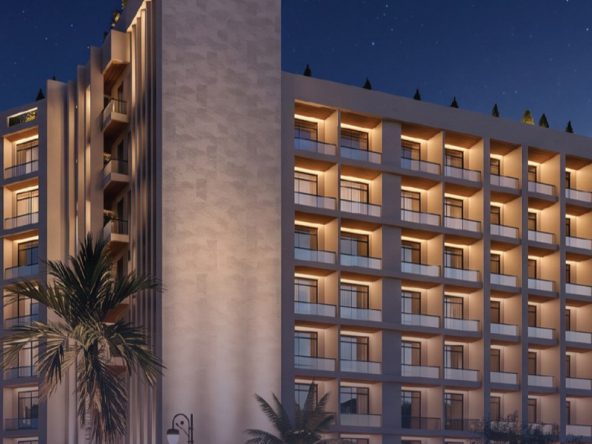
International hospitality brands identified Jebel Akhdar’s potential early, and the plateau is now home to internationally branded luxury resorts perched along the canyon rim, offering panoramic views into Wadi Nakhr. These resorts operate at a premium price point relative to coastal Oman properties, reflecting both the exclusivity of the terrain-limited development sites and consistently strong occupancy driven by the cooling-effect tourism described above. The success of these anchor properties has, in turn, encouraged additional boutique hospitality and residential development in surrounding villages, extending the investment opportunity beyond the handful of flagship resort operators into smaller-scale guesthouse and villa projects catering to the same climate-driven demand.
Occupancy patterns at these resorts follow a distinct seasonal curve compared to coastal Oman properties: while Muscat and Salalah hospitality assets often see summer as a comparatively quiet period for leisure travel (excluding Salalah’s Khareef season), Jebel Akhdar’s resorts see summer as a peak period precisely because of the temperature relief the altitude provides. This creates a genuinely complementary seasonal profile for investors who hold assets across multiple Omani regions — a portfolio spanning coastal and mountain properties can smooth occupancy and cash flow across the calendar year in a way that a single-region portfolio cannot.
Residential and Investment Property on the Plateau
Property development on Jebel Akhdar differs meaningfully from Oman’s freehold coastal zones. Much of the mountain remains under traditional land use tied to the region’s farming villages, which means available development sites are genuinely limited — a scarcity dynamic that supports long-term value for the properties that do come to market. Investors interested in this niche segment typically look at branded residences attached to resort operators, which combine hotel-grade management and rental programs with individual unit ownership, similar in structure to branded residence models seen in ski and mountain resort markets internationally.
| Ownership Route | Description |
|---|---|
| Branded resort residences | Individual unit ownership with hotel-grade rental management |
| Village land | Largely under traditional local ownership, rarely on open market |
| Tourism-designated development land | Limited allocation, subject to government tourism zoning |
This structure appeals particularly to investors who want a genuinely differentiated asset in their Oman portfolio — one exposed to a completely different demand driver (climate-tourism) than the coastal freehold properties covered in our guides to Muscat and Salalah. Because supply is structurally limited by terrain and land-use patterns rather than simply by current construction pace, the scarcity value of well-located Jebel Akhdar branded residences tends to hold up over time in a way that is harder to guarantee in markets where developable land remains abundant.
Accessibility and Infrastructure
Reaching Jebel Akhdar requires a 4×4 vehicle for the final ascent — a police checkpoint at the base of the mountain road enforces this requirement, partly for safety on the steep switchback route and partly to manage tourism traffic on the plateau’s limited road infrastructure. The drive from Muscat takes approximately two to two-and-a-half hours, making Jebel Akhdar a genuinely feasible weekend or short-stay destination for Muscat residents rather than a remote outpost requiring extensive trip planning. Government investment in the region’s road network and utilities has kept pace with the growing resort footprint, and continued infrastructure development is widely expected as tourism numbers on the plateau continue to grow year over year.
Mobile connectivity and utilities on the plateau have improved substantially over the past decade as resort development has progressed, though visitors and residents should still expect a more rural infrastructure profile than in Muscat itself — a trade-off most people drawn to Jebel Akhdar’s appeal are consciously making in exchange for the scenery, climate, and relative seclusion the plateau offers.
Hiking, Trekking, and Outdoor Tourism
Beyond the resort experience, Jebel Akhdar has developed a genuine reputation among hiking and trekking enthusiasts, with several well-marked trails of varying difficulty winding through the terraced villages and along the canyon rim. The Diana’s Viewpoint trail, named for a royal visit decades ago, remains one of the most accessible and popular routes, offering dramatic views into Wadi Nakhr without requiring technical climbing experience. More ambitious routes connect village to village along the old footpaths that predate the modern road, giving hikers a genuine sense of how the plateau’s agricultural communities were connected before vehicle access existed. This outdoor tourism dimension broadens Jebel Akhdar’s appeal beyond luxury resort guests to a wider adventure-travel market, which further supports the case for sustained visitor demand across different traveler segments and price points.
Comparing Jebel Akhdar to Other Mountain Investment Destinations
Globally, mountain and highland tourism destinations — from the Swiss Alps to more recently developed markets like the mountain resorts of Ras Al Khaimah in the UAE — have shown that altitude-driven climate relief and dramatic scenery can support premium property pricing independent of a coastal or urban location. Jebel Akhdar fits this pattern closely, and its relatively early stage of development compared to more mature mountain resort markets is precisely what makes it interesting to investors looking for ground-floor positioning in a niche but structurally sound segment of Oman’s broader tourism and real estate diversification strategy under Vision 2040.
Unlike some mountain resort markets that have overbuilt relative to genuine demand, Jebel Akhdar’s development has so far remained deliberately constrained by both terrain and government zoning — a dynamic that, if it continues, should help the plateau avoid the oversupply problems that have affected pricing in some more aggressively developed mountain tourism markets elsewhere in the world.
Agriculture Beyond Roses: Pomegranates, Walnuts, and Apricots
While the Damask rose harvest gets most of the international attention, Jebel Akhdar’s terraced agriculture extends well beyond a single crop. Pomegranate orchards blanket significant sections of the plateau’s terraces, and the annual pomegranate harvest in early autumn draws its own dedicated following of domestic visitors, with local festivals celebrating the fruit’s arrival alongside walnuts, apricots, and figs that also thrive in the plateau’s cooler, higher-altitude soil conditions. This agricultural diversity matters for the region’s long-term tourism resilience, since it spreads visitor interest across multiple seasons rather than concentrating almost entirely around the spring rose bloom — spring for roses, early autumn for pomegranates and walnuts, and the summer months for heat-relief tourism from coastal Oman and the wider Gulf.
The Omani government has actively supported this agricultural heritage through preservation and marketing initiatives tied to the broader tourism strategy for the plateau, recognizing that the working terraces are themselves one of Jebel Akhdar’s primary draws rather than simply a scenic backdrop to be preserved separately from the tourism economy. Rosewater, dried fruit, and traditional preserves produced on the plateau have become sought-after products both for visitors purchasing directly from producers and increasingly through retail distribution in Muscat, adding a small but genuine agricultural export dimension to the plateau’s economy alongside tourism and hospitality.
Government Tourism Strategy and Vision 2040 Alignment
Jebel Akhdar’s development sits squarely within Oman’s Vision 2040 diversification priorities, which explicitly identify tourism — and specifically differentiated, experience-driven tourism rather than generic beach-and-sun offerings — as a core pillar of the country’s post-oil economic strategy. The Ministry of Heritage and Tourism has supported infrastructure upgrades to the plateau’s road network and utilities specifically to enable continued hospitality investment, while simultaneously working to protect the agricultural villages and terracing that give the destination its authentic character, rather than allowing unrestrained development to displace the very features that draw visitors in the first place.
This balance — between enabling investment and preserving the plateau’s agricultural and cultural identity — is a deliberate policy choice, and it is part of why development on Jebel Akhdar has proceeded more slowly and selectively than in some more aggressively marketed tourism destinations regionally. For investors, this measured pace should be read as a structural feature rather than a shortcoming: it constrains future supply in a way that supports the value of existing and near-term branded residence developments, similar to how strict zoning in mature international mountain resort markets has historically protected property values for early investors.
| Season | Primary Draw |
|---|---|
| Spring (Mar-Apr) | Damask rose harvest and distillation |
| Summer (Jun-Aug) | Heat-relief tourism from coastal Oman and GCC |
| Early Autumn (Sep-Oct) | Pomegranate and walnut harvest festivals |
| Winter (Dec-Feb) | Cool-weather hiking and scenic photography |
Why Investors Are Looking Beyond Coastal Oman
The broader pattern behind interest in Jebel Akhdar reflects a maturing approach among foreign investors evaluating Oman’s real estate market. Early-stage foreign investment in any developing market tends to concentrate on the most obvious, easiest-to-understand assets — in Oman’s case, coastal freehold apartments and villas in Muscat’s established Integrated Tourism Complexes. As investor familiarity with the broader market deepens, capital typically starts flowing toward differentiated, scarcity-driven niches that offer diversification benefits a single-region coastal portfolio cannot provide. Jebel Akhdar’s combination of genuine scarcity, a distinct seasonal demand curve, and strong existing hospitality brand validation makes it one of the more credible niche opportunities to have emerged in Oman’s property market to date, alongside similarly differentiated regional plays like Duqm’s Special Economic Zone.
That said, the niche nature of the market cuts both ways: liquidity for Jebel Akhdar branded residences is inherently lower than for mainstream coastal apartments simply because the buyer pool for this specific asset type is smaller and more specialized. Investors considering this segment should treat it as a genuine diversification play within a broader Oman portfolio rather than a core holding, and should go in with realistic expectations about resale timelines given the specialized nature of the asset.
Rental Income Potential for Branded Residence Owners
For investors specifically evaluating the income potential of a Jebel Akhdar branded residence, the economics differ from a typical long-term coastal rental in a way worth understanding before committing capital. Rather than leasing to a resident tenant on an annual contract, most branded residence owners on the plateau participate in the resort operator’s rental management program, which places the unit into the hotel’s short-stay inventory when the owner is not personally using it. Returns under this model are driven by average daily rate and occupancy across the resort’s booking calendar rather than a fixed monthly rent, which means income can fluctuate more than a standard residential lease but also carries meaningfully higher per-night rates during peak periods — particularly the cooler summer months when coastal Gulf demand for mountain escape is at its highest.
Owners considering this model should request detailed historical occupancy and rate data from the specific resort operator before purchasing, since performance can vary considerably between individual properties and management programs even within the same general market. It is also worth clarifying upfront how many weeks of personal use the ownership structure permits annually, since branded residence agreements typically balance owner personal-use rights against the rental pool’s income-generating availability, and the right balance depends heavily on whether an individual investor’s primary goal is investment income, personal lifestyle use, or some combination of both.
Getting There: A Practical Route Guide
The standard route to Jebel Akhdar begins on the highway linking Muscat to Nizwa, Oman’s historic interior capital, before turning off toward the town of Birkat Al Mouz at the foot of the mountain range. From Birkat Al Mouz, the ascent road climbs roughly 2,000 meters in elevation over a series of switchbacks, a stretch that takes around 30-40 minutes of careful driving even in a capable 4×4. Rental agencies in Muscat routinely offer 4×4 vehicles specifically marketed for this route, and several resort operators also provide their own transfer services from Muscat International Airport directly to the property, removing the self-drive requirement entirely for guests who prefer not to navigate the mountain road themselves.
Nizwa itself is worth factoring into any Jebel Akhdar trip, whether as a stopover or a dedicated side visit — the city’s historic fort and traditional souq offer a cultural counterpoint to the natural scenery of the plateau above, and many visitors combine both destinations into a single multi-day itinerary out of Muscat. This pairing has become a standard recommendation in Oman tourism marketing precisely because it packages two very different experiences — historic urban Oman and high-altitude natural Oman — into a single accessible trip from the capital.
Sustainability and Long-Term Environmental Management
Water management is one of the more understated but important considerations shaping Jebel Akhdar’s long-term development trajectory. The plateau’s traditional falaj irrigation system, which channels water to the terraced farms, represents centuries of accumulated engineering knowledge suited specifically to the region’s arid, high-altitude conditions, and its continued function is essential both to the agricultural heritage that draws tourists and to the everyday needs of the villages that still farm the terraces. Resort and residential development on the plateau has generally been required to operate within water availability constraints that protect this traditional system, rather than drawing down shared resources in competition with agricultural use — a sustainability consideration that increasingly matters to environmentally conscious international travelers and investors alike.
This environmental stewardship angle has become a meaningful part of how Jebel Akhdar positions itself relative to other regional mountain and desert tourism destinations, several of which have faced criticism for resource-intensive development in water-scarce environments. Investors and travelers increasingly factor sustainability credentials into their decisions, and Jebel Akhdar’s more measured, terrain-respecting development approach gives it a genuine point of differentiation on this front.
Frequently Asked Questions
Do I need a 4×4 to visit Jebel Akhdar?
Yes. A police checkpoint at the base of the mountain road requires visitors to have a 4×4 vehicle before proceeding up the steep ascent route, though several resorts offer direct transfer services from Muscat that remove this requirement for guests.
What is the best time of year to visit?
Spring, particularly during the Damask rose harvest, is the most popular season, though the plateau’s cooler climate makes it an attractive escape from coastal heat throughout the summer months as well, and early autumn brings the pomegranate and walnut harvest.
Can foreigners buy property on Jebel Akhdar?
Foreign ownership is available primarily through branded residence developments attached to resort operators, given the limited availability of freehold land on the plateau compared to Oman’s coastal Integrated Tourism Complexes.
How does Jebel Akhdar compare to buying in Muscat?
Jebel Akhdar offers a niche, scarcity-driven asset with a different seasonal demand pattern than coastal Muscat property, making it a complementary rather than competing addition to a diversified Oman property portfolio rather than a substitute for it.
How long does it take to drive from Muscat?
Approximately two to two-and-a-half hours, including the final ascent from Birkat Al Mouz, making it a realistic weekend destination for Muscat residents.
Is Jebel Akhdar suitable as a primary residence?
Most owners use Jebel Akhdar property as a second home or rental investment rather than a primary residence, given its distance from Muscat’s employment centers, schools, and healthcare facilities compared to coastal freehold districts.