



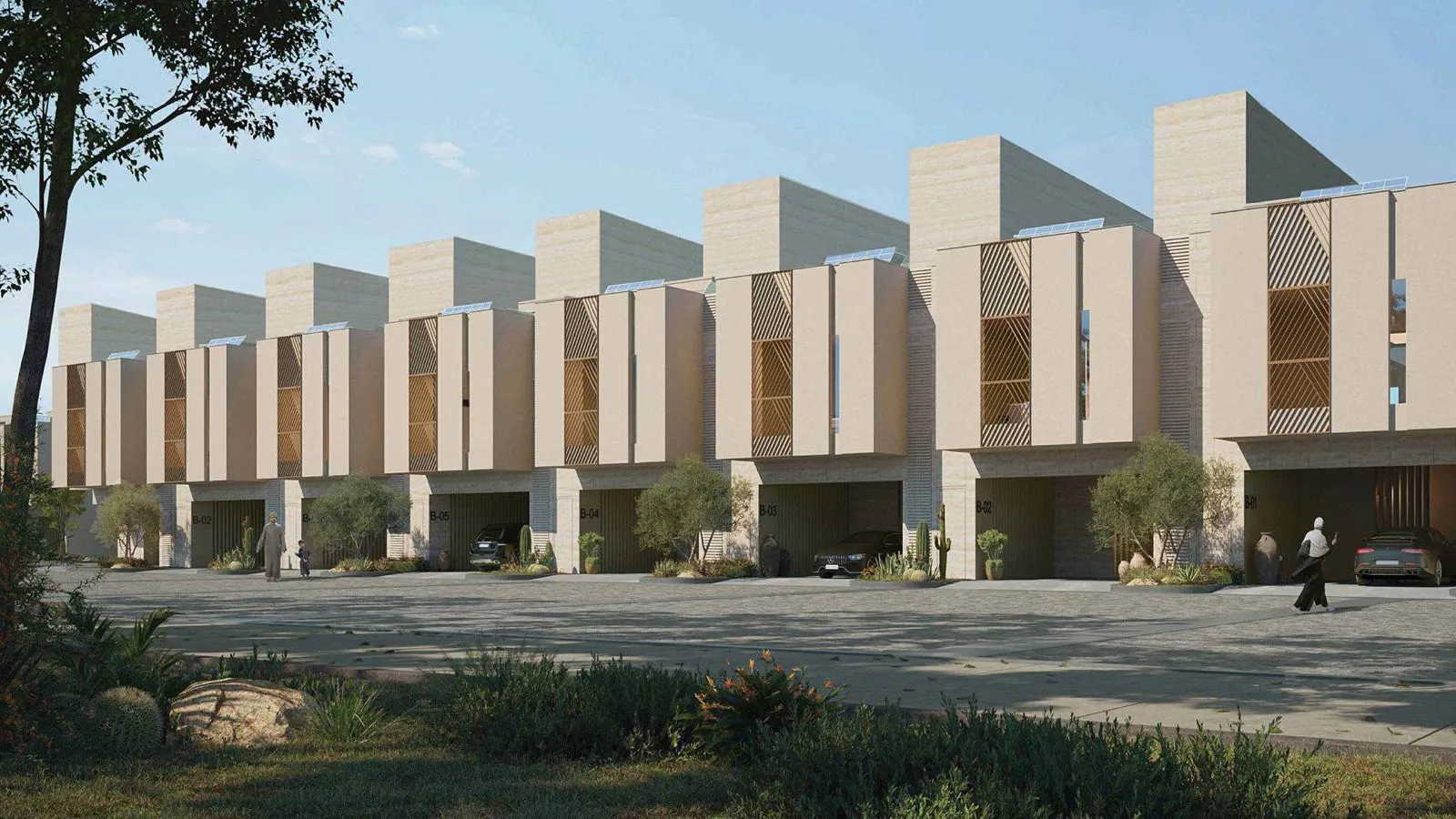
Townhouses for sale in Oman: every project available now
All seven projects offering townhouses for sale in Oman that we represent, with live prices and photography. Read the pricing note below before comparing them — most of these schemes advertise an apartment price, not a townhouse price.

Mira Ocean Estates, Hawana Salalah, Oman
Mira Ocean Estates, Hawana Salalah, Dhofar, Oman Details
Telal Al Qurm, Muscat — Freehold ITC Apartments & Townhouses, Oman
Telal Al Qurm, Muscat, Oman Details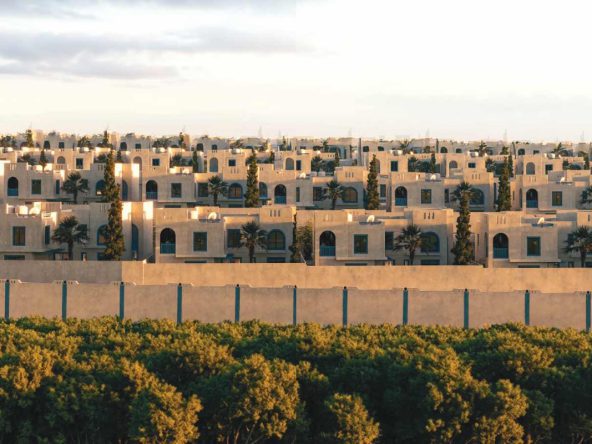
Nismat Zain, Sur — Surooh Villas, Townhouses & Plots in Oman
Nismat Zain, Sur, South Al Sharqiyah, Oman Details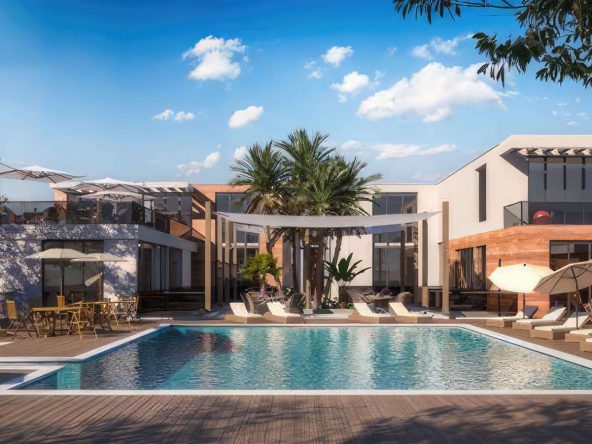
Luma Residence, Bandar Jissah, Muscat Bay, Oman
Luma Residence, Bandar Jissah, Muscat Bay, Muscat, Oman Details
Hay Al Wafa, Sultan Haitham City — Freehold Apartments, Townhouses & Villas in Muscat
Hay Al Wafa, Sultan Haitham City, Muscat, Oman Details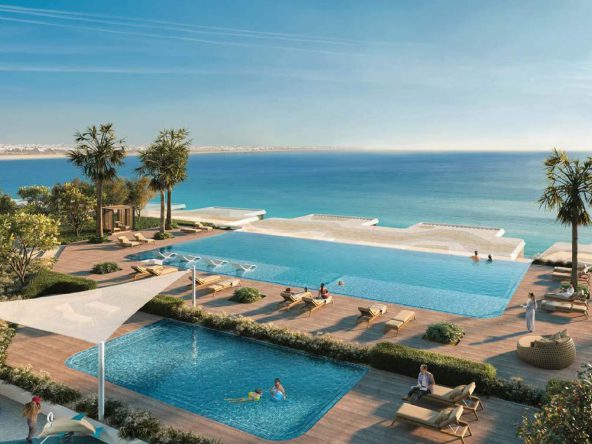
Azura Beach Residences, Al Mouj — Freehold Beachfront Apartments in Muscat, Oman
Al Mouj, Muscat, Oman Details
The St. Regis Residences, Al Mouj — Branded Freehold Living in Muscat, Oman
Al Mouj, Muscat, Oman DetailsThree of these seven never publish a townhouse price
The townhouse is the hardest product in Oman to price, because almost every scheme that builds them is a mixed development that advertises its cheapest unit — an apartment — and leaves the townhouse tier to a private price list.
| Project | Advertised “from” | What that price is | Townhouse price |
|---|---|---|---|
| Hay Al Wafa | $170,600 | An apartment | $263,200 |
| Telal Al Qurm | $200,100 | An apartment | $445,800 |
| Luma Residence | $300,500 | An apartment | $568,400 |
| Mira Ocean Estates | $149,738 | A studio or apartment | Not published |
| Azura Beach Residences | $221,000 | An apartment | Not published |
| The St. Regis Residences | $882,000 | A one-bedroom apartment | Not published |
The gap is real money. At Luma Residence the townhouse costs $267,900 more than the advertised entry price; at Telal Al Qurm it costs $245,700 more. A buyer who budgets from the headline figure is short by roughly the price of an entire Omani apartment.
Where a townhouse price exists, this page uses it. Where the developer has not published one, we say so rather than quoting the apartment and hoping you do not notice.
Townhouses in Oman at a glance
| Buying a townhouse in Oman | |
|---|---|
| Who can buy | Any nationality, inside a designated ITC — no sponsor, no local company |
| Ownership route | ITC freehold only — usufruct never reaches a townhouse |
| Projects with townhouses | 7; four publish a price; three are buyable and priced |
| Cheapest overall | $104,000 — Nismat Zain, Sur, Omani citizens only |
| Cheapest you can buy | $263,200 — Hay Al Wafa, Sultan Haitham City |
| Most expensive published | $568,400 — Luma Residence, Muscat Bay |
| Price per sq ft | $153 – $218 — the narrowest band of any Omani property type |
| Ready today | The St. Regis Residences, handed over August 2024 |
| Annual property tax | None — and none on rental income or capital gains |
| Clears OMR 200,000 for Golden Residency | One — the Luma townhouse |
Every townhouse at the townhouse price
| Project | Where | Townhouse from | Size | ~ Per sq ft | Handover |
|---|---|---|---|---|---|
| Nismat Zain | Sur | $104,000 (citizens only) | 1,862 sq ft | ~$56 | 2033 |
| Hay Al Wafa | Sultan Haitham City | $263,200 | 1,722 sq ft (160 m²) | ~$153 | 2027 |
| Telal Al Qurm | Muscat | $445,800 | 2,282 sq ft | ~$195 | 2028 |
| Luma Residence | Muscat Bay | $568,400 | 2,607 sq ft (242 m²) | ~$218 | 2029 |
| Mira Ocean Estates | Salalah | Not published | — | — | 2028 |
| Azura Beach Residences | Al Mouj | Not published | — | — | 2026 |
| The St. Regis Residences | Al Mouj | Not published | Duplex townhouses | — | Complete |
Strip out the one project a foreign buyer cannot complete on and the three that do not publish a figure, and the entire foreign-accessible, priced townhouse market in Oman is three addresses: Hay Al Wafa, Telal Al Qurm and Luma Residence. That is the smallest choice set of any property type we sell in the country apart from land.
The townhouse is the only type that starts above the villa
This is the fact that surprises every buyer who arrives expecting the townhouse to be the sensible middle option.
| Property type | Entry price | Per sq ft | Projects |
|---|---|---|---|
| Apartment | From $82,160 | $100 – $666 | 31 |
| Villa | From $195,100 | $118 – $660 | 17 |
| Townhouse | From $263,200 | $153 – $218 | 3 priced and buyable |
| Land | From $1,300,400 | Land and build bundled | 2 |
The cheapest buyable townhouse in Oman costs $68,100 more than the cheapest villa. In most markets a townhouse is the compromise between an apartment and a detached house, priced between the two. In Oman it is not, because nobody builds a budget townhouse — the three that exist sit inside master-planned schemes at Sultan Haitham City, Qurm and Muscat Bay, all aimed at the same middle-to-upper family buyer.
The per-square-foot column tells the same story from a different angle. Townhouses occupy a band of $153 to $218 — a spread of just 1.4 times, against 6.7 times for apartments and 5.6 times for villas. There is no cheap end to this market and, among published prices, no luxury end either. It is a single narrow product class.
At Hay Al Wafa the townhouse costs more per foot than the villa
The clearest illustration of the pricing logic sits inside one project. Hay Al Wafa in Sultan Haitham City sells all three products on one masterplan.
| Product | From | Size | Per sq ft |
|---|---|---|---|
| Apartment | $170,600 | 1,700 sq ft | ~$100 |
| Villa | $629,400 | 4,627 sq ft | ~$136 |
| Townhouse | $263,200 | 1,722 sq ft (160 m²) | ~$153 |
Read the rate column downward. The townhouse is the most expensive product per square foot in its own project — dearer than the villa that is nearly three times its size. That is not a pricing error; it is what happens when a scheme puts its townhouses on the serviced, walkable plots closest to the park and its villas further out on cheaper land. You pay for position and plot servicing, and you pay for it across a smaller floor area.
The practical lesson generalises. If your priority is dollars per square foot, the townhouse is rarely the right answer in Oman. If your priority is a private front door, a garden and a garage inside a walkable neighbourhood without villa money, it often is.
The cheapest townhouse in Oman is closed to you
Nismat Zain in Sur sells townhouses from $104,000 — 1,862 square feet on a 140 m² plot, about $56 per square foot. That is the cheapest rate of any home in Oman by a wide margin, roughly a third of what the cheapest buyable townhouse costs per foot.
It is a Surooh scheme run by the Ministry of Housing for Omani citizens, one of 358 units of townhouses, standalone villas and serviced land plots on ordinary land, with handover in 2033. A foreign buyer cannot complete on it. It appears in the listing block above because it is genuine stock we represent, and in this table because leaving it out would misrepresent the market — but it is not available to you.
The same trap recurs across Omani property. Whenever a home in Oman is priced far below the rest of the market, the first question is who is allowed to buy it, not what it costs. Our overview is buying property in Oman as a foreigner.
How scarce a townhouse actually is
| Project | Total units | Townhouses | Share |
|---|---|---|---|
| Luma Residence | 240 | 52 | 22% |
| Telal Al Qurm | 1,500+ apartments, 190 serviced apartments | 46 | Under 3% |
| Mira Ocean Estates | 263 | 20 | 8% |
Across the three projects that publish a unit breakdown, there are 118 townhouses in total. Telal Al Qurm is the sharpest case: a masterplan with more than 1,500 apartments contains just 46 townhouses, under three per cent of the scheme.
Scarcity cuts both ways. It supports resale value in a market where apartments are numerous and interchangeable — but it also means very few comparable sales for a valuer to work from, and a smaller pool of buyers when you exit. At Luma, 82% of the scheme was already taken at the time of writing, with 43 units left across all three products, which tells you how quickly the townhouse tier moves when a project is well located.
Residency: the townhouse is the natural threshold unit
The Owner Visa is sponsor-free, tied to ownership, renewable, covers a spouse and first-degree relatives, and has no minimum purchase amount. Every freehold townhouse here supports one.
Golden Residency is the ten-year permit and requires OMR 200,000, about $520,160.
| Townhouse | Price | In rials | Against OMR 200,000 |
|---|---|---|---|
| Luma Residence | $568,400 | OMR 218,548 | Clears, with about $48,200 to spare |
| Telal Al Qurm | $445,800 | OMR 171,409 | Short by OMR 28,591 |
| Hay Al Wafa | $263,200 | OMR 101,200 | Short by OMR 98,800 |
This is where the townhouse earns its place. At Luma Residence the townhouse is the cheapest home in the scheme that clears the ten-year threshold — the apartments at $300,500 do not reach it, the villas at $650,200 clear it but cost $81,800 more. And it clears with a margin rather than sitting on the line, which matters, because the permit is assessed on registered value and a thin margin can evaporate on a valuation.
Telal Al Qurm is the near miss worth a phone call. The published four-bedroom townhouse falls OMR 28,591 short — about $74,400. In a scheme with 46 townhouses, a larger or higher-specification unit may well clear, and that is a specific, answerable question for the developer rather than a reason to walk away. The routes are compared in Golden Residency vs the Owner Visa.
The only finished townhouses in Oman
The St. Regis Residences at Al Mouj is a completed, operating property. The resort opened in June 2024 and the residences were handed over to owners that August, so there is no construction risk, no handover date to track and no waiting for amenities — the spa, restaurants, pools and golf access are open and staffed.
The collection is 162 branded residences alongside 250 hotel guestrooms on a private 360-metre beachfront, with 68 units currently available. It includes duplex townhouses as well as apartments, and the larger units carry a dedicated domestic worker’s room.
| Unit | Size from | Price from |
|---|---|---|
| One-bedroom apartment | 1,540 sq ft | $882,000 |
| Two-bedroom apartment | 1,953 sq ft | $1,148,600 |
| Three-bedroom apartment | 2,421 sq ft | $1,504,700 |
| Duplex townhouse | Not published | Not published |
The published price list covers apartments only. Given that the one-bedroom starts at $882,000 across 1,540 square feet, a duplex townhouse here is comfortably the most expensive townhouse in the country — and comfortably clears the residency threshold. It is also the only one you can walk through before buying. Ask for the townhouse price list by unit number; it exists.
Where the townhouses are
| Area | Townhouse from | Character |
|---|---|---|
| Sultan Haitham City | $263,200 | New inland city at Al Seeb, walkable neighbourhood, park frontage |
| Muscat | $445,800 | Qurm district, established capital address, ITC-licensed since 2024 |
| Muscat Bay | $568,400 | Gated bay 15 km from the capital, resort community |
| Al Mouj | Not published | Established waterfront, marina and golf, branded stock |
| Salalah | Not published | Dhofar coast, Khareef season, lagoon system |
| Sur | $104,000 (citizens only) | Eastern coast, Ministry of Housing scheme |
The pattern runs inland to shoreline, exactly as it does for every other Omani property type. The cheapest townhouse you can buy sits furthest from the sea, in a new inland city; the dearest published one sits in a gated bay; and the two coastal addresses at Al Mouj and Hawana Salalah do not publish a townhouse figure at all.
Ready now or waiting until 2033
| Handover | Projects |
|---|---|
| Complete today | The St. Regis Residences — handed over August 2024 |
| 2026 | Azura Beach Residences |
| 2027 | Hay Al Wafa |
| 2028 | Telal Al Qurm, Mira Ocean Estates |
| 2029 | Luma Residence |
| 2033 | Nismat Zain (citizens only) |
The delivery range on this page is nine years wide, from a property you can move into today to one handing over in 2033. That spread is much larger than the price spread, and for a family buying a home rather than an investment it is usually the more important variable. If you need to be living in it before 2028, the list is short.
What owning a townhouse costs
| Item | Typical |
|---|---|
| Title transfer fee | 3% of the purchase price |
| VAT | 5% where it applies — confirm per project |
| Legal and registration | Budget separately; use your own independent Omani lawyer |
| Service charge — Telal Al Qurm | OMR 954 a year on a 212 m² townhouse (OMR 4.5 per m²) |
| Service charge — Luma | Townhouse rate not published. ~OMR 1,519 a year at the villa rate of 6.27 per m² |
| Payment plan — Hay Al Wafa | 20% on booking, 80% across 36 months |
| Payment plan — Luma | 2.5% booking ($14,210 on the townhouse), 7.5% at signing |
| Furnishing | Five figures on a three or four-bedroom house |
| Annual property tax | None |
| Rental income tax | None |
| Capital gains tax | None |
Budget roughly 8% on top of the price where VAT applies. Two townhouse-specific points. Luma publishes an apartment rate of 8.27 OMR per square metre and a villa rate of 6.27, but no townhouse rate — at the villa rate a 242 m² townhouse would run about OMR 1,519 a year, roughly 0.69% of the purchase price, which is low by Gulf standards. Get it confirmed rather than assumed. And on a charge calculated per square metre, the townhouse’s larger floor area works against it compared with an apartment in the same scheme. More in service charges in Oman and property tax in Oman.
Townhouse or villa or apartment
| Townhouse | Villa | Apartment | |
|---|---|---|---|
| Entry price | From $263,200 | From $195,100 | From $82,160 |
| Per sq ft | $153 – $218 | $118 – $660 | $100 – $666 |
| Ownership routes | ITC freehold only | ITC freehold only | Freehold or usufruct |
| Choice | 3 priced and buyable | 17 projects | 31 projects |
| Private entrance and garden | Yes | Yes | No |
| Shared walls | Yes | No | Yes |
| Resale comparables | Very few | Thin | Deep |
| Clears OMR 200,000 | One | Five projects | One project at entry |
The honest summary is that the townhouse in Oman is a lifestyle choice rather than a value play. It costs more to enter than a villa, it prices higher per square foot than the villa in at least one scheme, and it gives you three options instead of seventeen. What it gives back is a house with its own front door, garden and garage inside a walkable, serviced neighbourhood — which the apartments cannot offer at all, and which the villas deliver only by putting you on a larger plot further from the centre of the community.
For families who want to walk to the park rather than drive to it, that trade is often exactly right. For anyone optimising the price of space, villas and apartments both do better.
Renting a townhouse out
Townhouses let to families on twelve-month contracts — expatriate professionals with children who want space, parking and a school run, but who do not need or want to pay for a full villa plot. It is a narrower tenant pool than apartments and a slightly wider one than villas, sitting between the two on both turnover and void length.
Location decides the economics. Sultan Haitham City and Muscat run on year-round corporate and professional demand, which is what a family townhouse is built for. Muscat Bay and Al Mouj are resort and second-home markets, so expect seasonality and a management company taking its cut. Salalah concentrates demand into the three months of the Khareef monsoon. Full context in rental yields in Oman.
Eight checks before buying a townhouse in Oman
- Ask for the townhouse price, not the project price. On this page the gap runs to $267,900.
- Get the built-up area and the plot area separately, and confirm whether the quoted size is gross or net.
- Ask which units are townhouses by number — in a scheme of 1,500 apartments and 46 townhouses, availability is the constraint, not budget.
- Get the townhouse service charge in writing. Two of the three priced schemes publish apartment and villa rates but not the townhouse rate.
- If residency is the goal, run the rial figure against OMR 200,000 before choosing a unit — one of the three clears it, and one misses by a margin worth negotiating.
- Confirm the ITC licence and have an independent Omani lawyer verify the title classification. Usufruct never applies to a townhouse.
- Check the handover date in the contract. The range on this page runs from complete to 2033.
- Ask what the shared walls are. An end unit, an acoustic specification and a corner plot are all worth asking about and all priced differently.
Frequently asked questions
Can foreigners buy townhouses in Oman?
Yes, inside a designated Integrated Tourism Complex or approved area. Buyers of any nationality can hold full freehold title in their own name with no Omani sponsor and no local company. Note that the expatriate usufruct route applies only to units in buildings of four storeys or more, so it never reaches a townhouse — ITC freehold is the only path.
How much does a townhouse cost in Oman?
From $263,200 for the cheapest one a foreign buyer can purchase — Hay Al Wafa in Sultan Haitham City, 1,722 sq ft at about $153 per square foot — up to $568,400 for a 2,607 sq ft townhouse at Luma Residence in Muscat Bay. Telal Al Qurm in Muscat sits between them at $445,800. Nismat Zain in Sur is cheaper at $104,000 but is a Ministry of Housing scheme for Omani citizens.
Why are townhouses more expensive than villas in Oman?
Because nobody builds a budget townhouse here. The three buyable, priced townhouses all sit inside master-planned schemes aimed at middle-to-upper family buyers, on the serviced, walkable plots near the centre of the community, while the cheapest villas sit on larger, cheaper plots further out. At Hay Al Wafa the townhouse costs about $153 per square foot against $136 for the villa in the same project.
Which townhouse in Oman is the best value per square foot?
Hay Al Wafa at about $153 per square foot, followed by Telal Al Qurm at $195 and Luma Residence at $218. The whole foreign-buyable townhouse market fits in a band of 1.4 times, which is far narrower than apartments or villas.
Does buying a townhouse give Oman residency?
A completed freehold purchase supports the sponsor-free Owner Visa, which has no minimum amount. The ten-year Golden Residency requires OMR 200,000 (about $520,160), and only the Luma Residence townhouse clears it at $568,400 (OMR 218,548) — with roughly $48,200 to spare. The Telal Al Qurm townhouse falls OMR 28,591 short, close enough to be worth raising with the developer.
Are there completed townhouses in Oman?
Yes — The St. Regis Residences at Al Mouj includes duplex townhouses and was handed over to owners in August 2024, so it is a finished, operating property rather than an off-plan reservation. Its published price list covers apartments only, from $882,000, so ask for the townhouse pricing by unit number.
What is the cheapest townhouse in Oman?
Nismat Zain in Sur at $104,000 — 1,862 sq ft on a 140 m² plot, about $56 per square foot, the cheapest rate for any home in the country. It is a Surooh scheme run by the Ministry of Housing for Omani citizens and is not available to foreign buyers. The cheapest one you can actually buy is Hay Al Wafa at $263,200.
How many townhouses are there in Oman?
Very few. Across the three projects that publish a unit breakdown there are 118 in total: 52 at Luma Residence, 46 at Telal Al Qurm and 20 at Mira Ocean Estates. At Telal Al Qurm that is under three per cent of a masterplan holding more than 1,500 apartments.
Are townhouse service charges high in Oman?
By Gulf standards they are low, but they are frequently unpublished for the townhouse tier specifically. Telal Al Qurm quotes OMR 954 a year on a 212 m² townhouse, about OMR 4.5 per square metre. Luma publishes apartment and villa rates but not the townhouse rate; at the villa rate a 242 m² townhouse would cost around OMR 1,519 a year, roughly 0.69% of the purchase price. Ask for the figure in writing.
Related reading on this site
By property type: apartments for sale in Oman, villas, houses, land, penthouses, studios, beach houses, affordable homes. By area: Sultan Haitham City, Muscat, Muscat Bay, Al Mouj, Salalah, Sur, Al Seeb, Jebel Sifah. Rules and process: buying as a foreigner, freehold property in Oman, comparing the ITCs, residency routes, property tax, service charges, rental yields, mortgages for foreigners, inheritance rules, market risks, all Oman property.
The verdict
The townhouse is the least understood product in the Omani market and, priced honestly, the most awkward. It costs more to enter than a villa, it can cost more per square foot than a villa in the same project, and there are exactly three of them a foreign buyer can price and purchase.
Most of the confusion is a pricing artefact. Three of the seven schemes that build townhouses never publish a townhouse price, and the four that do are read alongside an advertised entry price that belongs to an apartment. At Luma Residence the difference between the headline and the townhouse is $267,900 — more than the entire cost of a Hay Al Wafa townhouse.
Where the townhouse genuinely wins is residency and daily life. At Luma it is the cheapest home in the scheme that clears the OMR 200,000 Golden Residency threshold, and it does so with about $48,200 of margin rather than balancing on the line. And in a walkable, serviced neighbourhood it delivers a private front door, a garden and a garage without villa money and without a villa’s distance from the centre.
Two instructions before you commit. Get the townhouse price list by unit number, not the project’s “from” price — that single request is worth more than everything else on this page. And if a townhouse in Oman is offered near $100,000, check who is allowed to buy it: the cheapest townhouse in the country is government housing for Omani citizens, and no brochure will tell you so.
Request townhouse prices by unit number, not project entry prices
Further reading: the Ministry of Housing and Urban Planning registers title; the Ministry of Heritage and Tourism licenses Integrated Tourism Complexes; the Central Bank of Oman publishes lending benchmarks.
