



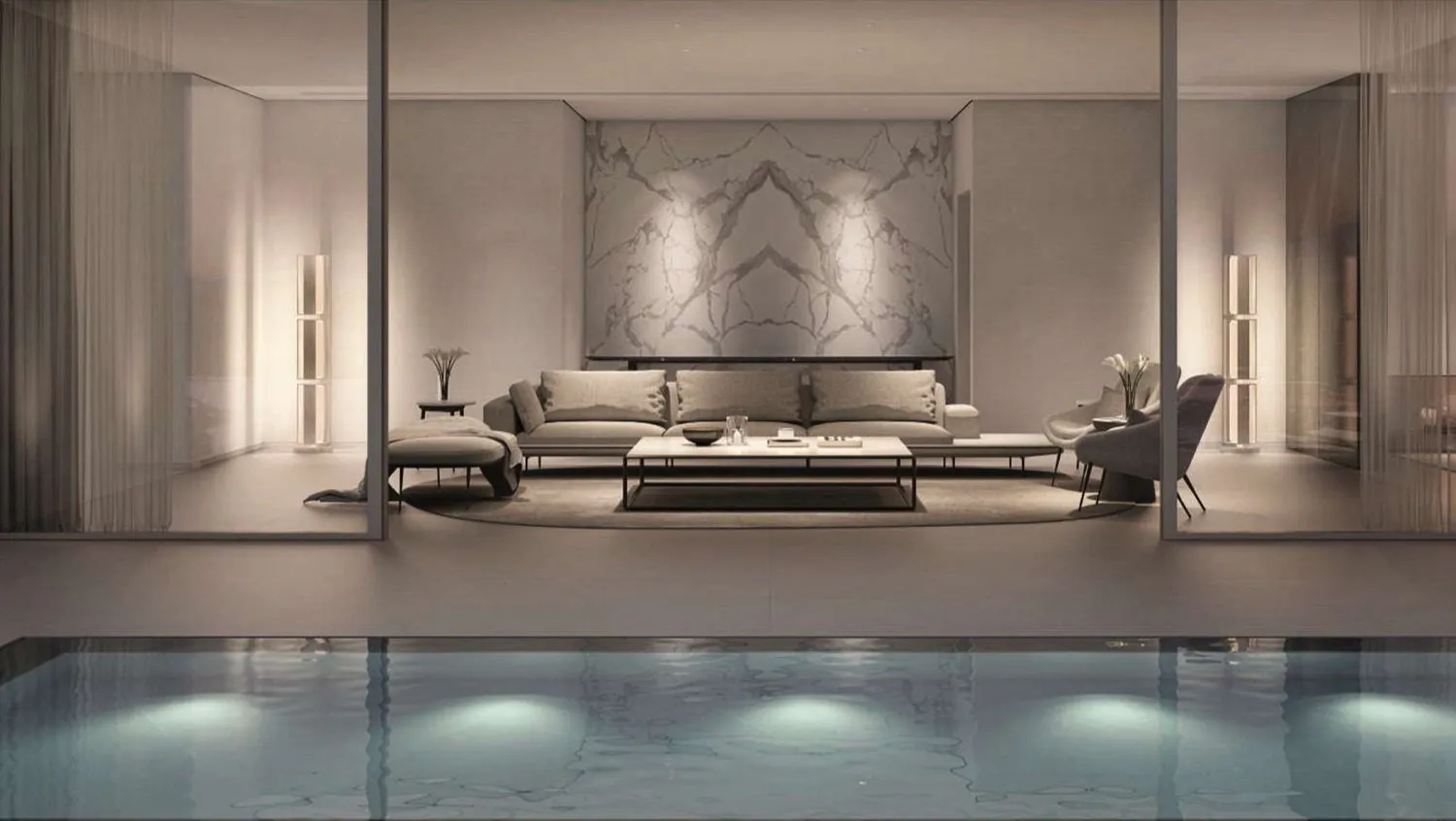
Penthouses for sale in Oman: every project available now
All six projects offering penthouses for sale in Oman that we represent, with live prices and photography. Half of them describe a penthouse in the unit mix without publishing what it costs — those are flagged below rather than filled in with an apartment price.
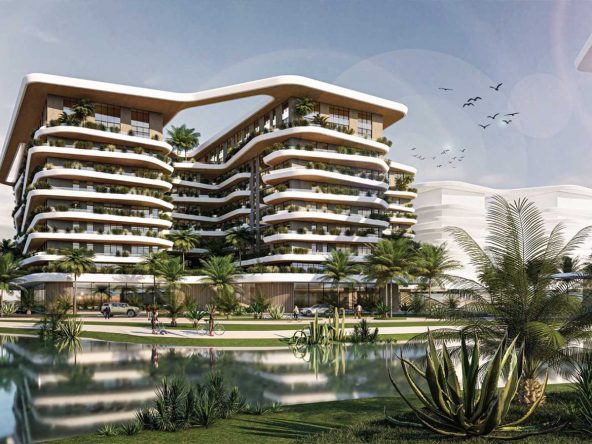
Uptown Muscat, Knowledge Oasis — Apartments & Duplexes in Oman from $106,900
Knowledge Oasis Muscat, Al Rusayl, Muscat, Oman Details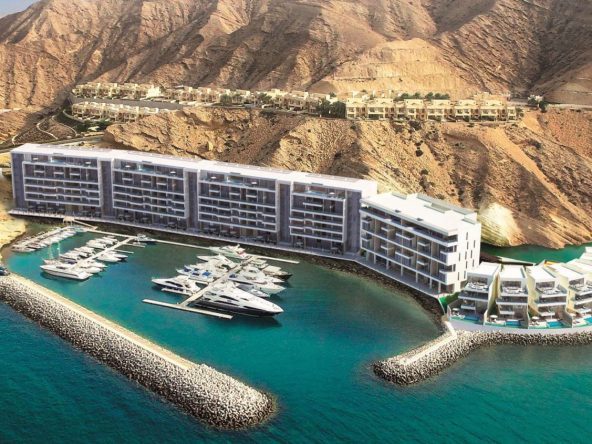
Al Mina, Barr Al Jissah, Muscat, Oman — Marina Residences & Beachfront Villas
Al Mina, Barr Al Jissah, Muscat, Oman Details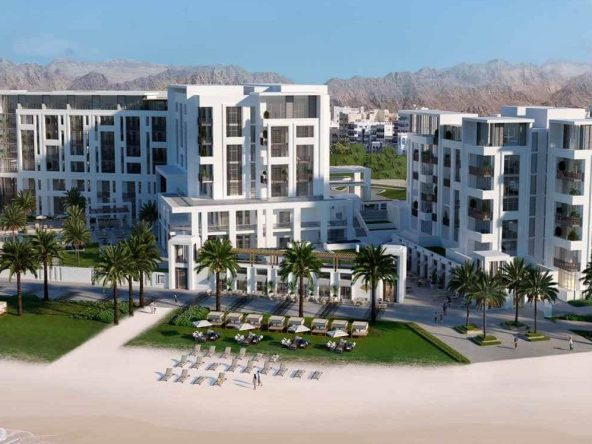
The Residences at Mandarin Oriental, Shatti Al Qurum — Branded Freehold Homes in Muscat, Oman
Shatti Al Qurum, Muscat, Oman Details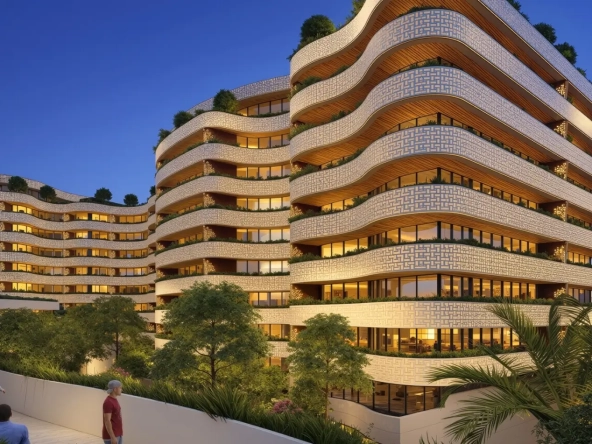
Yenaier Residences, Sultan Haitham City — Freehold Homes in Oman’s Smart City
Sultan Haitham City, Al Seeb, Muscat, Oman Details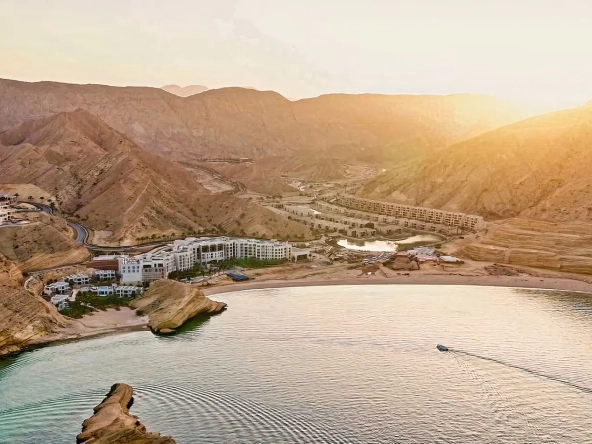
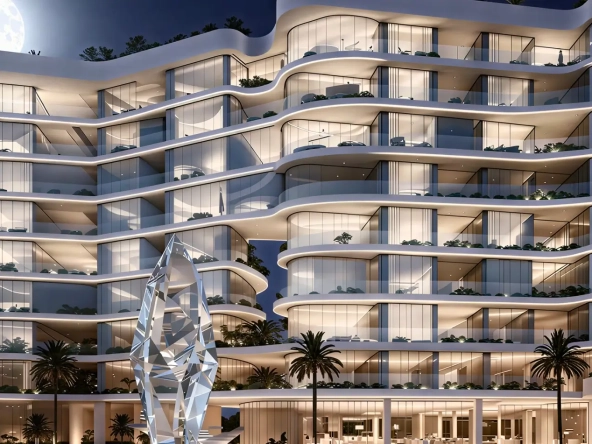
Vistal by Victoria Swarovski, Al Mouj — Branded Freehold Residences in Muscat, Oman
Al Mouj, Muscat, Oman DetailsHalf the penthouse market has no published price
The penthouse is the top of a building’s price list and, in Oman, the tier developers most often keep off it. Three of these six name a figure; three do not.
| Project | Penthouse described | Penthouse price |
|---|---|---|
| Uptown Muscat | 2,197 sq ft | $422,600 |
| Al Mina, Barr Al Jissah | 3,025 sq ft duplex, 7.5 m ceilings | $1,868,200 |
| Vistal — Sky Villa | 3,230 sq ft and up | $2,029,100 |
| Mandarin Oriental | 4-bedroom, private terraces | Not published |
| Yenaier Residences | Top floors, 677 – 12,357 sq ft | Not published |
| Muscat Bay | 3-bedroom penthouses and duplexes | Not published — “on request” |
The Mandarin Oriental case is worth understanding before you enquire. Its scheme spans 70 to 260 m², but the units currently offered run 818 to 2,099 sq ft — which may not include a penthouse at all. If a branded penthouse at Shatti Al Qurum is what you want, the first question is not the price but whether one exists in the current release or only in secondary stock.
At Muscat Bay the position is explicit: neither the duplexes nor the largest villas carry published prices, and the penthouse tier is quoted on request. That is a completed, operating community, so the stock is real — it simply is not on a public list.
Penthouses in Oman at a glance
| Buying a penthouse in Oman | |
|---|---|
| Who can buy | Any nationality — no sponsor, no local company |
| Ownership routes | ITC freehold, or expatriate usufruct in buildings of four storeys and up |
| Projects with penthouses | 6; three publish a price |
| Cheapest published | $422,600 — Uptown Muscat, 2,197 sq ft |
| Most expensive published | $2,029,100 — Vistal Sky Villa, Al Mouj |
| Size range | 2,197 – 3,230 sq ft published; up to 12,357 sq ft at Yenaier |
| Price per sq ft | $192 – $628, a spread of 3.3 times |
| Ready today | Muscat Bay — the only completed penthouse stock |
| Clears OMR 200,000 for Golden Residency | Two of the three priced — the cheapest misses |
| Annual property tax | None — and none on rental income or capital gains |
Every penthouse at the penthouse price
| Project | Where | Penthouse from | Size | ~ Per sq ft | Handover |
|---|---|---|---|---|---|
| Uptown Muscat | Muscat | $422,600 | 2,197 sq ft | ~$192 | 2027 |
| Al Mina, Barr Al Jissah | Muscat Bay | $1,868,200 | 3,025 sq ft (281 m²) | ~$618 | 2027 |
| Vistal — Sky Villa | Al Mouj | $2,029,100 | 3,230 sq ft and up | ~$628 | Q4 2029 |
| Mandarin Oriental | Shatti Al Qurum | Not published | Up to 260 m² | — | 2026 |
| Yenaier Residences | Sultan Haitham City | Not published | 677 – 12,357 sq ft | — | 2028 |
| Muscat Bay | Muscat Bay | Not published | 3-bedroom | — | Complete |
Three published prices spanning $422,600 to $2,029,100 — a 4.8-times gap between the cheapest and the dearest penthouse in the country. Nothing sits in the middle. Oman’s penthouse market is a modest business-park product at one end and two branded waterfront trophies at the other, with a $1.4 million hole between them.
The penthouse that costs less per foot than the flat below it
This is the most useful fact on the page, and it inverts what almost every buyer expects.
| Uptown Muscat unit | Size | Price | Per sq ft |
|---|---|---|---|
| Studio | 409 sq ft | $106,900 | ~$261 |
| Two-bedroom apartment | — | — | ~$200 |
| Penthouse | 2,197 sq ft | $422,600 | ~$192 |
At Uptown Muscat the penthouse is the cheapest square foot in the entire building — it undercuts the two-bedroom at $200 and the studio at $261. In most markets the top floor carries a premium of 20 to 50 per cent. Here it carries a discount.
The reason is scale rather than generosity. A 2,197 square foot unit in a Knowledge Oasis business-park scheme is a large, hard-to-place asset with a small pool of buyers, so it prices to move. The kitchen and bathrooms that make a studio expensive per foot are spread across five times the floor area. If you want the most space per dollar in Omani apartment stock, the penthouse at Uptown is it — and at $422,600 it is the only penthouse in the country under seven figures.
The catch arrives in the residency section below, and it is a real one.
What the branded penthouses cost
| Residence | Penthouse | Size | Per sq ft | Its own apartments |
|---|---|---|---|---|
| Vistal Sky Villa | $2,029,100 | 3,230 sq ft | ~$628 | 1-bed from $364,100 (~$494/sq ft) |
| Al Mina penthouse | $1,868,200 | 3,025 sq ft | ~$618 | From $479,200 at 1,238 sq ft |
The two trophy penthouses price within 2 per cent of each other per square foot, which is a fair indication that $620 or so is what the top of the Omani market currently clears at. Both are duplex-format: Al Mina’s carries 7.5-metre double-height living space, private access and a private pool terrace. Vistal’s Sky Villas occupy the upper levels of a wave-form building designed in collaboration with Victoria Swarovski.
One comparison inside Al Mina is worth pausing on. Its penthouse costs $618 per square foot and its beachfront villa costs $660 — so even at the top of this market, the penthouse is the cheaper way to buy a large home in the same scheme. Both sit roughly 50 per cent above the project’s apartments. Our wider look is branded residences in Oman.
Residency: the affordable penthouse is the one that fails
The Owner Visa is sponsor-free, tied to ownership, renewable, covers a spouse and first-degree relatives, and has no minimum purchase amount. Every penthouse here supports one.
Golden Residency is the ten-year permit and requires OMR 200,000, about $520,160.
| Penthouse | Price | In rials | Against OMR 200,000 |
|---|---|---|---|
| Vistal Sky Villa | $2,029,100 | OMR 780,183 | Clears 3.9× |
| Al Mina | $1,868,200 | OMR 718,317 | Clears 3.6× |
| Uptown Muscat | $422,600 | OMR 162,488 | Short by OMR 37,512 |
There is a neat irony in that table. The one penthouse most buyers could actually afford is the only one that misses the ten-year threshold — by OMR 37,512, roughly $97,570. The two that clear it do so three and a half times over and cost more than four times as much.
If Uptown is the building you want and Golden Residency is the objective, the answer is one unit type across. Uptown’s four-bedroom duplex registers at OMR 303,714 and clears the threshold comfortably. It is a different product from the penthouse, but it is in the same scheme at the same quality, and it is the cheapest route in that building to a ten-year permit. The routes are compared in Golden Residency vs the Owner Visa.
Service charges: check the rate, not the total
Penthouses are charged like every other unit — usually per square metre — which means the largest floor plate in the building carries the largest bill. The rate itself varies far more than most buyers expect.
| Scheme | Rate | On a 300 m² penthouse |
|---|---|---|
| Vistal | 1.65 OMR per m² per month (~19.5 a year) | ~OMR 5,850 a year (~$15,215) |
| Luma Residence | 8.27 OMR per m² a year (apartments) | ~OMR 2,481 a year |
| Mandarin Oriental | Just over 3 OMR per m² a year | ~OMR 975 a year |
Vistal’s published rate is roughly six times the Mandarin Oriental’s per square metre — and Mandarin Oriental is a five-star hotel-branded scheme. On a 300 m² Sky Villa that difference is about OMR 4,875 a year, close to $12,700, every year for as long as you own it.
The lesson generalises to any penthouse purchase. Ask for the rate per square metre and multiply it by your own floor area yourself, rather than accepting a headline figure quoted for a one-bedroom. On the largest unit in a building, a difference of a few rials per square metre compounds into five figures annually. More in service charges in Oman.
How a penthouse compares with everything else
| Property type | Entry price | Per sq ft | Projects |
|---|---|---|---|
| Apartment | From $82,160 | $100 – $666 | 31 |
| Studio | From $106,900 | $261 – $343 | 8 |
| Villa | From $195,100 | $118 – $660 | 17 |
| Townhouse | From $263,200 | $153 – $218 | 3 priced |
| Penthouse | From $422,600 | $192 – $628 | 3 priced |
| Land | From $1,300,400 | Land and build bundled | 2 |
The penthouse is the second most expensive way into Omani property, behind only land. It costs more to enter than a villa or a townhouse, and five times what an apartment does. That is the expected shape of a top-floor market.
What is not expected is the bottom of the rate column. At $192 per square foot the Uptown penthouse is cheaper per foot than every studio, every townhouse and most apartments in the country — beaten only by the very largest apartments at Hay Al Wafa and Alef Qurum. High total price, low unit rate: that is the whole penthouse proposition in Oman, stated in one line.
Where the penthouses are
| Area | Penthouse from | Character |
|---|---|---|
| Muscat | $422,600 | Knowledge Oasis business park, 445 residences, 156 available |
| Muscat Bay | $1,868,200 | Gated bay, marina, beachfront duplexes with private pools |
| Al Mouj | $2,029,100 | Established waterfront, marina and golf, branded stock |
| Shatti Al Qurum | Not published | Capital beachfront, five-star hotel branding |
| Sultan Haitham City | Not published | New inland city, largest floorplates in the country |
The geography is stark. Every priced penthouse above a million dollars is on the water, at Muscat Bay or Al Mouj; the only one below is inland, in a technology and business park eighteen kilometres from the coast. There is no mid-market coastal penthouse in Oman at present.
Yenaier Residences at Sultan Haitham City is the wildcard. Its penthouses sit on the top floors of each building with floorplates running up to 12,357 square feet — by a wide margin the largest residential floor area quoted anywhere in our Omani portfolio, roughly four times the Al Mina penthouse. No price is published, and at that size the number could sit almost anywhere.
Ready now or waiting until 2029
| Handover | Projects |
|---|---|
| Complete today | Muscat Bay — price on request |
| 2026 | Mandarin Oriental |
| 2027 | Uptown Muscat, Al Mina |
| 2028 | Yenaier Residences |
| Q4 2029 | Vistal Sky Villa |
One completed penthouse exists in Oman and it does not publish a price. That is an awkward combination: the only stock you can walk through before buying is the only stock you cannot compare on a list. If a finished penthouse matters to you, Muscat Bay is the conversation — and it is a real one, since the community has been operating since 2024.
Everything else is off-plan, with the two trophy units handing over in 2027 and late 2029 respectively.
What owning a penthouse costs
| Item | Typical |
|---|---|
| Title transfer fee | 3% of the purchase price |
| VAT | 5% where it applies — confirm per project |
| Legal and registration | Budget separately; use your own independent Omani lawyer |
| Service charge | Charged per m² — from ~3 OMR to 19.5 OMR per m² a year |
| Booking — Uptown penthouse | $63,390, then $359,210 staged |
| Al Mina penthouse plan | $373,640 then $399,648 — about 21.4% by that point |
| Furnishing | Five to six figures on 2,200 – 3,200 sq ft |
| Annual property tax | None |
| Rental income tax | None |
| Capital gains tax | None |
Budget roughly 8% on top of the price where VAT applies. Two penthouse-specific points. The service charge is the line that varies most and matters most, because it is levied on the largest floor plate in the building — a six-fold difference in rate becomes a five-figure difference in annual cost. And furnishing a 3,000 square foot duplex with double-height living space is a design project, not a shopping trip; treat it as a six-figure line unless you are told otherwise in writing. Costs are covered in property tax in Oman.
Penthouse or villa
| Penthouse | Villa | |
|---|---|---|
| Entry price | From $422,600 | From $195,100 |
| Per sq ft | $192 – $628 | $118 – $660 |
| Ground you own | None — a terrace instead | 140 – 545 m² |
| Ownership routes | Freehold or usufruct | ITC freehold only |
| Choice | 3 priced projects | 17 projects |
| Lock-up-and-leave | Yes — managed building | No — garden and pool to maintain |
| Service charge exposure | High — largest unit, per-m² rate | Lower per m² in most schemes |
| Clears OMR 200,000 | Two of three priced | Five projects |
At the top of the Omani market these two products meet. Al Mina sells a 3,025 sq ft penthouse at $1,868,200 and a 6,340 sq ft beachfront villa at $4,183,000 in the same scheme — the penthouse costs less per foot and less than half in total, and it comes with a managed building rather than a garden to keep.
The trade is ground versus convenience. A villa gives you land, privacy and a plot that is genuinely scarce in Oman; a penthouse gives you the same view from higher up, a lock-up-and-leave asset and a lower entry price. For an owner who is in the country a few months a year, the penthouse is usually the better instrument. For a family living in Oman full time, the villa usually wins.
Renting a penthouse out
Penthouses let to senior expatriate executives, diplomatic households and corporate lettings on twelve-month contracts, and in the resort schemes to high-end short stays. It is the shallowest tenant pool in the Omani market — a handful of qualifying tenants in any given month — but the rents are the highest and the tenants tend to stay.
The economics turn on the service charge more than anything else. On a 300 m² unit the difference between a 3 OMR and a 19.5 OMR per square metre rate is roughly OMR 4,875 a year, which on a premium letting is a substantial share of net income. Model the net after charges, management fee and a realistic void assumption, not the gross.
Location decides the tenant. Al Mouj and Muscat Bay attract executive and second-home demand with international recognition behind the address. Shatti Al Qurum is the capital’s established beachfront and the closest thing Oman has to a diplomatic quarter. Knowledge Oasis is a business-park letting — corporate, year-round, unglamorous and reliable. Full context in rental yields in Oman.
Eight checks before buying a penthouse in Oman
- Ask whether a penthouse exists in the current release. At Mandarin Oriental the units on offer may not include one.
- Get the price per square foot and compare it to the flat below. At Uptown the penthouse is the cheaper rate; do not assume a top-floor premium.
- Get the service charge rate per square metre and multiply by your own floor area. Rates on this page span six times.
- Confirm terrace area is stated separately from internal area, and whether it is charged for.
- If residency is the goal, run the rial figure first. The cheapest penthouse in Oman misses OMR 200,000 by OMR 37,512.
- Ask what “duplex” includes — private access, private pool, ceiling height and lift arrangements all differ.
- Establish freehold or usufruct in writing and have an independent Omani lawyer verify it at the land registry.
- Ask for comparable resales. With three published prices nationally, this is the thinnest evidence base of any Omani product.
Frequently asked questions
Can foreigners buy penthouses in Oman?
Yes. Buyers of any nationality can own a penthouse with full freehold title in their own name inside a designated Integrated Tourism Complex, with no Omani sponsor and no local company. Penthouses sit in apartment buildings, so they are also reachable through the expatriate usufruct route, which applies to units in buildings of four storeys or more.
How much does a penthouse cost in Oman?
From $422,600 for the cheapest published penthouse — 2,197 sq ft at Uptown Muscat, about $192 per square foot — up to $2,029,100 for a 3,230 sq ft Sky Villa at Vistal on Al Mouj. The Al Mina penthouse at Barr Al Jissah sits between them at $1,868,200 for 3,025 sq ft. Three further projects include penthouses without publishing a price.
Why is the Uptown Muscat penthouse cheaper per square foot than its apartments?
Because it is much larger and the buyer pool for a 2,197 square foot unit in a business-park scheme is small, so it prices to move. At about $192 per square foot it undercuts the two-bedroom at $200 and the studio at $261. The fixed cost of a kitchen and bathrooms is spread over five times the floor area of a studio.
Does buying a penthouse give Oman residency?
Every penthouse supports the sponsor-free Owner Visa, which has no minimum purchase amount. For the ten-year Golden Residency you need OMR 200,000 (about $520,160): the Vistal Sky Villa clears it 3.9 times over and Al Mina 3.6 times, but the Uptown penthouse registers at OMR 162,488 and falls short by OMR 37,512. Uptown’s four-bedroom duplex, at OMR 303,714, does clear it.
Are there completed penthouses in Oman?
Only at Muscat Bay, which has been an operating community since 2024 and includes three-bedroom penthouses and duplexes. Its penthouse tier is quoted on request rather than published. Everything else is off-plan, with handovers from 2026 to the fourth quarter of 2029.
What is the largest penthouse in Oman?
Yenaier Residences at Sultan Haitham City quotes top-floor units running up to 12,357 square feet, by a wide margin the largest residential floorplate in our Omani portfolio — roughly four times the size of the Al Mina penthouse. No price is published for that tier.
What service charge should I expect on an Omani penthouse?
Charges are levied per square metre, so the largest unit in a building carries the largest bill, and the rates vary enormously. Vistal publishes 1.65 OMR per square metre per month — about 19.5 a year — against just over 3 OMR a year at Mandarin Oriental. On a 300 m² penthouse that difference is close to $12,700 a year. Always ask for the rate and do the multiplication yourself.
Penthouse or villa in Oman?
At Al Mina the same developer sells a 3,025 sq ft penthouse at $1,868,200 and a 6,340 sq ft beachfront villa at $4,183,000 — the penthouse is cheaper per square foot and less than half the total. A villa gives you land and privacy; a penthouse gives you a lock-up-and-leave asset in a managed building. Owners who spend part of the year in Oman usually prefer the penthouse.
Where is the best place to buy a penthouse in Oman?
Al Mouj and Muscat Bay for internationally recognised waterfront addresses and the largest resale audience; Shatti Al Qurum for the capital’s established beachfront with hotel branding; Knowledge Oasis in Muscat if you want the most floor area per dollar and a corporate tenant rather than a view.
Related reading on this site
By property type: apartments for sale in Oman, villas, townhouses, studios, houses, land, beach houses, affordable homes. By area: Al Mouj, Muscat Bay, Shatti Al Qurum, Muscat, Sultan Haitham City, Muscat Hills, Jebel Sifah, Yiti. Rules and process: buying as a foreigner, freehold property in Oman, comparing the ITCs, residency routes, branded residences, property tax, service charges, rental yields, mortgages for foreigners, all Oman property.
The verdict
Oman’s penthouse market is six projects deep and three prices wide. That is small enough that the individual facts matter more than any general advice, and two of them are worth carrying into a conversation with any agent.
The first is that a penthouse in Oman can be the cheapest square foot in its own building. At Uptown Muscat it prices at about $192 per square foot against $200 for the two-bedroom and $261 for the studio, and at $422,600 it is the only penthouse in the country under a million dollars. If floor area per dollar is what you are optimising, this is the most efficient apartment purchase available anywhere on this site.
The second is that the service charge, not the price, is where a penthouse purchase goes wrong. Rates on this page span from just over 3 OMR to 19.5 OMR per square metre a year — a six-fold difference applied to the largest floor plate in the building. On a 300 m² unit that is roughly $12,700 a year, every year. Ask for the rate, not the total, and do the arithmetic against your own floor area before you reserve.
And if residency is the point of the purchase, note the irony carefully: the affordable penthouse is the one that misses OMR 200,000, by about $97,570. In that building the four-bedroom duplex clears it instead. As with every Omani product, you are choosing a unit, not a project.
Ask which penthouses are in the current release, and at what rate per m²
Further reading: the Ministry of Housing and Urban Planning registers title; the Ministry of Heritage and Tourism licenses Integrated Tourism Complexes; the Central Bank of Oman publishes lending benchmarks.
