

























Branded residences — private homes attached to an international hotel or lifestyle name and operated with hotel-grade services — are a newer category in Oman than in Dubai. In Muscat, the St. Regis Residences (Al Mouj), The Residences at Mandarin Oriental (Shatti Al Qurum) and the Nikki Beach-branded units within The Sustainable City – Yiti are marketed as branded residences, Vistal by Victoria Swarovski at Al Mouj carries a design collaborator’s name, and AIDA at Yiti includes Marriott Residences and Trump Golf Villas. For buyers, a brand name can affect pricing, resale and ongoing costs. This guide sets out these programmes with the price-from figures and handover dates shown on each listing page, how they compare, and what to check before paying for a brand.
What a Branded Residence Actually Is — and Isn’t
A branded residence is a private, individually owned home — apartment, villa or townhouse — that carries the name of an international hospitality group and is managed under that group’s operating standards. This is different from simply living near a hotel with the same name, or from a project that borrows a brand’s aesthetic without an operating agreement. A branded residence typically comes with hotel-style concierge and housekeeping services, access to hotel amenities such as pools, spas, and restaurants, professional building and facilities management to the brand’s global standard, and access to the brand’s rental management programme if you choose to let the unit out.
That last point matters for investors specifically. A branded residence let through the operator’s own programme can market itself under the hotel brand’s name and distribution channels, which differs from listing an unbranded apartment yourself on a local portal. It’s also worth understanding the freehold and ownership framework these developments sit inside before going further — see our guide to freehold property in Oman and Integrated Tourism Complexes for the legal backdrop that applies to every project in this article, since branding sits on top of that framework rather than replacing it.
Why International Brands Are Entering Oman Now
Population and tourism statistics for Oman are published by the National Centre for Statistics and Information.
Oman’s Integrated Tourism Complex (ITC) model, under which non-Omani buyers can hold freehold title, covers communities such as Al Mouj, Muscat Bay and Jebel Sifah, and the branded programmes in this article sit inside or alongside that framework. Oman Observer’s report of 17 March 2026, citing Hamptons International, describes the wider market as moving from speculative expansion toward income-generating, higher-quality assets; the report does not discuss branded residences specifically.
Oman Vision 2040 sets economic diversification away from oil as a national goal, with tourism among its priority sectors.
St. Regis Residences, Al Mouj — Marriott’s St. Regis Brand in Muscat
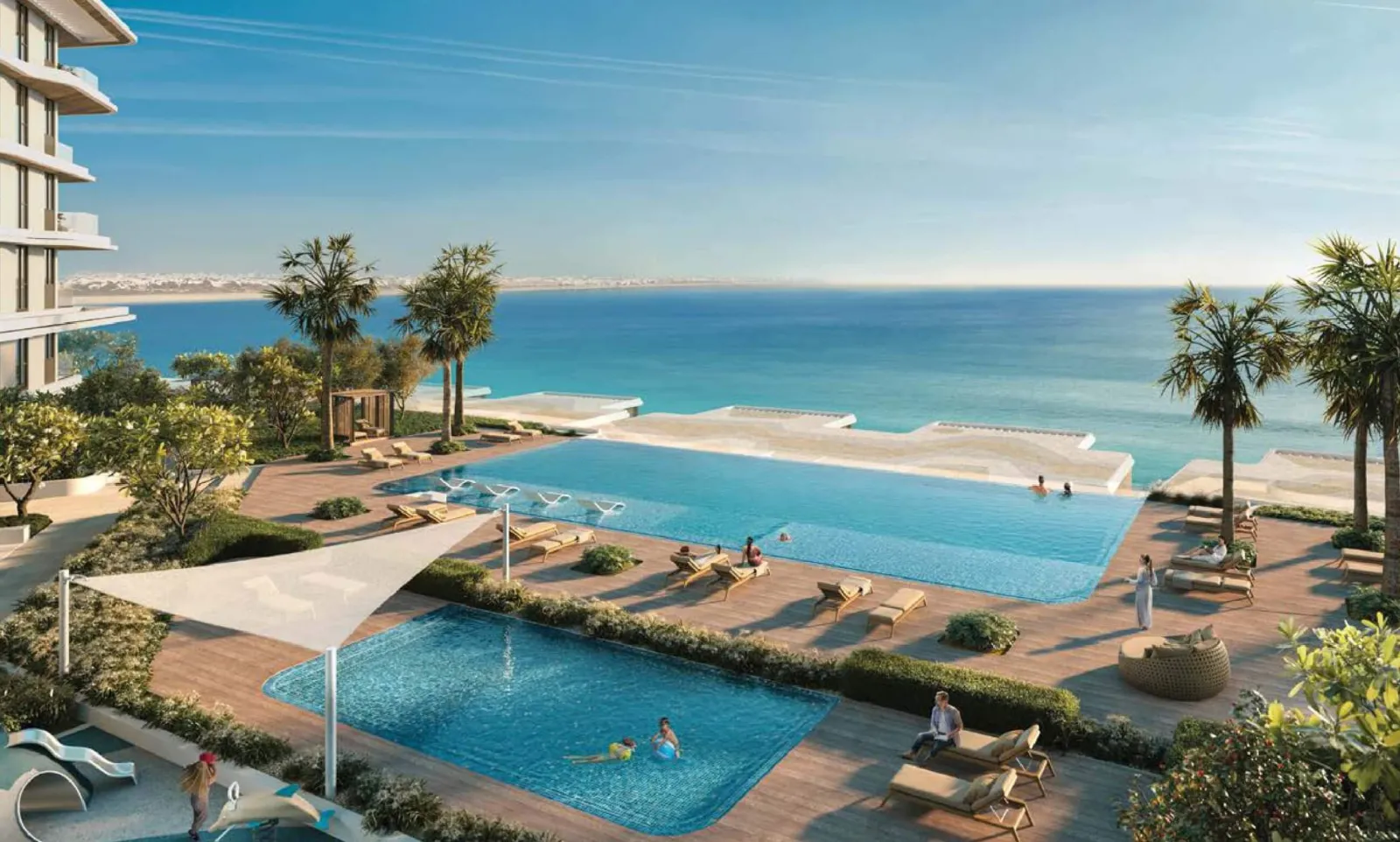
The Residences at The St. Regis Al Mouj Muscat Resort are St. Regis-branded freehold apartments and townhouses on a 360-metre stretch of beachfront within Al Mouj Muscat. The developer, Alfardan Group, partnered with Marriott International, which operates the St. Regis brand, and announced the handover of the residences to owners on 1 August 2024. According to our listing, the resort has 250 guestrooms and suites, and the brand’s butler service and 24-hour concierge are part of the residential offer.
The St. Regis Residences are a completed, operating property, so buyers can inspect the finished building rather than buy from plans. Al Mouj also has a marina and a golf course that adjoins the resort. Price from: USD 882,000 for a one-bedroom apartment (about OMR 339,126 at the fixed rate of OMR 1 = USD 2.6008). Handover: August 2024, per the developer. For unit types and current availability, see the St. Regis Residences, Al Mouj listing, and for the wider community, our complete Al Mouj Muscat investment guide.
Vistal by Victoria Swarovski, Al Mouj — Design-Endorsed Residences by LEO Developments
Vistal is a nine-storey waterfront residential complex on the coastline of Al Mouj Muscat, developed by LEO Developments. Victoria Swarovski, an Austrian singer and television personality from the family behind the Swarovski crystal brand, is the design collaborator and endorser. TradeArabia reported on 11 December 2025 that LEO Developments launched the project at a ceremony in Muscat under the patronage of the Minister of Housing and Urban Planning. The branding is therefore a design endorsement rather than a hotel-operator brand: our listing names LEO Developments as the developer and as the seller in the sale and purchase agreement, and does not name a hotel operator.
The collection comprises one- and two-bedroom apartments, two- and three-bedroom duplexes, three-bedroom beach chalets and Sky Villas, with unit sizes from 478 to 7,532 sq ft; the listing counts 70 units available. Al Mouj is a freehold Integrated Tourism Complex, and the listing states that foreign buyers can hold full ownership of the unit and the land beneath it. Price from: USD 364,100 for a one-bedroom apartment (about OMR 139,995 at the fixed rate of OMR 1 = USD 2.6008) and USD 611,200 for a two-bedroom; the listing adds that launch pricing in January 2026 started from approximately OMR 133,546. Handover: completion is scheduled for Q4 2029 under an eight-instalment off-plan payment plan, per the listing. Full details are on the Vistal by Victoria Swarovski, Al Mouj listing.
The Residences at Mandarin Oriental, Shatti Al Qurum
The Residences at Mandarin Oriental, Muscat are 156 serviced residences in three seven-storey buildings on the beachfront at Shatti Al Qurum, an established coastal district inside Muscat rather than a resort enclave outside the city. The developer is Eagle Hills Muscat, a joint venture between Eagle Hills (Abu Dhabi) and Izz International, and Mandarin Oriental Hotel Group services the residences. According to our listing, the project was announced in May 2018, broke ground in November 2019 and is now complete, with homes delivered fully furnished.
The product ranges from one- to three-bedroom apartments to four-bedroom penthouses. Price from: USD 442,100 for a one-bedroom apartment (about OMR 169,990 at the fixed rate of OMR 1 = USD 2.6008). Handover: the listing shows the residences as complete, so no handover date is outstanding; 18 of the 156 homes were shown as available. See the Residences at Mandarin Oriental listing for current unit availability and pricing.
Nikki Beach-Branded Residences at The Sustainable City – Yiti
The Sustainable City – Yiti, a masterplan by Diamond Developers and OMRAN, includes Nikki Beach-branded residences. Nikki Beach is a beach-club and hospitality brand; according to OMRAN, Nikki Beach Hotels & Resorts operates the Nikki Beach Resort & Spa at Yiti (140 hotel rooms and 30 villas). Our listing describes the masterplan as built around renewable energy generation and an organic-farming and green-mobility framework, with a stated net-zero target.
Price from: not published. The Sustainable City Muscat listing shows price on request and gives no separate figure for the Nikki Beach units. Handover: December 2027 is the target stated for the masterplan on the listing; the sources we reviewed differ on the status of the resort and residences, so the phase and date for a specific unit should be confirmed in the sale and purchase agreement. Our Sustainable City – Yiti investor guide covers the wider masterplan, including unit types.
How Oman’s Branded Programmes Compare
| Programme | Location | Brand and Developer | Status and Handover | Price From (Our Listing) |
|---|---|---|---|---|
| St. Regis Residences, Al Mouj | Al Mouj Muscat waterfront | St. Regis brand (Marriott International); developer Alfardan Group | Completed; handed over August 2024 per the developer | From USD 882,000 (about OMR 339,126), 1-bedroom |
| Vistal by Victoria Swarovski, Al Mouj | Al Mouj Muscat waterfront | Design collaboration and endorsement by Victoria Swarovski; developer LEO Developments; no hotel operator named on the listing | Off-plan; completion scheduled Q4 2029 per the listing | From USD 364,100 (about OMR 139,995), 1-bedroom |
| Residences at Mandarin Oriental | Shatti Al Qurum, central Muscat | Mandarin Oriental Hotel Group; developer Eagle Hills Muscat | Completed; delivered furnished per the listing | From USD 442,100 (about OMR 169,990), 1-bedroom |
| Nikki Beach Residences, Yiti | The Sustainable City – Yiti | Nikki Beach brand; masterplan by Diamond Developers and OMRAN | Off-plan; masterplan handover target December 2027 per the listing | Price on request (no figure on the listing) |
| Marriott Residences at AIDA | AIDA, Yiti | Marriott brand; developer DarGlobal | Off-plan; target completion Q4 2027 per the developer | From OMR 139,200 (about USD 362,031), 1-bedroom |
| Trump Golf Villas, AIDA | AIDA, Yiti | Trump name; developer DarGlobal | Off-plan; no completion date on the developer’s price list | From OMR 903,320 (about USD 2,349,355), 5-bedroom villa |
Prices are the “from” figures on each listing page as of 12 October 2026, in the currency the listing uses: USD for St. Regis, Vistal and Mandarin Oriental, and OMR (the developer’s price list currency) for the two AIDA collections. Conversions use the fixed rate of OMR 1 = USD 2.6008. Prices, availability and handover dates can change.
The Wider Picture: W Muscat and AIDA
W Muscat is a hotel under Marriott’s W Hotels brand, developed by OMRAN and announced as open in June 2019; the sources we reviewed do not describe branded residences there. AIDA by DarGlobal at Yiti is a separate programme: DarGlobal has described a Trump resort with villas, a hotel and a golf course at AIDA, and a July 2024 DarGlobal release described Marriott Residences at AIDA as 224 one-, two- and three-bedroom residences along the shoreline (per the developer). The price lists are on our Trump Golf Villas and Marriott Residences at AIDA listings.
The programmes differ in status. The St. Regis Residences and the Residences at Mandarin Oriental are completed, while Nikki Beach, AIDA and Vistal are off-plan, with handover dates stated between Q4 2027 and Q4 2029. For off-plan units, the handover date, payment schedule and escrow arrangements are set in the sale and purchase agreement.
How Oman’s Branded Market Compares to Dubai’s
Foreign ownership in Integrated Tourism Complexes is administered through Oman’s Ministry of Housing and Urban Planning, the same authority that handles standard freehold registration.
Most international buyers researching this space also look at Dubai. Dubai has a larger and longer-running branded-residence market than Oman, with more brands and projects. Oman’s category is smaller and newer: this article covers St. Regis, Mandarin Oriental, Nikki Beach, Vistal (a design endorsement rather than a hotel brand) and the Marriott and Trump collections at AIDA.
The two markets differ in choice, price levels and resale history, and entry prices vary by project: the table above shows the Oman figures from our listings. For a fuller comparison beyond branded product, see our Oman vs Dubai investment guide. Neither market is objectively better for branded residences: Dubai offers more choice and a longer resale history, while Oman offers a smaller, newer category.
Branded vs Non-Branded: Is the Premium Worth It?
| Factor | Branded Residence | Non-Branded Freehold |
|---|---|---|
| Purchase price | Often priced above comparable unbranded units; the difference varies by project | Market price for the community |
| Resale | Depends on the project; resale evidence is limited | Depends on the project |
| Service standard | Hotel-style services under the operator’s agreement; confirm the terms in the contract | Varies by developer |
Branded residences are generally priced above comparable unbranded units in the same community; the size of the premium differs by project, and we have not found a published Oman-wide figure. The premium typically reflects the operating standard, access to amenities and the brand’s rental and resale recognition. Whether it is worth paying depends on what the buyer is optimising for.
Considerations in favour of a branded unit include: renting through the operator’s own management programme and its distribution channels (terms vary by programme); wanting turnkey ownership with minimal day-to-day involvement, which can matter to overseas buyers; or buying for the brand experience rather than for yield alone.
Where the priority is gross rental yield as a percentage of the purchase price, compare branded and unbranded options on net figures: a higher purchase price and higher service charge can lower the percentage even where the absolute rent is higher. For how yields compare across Oman’s communities regardless of branding, see our Oman rental yields guide.
Which Buyer Profile Fits Which Programme
Matching your own priorities to a programme is usually more useful than ranking them. If a completed building with an operating resort matters, the St. Regis Residences (handed over August 2024 per the developer) and the Residences at Mandarin Oriental (complete per the listing) are the two finished programmes covered here. If you want a branded address inside Muscat rather than a resort community, Mandarin Oriental at Shatti Al Qurum is the programme in this article located in the city. If you prefer a sustainability-led masterplan with a beach-club brand and accept a later handover (December 2027 target per the listing), Nikki Beach at Yiti is the relevant programme. Vistal at Al Mouj is a design-endorsed rather than hotel-operated project, with completion scheduled for Q4 2029.
Buyers comparing branded product with unbranded resort communities can read our Jebel Sifah guide and Hawana Salalah guide, which cover unbranded resort communities.
How to Evaluate a Branded Residence Before You Buy
Buyers financing a purchase should confirm mortgage terms with lenders operating under rules from the Central Bank of Oman; terms vary by lender and by project.
A handful of specific checks apply to branded product in particular:
- Confirm the operating agreement’s length and renewal terms. A branded residence is only “branded” for as long as the hotel operator’s agreement with the developer or owners’ association remains in force — ask specifically how long the current agreement runs and what happens to the property’s branding and service standard if it isn’t renewed.
- Understand the rental management programme’s fee structure if you plan to let through the brand — management and marketing fees on branded rental programmes can differ from what a standalone local agent would charge, and that should be modelled into your net yield calculation from the outset, not treated as an afterthought.
- Check what “hotel-grade services” actually includes for your specific unit — housekeeping frequency, concierge hours, and amenity access can differ between what is marketed in brochures and what is set out in the unit’s service agreement.
- Verify the freehold title and purchase permit process apply on exactly the same terms as any other ITC property — branding doesn’t change the underlying legal framework or the residency thresholds that apply. See our freehold and ITC guide for the full process.
- Model the true all-in cost, including any service charge premium tied to the brand’s operating standard, alongside the transfer fees and other costs covered in our Oman property tax guide. Service charges are set per project, so request the schedule for the unit.
- Ask about financing specifically for the branded unit, since lenders set their own loan-to-value ratios — our Oman mortgage guide for foreign buyers covers how financing actually works in practice.
- Compare resale evidence where it exists. For completed buildings (the St. Regis Residences, the Residences at Mandarin Oriental), ask for resale transactions in the same building; for off-plan projects there is none yet, so any resale view rests on projection.
Frequently Asked Questions
What branded residences currently exist in Oman?
The programmes covered here are the St. Regis Residences at Al Mouj (Marriott International), The Residences at Mandarin Oriental in Shatti Al Qurum, the Nikki Beach-branded residences within The Sustainable City – Yiti, Marriott Residences and Trump Golf Villas at AIDA in Yiti, and Vistal by Victoria Swarovski at Al Mouj, which carries a design collaborator’s name rather than a hotel brand.
Do branded residences qualify for Oman residency the same way as other freehold property?
Residency follows the property’s tenure and price, not its branding. Property in an Integrated Tourism Complex can support the Owner Visa, which has no minimum value, and a single ITC property worth at least OMR 200,000 can support a Golden Residency application, which the Royal Oman Police decides. See our Golden Residency vs Owner Visa guide for current thresholds.
Are branded residences a good investment, or just a lifestyle purchase?
That depends on the buyer’s goal, and this guide does not project returns. Branded units often cost more to buy and to run than unbranded ones, so the comparison should be made on net figures; a branded unit also offers hotel-style services and, in some programmes, the operator’s rental management.
Is the service charge higher on a branded residence?
Hotel-style services may be charged for, and service charges are set per project, so request the specific service charge schedule for the unit you are considering rather than assuming it matches a standard freehold apartment.
Can I manage the rental myself instead of using the brand’s programme?
This is set by each programme’s management agreement and owners’ association rules. Confirm the specific terms with the developer or owners’ association before purchase, since they differ between programmes.
Which branded programmes are already completed?
The St. Regis Residences were handed over to owners in August 2024, according to the developer, and our listing shows the Residences at Mandarin Oriental as complete and delivered furnished. Nikki Beach at Yiti (masterplan handover target December 2027), Marriott Residences at AIDA (target completion Q4 2027 per the developer) and Vistal (scheduled for Q4 2029) are off-plan; the Trump Golf Villas price list gives no completion date.
Branded Residences in Oman: Listings Referenced
Listing pages for the programmes in this guide: St. Regis Residences, Al Mouj; Vistal by Victoria Swarovski, Al Mouj; Residences at Mandarin Oriental, Shatti Al Qurum; The Sustainable City Muscat (Nikki Beach-branded units); Marriott Residences at AIDA; and Trump Golf Villas, AIDA. Figures in this guide are taken from those pages as of 12 October 2026; prices, availability and handover dates can change.