



























Real Estate Agents in Oman: Licensing, Fees and How to Verify
This guide is current at 16 October 2026 and explains how real estate agents in Oman are regulated since Royal Decree 79/2025, the Real Estate Regulation Law, took effect in March 2026. It sets out who needs a licence, which Ministry issues it, what the register of brokers is, what the law says about contracts and fees, and which penalties apply when someone brokers or advertises property without permission. All rial amounts use the fixed peg of OMR 1 = $2.6008, with dollars in brackets.
It then turns to practice. You will see how a sales mandate for a large development such as Jood and Yamal is described in the press, how the developer, the project and the advertising licences differ from a broker’s licence, what documents a buyer can ask for, and which warning signs Omani officials and newspapers have described. The aim is a neutral checklist for anyone dealing with real estate agents in Oman, not a recommendation to buy any property.
What the Law Says About Real Estate Agents in Oman
Royal Decree 79/2025 was issued on 10 September 2025 and published in Official Gazette 1613 on 14 September 2025, according to the decree.om record. It enters into force 180 days after publication, which BSA, a law firm, dates to 10 March 2026. Article III of the decree repeals three older instruments: the Brokerage Law (Royal Decree 78/86), the Apartments and Floors Ownership System (Royal Decree 48/89) and the Escrow Account System (Royal Decree 30/2018). Brokerage, which used to have its own law, is now one chapter of a single statute that also covers developers, off-plan sales, valuation, shared property and escrow accounts.
According to the qanoon.om transcription of the law, which says it is not an official source, brokerage and valuation sit in Chapter 8, Articles 57 to 62. Article 1 defines brokerage as arranging sales, leases or other dispositions of built or unbuilt property, and marketing it, for a fee, and defines a broker as a person licensed to practise it. That definition matters because it ties the licence to the activity rather than to a business card. Anyone who arranges or markets a property deal for a fee falls inside it, whether the person works alone or for a company.
| Provision | What it says | Why it matters to a buyer |
|---|---|---|
| Article 1 (definitions) | Brokerage means arranging and marketing sales, leases or other dispositions of built or unbuilt property for a fee; a broker is a licensed person | The licence follows the activity of intermediating for a fee |
| Article 57 | Brokerage and valuation each need a Ministry licence; the Minister may classify licences into categories by decision | A licence is issued by the Ministry of Housing and Urban Planning, not by the seller |
| Article 58 | The Ministry keeps one register of brokers and one of valuers | There is an official register to check a name against |
| Article 59 | A broker must sign a contract with the person using the service; the executive regulation sets its contents and how fees are set | The engagement is written, and the law itself sets no commission rate |
| Article 60 | Brokers follow the professional rules set in the regulation | Conduct standards exist, with details to come from the regulation |
| Article 61 | Practising brokerage and valuation together is prohibited | The person valuing a property cannot also be selling it |
| Article 62 | Claims for fees lapse after five years from the date the fee became payable | A time limit applies to fee disputes |
BSA and Mondaq, which republished a law-firm summary, describe the same duty in plainer terms: anyone engaged in brokerage or marketing needs an official licence from the Ministry of Housing and Urban Planning, must observe standards of integrity, transparency and protection of clients’ interests, and must be registered. BSA adds that violations can bring administrative and criminal penalties, including fines and licence revocation. The Ministry’s own statement of 25 July 2026, reported by the Oman Observer and Times of Oman, lists brokerage among the activities the new law brings under one framework alongside development, off-plan sales, valuation, joint-property management and escrow accounts.
One structural point is easy to miss. Article II of the decree gives the Minister of Housing and Urban Planning one year from entry into force to issue the executive regulation, and until then the existing regulations and decisions continue to operate where they do not conflict with the law. Several of the details that matter most for real estate agents in Oman, such as licence categories, contract contents and how fees are set, are left to that regulation. The one-year period points to about March 2027.
What Changed for Real Estate Agents in Oman Since March 2026
Understanding the older regime helps because many guides, forum posts and agency websites still describe it. Under the repealed brokerage law, according to a 2013 note from the law firm Curtis and Oman Observer reports of 2017, brokerage licences were issued through the Ministry of Commerce and Industry, brokers also had to register with the Ministry of Housing, individuals needed to complete a specialised training course, and companies needed at least 80 per cent of their brokerage workforce to be Omani nationals with a diploma or equivalent. The Public Prosecution warned in August 2017 that brokering without a licence was a crime punishable by up to six months in prison and a fine of RO 3,000.
In September 2018 the Oman Observer reported that, from 1 October of that year, the Ministry of Housing would accept registration of real estate transactions only through brokerage offices it had licensed, with those offices registering the initial sales contract electronically and the remaining steps completed at the Ministry’s one-stop shop. That rule belonged to the repealed regime, and whether and how it continues will depend on the executive regulation. It is useful mainly as background: it shows that Oman has regulated the licensed-intermediary role for years, and that the 2025 law consolidates rather than invents it.
| Topic | Repealed brokerage regime (as reported 2013-2018) | Royal Decree 79/2025 (in force from March 2026) |
|---|---|---|
| Governing text | Royal Decree 78/86 | Chapter 8 of the Real Estate Regulation Law, Articles 57 to 62 |
| Licence | Licensed via the Ministry of Commerce and Industry, with registration at the Ministry of Housing | Ministry of Housing and Urban Planning licence, in categories set by ministerial decision |
| Penalty for unlicensed brokerage | Up to six months in prison, a fine of up to RO 3,000, or both | 10 days to six months in prison, a fine of OMR 1,000 to 10,000 ($2,601 to $26,008), or one of the two (Article 64) |
| Written contract | Required; minimum contents were the parties, the property, the terms and the amount payable | Required (Article 59); contents and fee-setting left to the executive regulation |
| Default commission | 3% of the value on a transfer of property and 5% of the lease value on a lease, if the parties could not agree | The law sets no rate; Article 59 refers fees to the regulation |
| Register | Ministry of Housing registration of brokers | Ministry registers of brokers and of valuers (Article 58) |
| Brokerage and valuation together | Not addressed in the sources reviewed | Prohibited (Article 61) |
Two changes stand out. The penalty for brokering without a licence now has a floor and a higher ceiling: the maximum fine rises from RO 3,000 to OMR 10,000, which is $7,802 and $26,008 respectively at the peg, and the imprisonment range is stated as 10 days to six months. And the new law does not carry forward a statutory default commission. The default percentages in the table come from the 2013 Curtis note on the old law and should not be read as current rules.
Licences, Registers and Fees for Real Estate Agents in Oman
The Ministry has cut and restructured its service fees more than once. A ministerial resolution reported by Times of Oman on 17 October 2022 halved six brokerage-related fees, and a January 2025 package amended 85 Ministry services, as Muscat Daily reported on 27 January 2025. The 2025 package merged 47 fees, cancelled 11, reduced eight and added 14 new services, and Muscat Daily says it regulated fees for real estate brokerage licences. The same package cut the registration fee on sales contracts for Omani individuals and companies from 2% to 1%.
The 2022 table below shows the scale of the broker and brokerage-company card fees at that date. Because the Ministry amended its fees again in 2025, the figures are a historical reference for the cost structure, and the current amounts are those shown on the Ministry’s fee schedule.
| Fee (2022 resolution) | Before, Muscat / other governorates | After, Muscat / other governorates |
|---|---|---|
| Registration card to practise brokerage (company, one-time) | OMR 500 / 300 | OMR 200 / 150 |
| Renewal of company registration card | OMR 200 / 100 | OMR 100 / 50 |
| Replacement of lost company card | OMR 100 / 50 | OMR 50 / 25 |
| Broker card issuance (one-time) | OMR 50 / 25 | OMR 25 / 15 |
| Annual broker card renewal | OMR 25 / 15 | OMR 15 / 10 |
| Replacement of lost broker card | OMR 25 / 15 | OMR 10 / 10 |
A worked example shows how small these state fees are next to the money in a property deal. Under the 2022 schedule a company in Muscat paid OMR 200 ($520) for its first card, and each broker card cost OMR 25 ($65) at issuance and OMR 15 ($39) a year to renew. A company with ten brokers would therefore have paid OMR 200 + (10 x OMR 25) = OMR 450 ($1,170) in card fees in the first year, before the 2025 amendments. Licence fees say nothing about the quality of an agent, but they show that registration is a routine, low-cost administrative step, so an agent who has no licence cannot credibly cite cost as the reason.
Ministry figures show why the sector is supervised. According to the Ministry statement of 25 July 2026, the value of real estate transactions in the first half of 2026 reached OMR 1.43 billion ($3.73 billion), up 5.4% from OMR 1.36 billion a year earlier, and more than 190 real estate companies were registered with the Ministry by the end of June 2026. Foreign real estate investment transactions exceeded OMR 60 million ($156 million), which is about 4.2% of the half-year total, and transactions involving Gulf investors exceeded OMR 13 million ($33.8 million). The National Centre for Statistics and Information put the contribution of real estate activities to 2025 GDP at about OMR 1.08 billion ($2.81 billion), according to the same statement.
Commission: What the Law Sets and What Is Negotiated
The text of Article 59, as transcribed on qanoon.om, requires the broker and the person using the service to sign a contract and leaves its contents, the parties’ rights and duties and the method of setting fees to the executive regulation. The law itself therefore names no percentage. Article 62 adds that a broker’s claim for fees on completed work lapses after five years from the date the fee becomes payable. These two articles are the only fee rules in the brokerage chapter as transcribed.
For that reason a commission is a matter of the written engagement. A buyer or seller can read the contract and answer four questions: who is the paying party, what event triggers the fee, what is the amount or percentage, and what the fee covers. The 2013 Curtis note on the repealed law recorded that the party who engaged the broker paid, that two engaging parties shared the cost, and that the broker earned a commission only if the transaction was completed. The new law leaves these points to the contract and the regulation, so the contract wording is what counts.
| Question for the written engagement | Why it matters | Worked arithmetic on a Jood entry price of OMR 78,437 ($204,000) |
|---|---|---|
| Is the fee a percentage or a fixed sum? | A percentage grows with the price | Each 1% is OMR 784.37 ($2,040) |
| Who pays and when? | The paying party and the trigger date set the cash flow | A fee payable at booking would fall due when 2.5% of the price, OMR 1,960.93 ($5,100), is also due |
| Is VAT or any other charge added? | The all-in cost can differ from the headline rate | Ask for the total in rials and dollars before signing |
| What happens if the sale does not complete? | The 2013 note on the old law tied the fee to completion | A conditional fee of 1% would be OMR 784.37 only if the sale completes |
The arithmetic in the table is illustrative of how to read a fee clause and is not a rate that any agent charges. Note also that a registration fee is a different item from a commission. The Ministry fee for registering a sale is paid to the state. The listing page for Yamal states a 3% property transfer fee for foreign buyers, which on its entry price of OMR 63,750 ($165,800) is OMR 1,912.50 ($4,974), and the Ministry’s January 2025 reduction from 2% to 1% was reported for Omani individuals and companies. Buyers can ask the developer or the Ministry which fee schedule applies to them.
Developer Sales Teams, Appointed Agents and Resale Brokers
A buyer in Oman can meet three different kinds of seller-side party, and the law treats them differently. The first is the developer’s own sales office, which sells units the developer has been licensed to build and market. The second is an appointed sales agent or brokerage firm that a developer has engaged to find buyers, sometimes for a particular market. The third is a resale broker who markets a finished unit on behalf of an owner. All three do work that the law describes as marketing or intermediating, but the paperwork that sits behind each is not identical.
For a new development, the Ministry’s three-stage description, reported on 25 July 2026, separates the developer licence, the project licence and the advertising permit. The developer needs all three before it announces, promotes or sells a project. Advertising or marketing that project, whether by the developer or by anyone acting for it, needs the project-specific licence, because Article 6, as transcribed, bars it without one. The broker licence under Articles 57 and 58 is a separate document held by the person or firm doing the brokering, so a buyer can ask for both: the project’s licences and the agent’s own licence.
On the resale side there is no developer in the chain. The seller is an owner, the title is already registered, and the question is whether the person marketing the unit holds a broker licence and a written engagement from the owner. Our guide to selling property in Oman covers the owner’s side of that exit, including the transfer steps. For a buyer of an off-plan unit, the developer’s role in the contract is explained in the developer guide, which notes that the contracting party in the sale and purchase agreement should match the licensed developer.
The developers hub at Oman developers directory lists developer profiles by company, which helps a buyer identify the seller named on a reservation form. The profile of a developer does not replace a check against the Ministry, but it shows the corporate name, the projects and the community each company builds.
One Developer, One Sales Mandate: Jood and Yamal
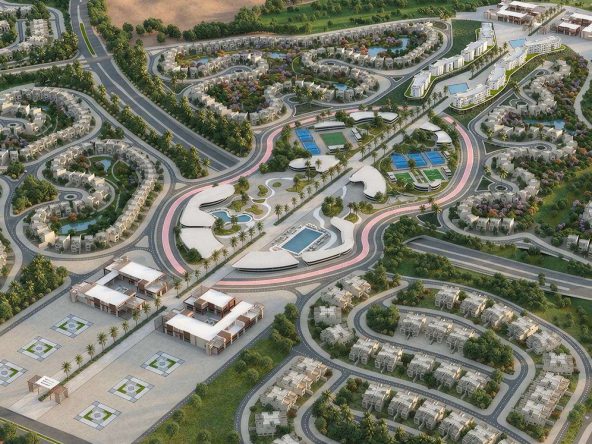
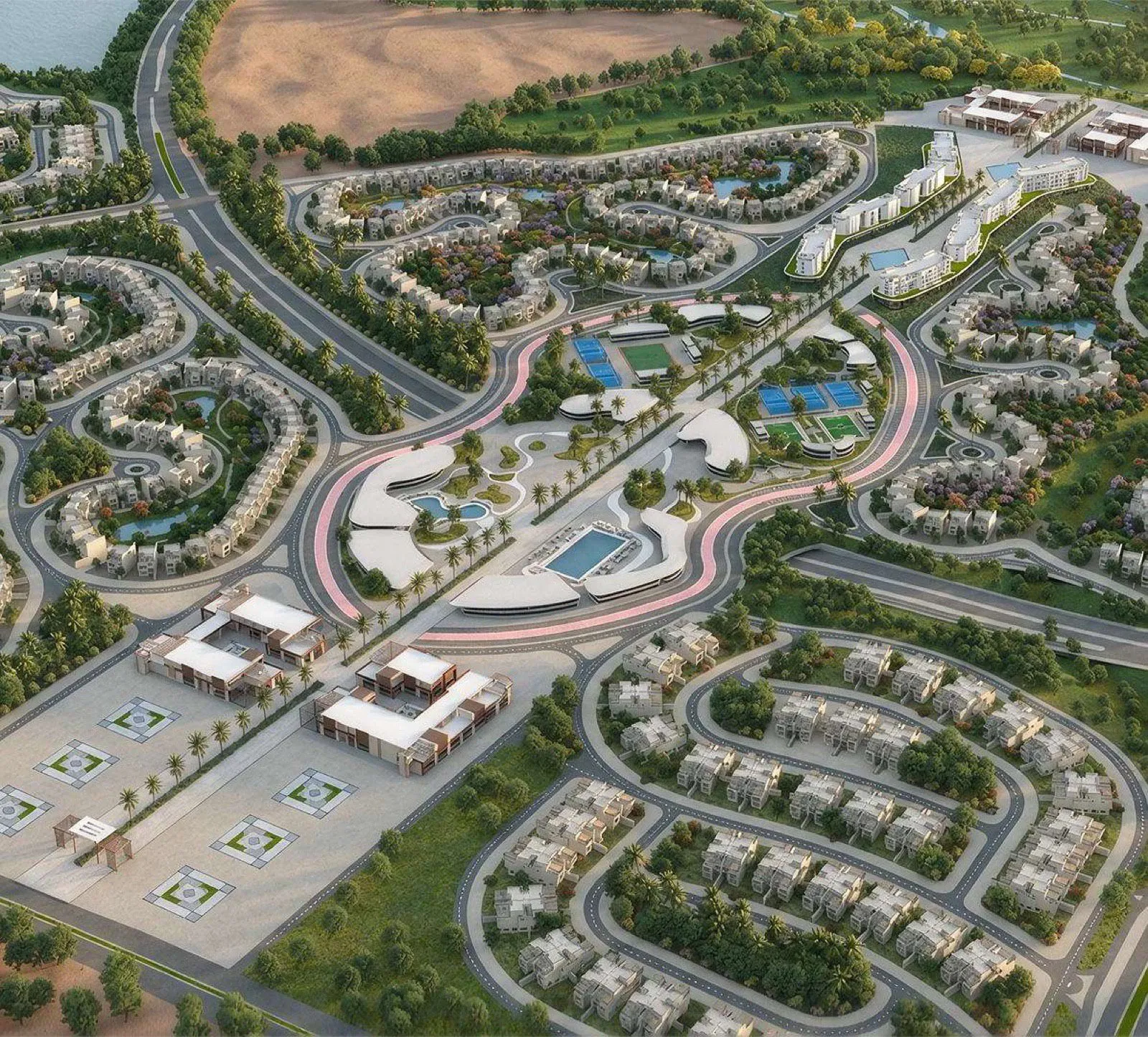
A recent example shows how a sales mandate is described in the Omani press. Muscat Daily reported on 8 February 2026 that Hamptons International Oman, a real estate advisory and brokerage firm, had signed with Talaat Moustafa Group (TMG) at the developer’s headquarters to act as exclusive international sales agent for Jood and Yamal, and as exclusive third-party sales agent for both local and international markets. The report says the two ITC developments have a combined value of about $5 billion and more than 15,000 residential units, and that sales were being rolled out through Hamptons’ offices and private client platform.
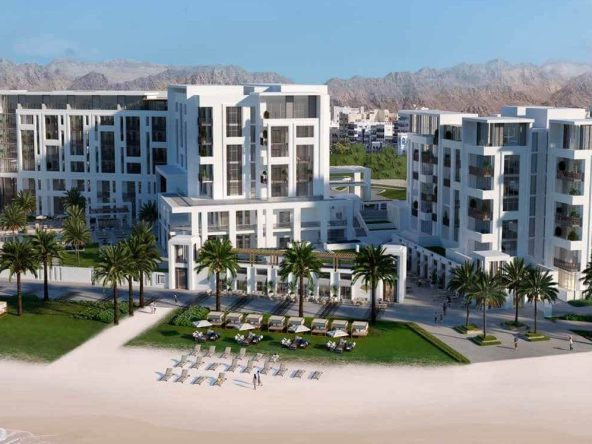
The developer’s side is described in the launch announcement from Al Muhaidib Group, TMG’s partner, which reports a launch on 2 December 2025: Jood is a planned smart residential community in Sultan Haitham City and Yamal a coastal destination with about 1,760 metres of beachfront on the Gulf of Oman, with combined investment above $5 billion. Our listing pages for Jood and Yamal describe the sales mandate in the same terms and give the project data used below. The mandate shows how real estate agents in Oman can include a foreign-market sales role, which sits alongside the developer’s own licences rather than replacing them.
The Jood data per our listing page is a good case for reading a payment plan. The two-bedroom apartment starts at OMR 78,437 ($204,000) for 1,141 sq ft (106 m2), handover is targeted for Q1 2030, and the 4.5-year plan is 2.5% on booking, 17.5% within one month, 15% at 12 months, 15% at 24 months, three further 15% instalments every six to eight months, and 5% on completion. On the entry price that works out as follows.
| Step (Jood, 4.5-year plan) | Share | Amount in OMR | Amount in USD |
|---|---|---|---|
| Booking | 2.5% | OMR 1,960.93 | $5,100 |
| Within one month of booking | 17.5% | OMR 13,726.48 | $35,700 |
| At 12 months | 15% | OMR 11,765.55 | $30,600 |
| At 24 months | 15% | OMR 11,765.55 | $30,600 |
| Three further instalments, 15% each | 45% | OMR 35,296.65 | $91,800 |
| Completion | 5% | OMR 3,921.85 | $10,200 |
| Total | 100% | OMR 78,437.00 | $204,000 |
The shares add up as 2.5 + 17.5 + 15 + 15 + 45 + 5 = 100. Before completion the buyer has paid 95%, or OMR 74,515.15 ($193,800), and OMR 3,921.85 ($10,200) remains. The page adds that each due date is fixed in the sale and purchase agreement, which is the binding record regardless of who presented the plan. The Yamal listing shows a lower entry price of OMR 63,750 ($165,800), a Q4 2029 handover target and the same 4.5-year structure among its four payment options, plus longer 6- and 8-year plans. Our comparison of Oman property payment plans sets these structures beside other developers.
Three Licences Behind an Off-Plan Sale
The Ministry’s description of 25 July 2026 gives buyers a simple map of what should exist before a unit is offered. The first stage is the development licence, which gives a company legal authority to conduct development in Oman. The second is the project licence for the specific project, which includes opening an escrow account with a local bank so off-plan units can be sold. The third is the advertising, promotion and marketing permit for media, online platforms or exhibitions. The Director-General of Real Estate Development, Nasser bin Khamis Al Siyabi, urged buyers to confirm that both the developer and the project are registered and licensed before paying or signing.
The advertising permit is the one most visible to a buyer. Under Article 6, as transcribed, advertising, promoting or marketing a project requires a project-specific Ministry licence, whether the project is in Oman or abroad, and the rule extends to marketing outside Oman for local projects. Article 63 sets a penalty of one to three years in prison and a fine of OMR 10,000 to 100,000 ($26,008 to $260,080), or either, for advertising or holding property exhibitions without that licence. The Ministry repeated the point in September 2025, when the Muscat Daily reported its reminder that no entity may advertise property projects without prior approval.
Our own analysis of the pre-sale gates is in the article on the Oman off-plan marketing threshold, and the escrow and registry mechanics are in the guide to Royal Decree 79/2025 for off-plan buyers. Those pages note that the mainland escrow deposit percentage is left to the executive regulation, so the licences above are the checkable evidence available today.
How to Verify an Agent, a Developer or a Project
The Ministry of Housing and Urban Planning is the body that issues the licences, keeps the registers and receives enquiries, and its website is mohup.gov.om. Atheer, an Omani news outlet, wrote on 25 July 2026 that the law requires registers of licensed developers and projects, with public access depending on the executive regulation, and recommended that buyers start with the Ministry’s published channels. A buyer can therefore ask each party for specific documents and then confirm them with the Ministry. The checklist below follows the legal sources cited in this guide.
| Document or fact | Ask whom | What it should show | Source in the law or press |
|---|---|---|---|
| Broker licence and register entry | The agent, then the Ministry | Name, licence category and a register entry matching the person or firm | Articles 57 and 58 |
| Written engagement | The agent | Parties, service, who pays the fee and how it is set | Article 59 |
| Developer licence | The developer, then the Ministry | Registered developer whose legal name matches the seller on the reservation form | Ministry statement, 25 July 2026 |
| Project licence | The developer, then the Ministry | A licence for the specific project or phase, with its number | Ministry statement; Atheer, 25 July 2026 |
| Advertising permit | The agent or developer | A project licence number on the marketing material | Article 6; Atheer |
| Escrow account | The developer | Bank, project name and account holder, named in the contract | Articles 29 and 30 |
| Preliminary register entry | The developer | The unit recorded after signing | Articles 21 and 22 |
| Sale and purchase agreement | The developer | Ministry-approved form, unit details, payment schedule, handover and delay remedies | Atheer, 25 July 2026 |
A few cautions apply to the register. The law requires the Ministry to keep a broker register under Article 58, but Atheer notes that how the public accesses the registers depends on the executive regulation, so the practical step is a direct written enquiry to the Ministry for each name and licence number. It also helps to read the licence number against the legal name on the contract rather than against a trading name or a brochure. Two firms with similar names can be separate companies, and a payment made to the wrong one is hard to trace.
The Contract, Escrow and Registry: What an Agent Does Not Control
A buyer’s protection in an off-plan purchase does not come from the intermediary. It comes from three structures in the law. The first is the escrow account. Under Articles 29 and 30, as transcribed, the developer opens a project escrow account at a licensed bank registered with the Ministry, with a separate account per phase for multi-phase projects, and the Ministry approves opening and closing it. Article 32 requires periodic bank statements, Article 34 lets the Ministry appoint another consultant at the developer’s cost and instruct the bank to halt payments when completion certificates prove inaccurate, and Article 37 protects escrow funds from the developer’s creditors.
The second is the preliminary register. Article 21 creates a preliminary register of off-plan units, and a dealing in such a unit has no effect unless it is recorded there. Article 22 requires the developer to move the registration to the main register and allows no fee to the buyer beyond Ministry registration fees. Royal Decree 56/2026, the Real Estate Register Law, was in force from 18 May 2026 according to Trowers & Hamlins, and it provides for electronic registers and title deeds and a preliminary register for off-plan units. That law also requires a power of attorney to be specific about the transaction and lets an agent register property in their own name only where the power of attorney expressly allows it.
The third is the contract. Atheer reports that a Ministry-approved sale contract should cover the unit description, price, payment schedule, delivery date and each side’s obligations for delay, and that side agreements outside the approved contract are void. The same article records a ten-year warranty for major structural defects. For the money trail, our step-by-step off-plan guide describes the reservation, the agreement and the instalments in order, and service charges are covered separately because they continue after handover. The agent’s role in this chain is to introduce the parties and the property; the escrow account, the registry entry and the contract are what protect the money.
Our listing pages record the same structure project by project. The comparison below uses only what each page states, and the sale and purchase agreement is the binding document in every case.
| Listing | Developer | Sales route named on the page | Entry price | Handover target | Paid before handover |
|---|---|---|---|---|---|
| Jood | Talaat Moustafa Group, with Al Muhaidib Group | Hamptons International Oman, exclusive international sales mandate | OMR 78,437 ($204,000) | Q1 2030 | 95% on the 4.5-year plan |
| Yamal | Talaat Moustafa Group, with Al Muhaidib Group | Hamptons International Oman, exclusive international sales mandate | OMR 63,750 ($165,800) | Q4 2029 | 95% on the 4.5-year plan |
| AIDA | DarGlobal with Omran Group | DarGlobal sales office in Muscat; OMR 4,000 ($10,403) reservation token per unit | OMR 126,800 ($329,800) | Villas Q1 2027 to Q4 2028 | 50% on the villa plan |
| Luma Residence | Saraya Bandar Jissah (Muscat Bay) | Reservation form records unit and deposit; agreement signed 15 days after booking | OMR 115,541 ($300,500) | Q1 2029 | 50% |
| Dar Muscat Hills | Dar Arabia Development | Project shown as registered with the Ministry of Housing, General Directorate of Real Estate Development | Provided with reservation documents | December 2029 (beginning) | Plan provided with reservation documents |
On AIDA, the reservation token of OMR 4,000 ($10,403) is 3.2% of the OMR 126,800 entry price (4,000 / 126,800 = 0.0315), which shows how a fixed token behaves as a share of price. On Luma Residence, the apartment from $300,500 equals OMR 115,541 at the peg, and the 2.5% booking deposit is about OMR 2,889 ($7,513) with the 7.5% signing instalment about OMR 8,666 ($22,538) 15 days later. In every row the same principle applies: the page names the party that signs the agreement, and a buyer can match that name to the developer licence.
ITCs and Special Economic Zones: Different Approval Routes
Not every project follows the mainland path described above. Integrated Tourism Complexes, which are the freehold zones open to foreign buyers, are governed by Royal Decree 12/2006 and Ministerial Decision 191/2007, as amended. A July 2026 opinion in Times of Oman by the lawyer Dr Mohammed Ibrahim Al Zadjali describes the ownership rules: non-Omanis may own built units or plots zoned for construction or investment, Musandam is limited to built units under a usufruct of up to 99 years, and an owner cannot sell an undeveloped plot before completion except through a mortgage taken to finance the build. Our guide to freehold property in Oman and the comparison of integrated tourism complexes explain those zones in more detail.
For Jebel Sifah, the Oman Observer reported on 28 September 2025 a decree by the Minister of Heritage and Tourism, based on Royal Decree 12/2006 and Ministerial Decision 191/2007, under which the developer must not sell units until it has approval from both the Ministry of Housing and Urban Planning and the Ministry of Heritage and Tourism. The decree also requires a dedicated escrow account and an independent auditing firm. A buyer looking at an ITC project can therefore ask which ministries approved the sale, in addition to asking for the licence numbers above.
Special economic and free zones have their own authority. The Oman Observer reported on 21 September 2026 that the Public Authority for Special Economic Zones and Free Zones issued an executive regulation under Decision 81/2026, published in Official Gazette 1666. According to that report, developers must reach a threshold equal to 20% of total project cost before marketing off-plan units or accepting reservation payments, escrow spending on marketing is capped at 3% of the amounts in the account, and 5% of each unit’s sale value is retained for one year after registration. Developers that already market have up to six months to comply. For real estate agents in Oman who work on zone projects, the relevant approval therefore comes from the zone authority or operator, not only from the Ministry of Housing.
Red Flags: A Neutral Checklist
Officials and newspapers have described recurring patterns in property fraud, and they overlap with the legal gaps above. In September 2025 an assistant director at the Royal Oman Police’s Directorate General of Inquiries and Criminal Search said that social media advertisements for real estate, including farms and apartments, at unusually low prices had increased, and advised residents to check an offer is legitimate before engaging. On 14 July 2025 Times of Oman reported that Muscat Governorate Police had arrested two people for posting fake rental listings and collecting up-front payments. On 9 May 2026 the Oman Observer described fake flat listings priced well below market, requests for advance payments, small confirmation payments and communication through messaging apps, and advice not to pay before legal documents and verification are complete.
Atheer’s July 2026 article lists warning signs for off-plan purchases. Taken together with the legal sources, they produce the neutral checklist below. None of these signs proves wrongdoing on its own; each is a prompt to ask for the document the law requires.
| Warning sign | Why it matters | What can be checked |
|---|---|---|
| No mention of an escrow account | Off-plan payments must go into a project escrow account (Articles 29 and 30) | Bank, account name and agreement in the contract |
| Payment requested to a personal account, including a sales employee’s | Payments belong in the project escrow account | Account holder name against the developer and project |
| No project licence number on advertising | Advertising needs a project-specific licence (Article 6) | Licence number against the Ministry |
| Booking deposit demanded before the Ministry-approved contract is shown | Side agreements outside the approved contract are void, per Atheer | The approved form and its terms |
| Promises of high returns within a short time | Atheer lists this as a warning sign | Any return in writing, and the contract’s actual terms |
| Price far below comparable listings | A Royal Oman Police official described unusually low-priced adverts | Owner, title and viewing in person |
| Pressure to pay before verification | Press reports advise against paying before documents and verification are complete | Whether each document above has been seen |
The Oman Observer opinion of 26 July 2025 on rental fraud adds a pattern from the lettings side: the author describes unregistered people posing as estate agents, verbal agreements in place of written contracts, and a gap between what the tenant pays and the owner receives. It is an opinion column, not an official finding, but it points to the same control: a written contract, and a licensed intermediary whose name can be checked.
Residency Claims Made by Real Estate Agents in Oman
Residency is the topic on which agents’ statements most often need checking. A property purchase on its own does not grant residency. Golden Residency requires a single property in an Integrated Tourism Complex worth at least OMR 200,000 ($520,160), and the Royal Oman Police decides each application. The Owner Visa, under Royal Oman Police Decision 87/2026, has no minimum property value, requires no sponsor and is tied to ownership, so it ends if the property is transferred. Our guide to Golden Residency and the Owner Visa sets out the difference.
Applying the threshold to the listings above shows how a statement can be tested against the numbers. Jood’s entry price of OMR 78,437 is 39% of OMR 200,000 (78,437 / 200,000 = 0.392), and Yamal’s OMR 63,750 is about 32% of it. AIDA’s Amour Sans Détour collection is priced from OMR 126,800 to OMR 152,960, which is below the threshold, while every standalone villa on the page, from the Fairway Villas upward, is at or above it, per our listing page. On Luma Residence the apartment is below OMR 200,000 and the villa from $650,200 (OMR 250,000) is above it. A claim that a purchase gives residency is incomplete unless it names the route, the ITC status of the property, the single-property rule and the amount.
Penalties, Complaints and Disputes
The penalty provisions give buyers a way to see which conduct is an offence. As summarised from the transcribed law, practising brokerage or valuation without a licence is punishable under Article 64 by 10 days to six months in prison, a fine of OMR 1,000 to 10,000 ($2,601 to $26,008), or either. Under Article 63, developing, advertising or marketing without the required licence, or withdrawing escrow funds in breach of the law, is punishable by one to three years in prison and a fine of OMR 10,000 to 100,000, according to the Muscat Daily and the transcription. Article 65 lets the Minister impose administrative sanctions, including suspending, withdrawing or cancelling licences, or a fine of up to OMR 10,000, doubled for repeat violations.
| Conduct | Provision | Penalty |
|---|---|---|
| Brokerage or valuation without a licence | Article 64 | 10 days to six months in prison, a fine of OMR 1,000 to 10,000 ($2,601 to $26,008), or either |
| Advertising, marketing or holding exhibitions without a licence | Articles 6 and 63 | One to three years in prison and a fine of OMR 10,000 to 100,000 ($26,008 to $260,080), or either |
| Withdrawing escrow funds in breach of the law | Article 63 | Criminal offence; up to three years and OMR 100,000 per Atheer |
| Other violations | Article 65 | Suspension, withdrawal or cancellation of a licence, or an administrative fine up to OMR 10,000, doubled on repeat |
For disputes, Atheer notes that where a project stalls the project consultant must report to the Ministry within 30 days with the causes, after which the Ministry studies the situation and either finds a solution or refers the matter to the competent court. Owners’ disputes over unpaid shared-service charges go straight to the competent court. For a complaint about a broker or a project, the stated starting point is the Ministry through mohup.gov.om and its published channels. A fee claim by a broker lapses after five years under Article 62, which is a reason to keep every contract and receipt.
Frequently Asked Questions
Do real estate agents in Oman need a licence?
Yes, real estate agents in Oman need a licence. Article 57 of Royal Decree 79/2025, as transcribed on qanoon.om, says brokerage needs a licence from the Ministry of Housing and Urban Planning, and BSA reports the same duty. The law took effect in March 2026 and repealed the earlier brokerage law, Royal Decree 78/86.
Who regulates real estate agents in Oman?
Real estate agents in Oman are regulated by the Ministry of Housing and Urban Planning, which issues licences and keeps the registers of brokers and valuers under Article 58. Under the repealed regime, reports in 2013 and 2017 described licensing through the Ministry of Commerce and Industry with registration at the Ministry of Housing.
What is the commission for real estate agents in Oman?
For real estate agents in Oman the law sets no percentage. Article 59 requires a written contract between broker and client and leaves fee-setting to the executive regulation. Under the repealed law, a 2013 note recorded a default of 3% of the value on a transfer and 5% of the lease value on a lease when the parties had not agreed.
Can I verify a broker or developer licence?
The Ministry keeps the registers of real estate agents in Oman and urges buyers to confirm that both developer and project are registered and licensed before paying. Atheer notes that public access to the registers depends on the executive regulation, so a written enquiry to the Ministry with the licence number is the practical route.
Is it legal for real estate agents in Oman to advertise without a project licence?
No. Article 6, as transcribed, requires a project-specific Ministry licence for advertising a project, and Article 63 sets one to three years in prison and a fine of OMR 10,000 to 100,000 ($26,008 to $260,080), or either, for breaches.
Where should payments go in an off-plan purchase?
Into the project escrow account named in the contract. Articles 29 and 30 require a project escrow account at a licensed bank, and Atheer lists a request to pay a sales employee’s personal account as a warning sign.
Does buying through an agent give residency?
A purchase through any of the real estate agents in Oman does not give residency on its own. Golden Residency requires a single ITC property worth at least OMR 200,000 ($520,160) and is decided by the Royal Oman Police. The Owner Visa under Decision 87/2026 has no minimum value, needs no sponsor and ends if ownership is transferred.
Can one person act as both broker and valuer?
No. Article 61 prohibits practising brokerage and valuation together, so the person valuing a property cannot also be the intermediary selling it.
What happens to an unlicensed broker?
Article 64 provides 10 days to six months in prison, a fine of OMR 1,000 to 10,000, or either. Article 65 adds administrative sanctions for licensed operators, including licence suspension or cancellation and fines up to OMR 10,000.
Are the rules for real estate agents in Oman final?
The law is in force, but the Minister has until about March 2027 to issue the executive regulation, which will set licence categories, contract contents and fee methods. Until then, existing regulations and decisions continue where they do not conflict with the law.
Last checked: 16 October 2026. Sources: decree.om, Royal Decree 79/2025; qanoon.om transcription of the law; BSA; Mondaq; Oman Observer, 25 July 2026; Times of Oman, 25 July 2026; Atheer; Muscat Daily on the Hamptons mandate; Al Muhaidib Group; Trowers & Hamlins on the register law; Times of Oman on 2022 fees; Muscat Daily on 2025 fees; Curtis Oman Law Blog; Oman Observer, 2017; Oman Observer, 2018; Muscat Daily on scams; Oman Observer, 9 May 2026; Times of Oman on fake adverts; Oman Observer opinion; Oman Observer on the OPAZ regulation; Times of Oman on ITC ownership; Oman Observer on Jebel Sifah; Ministry of Housing and Urban Planning.