




























How to Buy Land in Oman as a Foreigner: 2026 Rules and Prices
This guide was checked on 16 October 2026. It sets out who may buy land in Oman, in which places, on what conditions, and what the two plot releases on our site actually cost. In short, a foreign individual or company can buy land in Oman where Omani law has designated the site, mainly plots inside licensed Integrated Tourism Complexes (ITCs), and cannot do so on ordinary private, agricultural or citizen-entitlement land. Every price below is shown in Omani rials (OMR) with US dollars in brackets, converted at the pegged rate of 2.6008 dollars per rial, and every rule carries the date or source it comes from.
The article covers the legal basis for plot ownership, the duties that come with a plot, the government programmes that keep most land reserved for citizens, our Jebel Sifah and Salalah plot listings with price per square metre, a comparison of plot, villa and apartment costs built from our own listing pages, the registration fee and VAT arithmetic, the title-deed and escrow rules, the residency position, and how national land-price data has moved in 2026. Readers who want a narrower question answered, such as how to tell a freehold project from a citizen scheme, will also find the three-question test in our guide on Omani property foreigners cannot buy.
Buy Land in Oman: The Short Answer at a Glance
Oman does not have one rule for land. It has a layered system in which the answer depends on the exact parcel, and the table below summarises where each type of land stands for a non-Omani buyer on 16 October 2026. The sections that follow explain each row and cite the source for it.
| Type of land | Position for a non-Omani buyer | Legal basis (as reported) | Example on our site |
|---|---|---|---|
| Plot inside a licensed ITC | May own plots prepared for building or exploitation, with a duty to build | Royal Decree 12/2006 as amended by RD 76/2010; Ministerial Decision 191/2007 as amended by MD 109/2022 | Jebel Sifah Land Plots; Salalah Land Plots (Hawana) |
| Unit in a special economic zone or free zone project | Freehold on the unit; the land stays under usufruct | Royal Decree 38/2025, Article 42, in the manner set by the regulation | None of our plot listings |
| Future cities and integrated neighbourhoods | Named by the Ministry of Housing and Urban Planning in June 2026 as areas where foreigners may own; title form decided project by project | Ministry statement, June 2026 | Sultan Haitham City listings |
| Surooh citizen-entitlement schemes | Programme is for citizens entitled to residential land; developer must confirm eligibility in writing before any payment | Listing pages for Husn Al Zain and Nismat Zain | Husn Al Zain; Nismat Zain |
| Ordinary private land, agricultural land, restricted governorates | Not open to non-Omanis | Royal Decree 29/2018, as reported by the Oman Observer | None |
The practical consequence is that anyone who wants to buy land in Oman as a foreigner is, in nearly every case, looking at a plot inside a licensed tourism complex. Our site lists exactly two such releases, both by Muriya, and both are sold together with a villa built to the developer’s specification rather than as bare land. That fact shapes the rest of this guide, because the usual meaning of a plot price, the cost of land alone, does not apply to either release.
Who Can Buy Land in Oman: How the Land System Is Divided
Understanding why the foreign market is narrow starts with how land reaches Omani citizens. The Ministry of Housing and Urban Planning has for decades distributed residential plots to eligible citizens under the Land Law. In February 2022 the minister told a briefing, as reported by the Oman Observer, that the ministry had distributed 1.319 million plots, of which 632,000 (48%) had been built or developed and 686,000 (52%) remained undeveloped, and that about 509,000 citizen applications for plots were still pending. Land is therefore a citizen entitlement first and a market asset second, which is the context for the restrictions on foreign ownership.
The restrictions themselves are set by Royal Decree 29/2018, which prohibits non-Omani ownership of land and real estate in certain places. According to an Oman Observer report of March 2022, the prohibited areas include Musandam, Al Buraimi, Al Dhahirah, Al Wusta and Dhofar (with the wilayat of Salalah excepted), the wilayats of Liwa, Shinas, Masirah, Jabal Al Akhdar and Jabal Shams, other strategic mountain areas, islands, sites near palaces and security or military facilities, archaeological and heritage lanes, and agricultural land in every governorate. The same report states that integrated tourism complexes in all governorates are excluded from the ban. That exclusion is the doorway through which almost all foreign land ownership passes.
The Ministry of Housing and Urban Planning restated the position in June 2026. As reported by Gulf News, the ministry said that foreigners still cannot buy property across the country, that ownership by non-Omanis is limited to the areas set out in existing laws, and that recent amendments to the executive regulations of the Foreigners’ Residence Law concern residency only. It listed integrated tourism complexes, the future cities of Sultan Haitham City, Al Thuraya City and Al Jabal Al Aali, and integrated residential neighbourhoods such as Surooh. Citizens of Gulf Cooperation Council countries are governed separately by GCC agreements and Omani rules for approved areas.
A Muscat Daily opinion column dated 19 August 2026 by the Muscat real estate advisor Waleed Al Abri lists the misunderstandings that followed the June headlines: assuming ownership opened nationwide, confusing the residency change with an ownership change, relying on brochures instead of the official designated list, and failing to distinguish freehold from usufruct, a long lease that ends. The column also notes that deposits are sometimes paid before eligibility is confirmed. Our own buying guide, Buying Property in Oman as a Foreigner, covers the wider purchase process.
Buy Land in Oman Inside an Integrated Tourism Complex
An Integrated Tourism Complex is a government-licensed development that must combine residential, commercial and tourism components. The licence is issued by the Ministry of Heritage and Tourism. According to the government services portal, the application carries a fixed fee of OMR 500 ($1,300), takes about six months and passes through seven stages that end in a government committee decision. Ownership inside a complex is governed by the system issued under Royal Decree 12/2006, amended up to Royal Decree 76/2010, and by its executive regulation, Ministerial Decision 191/2007, amended up to Ministerial Decision 109/2022.
Dr Mohammed Ibrahim Al Zadjali, a founding partner of a Muscat law firm, summarised the regime in a Times of Oman opinion piece of 25 July 2026. Omanis and non-Omanis, individuals and companies alike, may own built units or plots designated for construction or exploitation inside a complex, for residential or investment use. The executive regulation’s Article 2, as summarised by the Gulf Labour Markets and Migration programme, uses the words “prepared for building or exploitation” for the plots concerned. A Curtis Oman Law Blog post of October 2017 adds that foreign companies may buy residential and non-residential units from developers and register title with the Ministry of Housing.
Build-out deadline and resale limits
Owning a plot in a complex is not the same as holding it indefinitely unbuilt. Al Zadjali states that the owner must complete construction, or put the land to its intended use, within four years of registration. The Ministry of Housing may grant up to two further years on the recommendation of the Ministry of Tourism, provided the owner applies before the original period expires and gives sufficient justification. Until completion the owner cannot sell or otherwise dispose of the plot, and the plot may be mortgaged only to finance the construction work. Developers and owners who breach these provisions can face warnings, corrective orders and fines.
The arithmetic is simple but worth stating. A plot registered on 1 March 2027 would need to be built or in use by 1 March 2031, and with the maximum extension by 1 March 2033, a total of six years. The extension is not automatic: it needs a recommendation and an approval, and the request has to be filed in the original four years. Because both Muriya releases on our site include construction of the villa within the purchase price, the practical question for those buyers is when the registration of the plot happens relative to the building schedule, and that is a question for the sale and purchase agreement.
Joint ownership, Musandam and public-interest limits
Two natural persons who are first-degree relatives may jointly own a unit or plot, subject to the legal conditions. Musandam is an exception inside the regime: non-Omanis there may acquire only already-built units, under a usufruct of up to 99 years, so an undeveloped plot in a Musandam complex is not available to them. The Ministerial Committee for Tourism can also ask the licensing committee not to grant ITC status to particular sites where, in the public interest, ownership should be limited to Omanis. For that reason the ITC status attaches to a named parcel, not to a developer or a brand, and a licence reference for the specific parcel is the document that settles the question.
| Rule for an ITC plot owner | Detail as reported | Source |
|---|---|---|
| Who may own | Omanis and non-Omanis, individuals and companies | Times of Oman, 25 July 2026 |
| What may be owned | Built units or plots designated for construction or exploitation | Times of Oman; MD 191/2007, Article 2 |
| Build-out period | 4 years from registration | Times of Oman, 25 July 2026 |
| Extension | Up to 2 more years, on application before expiry | Times of Oman, 25 July 2026 |
| Sale before completion | Not permitted | Times of Oman, 25 July 2026 |
| Mortgage | Only to finance the construction | Times of Oman, 25 July 2026 |
| Visa for plot owner | Multi-entry investor visa, renewed every 2 years until construction is finished | Times of Oman; MD 191/2007, Articles 11 and 25 |
| Residence for owner of a built unit | 2-year permit, renewed automatically every 2 years for 6 years | MD 191/2007, Article 25 |
Building permits in Muscat Governorate
Inside a master-planned community the developer normally manages design review, but the municipal rules still apply to the land. Muscat Municipality announced in August 2025, as reported by Lexis Middle East, that all construction in the governorate needs an official permit before work starts, including extensions to existing buildings, and that violations can lead to financial penalties and, for serious breaches, orders to remove unauthorised construction. The fine amounts were not specified in the report. The report concerns Muscat Governorate only; our Salalah listing page does not describe the permit procedure for Dhofar.
Can You Buy Land in Oman in a Free Zone or Future City?
Before 2025 the ITC route was the only established way for a foreigner to own freehold. Royal Decree 38/2025, issued on 7 April 2025 and effective from 14 April 2025, promulgated the Law of Special Economic Zones and Free Zones. Its Article 42, titled land allocation and freehold sale of units, allows a developer to sell project units to non-Omanis, individuals and legal entities, as freehold in the manner specified by the regulation. The Oman Observer’s report on the authority’s explanatory note states that the freehold option covers residential units in the projects, not land, and that land for these projects is still allocated through usufruct rights.
This distinction matters for anyone searching for a way to buy land in Oman outside a tourism complex. The zone law does not turn a zone plot into a freehold plot for the foreign buyer; it lets the developer who holds the land under usufruct sell finished units as freehold. The report does not say whether the implementing regulation had been issued when it was written. The Muscat Daily column of August 2026 treats the underlying principle in the same way and adds that freehold and usufruct should be told apart in every contract.
The ministry’s June 2026 list also names the future cities of Sultan Haitham City, Al Thuraya City and Al Jabal Al Aali. Those areas appear in our listings as apartments, villas and townhouses, and the form of title can differ by project. Our guide to Sultan Haitham City sets out the projects there, and the guide to comparing Oman’s Integrated Tourism Complexes explains how to tell a licensed complex from an unlicensed project.
The 2020 usufruct scheme for apartments in Muscat is a separate route that concerns units, not plots. A Times of Oman report of September 2021 described it as open to expatriates aged 23 or over holding a residence permit valid for at least two years, for units in licensed buildings of at least four floors, with expatriate buyers capped at 40 percent of a building’s units and 20 percent for any one nationality. Because it applies to flats in multi-storey buildings, it does not provide a way to hold an undeveloped plot.
Why Citizen-Entitlement Land and Surooh Homes Stay Closed
Surooh is a Ministry of Housing and Urban Planning programme for integrated residential neighbourhoods. The ministry has described it as a public-private partnership that gives eligible citizens an alternative to the direct land grant. The Oman Observer reported in September 2022 that the target beneficiaries are citizens eligible to receive residential land plots and that developers build the infrastructure inside each site while the government provides services outside it. The programme is still expanding: the Oman Observer of 6 October 2026 reported eight Surooh agreements worth RO 186.6 million for 2,443 housing units, made up of about 1,850 residential units and nearly 600 residential plots on roughly 1.74 million square metres.
Two Surooh developments by Zain Property Development appear on our site, and their listing pages are explicit about eligibility. The Husn Al Zain page describes the scheme as housing for citizens entitled to residential land, places it on Surooh programme land outside any ITC, and says the developer must confirm in writing whether a given buyer may purchase before any payment is made. The Nismat Zain page repeats the same condition and records the non-Omani basis as “per programme rules”. Neither page states that a foreigner can buy, so they are described here as citizen-entitlement stock and not as an option for a foreign buyer.
| Item | Husn Al Zain, Bidbid | Nismat Zain, Sur |
|---|---|---|
| Entry price per our listing page | OMR 47,485 ($123,500), Villa O | OMR 39,988 ($104,000), Type R townhouse |
| Plot size (smallest type) | 140 m² | 140 m² |
| Built-up area (smallest type) | 173 m² | 173 m² |
| Entry price per m² built | OMR 274 ($714) | OMR 231 ($601) |
| Target handover (developer) | Q4 2027 | Q4 2033 |
| Land status per listing page | Surooh programme land, outside an ITC | Ordinary Omani land, outside an ITC |
| Eligibility per listing page | Developer confirms in writing before payment | Developer confirms in writing before payment |
The price gap to ITC stock is large. On the same built-area basis, the Raya villa in Jebel Sifah at OMR 189,200 ($492,100) for a villa from 1,690 sq ft (about 157 m²) works out at roughly OMR 1,205 ($3,134) per square metre, which is 4.4 times the Husn Al Zain figure and 5.2 times the Nismat Zain figure. The listing pages attach the entry prices to eligibility being decided by the developer, so the difference is a statement about who the stock is built for and not a discount available to any buyer. Our article on Oman property prices per square metre ranks the projects on a common basis.
What Our Two Plot Listings Actually Sell
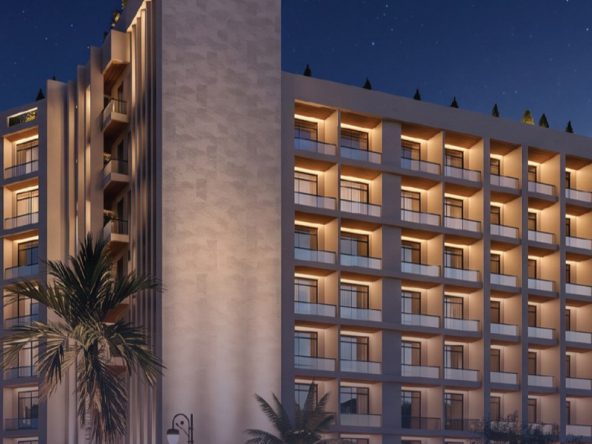
Our site carries two plot releases, both from Muriya, the developer that is owned 70% by Orascom Development and 30% by Omran, the Omani government’s tourism development arm, according to our listing pages. Both sit inside licensed complexes: Jebel Sifah Land Plots in the Jebel Sifah ITC in Muscat Governorate, and Salalah Land Plots in the Hawana Salalah ITC in Dhofar. Plots start at 1,000 m² in both. The Salalah page states plainly that the price includes a villa built to Muriya’s approved specification and that the release is not a raw land sale. The Jebel Sifah page describes the same structure, with a 3+1 or 4+1 villa, meaning three or four bedrooms plus a maid’s room.
| Release | Starting price | Minimum plot | Price per m² of plot | 20% reservation payment | Balance over 3 years |
|---|---|---|---|---|---|
| Jebel Sifah Land Plots | OMR 500,000 ($1,300,400) | 1,000 m² | OMR 500 ($1,300) | OMR 100,000 ($260,080) | OMR 400,000 ($1,040,320) |
| Salalah Land Plots, lagoon view | OMR 750,000 ($1,950,600) | 1,000 m² | OMR 750 ($1,951) | OMR 150,000 ($390,120) | OMR 600,000 ($1,560,480) |
| Salalah Land Plots, direct sea view | OMR 1,000,000 ($2,600,800) | 1,000 m² | OMR 1,000 ($2,601) | OMR 200,000 ($520,160) | OMR 800,000 ($2,080,640) |
Prices are the starting prices on our listing pages as of 16 October 2026, and both pages say that larger plots and premium positions cost more. The per-square-metre column divides the starting price by the 1,000 m² minimum, so it is the highest possible figure for the starting product, and it includes the villa. It should not be read as the value of the land alone. The Salalah lagoon-view price is 1.5 times the Jebel Sifah price, and the direct sea-view price is twice it. Neither page states a built-up area for the villa, a handover date or a service charge, so a price per square metre of built area cannot be calculated from the pages.
Both releases use the same payment structure: 20% on reservation and the balance on a three-year instalment plan that runs to handover, with the villa construction included in the schedule. The pages do not give the frequency of instalments. As an illustration only, if the Jebel Sifah balance of OMR 400,000 were split into 12 equal quarterly payments, each would be OMR 33,333 ($86,692); split into 36 equal monthly payments, each would be OMR 11,111 ($28,897). The actual schedule is issued with the reservation paperwork and the sale and purchase agreement.
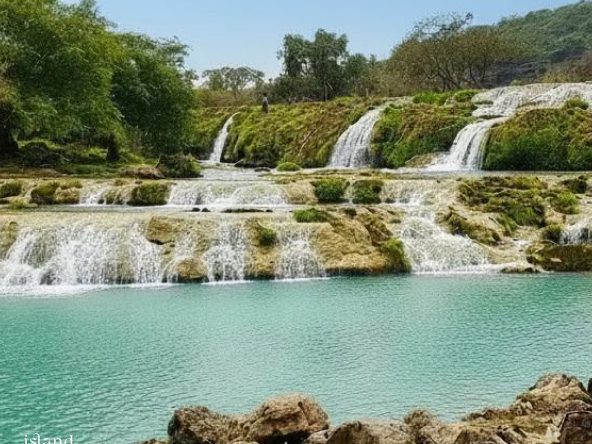
The setting differs. The Jebel Sifah page lists a working marina, a nine-hole, par-36 seaside golf course designed by Peter Harradine and playable as 18 holes using second pin positions, a beach club and a retail and hospitality core, about 45 minutes from Muscat International Airport. The Salalah page describes what it calls Oman’s largest man-made lagoon system, a marina and direct Arabian Sea beach frontage, and the area’s Khareef season from June to September. The Hawana Salalah website describes a 171-berth marina and a low-density resort near Salalah. More background is in our guides to Jebel Sifah and Hawana Salalah, and the Muriya profile in the Oman developers directory lists the developer’s other projects.
Plot, Villa or Apartment: Cost per Square Metre Compared
The plot releases are easier to judge against the other ways into the same two complexes. The table uses only prices and sizes stated on our listing pages, and the per-square-metre figures divide the starting price by the stated built-up area. Where a page gives only a price or only a size range, the cell says so and no figure is calculated.
| Product | Starting price | Size stated on page | Price per m² built | Target handover |
|---|---|---|---|---|
| Jebel Sifah plot with villa | OMR 500,000 ($1,300,400) | Plot from 1,000 m²; built area not stated | Not calculable | Not stated |
| Olive Farms villa, Jebel Sifah | OMR 75,000 ($195,060) | Plot 260 to 350 m²; built 75 to 120 m² | Not calculable for entry unit | Q4 2028 |
| Raya villa, Jebel Sifah | OMR 189,200 ($492,071) | From 1,690 sq ft (about 157 m²) | About OMR 1,205 ($3,134) | Q4 2027 |
| Solaris apartments, Jebel Sifah | OMR 50,000 ($130,040), September 2024 price | 37.4 to 85.3 m² | Not calculable for entry unit | Q4 2027 |
| Lubana Island one-bedroom apartment, Hawana | OMR 99,508 ($258,800) | From 67 m² | About OMR 1,485 ($3,862) | 2029 |
| Lubana Island villa or chalet, Hawana | OMR 135,612 ($352,700) | From 86 m² | About OMR 1,577 ($4,101) | 2029 |
| Salalah plot with villa, lagoon view | OMR 750,000 ($1,950,600) | Plot from 1,000 m²; built area not stated | Not calculable | Not stated |
Three readings follow from the table, and each is arithmetic and not advice. First, the plot releases cost 2.6 times the Raya villa (500,000 divided by 189,200) and 6.7 times the Olive Farms entry villa (500,000 divided by 75,000) at their starting prices, so the plot release is not a lower-cost way of owning land in the same complex. Second, the plot is much larger: the Olive Farms plots run from 260 to 350 m², so a 1,000 m² plot is between 2.9 and 3.8 times the area. Third, the stated built areas show that an apartment and a villa in the same complex are priced on a similar scale per built square metre, with the Hawana products near OMR 1,500 and the Raya villa near OMR 1,200.
Ownership costs differ by product as well. Each listing page says that service charges are quoted per unit on request, in OMR per square metre per year. The Olive Farms page adds that the reservation documents list two charges, one for the Olive Farms scheme and one for the Jebel Sifah master community, and state whether each is billed on plot area or built-up area. That basis changes the bill: for every OMR 1 of rate per square metre, a charge billed on a 1,000 m² plot would be OMR 1,000 a year, while the same rate billed on a 200 m² house would be OMR 200. Our article on service charges in Oman real estate explains how owners’ associations set them.
Buying Costs: Registration Fee, VAT and Income Tax
Three charges sit on top of the purchase price: the registration fee, value added tax, and, from 2028, income tax on any rent. The registration fee on a property sale is 3% of the value. The Ministry of Housing and Urban Planning cut it from 5% to 3% with effect from 3 November 2020, as reported by Times of Oman. Our Mira Ocean Estates listing page applies the same 3% rate in its worked example, where 3% of OMR 57,574 is about OMR 1,727.
VAT depends on what is being sold. Oman’s 5% VAT came into effect on 16 April 2021, and the Oman Tax Authority’s real estate guide, summarised by Deloitte in September 2021, treats supplies of undeveloped land as exempt, the first supply of residential property as taxed at 5%, and later resales of residential property as exempt. A tax expert quoted by the Oman Observer in April 2021 said the first sale of a home is taxed only where it was built by a professional developer. A plot sold together with a developer-built villa mixes the two categories, and the contract determines how the price is split, so the table shows the two outer bounds and not a quotation.
| Starting price | 3% registration fee | Total if VAT is nil | Total if 5% VAT applied to the whole price |
|---|---|---|---|
| OMR 500,000 ($1,300,400), Jebel Sifah | OMR 15,000 ($39,012) | OMR 515,000 ($1,339,412) | OMR 540,000 ($1,404,432) |
| OMR 750,000 ($1,950,600), Salalah lagoon view | OMR 22,500 ($58,518) | OMR 772,500 ($2,009,118) | OMR 810,000 ($2,106,648) |
| OMR 1,000,000 ($2,600,800), Salalah sea view | OMR 30,000 ($78,024) | OMR 1,030,000 ($2,678,824) | OMR 1,080,000 ($2,808,864) |
The arithmetic shows a spread of 5% of the price, which is OMR 25,000 ($65,020) on the Jebel Sifah plot, depending on how VAT applies. Legal fees and any translation costs are outside the table, and the sources reviewed do not set an official figure for them. Our guide to property tax in Oman sets out the recurring taxes.
Income tax matters only once a house stands on the plot and is let. Royal Decree 56/2025 introduces a personal income tax of 5% on income above OMR 42,000 a year from 1 January 2028, according to Gulf News, and rental income falls within the tax base as explained in our guide on renting out Oman property from abroad. A bare plot produces no rent, so the tax is not a cost of holding land.
Title Deed, Registry and Escrow: RD 56/2026 and RD 79/2025
Two recent laws change how a plot purchase is recorded and how the buyer’s money is held. The Real Estate Register Law, Royal Decree 56/2026, came into force on 18 May 2026 and replaced Royal Decree 2/1998. According to Trowers & Hamlins, the title deed is the only accepted proof of ownership, registration with the Real Estate Register is the basis of ownership, electronic registers and deeds carry the same legal weight as paper ones, an English translation can be issued on request, and a preliminary register records buyers’ interests in off-plan units. The firm also states that non-Omani individuals and companies may be registered as owners, subject to the laws on non-Omani ownership, and that the ministry had not yet issued the implementing regulation. Pinsent Masons adds that an unregistered disposition creates only personal obligations between the parties.
Royal Decree 79/2025, the law regulating real estate, was issued on 10 September 2025 and published in Official Gazette 1613 on 14 September 2025, according to decree.om. Our listing pages give 10 March 2026 as the date it took effect. The law firm summary by BSA states that each licensed project must have its own escrow account into which buyers’ payments are deposited, that withdrawals are limited to approved construction phases, that brokers and marketers must be licensed, and that each project must have an owners’ association. The decree repealed the 1986 brokerage law, the 1989 apartments ownership system and the 2018 escrow system. Our explainer on Law 79/2025 for off-plan buyers goes through the protections in more detail.
For a plot that is sold with a villa still to be built, both laws are relevant. The register determines when the plot is recorded and in what name, and the escrow rule determines where the instalments sit while construction proceeds. The Husn Al Zain and Nismat Zain pages both state that buyer payments go into a project escrow account under Royal Decree 79/2025, with withdrawals tied to approved construction phases. The Muriya plot pages say the villa is built to the developer’s approved specification, but they do not describe the escrow account, so the escrow details for a plot sale would appear in the reservation paperwork.
Steps to Buy Land in Oman, from Reservation to Title Deed
The sequence below follows the order used on our listing pages and the registry laws above. It is a description of the stages, not a legal checklist, and the order can vary by project.
| Stage | What happens | Document or evidence |
|---|---|---|
| 1. Identify the parcel | Confirm the plot sits inside a licensed ITC or another designated area | ITC licence reference for the parcel; Ministry statement of designated areas |
| 2. Reserve | Pay the reservation amount, 20% on the Muriya plot releases | Reservation form; payment receipt |
| 3. Sign the agreement | Sign the sale and purchase agreement, which sets the contractual handover date | Sale and purchase agreement; payment schedule; service-charge schedule |
| 4. Pay by instalments | Pay into the project escrow account; withdrawals follow construction phases | Escrow account details; instalment receipts |
| 5. Build and snag | Villa is built to the approved specification; municipal permit rules apply | Approved design; completion documents |
| 6. Register | Pay the 3% registration fee and record the title | Title deed, on paper or electronic, with an English translation on request |
| 7. Apply for a visa if eligible | Owner Visa on a competent authority’s certificate; Golden Residency decided by the Royal Oman Police | Certificate from the competent authority; application documents |
The documents named in stage 3 appear on our Mira Ocean Estates page as the expected set for a Salalah purchase: reservation form, sale and purchase agreement, payment schedule, escrow account details, handover schedule, ITC and title confirmation, service-charge schedule and residency-route confirmation. Passport and proof of funds are listed in our buying guide as market practice, not as an official list. Our guide to buying off-plan property in Oman covers the process step by step.
What a Plot Purchase Does and Does Not Give: Residency
Ownership and residency are separate questions in Oman. The Ministry of Housing and Urban Planning said in June 2026 that the amendments to the residence regulations concern residency and do not widen property rights. A plot purchase can connect to three different permits, and they should not be conflated.
Investor visa under the ITC regulation
Under the ITC executive regulation, owners of undeveloped plots and their first-degree relatives receive a multi-entry investor visa that is renewed every two years until construction is finished, while owners of completed units may obtain a two-year residence permit renewed automatically every two years for six years. The sources reviewed describe the visa as running only until construction ends, so it is a temporary arrangement tied to the build.
Owner Visa under ROP Decision 87/2026
The Royal Oman Police decision amending the executive regulations of the Foreigners’ Residence Law appeared in Official Gazette 1653 on 21 June 2026 and took effect the following day, according to Times of Oman. The Oman Observer reports that a foreigner who buys a plot of land prepared for construction, or a unit whose registration is not complete, can obtain a visa without a sponsor on a certificate from the competent authority. The visa also covers the buyer’s spouse, first-degree relatives and the legal representatives of an entity that owns the plot. It runs for at least six months and up to one year, can be renewed for a similar period, and allows a stay of up to three months per entry. It ends if the property is transferred by any legal act, and the family permits end with it. It has no minimum property value and is tied to ownership, which makes it a different instrument from Golden Residency. Our comparison of Golden Residency and the Owner Visa sets them side by side.
Golden Residency
Golden Residency was announced on 31 August 2025 as a 10-year renewable permit with a single threshold of OMR 200,000 ($520,160) across seven routes, according to Gulf News. Middle East Briefing describes the real estate route as property in Integrated Tourism Complexes held with a valid title deed. Our listing pages state the condition as a single ITC property worth at least OMR 200,000, decided by the Royal Oman Police. The starting prices of both Muriya plot releases are above that figure, 2.5 times it in the case of Jebel Sifah (500,000 divided by 200,000), and the Jebel Sifah page says a purchase at or above the relevant threshold can support an application. The decision on any application rests with the Police, and the route is worded around property held with a title deed.
The same arithmetic shows why smaller ITC products behave differently. The Olive Farms entry villa at OMR 75,000 is 37.5% of the threshold, and the Raya entry villa at OMR 189,200 is 94.6% of it, and both pages note that the entry unit is below the threshold and point to the Owner Visa, which has no minimum value. Neither route reaches a plot in a citizen scheme or on ordinary land, because the Golden Residency real estate route is limited to ITC property.
Land Prices in Oman: What the NCSI Index Shows
Land is the fastest-moving part of Oman’s property price data in 2026, although the index covers the national market, most of which foreigners cannot enter. The National Centre for Statistics and Information (NCSI) reported that its real estate price index rose 15.9% year on year in the first quarter of 2026, as published by the Oman Observer on 13 June 2026, and 22.7% in the second quarter, as published by Times of Oman on 19 September 2026.
| Index component (year on year) | Q1 2026 | Q2 2026 |
|---|---|---|
| All real estate | +15.9% | +22.7% |
| Residential | +17.6% | +24.6% |
| Residential land | +21% | +28% |
| Residential apartments | +4.4% | +17.2% |
| Villas | +9% | +10.8% |
| Residential land in Muscat | +43.6% | +40.6% |
| Residential land in Dhofar | Not reported | +16.4% |
| Commercial land | +11% | +19.2% |
Residential land rose faster than villas and apartments in both quarters, and Muscat led the governorates in the second quarter with 40.6%, ahead of Musandam at 29.1% and North Al Batinah at 29%. Residential land in Al Wusta fell 16%. These are index movements across all residential land, including the citizen-allocated plots that make up most of the market, so they describe national land demand, not the price of an ITC plot, and they say nothing about future prices. The Hamptons International half-year report, carried by the Oman Observer on 13 September 2026, put total property trading in the first half of 2026 at about RO 1.434 billion, with sales contracts worth RO 688.1 million (more than 34,000 contracts) and mortgage contracts worth RO 740.2 million (13,383 contracts).
Two points of context help when reading these numbers. The ITC plots on our site start at OMR 500 to OMR 1,000 per square metre of plot including a villa, whereas the NCSI index is a rate of change and does not give a price per square metre. And the second-quarter rise coincides with the period when ministry and police announcements dominated headlines, but the ministry’s own statement was that ownership rules had not changed. Our guide to selling property in Oman covers the exit side, which for an ITC plot begins only after the build-out duty is met.
Frequently Asked Questions
Can a foreigner buy land in Oman?
Yes, but only in designated places. A foreign individual or company can buy land in Oman where it forms a plot inside a licensed Integrated Tourism Complex, under Royal Decree 12/2006 and its executive regulation. Ownership on ordinary private land, agricultural land and in the restricted governorates is not open to non-Omanis under Royal Decree 29/2018, and the Ministry of Housing and Urban Planning confirmed in June 2026 that ownership remains limited to the designated areas.
Can I buy a bare plot and build later?
Neither plot release on our site is a bare-land sale: both starting prices include a villa built to the developer’s specification. In the wider ITC regime, a plot owner must complete construction or put the land to its intended use within four years of registration, with a possible extension of up to two years, and cannot sell the plot before completion.
How much does it cost to buy land in Oman in an ITC?
Per our listing pages as of 16 October 2026, the starting price is OMR 500,000 ($1,300,400) for a Jebel Sifah plot of at least 1,000 m², OMR 750,000 ($1,950,600) for a Salalah lagoon-view plot and OMR 1,000,000 ($2,600,800) for a Salalah direct sea-view plot, each with a villa included. A 3% registration fee applies on top, and VAT depends on how the contract treats the land and the building.
Does buying a plot lead to residency?
Only through a defined route. The Owner Visa under ROP Decision 87/2026 has no minimum value, needs no sponsor, is tied to ownership and can cover a plot prepared for construction on a certificate from the competent authority. Golden Residency requires a single ITC property worth at least OMR 200,000 and is decided by the Royal Oman Police. A plot in a citizen scheme or on ordinary land is outside both routes.
Can I buy land in Oman outside a tourism complex?
Only in the other designated areas. The June 2026 ministry list names future cities such as Sultan Haitham City, Al Thuraya City and Al Jabal Al Aali and integrated neighbourhoods such as Surooh, and Royal Decree 38/2025 allows freehold sales of units, not land, in special economic zones and free zones. The form of title and the eligibility of a foreign buyer are decided project by project.
Why are Surooh homes so much cheaper per square metre?
Our listing pages price the smallest Husn Al Zain home at OMR 47,485 for 173 m² built, about OMR 274 per square metre, against about OMR 1,205 for the Raya villa. The same pages describe Surooh as housing for citizens entitled to residential land and require the developer to confirm a buyer’s eligibility in writing before payment, so the price is tied to that eligibility.
Can a plot be mortgaged?
Within an ITC, a plot may be mortgaged only to finance the construction work, according to the 25 July 2026 Times of Oman summary of the regulation. Mortgage terms for non-resident buyers are set by individual banks, and our guide to mortgages in Oman for foreigners compares the published terms.
What happens to an ITC plot if the owner dies?
The executive regulation provides for succession: on the owner’s death, residence permits for immediate family stay valid and are renewed for the successors for the rest of the ownership period, as summarised for Article 27 by the Gulf Labour Markets and Migration programme. Our article on inheritance for foreign property owners in Oman covers estate planning.
Are GCC citizens treated the same way?
No. The Ministry of Housing and Urban Planning said in June 2026 that citizens of Gulf Cooperation Council countries are governed by separate GCC agreements and Omani rules for approved areas, so the conditions described here for non-GCC foreigners do not map directly onto them.
Last checked: 16 October 2026. Sources: Times of Oman, ITC legal framework; Gulf Labour Markets and Migration, Ministerial Decision 191/2007; Gulf News, Ministry of Housing statement; Oman Observer, restricted areas; Oman Observer, free zone freehold; Oman Observer, Owner Visa; Times of Oman, residence amendments; Trowers & Hamlins, Real Estate Register Law; decree.om, Royal Decree 79/2025; Times of Oman, NCSI Q2 2026 index; Oman Observer, NCSI Q1 2026 index; Deloitte, Oman Tax Authority VAT guide; Government services portal, ITC licence; and the live listing pages of Jebel Sifah Land Plots, Salalah Land Plots, Olive Farms, Raya, Solaris, Lubana Island, Husn Al Zain and Nismat Zain.